

Key Takeaways
- Peptide therapy is not one treatment: approval applies to specific FDA-approved products for defined uses, while compounded peptides are not FDA-reviewed for safety, effectiveness, or quality before marketing.
- Verify your prescriber's active Florida license through the Florida Department of Health lookup, and confirm the pharmacy supplying the product is licensed in Florida.
- Ask for the exact drug name, strength, regulatory status, quality testing methods, and a plan for handling side effects before your first dose.
- Be wary of pressure to buy a package on the first visit, guaranteed results, or vague answers about product sourcing; proven alternatives like medical weight loss and lab-based metabolic care should also be discussed.
Peptide therapy is one of the most talked-about topics in wellness today. Social media, online stores, and wellness influencers all promote peptides for aging, recovery, weight loss, and energy. For busy adults in Tampa, it can be hard to tell what is real, what is hype, and what is risky.
The term itself is part of the problem. "Peptide therapy" is not one treatment. Peptides are short chains of amino acids, and each one has its own evidence, risks, and legal status. Some are FDA-approved medicines for specific conditions. Others are compounded or unapproved products with limited human data.
That is why medically supervised peptide therapy in Tampa matters. This guide shows you how to find safe care, what a good clinician will explain, and which red flags to avoid in 2026.
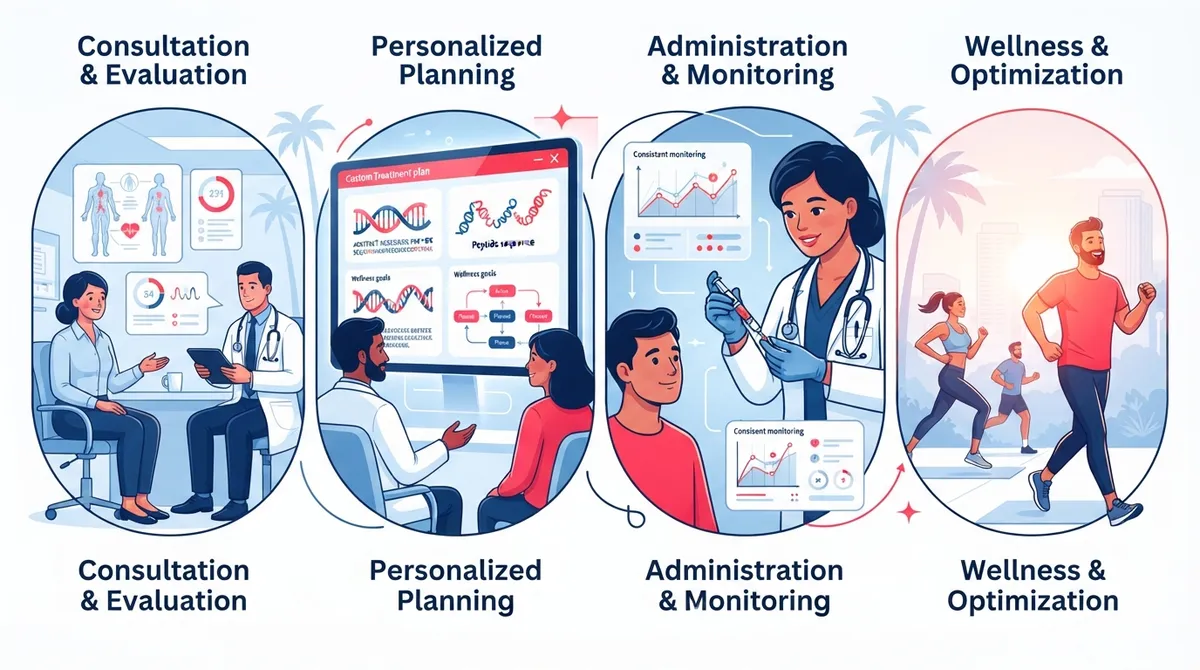
What Medically Supervised Peptide Therapy Really Means
Medical supervision means a licensed clinician reviews your health history, explains the evidence, and monitors you over time. It is not a one-click online order or a product handed over at a counter.
In a primary care or wellness setting, supervision should include:
- A clear clinical goal, such as weight management or metabolic health
- A review of your medical history, medications, and lab results
- A plain-language talk about benefits, risks, and alternatives
- A plan for follow-up and for handling side effects
A clinician should also tell you what is not known. Honest uncertainty is a sign of quality care. If a provider promises guaranteed results, treat that as a warning sign.
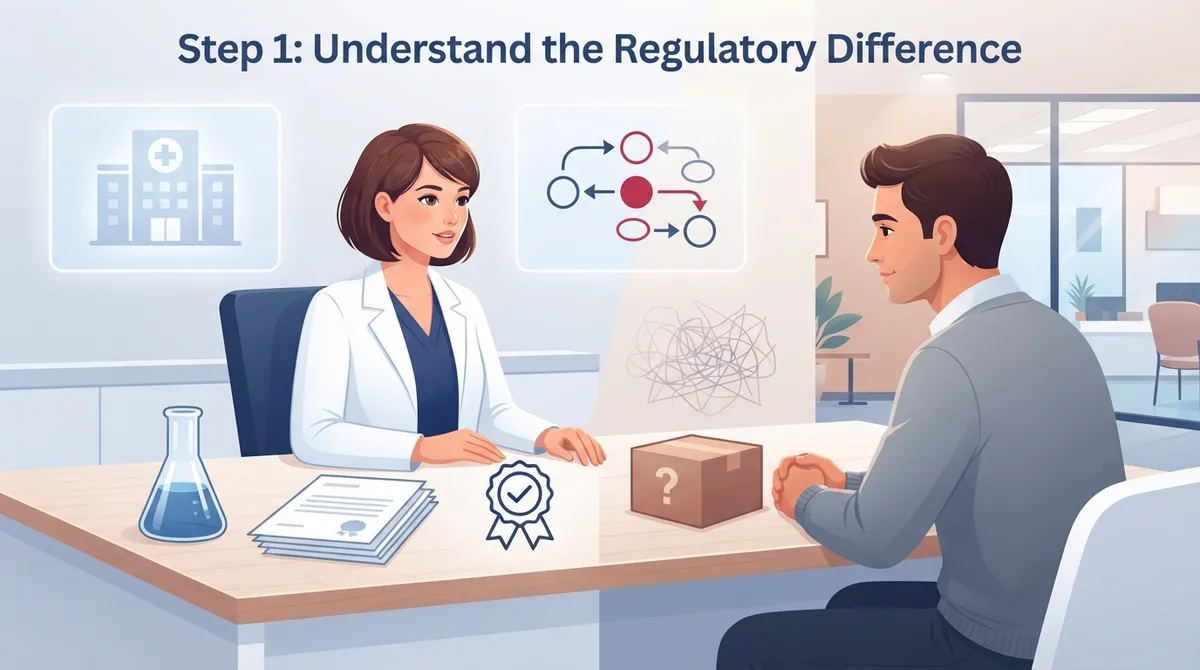
Step 1: Understand the Regulatory Difference
The most important concept is the difference between approved medicines and other peptide products. Many patients assume all peptides are held to the same standard. They are not.
|
Product Type |
FDA Review |
What It Means for You |
|---|---|---|
|
FDA-approved peptide medicine |
Reviewed for safety, effectiveness, and quality for a defined use |
Approval applies to that specific product and indication only |
|
Compounded peptide |
Not reviewed by FDA before marketing |
May fit certain patient-specific needs, but benefit is not proven by the compounding itself |
|
"Research use only" product |
Not intended for human use |
Not a safe or appropriate substitute for a prescription |
A 2026 Federal Register notice described an interim HHS enforcement-discretion policy for certain peptide compounding. It states plainly that compounded drugs are not FDA-approved and are not reviewed for safety, effectiveness, or quality before marketing. This policy is not an approval.
In July 2026, an FDA advisory committee also recommended adding six peptides to the 503A bulks list. That recommendation was nonbinding and did not make those peptides FDA-approved. Ask your clinician how any recommendation applies to the exact product you are considering. For a deeper look, read FDA-Approved vs. Compounded Peptides: Which Wins?
Step 2: Ask About the Evidence for Your Specific Goal
Evidence varies widely. Some peptide-based medicines have strong clinical trial data for approved uses. Many popular wellness peptides do not. Claims about reversing aging, building muscle, or healing injuries are often based on animal studies or small, early research.
Names like BPC-157 and TB-500 appear often online. Before you consider any of them, ask what human studies exist and what regulators say. These articles can help you prepare:
- 4 Facts on BPC-157 FDA Approval Status in 2026
- Peptides for Recovery: What the Evidence Really Shows
- How to Evaluate Peptide Therapy for Wellness Safely
No reliable Tampa-specific outcome statistics were found in current research. Be cautious of any clinic that cites local success rates without showing the source.
Step 3: Know the Risks Before You Start
FDA and medical experts have raised concerns about some compounded and online peptides. These concerns include limited human evidence, uncertain identity or purity, impurities, immune reactions, and risks tied to injectable products.
Questions worth asking include:
- What side effects are known for this exact product?
- Could it interact with my current medications?
- What happens if I have a reaction, and who do I call?
- Is this safe given my conditions, such as diabetes or a history of cancer?
Injectable products carry added risk if they are not made and handled correctly. Quality control matters. Read 5 BPC-157 Buying Mistakes That Put Your Health at Risk to see how buying errors can harm patients.
Step 4: Verify Licenses and Sources
You can check the people behind your care. A trustworthy clinic will welcome these questions.
- Check the prescriber. Confirm that the clinician holds an active Florida license through the Florida Department of Health license lookup.
- Check the pharmacy. Ask which pharmacy supplies the product and confirm that it is licensed in Florida.
- Ask for the exact drug name. You should know the substance, the strength, and its regulatory status.
- Ask about quality testing. Find out how identity and purity are confirmed.
- Ask how adverse effects are handled. A clear plan should exist before your first dose.
You can also use 15 Questions to Ask a Peptide Therapy Clinic in Tampa as a checklist during your visit.
Step 5: Know What a Good Consultation Looks Like
A strong first visit feels like a medical appointment, not a sales pitch. Expect time for questions and a focus on your whole health picture.
What Should Happen
- A full health history and medication review
- Baseline labs and vitals when appropriate
- A discussion of proven options, including lifestyle and approved medicines
- A written explanation of risks, costs, and follow-up steps
What Should Raise Concern
- Pressure to buy a bundle or package on the first visit
- Claims that a peptide is "FDA-approved" without naming the product and use
- No lab work or medical history review
- Vague answers about where the product comes from
Cost is another common question. Pricing varies by product and plan, and you should get it in writing. See What Does Monthly Peptide Therapy Cost in Tampa? for planning help.
Step 6: Consider Proven Alternatives First
Peptides are not the only path to better energy, weight, or recovery. In many cases, primary care tools offer stronger evidence. A good clinician will review these with you before or alongside any peptide discussion.
|
Goal |
Evidence-Based Options to Discuss |
|---|---|
|
Weight management |
Medical weight loss programs, nutrition support, and approved medicines |
|
Metabolic health |
Lab testing, metabolic breath analysis, and body composition tracking |
|
Fatigue and sleep |
Sleep evaluation, thyroid and hormone labs, and screening for underlying conditions |
|
Prevention |
Annual physicals, cancer screenings, and DNA gene testing |
For example, approved GLP-1 medicines have clinical trial data behind them. Compare them in Tirzepatide vs. Semaglutide: Which Wins for Weight Loss? Another helpful read is Which Named Peptides Are Available in Tampa Clinics?
Step 7: Plan for Monitoring and Follow-Up
Safe care does not end after the first prescription. Monitoring should fit the treatment and your health needs. It may include repeat labs, symptom checks, and dose reviews.
Monitoring does not guarantee safety or results. It does help your clinician catch problems early and decide whether to continue, adjust, or stop. Before you begin, confirm how often you will be seen and how to reach the care team between visits.
A primary care home makes this easier. When one team knows your history, they can spot interactions and coordinate care across conditions. If you are still choosing a doctor, review Best Primary Care Doctor in Tampa: How to Choose in 2026.
How InCare Approaches Wellness in Tampa and Riverview
InCare is a personalized primary care and wellness clinic serving Tampa and Riverview, Florida. The team combines medical expertise with modern technology, including metabolic breath analysis, 3D body composition tracking, DNA gene testing, and cancer screenings. The focus is prevention and whole-body optimization, not quick fixes.
Patients who want to explore peptide options can start with a conversation about goals, health history, and the evidence. Any service, product, or outcome should be confirmed directly with the clinic during your visit. You can see what patients say by reading InCare reviews on Visit us on Google — InCare, and follow health updates on Instagram, Facebook, and TikTok.
Key Takeaways for Tampa Patients
- "Peptide therapy" is a broad label, not a single treatment.
- Approval applies to specific products and uses, not the whole category.
- Compounded drugs are not FDA-approved or reviewed for quality before marketing.
- Verify the prescriber's Florida license and the pharmacy's licensure.
- Ask for the exact drug name, evidence, risks, alternatives, and follow-up plan.
- Be wary of marketing claims that sound too good to be true.
Take the Next Step With Confidence
Choosing medically supervised peptide therapy in Tampa should feel informed, not rushed. The right clinician will listen, explain the evidence honestly, and put your safety first. If you want a primary care team that values prevention and clear answers, we would be glad to help. Book Now to talk with InCare, or contact our team with questions before your visit.
FAQs
Q: Are peptide therapies FDA-approved?
A: Approval depends on the specific product and use. Some peptide-based medicines are FDA-approved for defined conditions, but peptide therapy as a category is not approved. Compounded peptides are not reviewed by the FDA for safety, effectiveness, or quality before marketing.
Q: What is the difference between an FDA-approved peptide medicine and a compounded peptide?
A: An FDA-approved medicine has been reviewed for a specific use. A compounded peptide is prepared for an individual patient and has not gone through that review. A clinician should tell you which type you are being offered and explain the evidence behind it.
Q: How can I verify a peptide prescriber and pharmacy in Florida?
A: Use the Florida Department of Health license lookup to confirm that the prescriber holds an active Florida license. Ask the clinic to name its pharmacy, then confirm that the pharmacy is licensed in Florida.
Q: Are BPC-157 and TB-500 proven to help with recovery or anti-aging?
A: Strong human evidence is limited for these peptides, and claims often rely on animal or early research. Discuss the regulatory status, safety concerns, and proven alternatives with your clinician before considering them.
Q: What should I expect during a peptide therapy consultation in Tampa?
A: Expect a full medical history, a medication review, and a discussion of your goals. A good clinician will explain evidence, risks, alternatives, costs, and follow-up plans without pressuring you to buy on the first visit.