
Key Takeaways
- Prescription does not equal FDA approval: the research reviewed shows no FDA-approved Semax product in the U.S., and compounded preparations are not reviewed by the FDA for safety or effectiveness.
- The October 2026 HHS policy is limited enforcement discretion for certain patient-specific compounding, not an approval, so ask any Tampa clinic whether it is offering an approved product or a compounded one.
- Verify the prescriber holds an active Florida license, confirm which pharmacy prepares the product and its licensing, and request written documentation on ingredient sourcing and quality testing.
- Start with a primary care evaluation, since memory, focus, mood, and fatigue often have common causes like sleep problems or thyroid issues, and human evidence for Semax remains limited.
Searching for doctor prescribed Semax in Tampa has become more common in 2026. Many Tampa adults hear about this peptide on social media and wonder if a clinician can simply write a prescription. The real answer is more careful than the online buzz suggests.
Semax is a synthetic peptide studied mainly for its neurological effects. It has a long history in Russia and a few other countries. The research we reviewed does not show an FDA-approved Semax product in the United States. A new federal policy has changed how some compounding may be handled, but that policy is not an approval.
This guide covers the top 10 mistakes people make when they look for doctor prescribed Semax in Tampa. It explains what the policy does and does not mean, how to protect yourself, and why a full primary care visit should come first. Our goal is to help you make a safe, informed choice, not to promise results.

What Semax Is and Where It Stands in 2026
Semax is a small peptide that researchers have studied for memory, focus, and recovery after neurological injury. Most of that work comes from outside the United States. Human evidence is limited compared with the proof behind established treatments.
The regulatory picture is also easy to misread. Here are the key facts as of November 2026:
- The search results do not establish an FDA-approved Semax product in the U.S.
- A July 2026 FDA advisory committee vote on Semax was reported as 8 to 5. An advisory vote is not an approval or final authorization.
- On October 28, 2026, HHS announced a limited enforcement-discretion policy covering six peptides, including Semax, for certain patient-specific compounding.
- That policy is not FDA approval and does not change the official 503A bulk-drug list.
Policy details can change quickly. Always confirm the current status and exact conditions with your clinician before relying on any of it.
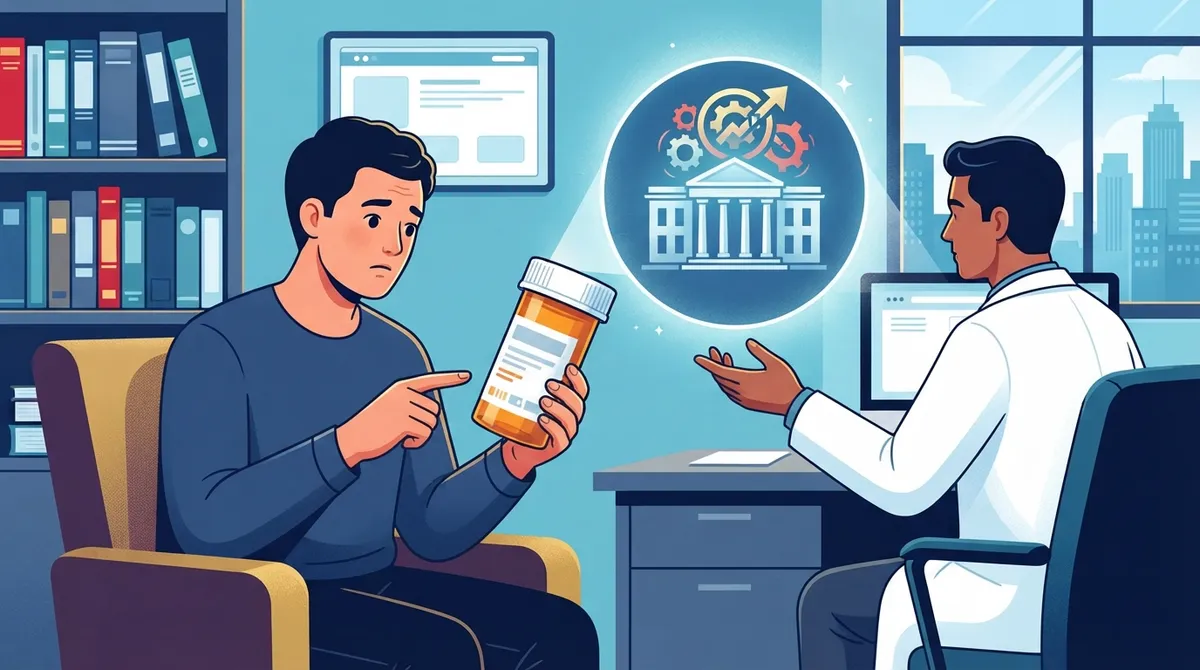
Mistake 1: Assuming a Prescription Means FDA Approval
A prescription does not prove a drug is approved, safe, or effective. A clinician can prescribe compounded medications that the FDA has not reviewed for safety, effectiveness, or quality before they reach the market.
This matters for Semax. If a Tampa clinic offers it, ask plainly: is this an FDA-approved product, or a compounded preparation? A trustworthy clinician will answer clearly and will not blur the two.
Mistake 2: Treating the 2026 Policy as an Approval
The October 2026 HHS policy describes limited enforcement discretion. That means regulators may hold off on enforcement when specific conditions are met. It does not mean Semax has passed the FDA approval process.
The policy materials cited in our research describe Semax free base for intranasal use. They also point to conditions such as ingredient documentation and quality controls. Anyone who tells you the policy "legalized" Semax for everyone is oversimplifying. Verify the current status and how it applies to your situation.
Mistake 3: Skipping the Primary Care Evaluation
Many people go straight to the peptide and skip the basics. That is backwards. A responsible visit starts with your goals, medical history, and an exam as appropriate.
Memory fog, poor focus, low mood, and fatigue have many common causes. These include sleep problems, thyroid issues, vitamin deficiencies, stress, and medication effects. A primary care doctor can look for these first. If you are struggling with rest, our guide on how to know when to see a doctor for poor sleep is a good starting point.
Mistake 4: Believing Online Claims About Benefits
Websites often promise sharper memory, better mood, or stroke recovery. These claims should be treated with caution. Human evidence for Semax remains limited, and long-term outcomes are not well established.
A careful clinician will describe what is known, what is uncertain, and what is simply unproven. If a source promises guaranteed results, treat that as a warning sign.
Mistake 5: Buying Semax Online Without Oversight
Unverified online sellers are one of the biggest risks. Products may be mislabeled, contaminated, or the wrong strength. You also lose the safety net of a clinician who knows your history.
Our research is clear on this point: avoid purchasing unverified products online or using Semax without clinician oversight. We cover similar risks in 5 BPC-157 buying mistakes that put your health at risk, and the same logic applies here.
Mistake 6: Not Verifying the Pharmacy and Prescriber
State law and pharmacy requirements may apply on top of federal policy. Availability in Tampa depends on a Florida-licensed prescriber and a pharmacy able to prepare the product legally and with proper quality controls.
Use this checklist before you proceed:
- Confirm the prescriber holds an active Florida license.
- Ask which pharmacy will prepare the product and whether it is licensed.
- Request documentation about ingredient sourcing and quality testing.
- Ask whether the preparation matches the formulation described in current policy materials.
- Get all answers in writing when possible.
If a clinic cannot answer these questions, walk away. For more screening ideas, see 15 questions to ask a peptide therapy clinic in Tampa.
Mistake 7: Hiding Your Medications and Health History
Optimal dosing, interactions, and long-term risks for Semax are not well established in the research we reviewed. That uncertainty makes honest disclosure even more important.
Tell your clinician about:
- All prescription medicines, supplements, and over-the-counter products
- Existing conditions, including neurological, psychiatric, or heart conditions
- Pregnancy or breastfeeding status
- Past reactions to peptides, nasal sprays, or other compounded drugs
Never assume a peptide is harmless because it is "natural" or small.
Mistake 8: Ignoring Evidence-Based Alternatives
Before an unapproved therapy, there are proven options worth trying. Depending on your goals, these may include sleep care, stress management, exercise, nutrition changes, lab testing, and treatment of underlying conditions.
The table below compares a common first-step approach with a peptide-first approach.
|
Factor |
Primary Care First |
Peptide-First Approach |
|---|---|---|
|
Starting point |
History, exam, labs as needed |
Product or prescription request |
|
Evidence base |
Established guidelines |
Limited human data for Semax |
|
Regulatory status |
FDA-approved options available |
Not FDA-approved; compounding policy is limited |
|
Safety monitoring |
Ongoing follow-up |
Depends heavily on the prescriber |
|
Root cause found? |
Often yes |
Often not addressed |
For a broader view, read Peptides in Primary Care: What Works, What's Risky in 2026.
Mistake 9: Overlooking Possible Side Effects and Unknowns
Every treatment carries risk. For Semax, the problem is that long-term safety data are thin. Patients should not assume the absence of reported harm means the absence of harm.
Stop and call your clinician if you notice any new or worsening symptoms after starting any compounded therapy. Seek urgent help for severe reactions such as trouble breathing, swelling, or chest pain. If you want context on a related option, our article on Semax vs. Selank compares what the evidence shows for each.
Mistake 10: Skipping Follow-Up and Monitoring
Starting a therapy is only the first step. Without follow-up, no one tracks whether it helps, whether side effects appear, or whether it is still the right choice.
A good plan includes a clear goal, a defined review date, and an agreement on when to stop. If a clinic offers no follow-up, that is a red flag. You can learn more about Tampa options in Who Provides Selank and Semax in Tampa? 2026 Guide and What Should Tampa Patients Know Before Trying Semax Peptide?.
How to Approach Semax the Safe Way in Tampa
If you are still curious after weighing the risks, follow a simple order of steps:
- Book a primary care visit to review your goals and symptoms.
- Ask about testing and evidence-based treatments first.
- If Semax comes up, ask your clinician to explain the current regulatory status.
- Verify the prescriber, the pharmacy, and the preparation details.
- Agree on a monitoring and stop plan before you begin.
InCare is a personalized primary care and wellness clinic serving Tampa and Riverview. Our approach centers on prevention, whole-body evaluation, and honest conversations about what the science supports. If you want to see how other patients describe their care, you can visit us on Google and read InCare reviews.
You can also follow our health updates on Instagram and Facebook, or watch short wellness explainers on TikTok. For help choosing a local clinician, see Best Primary Care Doctor in Tampa: How to Choose in 2026.
Conclusion: Put Your Safety Ahead of the Hype
Doctor prescribed Semax in Tampa is not as simple as the internet makes it sound. A prescription is not an approval, a federal enforcement policy is not an endorsement, and limited research is not proof of benefit. The smartest path begins with a thorough evaluation, honest conversations, and verified, licensed care.
Ready to talk through your goals with a clinician who puts evidence first? Book Now to schedule a visit, or contact our team with your questions.
FAQs
Q: Can a doctor prescribe Semax in Tampa, Florida?
A: Possibly, but availability depends on the prescriber, the pharmacy, and current federal and Florida requirements. A 2026 HHS policy describes limited enforcement discretion for certain compounding, but it is not FDA approval. Confirm the details directly with a Florida-licensed clinician and pharmacy.
Q: Is Semax FDA-approved in the United States?
A: The research we reviewed does not show an FDA-approved Semax product in the U.S. A July 2026 advisory committee vote and an October 2026 HHS enforcement-discretion policy are not approvals. Verify the current status before making any decision.
Q: Is compounded Semax the same as an FDA-approved medication?
A: No. Compounded drugs are not reviewed by the FDA for safety, effectiveness, or quality before they are marketed. A prescription for a compounded product does not mean the drug has been proven safe or effective.
Q: What are the possible risks of Semax?
A: Long-term safety, optimal dosing, and drug interactions are not well established. Human evidence is limited, so unknown risks remain. Share your full medical history, medications, and pregnancy or breastfeeding status with a clinician before considering it.
Q: What should I try before considering Semax?
A: Start with a primary care evaluation to look for common causes of focus, memory, mood, or sleep concerns. Evidence-based options such as sleep care, lab testing, nutrition, exercise, and stress management often come first. Your clinician can help you decide if anything further makes sense.