Key Takeaways
- A TRT diagnosis requires both symptoms of low testosterone and clearly low levels confirmed by repeat morning blood tests; a single low result is not enough.
- Primary care-based TRT programs typically offer stronger safety because they assess other causes like sleep, thyroid, medications, and blood pressure and coordinate care in one team.
- Testosterone therapy can suppress sperm production, so men planning to have children soon should discuss fertility and alternatives before starting treatment.
- Ask any provider for a written monitoring schedule covering testosterone levels, blood pressure, hematocrit, and prostate health; vague answers are a red flag.
- Ask for the full yearly cost, including labs, visits, and medication source, since low monthly prices can hide extra fees.
- Avoid clinics promising instant results or offering treatment after a single lab draw, and never use testosterone not prescribed to you.
Searching for a TRT program in Tampa can feel confusing. Some clinics focus only on testosterone. Others place hormone care inside a full primary care practice. Both models can prescribe treatment, but they differ in testing, follow-up, and long-term safety. Choosing between them matters, because testosterone therapy is a medical treatment, not a quick fix.
A TRT program is a clinician-supervised path to evaluate and, when medically appropriate, treat confirmed low testosterone. It is not a standard package. Services, monitoring, and costs vary from one practice to the next. That is why this comparison helps. Below, you will see how a primary care-based program stacks up against a standalone low-T clinic, what a safe program should include, and how to pick a provider you can trust in 2026.

What a TRT Program in Tampa Actually Means
In Tampa, a TRT program usually means testosterone replacement therapy for men being evaluated for possible hypogonadism. Hypogonadism means the body does not make enough testosterone. Programs differ in format. Some are one-time prescriptions. Others include ongoing visits, lab checks, and whole-health care.
Major medical guidelines, including those from the Endocrine Society, say a diagnosis needs two things together:
- Symptoms or signs that fit low testosterone, such as low sex drive, fatigue, or reduced muscle mass
- Clearly and repeatedly low testosterone on blood tests
A single low result is not enough. Routine screening of all men is also not recommended. A good program starts by asking why you feel the way you do, not by assuming the answer is testosterone.
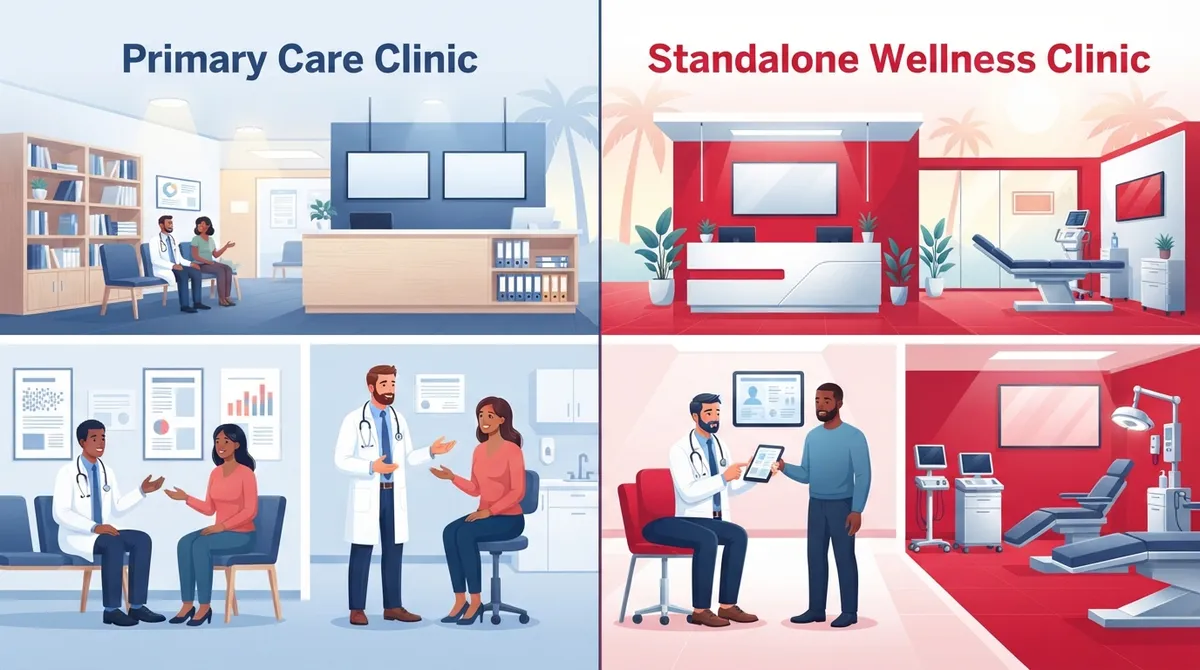
Primary Care vs. Standalone Clinic: Side-by-Side Comparison
The biggest difference is context. A standalone clinic often centers on one treatment. A primary care practice looks at your whole health. The table below shows how the two models commonly compare.
|
Factor |
Primary Care-Based TRT Program |
Standalone Low-T Clinic |
|---|---|---|
|
Starting point |
Full health review and symptom history |
Often a testosterone-focused intake |
|
Other causes checked |
Sleep, mood, medications, chronic conditions |
Varies by clinic |
|
Ongoing care |
Can include routine primary care |
Usually limited to hormone visits |
|
Monitoring |
Blood pressure, labs, and symptom review tied to your chart |
Depends on the program |
|
Care coordination |
One team sees the full picture |
May need separate doctors |
|
Best fit for |
Men who want safe, long-term, whole-body care |
Men who only want hormone services |
Neither model is automatically unsafe. The key is how thorough the evaluation and follow-up are. Still, a primary care setting has a built-in advantage: your doctor already knows your blood pressure, medications, sleep, and family history.
How a Safe Diagnosis Works
A careful program follows clear steps before any prescription is written. Here is what to expect from a responsible evaluation.
- Symptom and history review. Your clinician asks about energy, mood, sleep, sexual function, and medications.
- Morning blood testing. Testosterone is highest in the morning, so guidelines call for morning samples.
- Repeat testing. Low results should be confirmed with a second morning test before diagnosis.
- Cause investigation. Tests such as luteinizing hormone (LH) and follicle-stimulating hormone (FSH) help find the root cause. Free testosterone may be checked when needed.
- Other explanations ruled out. Fatigue and low mood can come from poor sleep, stress, thyroid issues, or medication side effects.
- Shared decision-making. You and your clinician discuss benefits, risks, alternatives, and follow-up before starting.
If a clinic offers treatment after one quick lab draw, that is a warning sign. For a deeper look at the basics, read what testosterone replacement therapy is at InCare.
Treatment Options: Gels, Injections, and More
Testosterone is available in several prescription forms. The right choice depends on your health, preferences, cost, and safety needs.
- Topical gels: Applied daily to the skin. They give steady levels but can transfer to others through contact.
- Injections: Given at set intervals. They are often cost-effective but can cause higher and lower swings in levels.
- Other forms: Some prescription options include patches, pellets, and oral products, each with its own limits.
Never use testosterone or anabolic steroids that were not prescribed for you. Products from unverified sources carry unknown quality and real health risks. To learn how injections are handled under medical supervision, see testosterone injections for low T at InCare.
Risks You Should Know Before Starting
TRT can help the right patient, but it is not risk-free. A trustworthy program will discuss these points openly.
Fertility and Sperm Production
Testosterone therapy can lower sperm production and affect fertility. The Endocrine Society recommends against starting testosterone for men who plan to have children soon. If fertility matters to you, ask about alternatives before treatment begins.
Blood Pressure and Heart Health
In 2025, the FDA removed the class-wide boxed warning about increased cardiovascular risk after reviewing the large TRAVERSE trial. However, the FDA added labeling that testosterone products can raise blood pressure. In the trial data, topical gel was linked to an average systolic change of +1.0 mm Hg at 36 months versus -0.5 mm Hg with placebo. That is a group average, not a prediction for any one person.
The FDA also kept limits on use for age-related low testosterone alone. This means TRT is not meant to treat normal aging.
Who Should Not Take TRT
The Endocrine Society advises against testosterone therapy in several situations, including:
- Near-term fertility plans
- Breast or prostate cancer
- Elevated hematocrit (thick blood)
- Untreated severe obstructive sleep apnea
- Uncontrolled heart failure
- Recent heart attack or stroke
- Certain prostate findings
This list shows why individual review matters. A primary care team can check these factors using your full medical record. If sleep is a concern, learn more about sleep apnea care in Tampa and Riverview.
Monitoring: The Part Many Programs Skip
Monitoring is not an optional add-on. It is part of safe treatment. A solid program tracks how you feel and checks for side effects. Depending on your case, your clinician may monitor:
- Testosterone levels
- Blood pressure
- Blood counts, including hematocrit
- Prostate health
For men being followed for prostate risk, the Endocrine Society suggests an assessment before treatment and again 3 to 12 months after starting. It also recommends a urology referral if PSA rises by more than 1.4 ng/mL above baseline in the first year, rises above 4.0 ng/mL, or if a prostate exam is abnormal. You can learn more about screening in key things men should know about prostate exams.
Ask any provider how often they check labs and blood pressure. Vague answers are a red flag.
Cost, Insurance, and Hidden Fees
TRT costs in Tampa vary widely. Insurance coverage depends on your plan and whether you meet medical criteria. Before you enroll, ask for a clear breakdown of:
- The initial evaluation and lab fees
- The monthly medication cost and source
- Follow-up visit and repeat lab charges
- Whether ongoing primary care is included
A low monthly price can hide extra charges for labs or visits. Ask for the full yearly cost, not just the first month. Also confirm where the medication comes from, since quality and safety depend on the source.
How to Choose the Right TRT Provider in Tampa
Use this checklist when comparing programs. It helps you separate careful care from sales-driven offers.
- Credentials: Confirm the prescriber is a licensed physician or qualified clinician.
- Diagnostic rigor: Look for repeat morning testing and cause investigation.
- Fertility counseling: The clinic should raise this topic without being asked.
- Monitoring plan: Ask for a written schedule of labs and blood pressure checks.
- Honest expectations: Beware of promises of instant results or guaranteed outcomes.
- Whole-health focus: A practice that offers primary care can spot issues a hormone-only clinic might miss.
Some Tampa-area practices advertise TRT alongside primary care. That setup can be helpful, but always verify the details yourself. You can also compare options in this guide to choosing a TRT clinic in Tampa Bay.
Why Primary Care Often Makes TRT Safer
Low testosterone rarely travels alone. It often overlaps with weight gain, poor sleep, high blood pressure, diabetes, and stress. A primary care team can address these together. That may even reduce the need for TRT in some men, since weight loss and better sleep can raise natural testosterone.
InCare is a personalized primary care and wellness clinic with locations in Tampa and Riverview. The practice combines modern technology with medical expertise and focuses on prevention and whole-body health. That approach fits well with hormone care, because your testosterone plan sits next to your blood pressure checks, lab work, and lifestyle goals. If you are weighing options, you can read more about testosterone replacement therapy at InCare and see how a physician-supervised plan is built.
Patients also value convenience. Busy professionals and families often want one trusted team for checkups, screenings, and hormone care. You can explore primary care services or meet the providers before you decide. Seeing what other patients say can help too, so you can read InCare reviews on Google for the Tampa and Riverview locations.
Who Should Consider a TRT Program?
TRT is meant for men with confirmed low testosterone and matching symptoms. It is not for everyone who feels tired or older. You may be a candidate if:
- You have ongoing symptoms such as low libido, low energy, or loss of muscle
- Repeat morning labs show clearly low testosterone
- Other causes have been checked and treated first
- You have reviewed risks, including fertility effects, with a clinician
If you are over 40 and curious about whether treatment fits, this overview of TRT for men over 40 can help you prepare questions. To see how the treatment works in the body, visit how testosterone therapy works.
Stay Informed and Follow Reliable Health Updates
Good decisions come from good information. Stick with medical guidelines and licensed clinicians rather than social media hype. You can still follow your local clinic for health news and wellness tips on Facebook, Instagram, and TikTok. Just remember that no post replaces a personal medical evaluation.
Final Verdict: Which TRT Program Wins?
For most men, a primary care-based TRT program offers the safer, more complete path. It checks for other causes, tracks your health over time, and ties hormone care to your full medical picture. A standalone clinic can work, but you must verify its testing, monitoring, and fertility counseling yourself.
Whichever route you choose, insist on repeat morning labs, a clear monitoring plan, and an honest talk about risks. Those three things matter more than price or promises.
Ready to find out if testosterone therapy is right for you? Book your evaluation at InCare today, or contact our team with questions about our Tampa and Riverview locations.
FAQs
Q: What is included in a TRT program in Tampa?
A: A TRT program is not standardized, so services vary by practice. A thorough program should include a symptom review, repeat morning testosterone testing, a cause investigation, a prescribed treatment plan, and scheduled monitoring of labs and blood pressure.
Q: How many testosterone blood tests are needed before starting TRT?
A: Guidelines recommend confirming low testosterone with repeat morning testing before a diagnosis is made. A single low result is not enough, because levels can vary from day to day and be affected by illness, sleep, and other factors.
Q: Can TRT affect fertility or sperm count?
A: Yes. Testosterone therapy can suppress sperm production and impair fertility. The Endocrine Society recommends against starting testosterone for men who plan to have children in the near term, so discuss alternatives with a qualified clinician first.
Q: Is TRT appropriate for low testosterone caused by aging?
A: TRT is meant for confirmed hypogonadism with matching symptoms, not for normal age-related decline alone. FDA labeling still limits use for age-related low testosterone, so individual medical assessment is essential.
Q: What should I look for when choosing a TRT provider in Tampa?
A: Verify the clinician's credentials, the use of repeat morning lab testing, and a written monitoring schedule. Also ask about fertility counseling, medication source, total yearly cost, and whether ongoing primary care is included.