Key Takeaways
- Low testosterone must be confirmed with symptoms plus two separate early-morning blood tests showing a total testosterone below about 300 ng/dL, since about 30% of initial low results normalize on repeat testing.
- Primary care is usually the best starting point, with referral to an endocrinologist or urologist for pituitary, testicular, or fertility concerns.
- Reversible factors such as poor sleep, excess weight, heavy alcohol use, uncontrolled diabetes, and certain medications can lower testosterone and should be addressed first.
- Testosterone therapy can suppress sperm production and is not recommended for men currently trying to conceive, so discuss fertility goals before starting treatment, then monitor levels every 6 to 12 months.
Feeling tired, flat, or just not like yourself? Many men in Tampa brush these changes off as stress, long work hours, or getting older. Sometimes, though, the cause is low testosterone, a medical condition that deserves a proper evaluation. If you are searching for a low testosterone doctor in Tampa, the goal is simple: find a licensed clinician who listens, tests carefully, and builds a plan around your health goals.
Good care starts with the right diagnosis. Low testosterone, also called male hypogonadism, cannot be confirmed by symptoms alone or by one lab result. It takes a full history, an exam, and properly timed blood work. This guide explains what kind of doctor to see, how testing works, what treatment options exist, and how to choose a clinic you can trust in 2026.

What Kind of Doctor Treats Low Testosterone in Tampa?
A low testosterone doctor in Tampa may be a primary care clinician, an endocrinologist, or a urologist. Each plays a useful role depending on your situation.
- Primary care clinicians assess symptoms, review medications, check common health contributors, and order first-line testing.
- Endocrinologists focus on hormone disorders, including pituitary concerns and complex cases.
- Urologists evaluate testicular conditions and fertility-related questions.
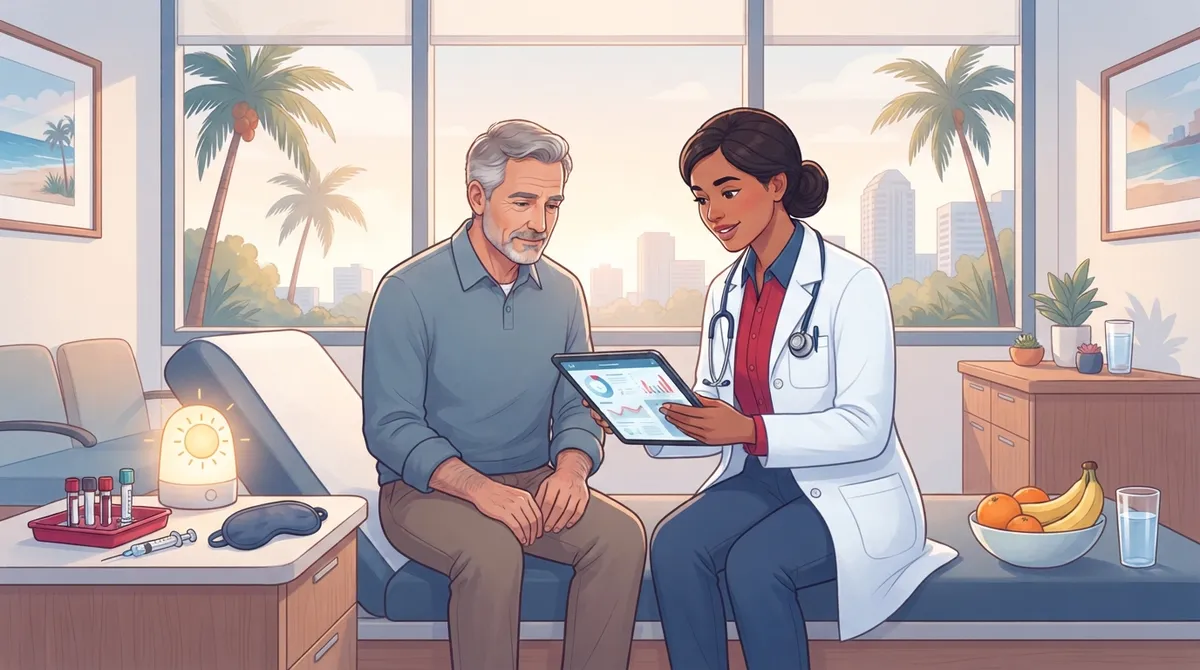
For most men, primary care is the best place to start. A primary care doctor sees the whole picture, including sleep, weight, blood pressure, blood sugar, mood, and medications. Referral to a specialist is appropriate when the findings point to a pituitary issue, a testicular condition, or fertility goals. If you are still choosing a regular clinician, our guide on how to choose the best primary care doctor in Tampa can help.
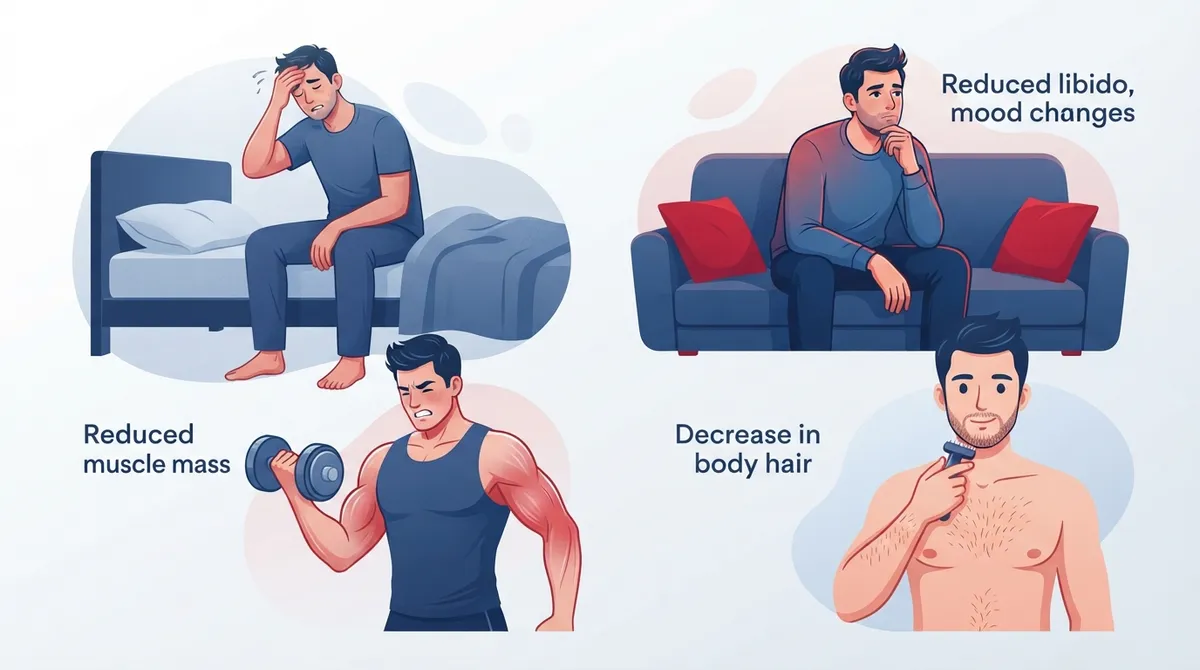
Common Signs of Low Testosterone
Symptoms often develop slowly, so many men do not notice them right away. Possible signs include:
- Reduced sex drive
- Fewer spontaneous erections
- Low energy or ongoing fatigue
- Reduced muscle mass or strength
- Low mood or irritability
- Difficulty with fertility
These symptoms are not specific to low testosterone. Poor sleep, thyroid problems, depression, diabetes, obesity, and certain medications can cause the same complaints. That is why a thorough evaluation matters. A good clinician looks for the true cause instead of assuming hormones are always the answer. If sleep is part of the picture, read how to know when to see a doctor for poor sleep.
How Low Testosterone Is Diagnosed
Diagnosis requires two things together: compatible symptoms or signs, and consistently low blood testosterone. The American Urological Association (AUA) considers a total testosterone below 300 ng/dL a reasonable cutoff. It also calls for two separate early-morning measurements.
Timing matters because testosterone levels vary across the day and can be lowered by food or glucose. The Endocrine Society recommends two separate fasting morning tests. Its guidance notes that about 30% of men whose first result is in the low range have a normal result on repeat testing. Confirming the result protects you from unnecessary treatment.
Step-by-Step: What Your Evaluation Typically Looks Like
- Symptom and history review. Your clinician asks about energy, libido, mood, sleep, alcohol use, weight changes, and other health conditions.
- Medication review. Some medications can affect hormone levels, so a full list is important.
- Physical exam. This checks for signs related to hormone levels and overall health.
- First morning blood test. Total testosterone is measured early in the day, often fasting.
- Repeat morning test. A second sample confirms whether the level is consistently low.
- Follow-up testing. Results guide which additional tests, if any, are needed.
Tests That Help Find the Cause
Confirming a low level is only half the job. The next question is why. Depending on your results, a clinician may order the following.
|
Test |
Why It May Be Ordered |
|---|---|
|
Total testosterone (morning) |
Confirms whether levels are consistently low |
|
Free testosterone |
Used when total testosterone results are borderline or unclear |
|
LH and FSH |
Helps identify whether the cause begins in the testes or the brain |
|
Prolactin |
Checks for a hormone imbalance that can lower testosterone |
|
Related health labs |
Evaluates blood sugar, blood counts, and other treatment-related risks |
In-clinic labs and a coordinated care team make this process faster and less stressful. Patients benefit when testing, review, and follow-up all happen under one roof.
Treatment Options for Low Testosterone
Treatment depends on the cause and on what you want from care. Not every man with a low reading needs a prescription.
Address Reversible Contributors First
Weight gain, poor sleep, heavy alcohol use, uncontrolled diabetes, and certain medications can all lower testosterone. Improving these areas may help restore healthier levels. A medically guided plan for weight, sleep, and metabolic health is often part of a smart first step. Some men also benefit from primary care support for weight loss.
Testosterone Therapy Under Medical Supervision
Prescription testosterone therapy may be considered for appropriately diagnosed patients. It should follow a clear discussion of expected benefits, limits, and risks. It is not a general treatment for aging or vague fatigue. To understand what supervised care involves, see who provides medically supervised TRT in Tampa Bay.
Fertility: An Important Conversation
Testosterone therapy can suppress sperm production. AUA guidance says it should not be prescribed to men who are currently trying to conceive. If you want children now or in the future, tell your clinician before starting treatment. A qualified doctor can discuss reproductive evaluation and alternatives that may protect fertility.
Why Follow-Up Matters
Testosterone therapy is not a one-time prescription. AUA guidance recommends measuring testosterone every 6 to 12 months once treatment is established. Clinicians also review symptoms, side effects, and relevant safety measures at each visit. Regular follow-up keeps treatment safe and effective. If you are weighing a clinic, our article on TRT follow-up mistakes to avoid explains what to watch for.
How to Choose a Low Testosterone Doctor in Tampa
Not every clinic approaches hormone care the same way. Use this checklist when comparing options.
- Confirms before treating. Look for repeat morning testing, not a prescription after one lab.
- Looks for causes. A strong clinic investigates sleep, weight, medications, and other conditions.
- Discusses fertility. Your goals should shape the plan.
- Explains risks plainly. You should hear both benefits and limits.
- Plans ongoing monitoring. Follow-up should be built into care from the start.
- Treats the whole person. Primary care connects hormones to your overall health.
Convenience counts too, especially for busy professionals and parents. Look for flexible scheduling, in-house labs, and virtual visit options so care fits your calendar.
Why Tampa Men Choose InCare
InCare is a personalized primary care and wellness clinic that combines modern technology with medical expertise. With locations in Tampa and Riverview, our team takes a prevention-first approach. Instead of treating a number on a lab report, we look at your energy, metabolism, sleep, weight, and long-term health goals.
That whole-body approach matters for men with symptoms of low testosterone. Our care model connects hormone evaluation with primary care, metabolic assessment, body composition analysis, and weight management. Patients can also use telemedicine when an in-person visit is hard to fit in. Learn more about our TRT clinic approach in Riverview and how we support men at every stage of care.
Patients consistently praise our friendly staff and attentive providers. You can see what our community says by reading InCare reviews on Google: Visit us on Google — InCare. You can also follow our updates on Instagram and Facebook, or watch wellness tips on TikTok.
What to Bring to Your First Visit
A little preparation makes your first appointment far more useful. Consider bringing:
- A list of current medications and supplements
- Notes on symptoms, including when they started
- Past lab results, if you have them
- Questions about fertility, sleep, and weight
- A plan to schedule early-morning blood work
Take the Next Step
Low testosterone is a real, treatable condition, but the path to the right answer starts with careful testing and an honest conversation. A low testosterone doctor in Tampa should confirm your results, look for underlying causes, respect your fertility goals, and monitor your care over time.
If you are ready for a thoughtful evaluation, Book Your InCare Appointment Today or Contact Our Tampa Team with questions. InCare is here to help you feel like yourself again, with care built around you.
FAQs
Q: What kind of doctor treats low testosterone in Tampa?
A: Primary care clinicians, endocrinologists, and urologists can all evaluate and treat low testosterone. Primary care is often the best starting point because it reviews overall health, and referral is appropriate for complex hormone, pituitary, testicular, or fertility concerns.
Q: How is low testosterone diagnosed, and do I need two blood tests?
A: Diagnosis requires compatible symptoms or signs plus consistently low blood testosterone. Both the AUA and the Endocrine Society recommend confirming a low morning result with a repeat test, since about 30% of men with an initial low result test normal the second time.
Q: What does a testosterone level below 300 ng/dL mean?
A: The AUA considers a total testosterone below 300 ng/dL a reasonable cutoff supporting a diagnosis of low testosterone. It still requires symptoms or signs and two separate early-morning measurements before a diagnosis is made.
Q: Can testosterone therapy affect fertility or sperm count?
A: Yes. Exogenous testosterone can suppress sperm production, and AUA guidance advises against prescribing it to men currently trying to conceive. Men who want current or future fertility should discuss reproductive evaluation and alternatives with a qualified clinician first.
Q: How often should testosterone levels be monitored during treatment?
A: AUA guidance recommends measuring testosterone levels every 6 to 12 months once treatment is established. Clinicians also review symptoms, side effects, and relevant safety measures at follow-up visits.