

Key Takeaways
- Injectable GHK-Cu lacks FDA approval and human safety data, while topical GHK-Cu has a reassuring short-term safety record in cosmetic use with mild side effects reported in 4-7% of users.
- GLP-1 medications like semaglutide have undergone rigorous large-scale clinical trials and FDA approval, while GHK-Cu, BPC-157, and TB-500 remain investigational with very limited human data.
- GHK-Cu research focuses on skin healing through topical application, while BPC-157 and TB-500 target muscle and gut tissue repair, making direct comparisons misleading despite their similar marketing.
- Before trying any peptide, verify FDA approval for your specific condition, review human trial data (not just animal studies), confirm product sourcing and purity testing, and compare to standard proven treatments.
- Injectable GHK-Cu carries risks including product contamination, incorrect dosing, immunogenic reactions, and copper exposure concerns, especially for people with liver disease or copper metabolism disorders.
- No large randomized human trial exceeding 100 participants currently exists for GHK-Cu, and a Phase 2 trial studying topical application is still ongoing as of 2026.
Peptide therapy has become one of the most talked-about topics in wellness clinics across Tampa and Riverview. Patients often ask about GHK-Cu, a copper-binding peptide known for its role in skin repair. But how does it stack up against other peptides like BPC-157, TB-500, or GLP-1 medications? This guide breaks down the evidence in plain language so you can make an informed choice with your primary care team.
Understanding the differences between these compounds matters. Some peptides have strong clinical backing. Others remain investigational, with limited human data. Knowing where GHK-Cu fits helps you set realistic expectations and avoid unnecessary risks. At InCare, our providers help patients sort through wellness trends using evidence-based guidance rather than hype.
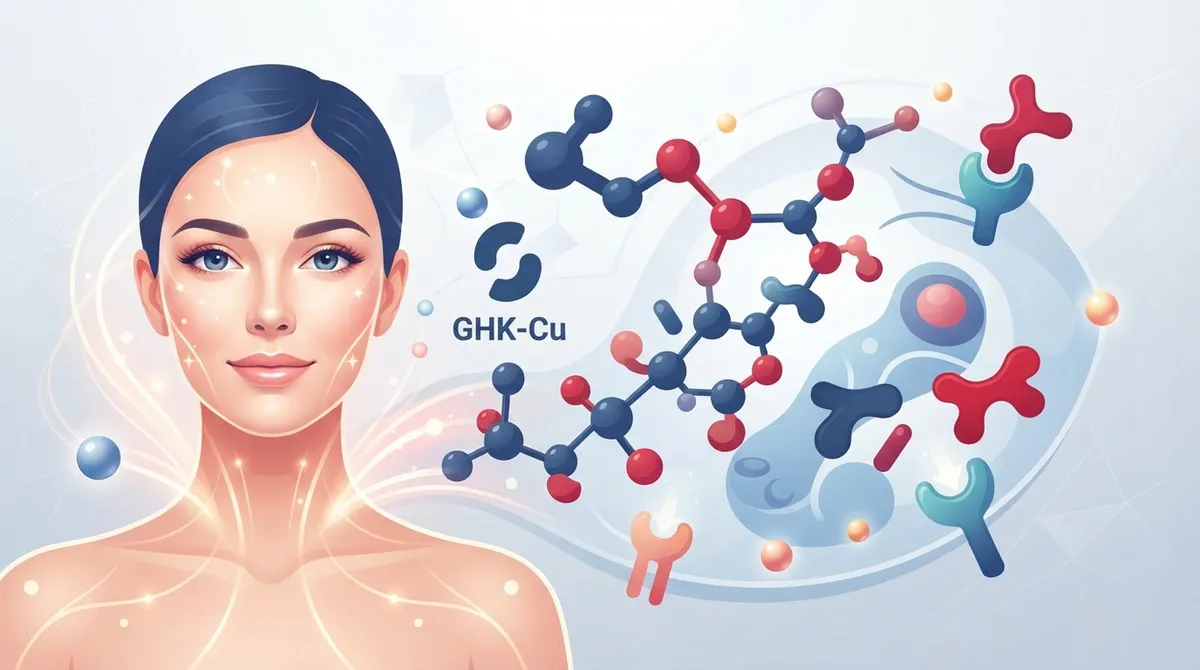
What Is GHK-Cu and Why Does It Matter?
GHK-Cu, short for glycyl-L-histidyl-L-lysine copper, is a small tripeptide that occurs naturally in the body. It binds copper and has been studied for decades, mostly in lab and animal research. Scientists have looked at its role in collagen production, wound healing, and skin repair.
Most of the strongest evidence for GHK-Cu comes from cell and tissue studies, not large human trials. This means the science is promising but still developing. A 2015 review found that GHK-Cu affects biological processes at very low concentrations, around 1 to 10 nanomolar in lab models. This is useful research, but it does not tell us the right human dose or confirm real-world results.
Topical vs Injectable GHK-Cu
The route of use matters a lot when comparing GHK-Cu to other peptides. Topical GHK-Cu, found in some skincare serums, has a fairly reassuring short-term safety record. Injectable or systemic GHK-Cu is a different story. There is much less human safety data for this form.
A 2023 review looked at 12 topical studies with about 512 participants. It reported mild side effects like redness in 4.2% of users and itching in 2.8%. These numbers sound low, but the studies varied widely in design and quality, so results should be viewed carefully.
How Does GHK-Cu Compare to Other Popular Peptides?
Many patients ask us to compare GHK-Cu with other well-known peptides. Here is a straightforward breakdown of where each one stands today.
|
Peptide |
Main Use |
FDA Status |
Human Evidence Level |
|---|---|---|---|
|
GHK-Cu |
Skin repair, wound healing (topical) |
Not FDA-approved as a drug |
Limited, mostly small topical studies |
|
Semaglutide (GLP-1) |
Diabetes, weight loss |
FDA-approved |
Strong, large randomized trials |
|
BPC-157 |
Investigational recovery, gut healing |
Not FDA-approved |
Very limited human data |
|
TB-500 / Thymosin Beta-4 |
Investigational tissue repair |
Not FDA-approved |
Very limited human data |
|
Collagen Peptides (oral) |
Skin hydration, joint support |
Dietary supplement, not a drug |
Moderate, some randomized studies |
This table shows a clear pattern. Peptides like semaglutide have gone through rigorous testing. Others, including GHK-Cu, BPC-157, and TB-500, remain in earlier stages of human research. If you are exploring peptide therapy in Tampa, understanding this distinction protects your health and your wallet.
Key Differences Between GHK-Cu and GLP-1 Medications
Some patients confuse GHK-Cu with weight loss peptides like semaglutide or tirzepatide. These are not the same category of treatment. GLP-1 receptor agonists have undergone massive clinical trials, including the STEP program, which enrolled thousands of participants.
GHK-Cu has no comparable body of evidence for weight loss, metabolic health, or general wellness. It has not been tested in trials of this size or rigor. If your goal is weight management, our weight loss program uses medically supervised, evidence-based options rather than unproven peptides.
Why This Distinction Matters for Your Health
Mixing up these peptide categories can lead to unrealistic expectations. Here are the main reasons this distinction is important:
- GLP-1 medications have regulatory approval and defined dosing guidelines.
- GHK-Cu lacks large-scale human trials proving systemic benefits.
- Injectable GHK-Cu carries unknown risks related to purity and dosing.
- Weight loss claims for GHK-Cu are not supported by strong clinical data.
- Your primary care provider can help you choose treatments backed by real evidence.
Comparing GHK-Cu to BPC-157 and TB-500
BPC-157 and TB-500 are often grouped with GHK-Cu in online wellness discussions. All three are marketed for recovery, healing, and anti-aging. However, none of them carry FDA approval, and human trial data remains sparse for all three compounds.
The main difference is where the research focus lies. GHK-Cu research centers on skin and wound healing, mostly through topical use. BPC-157 and TB-500 research focuses more on muscle, tendon, and gut tissue in animal models. Claims about systemic regeneration, muscle recovery, or anti-aging benefits from any of these three should be treated as investigational, not proven medical treatments.
Steps to Evaluate Any Peptide Before Trying It
Before considering GHK-Cu or any similar peptide, it helps to follow a clear evaluation process. Here is a simple sequence to use:
- Ask what condition or symptom you are trying to treat.
- Check whether the peptide has FDA approval for that specific use.
- Review how much human trial data exists, not just animal studies.
- Confirm the route of administration and its safety record.
- Discuss your full medical history with a licensed provider.
- Ask about product sourcing, purity testing, and sterility standards.
- Compare the peptide to standard, proven treatments for your condition.
This process protects you from products that promise big results without solid science behind them. It also helps you avoid wasting money on treatments that may not work as advertised.
GHK-Cu vs Collagen Peptides: What's the Difference?
Collagen peptides are a different category entirely. These are oral protein fragments, not signaling peptides like GHK-Cu. People take them as supplements for skin hydration, elasticity, and joint comfort.
Some randomized studies support modest benefits from collagen peptides. Results vary depending on the product, dose, and study design. Collagen supplements should not be confused with injectable peptide drugs like GHK-Cu, since they work through different mechanisms and carry different safety profiles.
Quick Comparison Table: Route and Evidence Quality
|
Factor |
Topical GHK-Cu |
Injectable GHK-Cu |
Oral Collagen Peptides |
|---|---|---|---|
|
Safety Data |
Reasonably reassuring, short-term |
Very limited |
Generally well-tolerated |
|
Evidence Type |
Small human studies |
Mostly lab and animal |
Some randomized trials |
|
Regulatory Status |
Cosmetic ingredient |
Not FDA-approved |
Dietary supplement |
What Are the Risks of Injectable or Compounded Peptides?
Injectable GHK-Cu and similar compounded peptides carry more uncertainty than topical products. Concerns include product contamination, incorrect concentration, and unknown effects with long-term use. There is also a risk of immunogenicity, meaning your body could react negatively to certain formulations.
Copper exposure is another consideration, especially for people with liver conditions or copper metabolism disorders. Your primary care provider should always review your health history, allergies, and current medications before recommending any peptide therapy.
Who Should Avoid Injectable GHK-Cu?
Certain groups face higher risks with unproven injectable peptides. Consider these factors carefully:
- Pregnant or breastfeeding individuals should avoid untested peptide products.
- People with liver disease or copper metabolism disorders need extra caution.
- Anyone with known allergies to peptide compounds should be screened first.
- Patients managing chronic conditions should not replace proven care with unproven peptides.
- Those seeking weight loss results should look at FDA-approved options instead.
Where Does Research Stand in 2026?
As of 2026, there is no large, independently funded randomized trial of GHK-Cu with more than 100 participants focused on skin regeneration. A Phase 2 trial (ClinicalTrials.gov NCT07437586) is currently studying topical GHK-Cu gel for acute skin wounds. This shows ongoing interest, but it does not confirm effectiveness or approval status.
Published evidence remains dominated by topical, small-scale human studies. No solid clinical trial data currently supports injectable GHK-Cu for systemic anti-aging, athletic recovery, or general wellness use. This gap in evidence is a key reason primary care providers recommend caution with unregulated peptide products.
Questions to Ask Your Provider About Peptide Therapy
Before starting any peptide protocol, bring these questions to your appointment:
- What specific evidence supports this peptide for my condition?
- Is this product sourced from a regulated pharmacy or compounding facility?
- What side effects have been reported in human studies?
- How does this compare to standard treatments already proven to work?
- Will this interact with my current medications or health conditions?
Our team at InCare providers welcomes these questions during every wellness consultation. We believe informed patients make better health decisions.
How InCare Approaches Peptide and Wellness Consultations
At InCare, we combine advanced diagnostics with honest, evidence-based conversations about peptide therapy. Our DNA gene testing and body composition analysis services help build a complete picture of your health before recommending any treatment path.
We also offer IV hydration and vitamin drips for patients seeking evidence-supported wellness boosts. Unlike unregulated online peptide sellers, our clinical team reviews your full medical history and current medications before suggesting any therapy. This approach keeps your safety at the center of every decision.
Patients in Tampa and Riverview trust our locations for straightforward, science-backed guidance. You can see what our community says by visiting InCare on Google, where our clinic maintains a strong reputation for honest care and attentive staff.
Why Choose a Licensed Clinic Over Online Peptide Sellers
Buying peptides online without medical supervision carries real risks. Consider these advantages of working with a licensed clinic instead:
- Providers can verify product quality and sourcing standards.
- Your full health history gets reviewed before any treatment starts.
- You receive guidance based on current research, not marketing claims.
- Follow-up care helps monitor for side effects or complications.
- Licensed clinics can direct you toward FDA-approved alternatives when appropriate.
You can also follow our updates and patient education content on Facebook, Instagram, and TikTok for more wellness tips grounded in real science.
Making an Informed Decision About Peptide Therapy
Comparing GHK-Cu to other peptides comes down to one key question: how strong is the human evidence? Topical GHK-Cu has a reasonable safety record for cosmetic use. Injectable forms, along with BPC-157 and TB-500, remain investigational with limited human data. GLP-1 medications like semaglutide stand apart with strong regulatory approval and large clinical trials.
Your best path forward is a conversation with a trusted primary care provider who understands both the promise and the limits of peptide science. Whether you are curious about skin health, weight management, or general wellness optimization, evidence should guide your choices, not trends.
Ready to get clear, science-based answers about peptide therapy and other wellness options? Reach out to our care team today or book your appointment now to start your personalized wellness journey with InCare in Tampa or Riverview.
FAQs
Q: What is GHK-Cu peptide and what is it used for?
A: GHK-Cu is a copper-binding tripeptide studied mainly for skin repair, collagen production, and wound healing. Most evidence comes from lab and animal studies, with limited human data concentrated on topical cosmetic use rather than injectable or systemic applications.
Q: Is GHK-Cu better than collagen peptides for skin and anti-aging?
A: GHK-Cu and collagen peptides work differently and are not directly interchangeable. Collagen peptides are oral supplements with some randomized study support for hydration and elasticity, while GHK-Cu is a signaling peptide with more limited but distinct topical research.
Q: How does GHK-Cu compare with BPC-157, TB-500, or other recovery peptides?
A: None of these peptides have FDA approval, and all have limited human trial data. GHK-Cu research focuses mainly on skin healing, while BPC-157 and TB-500 research centers on muscle, tendon, and gut tissue, mostly in animal models.
Q: Is injectable GHK-Cu FDA approved or safe?
A: Injectable GHK-Cu is not FDA-approved and has limited human safety, dosing, and sterility data. Topical GHK-Cu has a more reassuring short-term safety record, but systemic or injectable use carries unresolved risks including contamination and unknown long-term effects.
Q: Are GLP-1 medications more evidence-based than wellness peptides like GHK-Cu?
A: Yes, GLP-1 medications such as semaglutide have undergone large randomized clinical trials involving thousands of participants and hold FDA approval for diabetes and obesity. GHK-Cu and similar wellness peptides lack this scale of evidence and regulatory backing.