
Key Takeaways
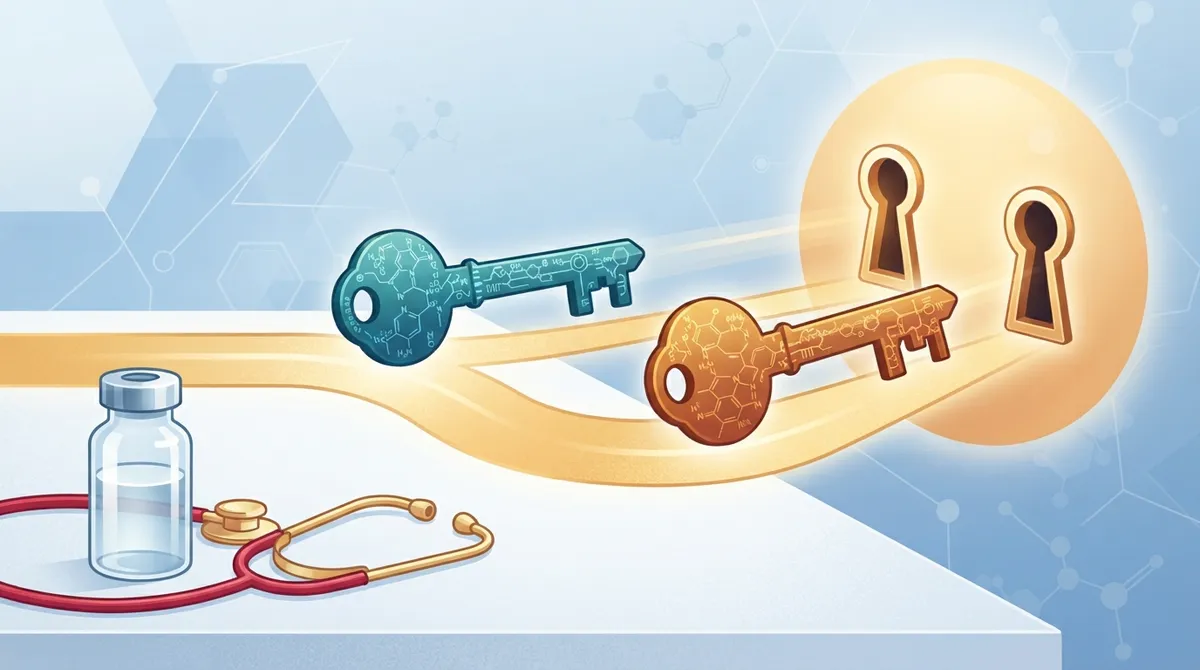
- CJC-1295 is a GHRH analog that acts on the GHRH receptor, while ipamorelin is a ghrelin-receptor agonist; both reach the same growth hormone pathway through different receptors.
- Check whether CJC-1295 contains DAC: the DAC version binds albumin and lasts much longer than the non-DAC form, so evidence for one cannot be assumed for the other.
- Neither peptide is FDA-approved for anti-aging, weight loss, muscle gain, or general wellness, and the FDA has raised quality and safety concerns about compounded versions.
- Combining the two is based on a mechanistic rationale, not clinical proof; no robust outcome trials show the combination is safe or effective for wellness goals, so discuss it with a licensed clinician first.
Peptide therapy has moved from niche forums into mainstream wellness conversations. Many patients now ask their doctors one practical question: how is CJC-1295 different from ipamorelin? Both are often marketed for energy, recovery, body composition, and healthy aging. Both also affect the body's growth hormone (GH) pathway. Yet they work in very different ways.
The differences matter for your safety. Neither peptide is FDA-approved for anti-aging, weight loss, muscle gain, or general wellness. The evidence for real-world benefit is thin, and the FDA has raised concerns about compounded versions.
This guide explains how the two peptides differ in mechanism, duration, evidence, and risk. It also covers what to ask your clinician before you consider any peptide. If you live in the Tampa Bay area, our team at InCare can help you sort fact from marketing.
Quick Answer: The Core Difference
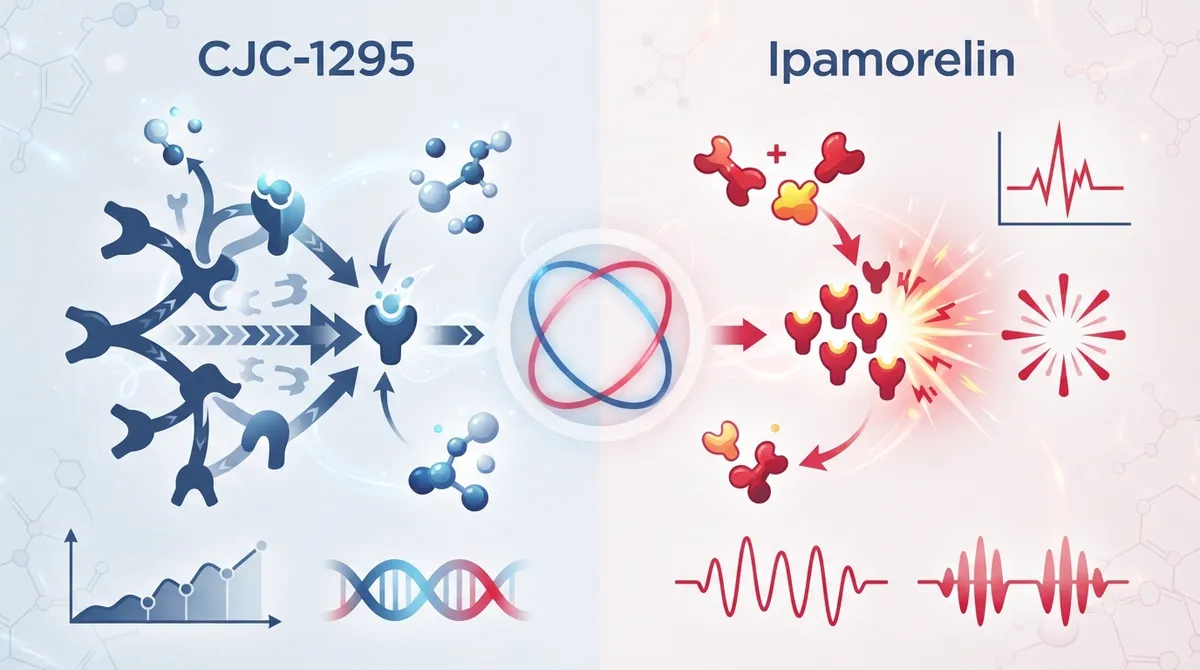
CJC-1295 is a growth hormone-releasing hormone (GHRH) analog. It mimics the signal your brain sends to the pituitary gland to release GH. Ipamorelin is a ghrelin-receptor agonist, also called a growth hormone secretagogue. It triggers GH release through a different receptor on the pituitary.
In short, how CJC-1295 is different from ipamorelin comes down to the target. One copies GHRH. The other copies a ghrelin-like signal. They are two separate doors to the same hormone pathway.
How Each Peptide Works
CJC-1295: The GHRH Analog
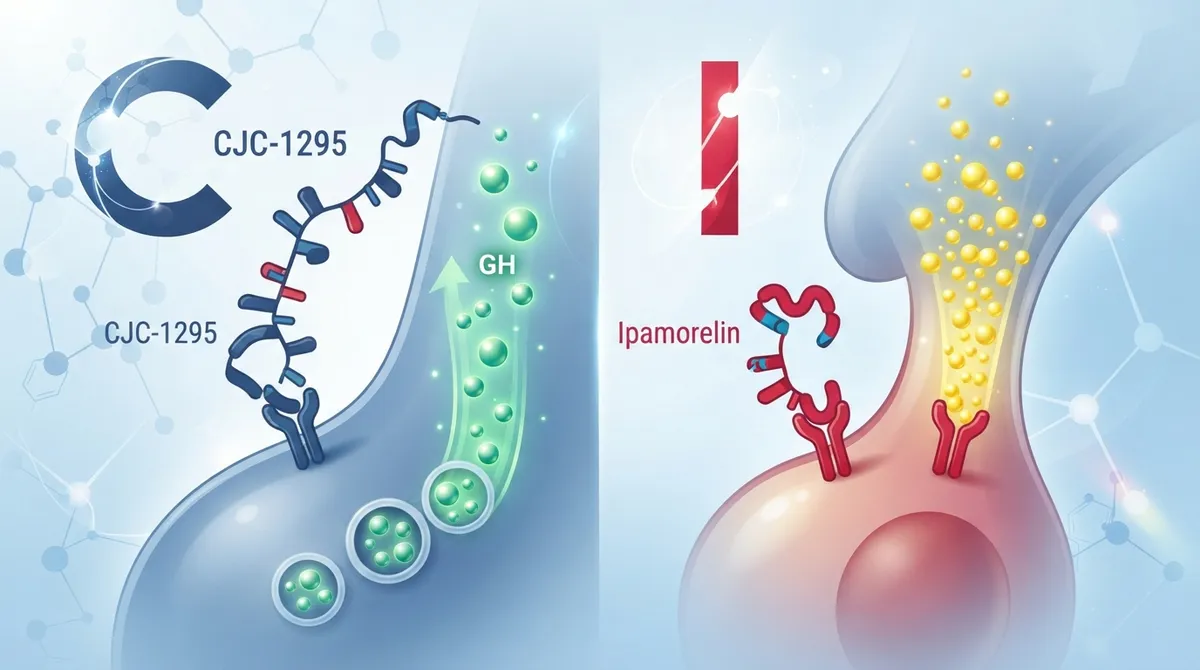
Your hypothalamus normally releases GHRH. GHRH tells the pituitary to make and release GH. CJC-1295 is a lab-made version of this signal, built to last longer than natural GHRH.
GH then prompts the liver to produce insulin-like growth factor 1 (IGF-1). Doctors often track IGF-1 as a marker of GH activity.
Ipamorelin: The Ghrelin-Receptor Agonist
Ipamorelin binds to the ghrelin receptor, formally the growth hormone secretagogue receptor. Ghrelin is often called the "hunger hormone," but it also helps regulate GH release. Ipamorelin uses this route to prompt the pituitary to release GH in a short pulse.
Researchers have studied ipamorelin for GH release and for gastrointestinal motility. That second area has not gone well, as covered below.
CJC-1295 vs. Ipamorelin at a Glance
|
Feature |
CJC-1295 |
Ipamorelin |
|---|---|---|
|
Peptide class |
GHRH analog |
Ghrelin-receptor agonist (GH secretagogue) |
|
Target |
GHRH receptor on the pituitary |
Ghrelin receptor on the pituitary |
|
Duration |
Varies: longer with DAC, shorter without DAC |
Short-acting pulse |
|
Human data |
Small study in healthy adults showing GH and IGF-1 changes |
Studied for GH release and GI motility; limited wellness data |
|
FDA approval for wellness |
No |
No |
|
Key FDA concerns |
Increased heart rate, systemic vasodilatory reaction |
Possible immunogenicity, limited route-specific safety data |
The DAC Distinction Many Buyers Miss
CJC-1295 is sold in two main forms. The name alone does not tell you which one you are getting.
- CJC-1295 with DAC: DAC stands for drug affinity complex. It binds to albumin in the blood and extends how long the peptide stays active.
- CJC-1295 without DAC: This version is shorter acting and clears faster.
This matters because evidence for one form cannot be assumed to apply to the other. If you want a deeper look, read our guide on what CJC-1295 without DAC is and whether it is safe. You can also compare formulations in our article on key differences between CJC-1295 with DAC and without DAC.
What the Evidence Actually Shows
CJC-1295 Research
The best-known human study of CJC-1295 involved roughly 50 healthy adults (Teichman et al., 2006). It reported dose-dependent GH increases of about 2- to 10-fold. IGF-1 rose about 1.5- to 3-fold. These changes lasted for days.
That is a hormone-level result. It does not prove better body composition, longevity, strength, or any clinical outcome. For a closer look, see what CJC-1295 human studies actually show.
Ipamorelin Research
Ipamorelin has been studied for GH release and gut motility. The evidence does not establish it as an effective treatment for growth hormone deficiency or for wellness goals. A clinical program testing intravenous ipamorelin for postoperative ileus was discontinued for lack of efficacy.
The FDA has also stated it has not found enough evidence to support ipamorelin for diagnosing or treating GH deficiency in adults or children. For more context, see our breakdown of what ipamorelin research actually shows so far.
Why Are They Often Combined?
You will often see both peptides sold together. The pitch is simple: CJC-1295 pushes the GHRH pathway, while ipamorelin pushes the ghrelin pathway. Together, the theory goes, they stimulate GH through complementary routes.
That is a mechanistic idea, not proof. No robust clinical-outcome trials show that the combination is safe or effective for wellness goals. Plausible biology does not equal proven benefit.
If you are curious about the theory behind pairing them, read how CJC-1295 and ipamorelin work together: a 2026 evidence review. For a side-by-side look at choosing between them, see CJC-1295 vs ipamorelin: which peptide fits your goals. We also cover common errors in 9 ipamorelin and CJC-1295 stack mistakes that risk health.
Regulatory Status and Safety Concerns
No FDA Approval for Wellness Use
Neither peptide is FDA-approved as a drug for anti-aging, weight loss, muscle gain, or general wellness. Our article on ipamorelin FDA approval status in 2026 explains the current picture in more detail.
Safety Signals From the FDA
FDA materials cite concerns about compounded peptide products. These include impurities, difficulty characterizing the product, and possible immunogenicity. That means your body might react to the peptide or to contaminants.
- CJC-1295: FDA materials note serious adverse events, including increased heart rate and a systemic vasodilatory reaction. No reliable incidence rate is available.
- Ipamorelin: FDA has flagged potential immunogenicity and limited route-specific safety data. In an intravenous study, serious events, including deaths, were reported. Causality was unclear, and those findings should not be treated as direct evidence about subcutaneous use.
Before trying either product, review 15 CJC-1295 contraindications you must know in 2026. You can also learn how to check product claims in 6 ways to verify CJC-1295 quality before you try it.
What This Means for Different Patients
Busy Professionals and Wellness Seekers
If you want to optimize energy, sleep, or body composition, start with data. Labs, metabolic testing, and body composition analysis can show where you stand. These tools guide decisions better than a peptide label.
Active Adults and Athletes
Many people ask about peptides for recovery. The honest answer is that evidence is limited. See our review of peptides for athletes: hype versus medical reality before you spend money.
Younger Adults and Families
Online marketing makes peptides look routine. They are not. If you are under 25 or managing a family's health, prioritize sleep, nutrition, preventive screenings, and a trusted primary care relationship first.
Questions to Ask Before Considering Peptide Therapy
- What specific symptom or goal am I trying to address?
- Have I had baseline labs and a full history reviewed by a licensed clinician?
- Is the product FDA-approved, compounded, or sold as a research chemical?
- What is the exact formulation, including whether it has DAC?
- Who tests the product for purity and contamination?
- What are the risks, and how will we monitor them?
- What proven alternatives exist for my goal?
For a longer checklist, use our guide on 15 questions to ask a peptide therapy clinic in Tampa. You can also read how to evaluate peptide therapy for wellness safely.
A Safer Path to Your Wellness Goals
The most useful steps are often the least flashy. A strong primary care foundation can address sleep, hormones, metabolism, and chronic disease risk. Many people find that proven options deliver more than an unproven peptide.
- Comprehensive labs and screenings to find real drivers of fatigue or weight gain.
- Metabolic breath analysis and body composition scans to measure progress objectively.
- Medically supervised weight loss using approved options. Compare choices in our guide to why medical weight loss clinics work better.
- Sleep evaluation when rest is poor. Learn when to see a doctor for poor sleep.
You can also explore which named peptides are available in Tampa clinics to understand what is and is not offered under medical oversight.
The Bottom Line
CJC-1295 and ipamorelin both nudge the growth hormone pathway, but they use different receptors and have different timing profiles. CJC-1295 mimics GHRH. Ipamorelin mimics a ghrelin signal. Neither has strong proof of wellness benefit, and both carry safety questions, especially in compounded or unapproved forms.
The smartest move is a conversation with a licensed clinician who will look at your whole health picture. At InCare, our Tampa and Riverview teams combine primary care with advanced diagnostics so you can make informed choices. You can also read InCare patient reviews on Google to see how others describe their care, and follow our updates on Instagram, Facebook, and TikTok.
Ready to talk through your goals? Book your visit with InCare today, or contact our team with questions. Our clinicians will help you separate evidence from hype and build a plan that fits your health.
FAQs
Q: What is the main difference between CJC-1295 and ipamorelin?
A: CJC-1295 is a growth hormone-releasing hormone (GHRH) analog that acts on the GHRH receptor. Ipamorelin is a ghrelin-receptor agonist that stimulates growth hormone release through a different receptor. They reach the same hormone pathway by two separate routes.
Q: Is CJC-1295 or ipamorelin FDA-approved?
A: Neither peptide is FDA-approved as a drug for anti-aging, weight loss, muscle gain, or general wellness. The FDA has also raised safety and quality concerns about compounded forms, including impurities and possible immunogenicity.
Q: What is the difference between CJC-1295 with DAC and without DAC?
A: DAC stands for drug affinity complex, which binds to albumin and prolongs how long the peptide stays active. The version without DAC is shorter acting. Evidence for one form should not be assumed to apply to the other.
Q: Does combining CJC-1295 and ipamorelin work better than using either alone?
A: The combination is marketed on the idea that the two peptides stimulate growth hormone through complementary pathways. That is a mechanistic rationale, not clinical proof. No robust outcome trials establish that the combination is safe or effective for wellness goals.
Q: What should I ask my primary care clinician before considering peptide therapy?
A: Ask what goal you are addressing, whether baseline labs are needed, and whether the product is FDA-approved or compounded. Also ask about purity testing, known risks, monitoring, and proven alternatives for your symptoms.