
Key Takeaways
- GHK-Cu shows promising but limited evidence from small 8-12 week studies reporting 20-35% wrinkle improvements, but retinoids remain the gold standard with decades of large clinical trials backing their effectiveness.
- Daily broad-spectrum sunscreen is the most researched and effective anti-aging tool, outperforming almost every cosmetic ingredient including GHK-Cu, and should be the foundation of any wrinkle-prevention routine.
- Injectable GHK-Cu lacks safety data and should be avoided due to formulation quality concerns, impurities, and inconsistent dosing, while topical use carries a better-established safety profile.
- Use GHK-Cu as a complementary addition to proven strategies rather than a replacement, introducing it gradually alongside sunscreen and retinoids, and reassess results every 8-12 weeks for realistic expectations.
Wrinkle creams promise a lot, but few ingredients have generated as much buzz as GHK-Cu. If you have searched for ways to soften fine lines without visiting a dermatologist, you have likely come across this copper peptide. But how does it actually compare to the gold-standard treatment, topical retinoids? This question matters for anyone building a smart, evidence-based skincare routine as part of a broader wellness plan. At InCare, our providers in Tampa and Riverview believe informed patients make better choices about their skin and overall health. This article breaks down what GHK-Cu wrinkles research actually shows, how it stacks up against retinoids, and where it fits into a realistic anti-aging strategy.
Understanding the difference between marketing claims and clinical evidence protects your wallet and your skin. Let's look at what the research really says.
What Is GHK-Cu and Why Is It Linked to Wrinkles?
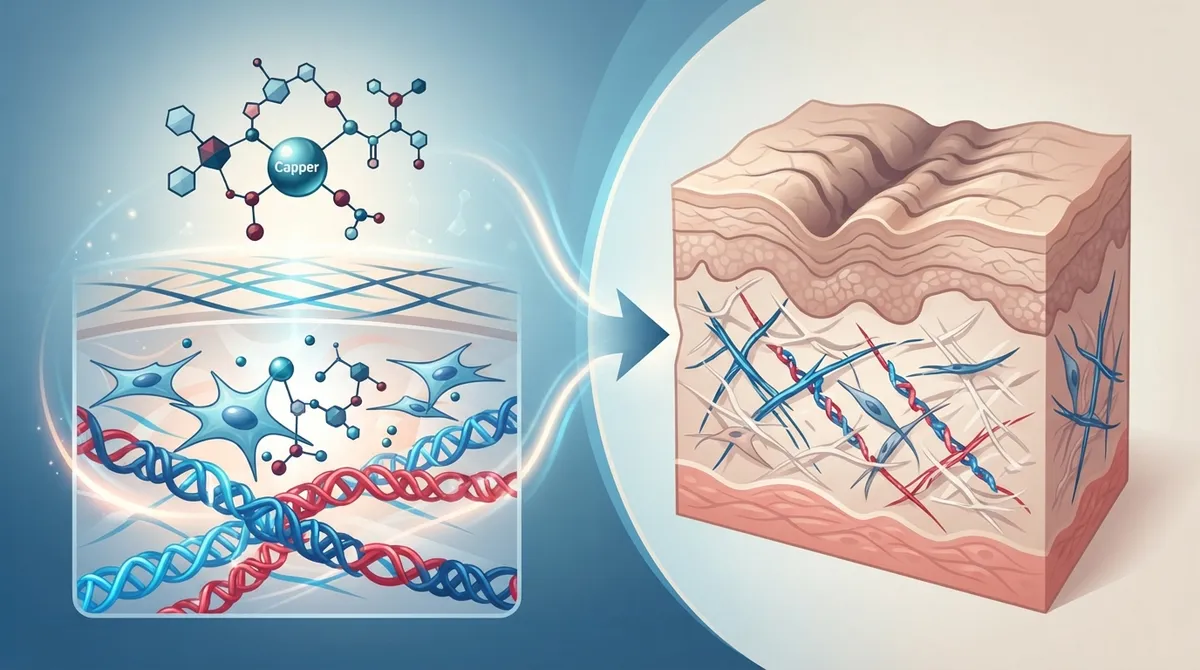
GHK-Cu, also called copper tripeptide-1, is a small copper-binding peptide found naturally in the body. Skincare brands add it to serums and creams aimed at photoaged, sun-damaged skin. Researchers believe it supports the skin's extracellular matrix, the structural network that keeps skin firm and elastic.
Proposed mechanisms include:
- Supporting collagen and elastin production in the dermis
- Helping remodel damaged extracellular matrix tissue
- Promoting general skin repair processes
- Potentially reducing activity of enzymes that break down collagen
These mechanisms sound impressive, but biological plausibility is not the same as proven results. A peptide can have interesting lab effects without delivering meaningful wrinkle reduction in a real skincare product. This distinction matters when you are deciding where to spend your time and money.
GHK-Cu vs. Retinoids: The Head-to-Head Comparison
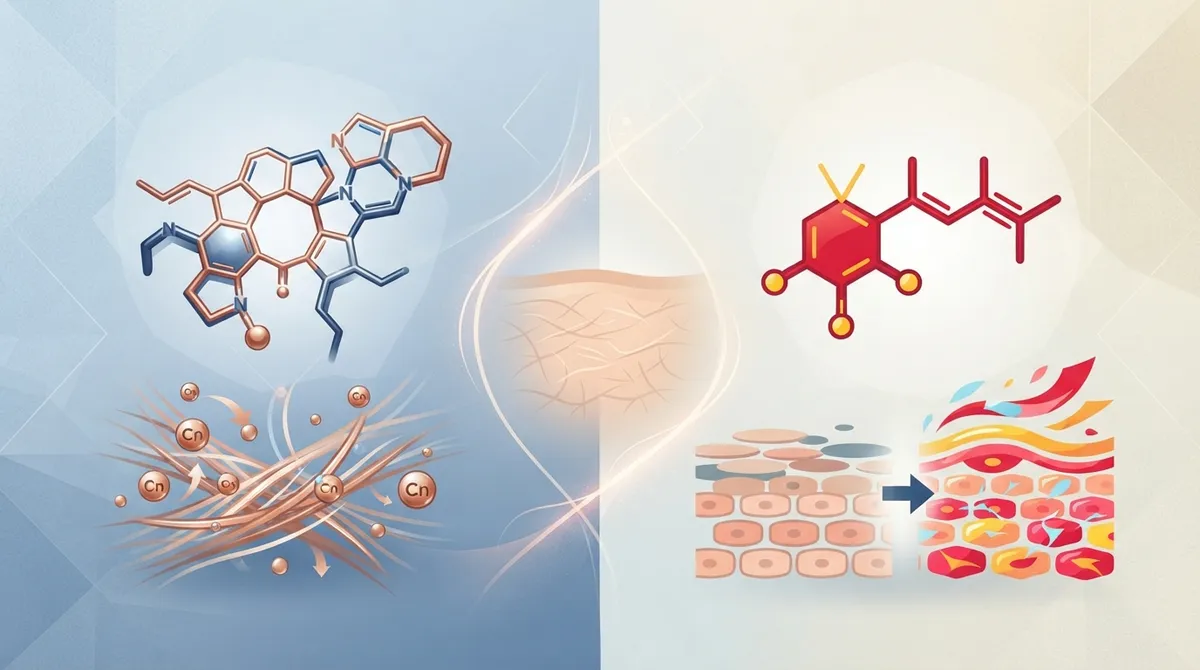
Retinoids, including prescription tretinoin and over-the-counter retinol, have decades of clinical research behind them. GHK-Cu has promising but much smaller studies. Here is how the two compare across key factors.
|
Factor |
GHK-Cu |
Topical Retinoids |
|---|---|---|
|
Evidence Base |
Small studies, 8-12 weeks, limited sample sizes |
Decades of large clinical trials |
|
FDA Status |
Not FDA-approved as a drug treatment |
Prescription retinoids are FDA-approved |
|
Typical Onset |
Reported improvements around 8-12 weeks |
Visible results often in 8-16 weeks |
|
Common Side Effects |
Redness, stinging, irritation, contact dermatitis |
Dryness, peeling, sun sensitivity |
|
Best Use Case |
Cosmetic add-on for mild photoaging |
Established option for wrinkles and acne |
Neither option is inherently superior for every person. Retinoids have stronger data, but GHK-Cu may appeal to those with retinoid sensitivity. Many people who explore both options wonder how to combine them safely, a topic we cover further below.
What the Research Actually Shows About GHK-Cu Wrinkles Results
Several small human studies have examined topical GHK-Cu creams. A frequently cited 12-week study followed 71 women with mild to advanced photoaging. Researchers reported improved skin density, reduced laxity, and fewer fine lines with a GHK-Cu formulation. Another 12-week study of about 41 women tested a GHK-Cu eye cream and found better results for lines and skin density compared to other products tested.
A third study followed 67 women aged roughly 50 to 59. It reported improvements in firmness, clarity, fine lines, and even mottled pigmentation. Some research summaries report wrinkle improvements in the range of 20 to 35 percent in controlled settings. These numbers sound exciting, but they come from specific formulations tested under controlled conditions.
Consider these important caveats before drawing conclusions:
- Study sizes were small, often under 75 participants
- Results are tied to specific product formulations, not GHK-Cu as a general ingredient
- Study duration was short, typically 8 to 12 weeks
- Long-term safety data for continuous use remains limited
- Comparison groups and methods varied across studies, making direct comparisons difficult
A 2024 review published in BioImpacts noted a lack of robust clinical trials for some GHK-derived anti-wrinkle ingredients. This highlights the need to separate hype from proven science, especially when marketing claims outpace the underlying data.
How Does GHK-Cu Compare to Other Anti-Aging Approaches?
Sunscreen remains the single most researched and effective tool for preventing photoaging. Daily broad-spectrum sun protection outperforms almost every cosmetic ingredient on the market, including GHK-Cu. Retinoids come in second, backed by extensive clinical trials spanning decades.
GHK-Cu sits further down the evidence hierarchy, alongside other emerging peptides. This does not mean it lacks value. It simply means patients should treat it as a complementary option rather than a replacement for proven strategies. If you are exploring anti-aging peptides as part of a broader wellness plan, our peptide therapy program in Tampa can help you understand which options make sense for your goals.
Topical vs. Injectable GHK-Cu: A Critical Distinction
Most of the encouraging GHK-Cu wrinkles research applies specifically to topical creams and serums. Injectable or systemic use is a different story entirely. Human safety and efficacy data for injectable GHK-Cu remain limited and inconsistent.
Concerns with injectable or compounded GHK-Cu products include:
- Formulation quality varies widely between compounding sources
- Peptide aggregation can affect product stability and safety
- Impurities in poorly regulated products pose health risks
- Immunogenicity concerns have been raised in some formulations
- Lack of standardized dosing guidelines
Because of these gaps, injectable GHK-Cu should be approached with significant caution. Topical cosmetic use carries a much better-established safety profile, though it is still not risk-free.
Who Should Consider Topical GHK-Cu Products?
GHK-Cu may appeal to certain groups more than others. Consider these scenarios:
- Adults with mild to moderate photoaging looking for a gentle addition to their routine
- People with retinoid sensitivity who cannot tolerate peeling or dryness
- Individuals already using sunscreen and other proven products who want an extra layer of support
- Patients interested in combining peptides with other wellness services, such as those exploring IV hydration and vitamin drips for overall skin and energy support
GHK-Cu is not a good fit for everyone. People with copper-metabolism disorders, such as Wilson's disease, should avoid copper-based peptides entirely and discuss any skincare changes with their physician first.
Safety Considerations and Who Should Avoid It
Topical GHK-Cu is generally considered low-risk for most healthy adults. Still, potential side effects can occur, including:
- Redness or stinging after application
- Itching or mild irritation
- Contact dermatitis in sensitive individuals
- Reactions related to other ingredients in the formulation, not just the peptide itself
Anyone with sensitive or reactive skin should patch-test a new product on the inner arm before applying it to the face. Discontinue use if irritation develops and does not resolve within a day or two. Patients managing chronic skin conditions or complex medical histories benefit from discussing new products during a wellness visit rather than guessing on their own.
How to Build a Realistic Anti-Aging Routine
Rather than choosing one single ingredient, most dermatology-minded providers recommend a layered approach. Here is a practical sequence to consider:
- Start with daily broad-spectrum sunscreen, applied every morning regardless of weather
- Introduce a retinoid gradually, starting two to three nights per week
- Add a topical GHK-Cu serum as a complementary step, ideally at a different time of day than retinoid use
- Monitor your skin for irritation and adjust frequency as needed
- Reassess results every 8 to 12 weeks, since this mirrors the timeline used in most GHK-Cu studies
- Discuss persistent concerns with a primary care or wellness provider
This structured approach reduces the risk of over-exfoliating or combining ingredients incorrectly. It also sets realistic expectations, since neither GHK-Cu nor retinoids produce overnight results.
Common Concentrations Used in Wrinkle Products
Most commercial GHK-Cu products use low percentages, often between 0.001 and 0.1 percent copper tripeptide-1, though formulations vary by brand. Higher concentrations are not automatically better and may increase the risk of irritation. Reading product labels carefully and starting with lower concentrations is a sensible strategy for first-time users.
Why Whole-Body Wellness Matters More Than Any Single Ingredient
Skin health rarely exists in isolation. Hydration, nutrition, sleep, hormone balance, and metabolic health all influence how your skin ages. A serum alone cannot compensate for chronic dehydration or poor sleep habits. This is why many patients pair skincare routines with broader wellness services.
At InCare, our approach includes body composition analysis and DNA gene testing to help patients understand how their unique biology affects aging, metabolism, and skin resilience. These tools give a clearer picture than skincare alone ever could. Our team of providers across Tampa and Riverview can help you connect the dots between internal health and external appearance.
Community engagement also matters to us. Follow our updates and patient education content on Facebook, Instagram, and TikTok for practical wellness tips beyond the exam room.
Making an Informed Decision About GHK-Cu Wrinkles Treatment
GHK-Cu is a reasonable, low-risk addition to a skincare routine for many adults dealing with early signs of photoaging. It is not an FDA-approved anti-aging drug, and it should not replace sunscreen or retinoids for people seeking the strongest evidence-backed results. Treat it as a complementary option, not a miracle fix.
If you want to learn how skincare choices fit into your broader health picture, our providers, including Dr. Pramjeet Ahluwalia and Dr. Teshy John, can guide you through options tailored to your skin type, medical history, and wellness goals. Patients across Tampa and Riverview trust InCare for straightforward, evidence-based guidance rather than exaggerated marketing claims. You can also visit us on Google — InCare to see what current patients say about their experience with our team.
Ready to talk with a provider about safe, effective anti-aging strategies? Book your appointment today and get a personalized plan built around real evidence, not hype.
FAQs
Q: Does GHK-Cu really reduce wrinkles?
A: Small studies lasting 8-12 weeks report improvements in fine lines, skin density, and firmness with topical GHK-Cu creams. However, these studies are small and product-specific, so results should be viewed as promising rather than guaranteed.
Q: Is GHK-Cu better than retinol for wrinkles?
A: Retinoids have decades of large clinical trials supporting their effectiveness, while GHK-Cu evidence comes from smaller, shorter studies. Retinoids are generally considered the stronger evidence-based option, though GHK-Cu may suit those who cannot tolerate retinoid irritation.
Q: Can GHK-Cu be used with vitamin C, retinol, or other skincare products?
A: Many people combine GHK-Cu with other skincare ingredients, but layering too many actives can increase irritation risk. It is wise to introduce one new product at a time and space out retinoid and peptide application if sensitivity develops.
Q: Are GHK-Cu injections safe or FDA approved for anti-aging?
A: No. GHK-Cu is not FDA-approved as an anti-aging drug, and injectable or compounded versions lack strong human safety and efficacy data. Concerns include formulation quality, impurities, and inconsistent dosing standards.
Q: Should someone with a copper-metabolism disorder use GHK-Cu?
A: No. Individuals with conditions like Wilson's disease should avoid copper-based peptides entirely. Anyone with a known metabolic condition should consult a physician before adding any copper-containing product to their routine.