
Key Takeaways
- CJC-1295 with DAC has a 6-8 day half-life requiring weekly dosing, while sermorelin's 10-20 minute half-life requires daily injections; choose based on your preferred injection frequency and lifestyle.
- CJC-1295 with DAC produces stronger IGF-1 elevation (1.5-3 fold increases lasting 28 days) compared to sermorelin's gentler pulsatile approach, but higher IGF-1 doesn't guarantee better fat loss or sleep outcomes.
- Sermorelin has decades of clinical history with FDA pediatric approval, making it the safer starting option for peptide therapy newcomers, while CJC-1295 has limited regulatory backing outside wellness settings.
- Both peptides require medical supervision, baseline bloodwork, and monitoring; combining them increases complexity and cost without proven added benefit unless directly supervised by an experienced provider.
Growth hormone peptides have become a popular topic in wellness clinics across Tampa and Riverview. Many adults want more energy, better sleep, and improved body composition as they age. Two names keep coming up in these conversations: CJC-1295 and sermorelin. Both belong to a family of peptides called GHRH analogs, which stand for growth hormone–releasing hormone analogs. They work by signaling your pituitary gland to release more growth hormone naturally. But these two peptides are not the same, and picking the wrong one for your goals can waste time and money. This guide breaks down the real differences between CJC-1295 and sermorelin in simple terms. We will cover how they work, how long they last, and what current research actually shows. Whether you are exploring peptide therapy for the first time or comparing options with your provider, understanding these facts matters. Let's look at what separates these two peptides and which one might fit your wellness goals.
What Are CJC-1295 and Sermorelin?
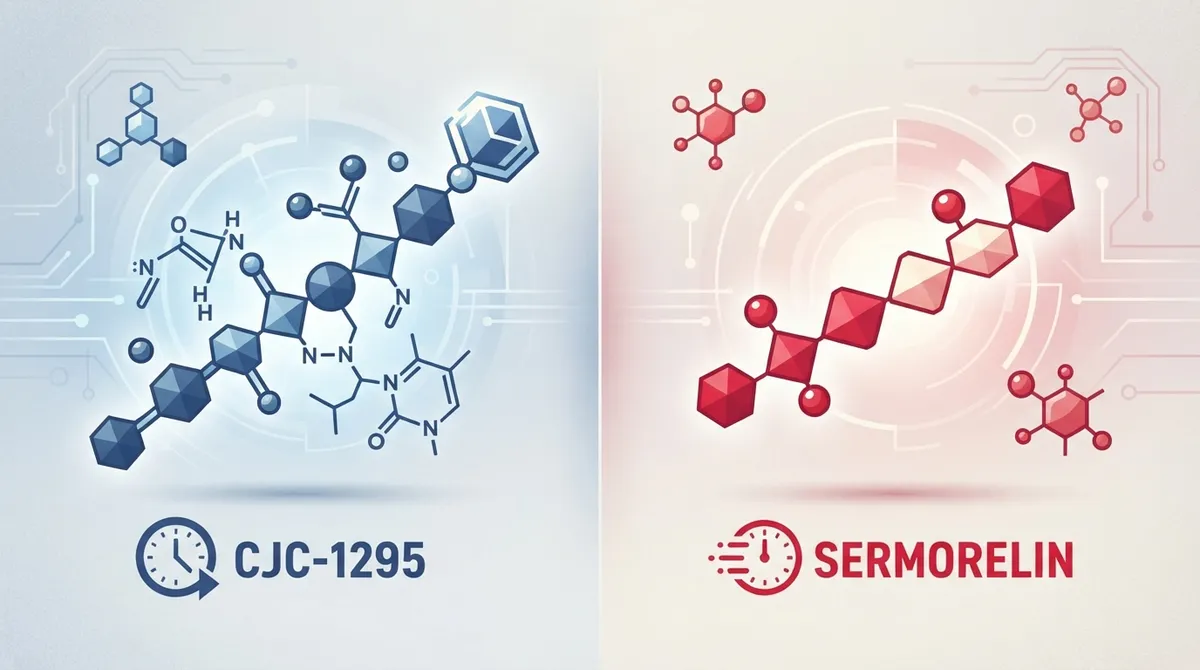
Both peptides fall under the same broad category. They are lab-made compounds that mimic a hormone your body already makes called GHRH. This hormone tells your pituitary gland to produce and release growth hormone. As people age, natural GHRH output tends to drop. This is part of why some adults consider peptide therapy at a primary care clinic in the first place.
Sermorelin has been used in medicine for decades. It has a track record that includes FDA approval for pediatric growth hormone deficiency, though its use in adult wellness settings is considered off-label. CJC-1295 is newer and was developed specifically to last longer in the body. It shows up frequently in wellness and anti-aging discussions, but its regulatory status is more limited than sermorelin's.
How Sermorelin Works in the Body
Sermorelin acts quickly and leaves the body fast. Its half-life is commonly cited at around 10 to 20 minutes, with some sources citing figures as low as 11 to 12 minutes. This short window means sermorelin closely follows your body's natural rhythm of releasing growth hormone in pulses, especially during deep sleep. Because of this, many clinics describe sermorelin as the gentler, more physiologic option.
How CJC-1295 Works in the Body
CJC-1295 comes in two forms, and this is where things get more complex. The version without DAC (a chemical modification called Drug Affinity Complex) has a half-life of about 30 minutes. This makes it act somewhat like a longer version of sermorelin. The version with DAC is a completely different story. Its half-life stretches to roughly 6 to 8 days, meaning it stays active in your system far longer than sermorelin ever would.

Key Differences Between CJC-1295 and Sermorelin
Understanding the practical differences helps you have a more informed conversation with your provider. Here are the main distinctions worth knowing:
- Sermorelin requires daily dosing to maintain consistent effects
- CJC-1295 with DAC is often dosed weekly or even less often
- Sermorelin has decades of clinical history and pediatric FDA approval
- CJC-1295 is mostly used in wellness settings with more limited regulatory backing
- CJC-1295 with DAC may produce a stronger and longer IGF-1 response
- Sermorelin more closely follows the body's natural hormone release pattern
Comparison Table: CJC-1295 vs Sermorelin
|
Feature |
Sermorelin |
CJC-1295 (No DAC) |
CJC-1295 (With DAC) |
|---|---|---|---|
|
Half-life |
10–20 minutes |
About 30 minutes |
6–8 days |
|
Typical dosing frequency |
Daily |
Daily to every other day |
Weekly or less |
|
Regulatory history |
FDA approved for pediatric use |
Limited regulatory status |
Limited regulatory status |
|
Wellness clinic pricing |
$250–$500 per month |
Often combined in stacks |
$300–$600 per month (with ipamorelin) |
|
Best known for |
Gentle, natural pulsing |
Moderate duration boost |
Sustained IGF-1 elevation |
What Does the Research Say About IGF-1 Response?
One of the most cited data points comes from a human study on CJC-1295 with DAC. It reported 1.5- to 3-fold increases in IGF-1 levels that lasted up to 28 days after just a single dose. This is a notable finding, but it is important to remember that IGF-1 elevation is not the same as guaranteed results in fat loss, muscle gain, or sleep quality. A 2024 FDA presentation also compared half-lives directly, citing 30 minutes for CJC-1295 versus 11 to 12 minutes for sermorelin, confirming the general duration gap between the two compounds.
Sermorelin has less dramatic single-dose data because it was never designed to produce a prolonged spike. Instead, it aims to support the body's own natural hormone pulses over time. For adults exploring these options through a peptide therapy program in Tampa, this distinction often shapes which peptide a provider recommends first.
Which Peptide Might Be Right for You?
There is no single answer that fits everyone. Your goals, health history, and comfort with injection frequency all play a role. Here is a general breakdown of how clinics often approach the decision:
- Patients new to peptide therapy often start with sermorelin because of its gentler profile and longer safety history
- Patients wanting less frequent dosing may lean toward CJC-1295 with DAC
- Patients seeking a stronger IGF-1 response for specific wellness goals may discuss CJC-1295 options with their provider
- Patients with certain health conditions may need additional screening before starting either peptide
- All patients should have baseline labs and follow-up monitoring regardless of which peptide is chosen
A qualified provider will also review your body composition data and overall health picture before recommending a specific peptide or dosing schedule.
Safety Considerations for Both Peptides
Neither peptide is risk-free, and both require medical oversight. Common considerations include:
- Injection site reactions such as redness or mild swelling
- Possible headaches or flushing shortly after dosing
- Water retention in some patients, especially with higher IGF-1 elevation
- Limited long-term human outcome data for both peptides in adult wellness use
- Need for baseline and follow-up bloodwork to track hormone levels safely
Because controlled human outcome data remains limited for both peptides when used for fat loss, recovery, or anti-aging goals, working with an experienced clinic matters. This is where a full evaluation, similar to what happens during a wellness visit, can help identify whether peptide therapy even makes sense for your situation.
Can CJC-1295 and Sermorelin Be Used Together?
Some providers do combine short-acting and long-acting GHRH analogs, or pair them with other peptides like ipamorelin. The idea is to get both an immediate pulse and a sustained elevation. However, this approach increases complexity and cost, and it should only be done under direct medical supervision. Combining peptides without proper guidance raises the risk of side effects without added benefit. Cost Comparison for Wellness Programs Pricing varies by clinic and by protocol, but general wellness-industry figures give a helpful starting point:
|
Peptide Option |
Estimated Monthly Cost |
|---|---|
|
Sermorelin |
$250–$500 |
|
CJC-1295 plus Ipamorelin stack |
$300–$600 |
These figures can shift based on dosing schedule, lab monitoring, and whether the program includes additional services like IV hydration and vitamin drips or DNA gene testing to personalize the plan further.
Why Medical Guidance Matters for Peptide Therapy
Peptide therapy is not something to start on your own. A knowledgeable provider will review your medical history, run appropriate labs, and monitor your progress over time. This is especially true for adults managing other health conditions, since GHRH analogs can interact with existing hormone therapies or metabolic conditions.
At InCare, our providers take a whole-body approach before recommending any peptide protocol. This often includes reviewing metabolic breath analysis results and discussing your goals in detail. Our team, including physicians like those featured on our providers page, works to match each patient with a safe, personalized plan rather than a one-size-fits-all protocol.
Patients in the Tampa Bay area have shared their experiences with our team, and you can visit us on Google — InCare to read what others have said about their care. You can also follow updates and wellness tips on our Facebook page or see behind-the-scenes content on Instagram and Tik Tok.
Making an Informed Decision
Choosing between CJC-1295 and sermorelin comes down to your personal health goals, how often you want to inject, and your comfort level with a newer versus more established compound. Sermorelin offers a longer safety track record and gentler action. CJC-1295, particularly the DAC version, offers convenience through less frequent dosing and a stronger, more sustained IGF-1 response based on available research.
Neither option should replace a foundation of good nutrition, exercise, and sleep. Peptide therapy works best as part of a broader wellness plan that includes regular checkups, screenings, and lifestyle support. If you are curious whether either peptide fits into your health goals, a conversation with a qualified provider is the right first step.
Take the Next Step Toward Your Wellness Goals
If you are considering CJC-1295, sermorelin, or another approach to hormone support, our team at InCare in Tampa and Riverview is ready to help you explore safe, personalized options. Ready to talk through your goals with a provider who knows the science? Book Your Appointment Today and take the first step toward a wellness plan built around your body and your goals.
FAQs
Q: What is the difference between CJC-1295 and sermorelin?
A: The main difference is duration of action. Sermorelin has a short half-life of 10 to 20 minutes and requires daily dosing, while CJC-1295 with DAC has a half-life of about 6 to 8 days and is often dosed weekly. Sermorelin also has a longer clinical history with FDA approval for pediatric use.
Q: Is sermorelin safer than CJC-1295?
A: Sermorelin has a more established safety profile due to decades of clinical use and FDA approval for pediatric growth hormone deficiency. CJC-1295 is widely used in wellness settings, but controlled human outcome data for adult use remains limited for both peptides, so medical supervision is essential either way.
Q: Does CJC-1295 increase IGF-1 more than sermorelin?
A: Research suggests CJC-1295 with DAC can produce a stronger and longer-lasting IGF-1 response, with one study showing 1.5- to 3-fold increases lasting up to 28 days after a single dose. Sermorelin tends to support more natural, pulsatile hormone release rather than a sustained spike.
Q: Can CJC-1295 and sermorelin be used together?
A: Some providers combine short-acting and long-acting GHRH analogs to balance immediate and sustained effects. This should only be done under close medical supervision, since combining peptides increases complexity and potential for side effects.
Q: Is sermorelin FDA approved?
A: Sermorelin has a history of FDA approval for treating pediatric growth hormone deficiency. Its use in adult wellness settings for anti-aging, fat loss, or recovery purposes is considered off-label and should be discussed with a knowledgeable provider.