

Key Takeaways
- KPV is not a collagen peptide but a three-amino-acid signaling molecule derived from alpha-MSH hormone, and marketing that conflates the two misleads consumers about its actual effects and evidence base.
- KPV lacks FDA approval, standardized dosing guidelines, and sufficient human clinical trials—most supporting research comes only from cell and animal studies, making safety and effectiveness unproven in real patients.
- Collagen peptides have measurable research support showing improvements in skin hydration, elasticity, modest fat loss, and lean muscle gains, while KPV claims remain largely unvalidated in humans.
- Unregulated online KPV products labeled as 'research chemicals' are not subject to manufacturing standards for drugs or supplements, creating unknown risks for contamination, potency, and purity.
- Always consult a licensed healthcare provider and request third-party lab testing before using any unregulated peptide product, especially if pregnant, managing chronic disease, or taking immunomodulating medications.
- Evaluate wellness peptide claims by checking for peer-reviewed human trials rather than testimonials or animal studies, and verify FDA approval status before purchasing or self-administering any unproven peptide.
Search for "kpv collagen peptide" online and you will find a tangled mix of claims. Some sites treat KPV like a type of collagen. Others promise it fixes gut problems, skin issues, and inflammation. The truth is simpler and more important than the marketing suggests. KPV is not a collagen peptide at all, and understanding the difference could protect your health and your wallet.
At InCare, we believe patients deserve clear, honest answers about trending wellness terms. Whether you are a busy parent researching supplements or a wellness-focused professional exploring peptide therapy in Tampa, you need facts, not hype. This guide breaks down what KPV actually is, how it differs from collagen peptides, and what current science really shows.
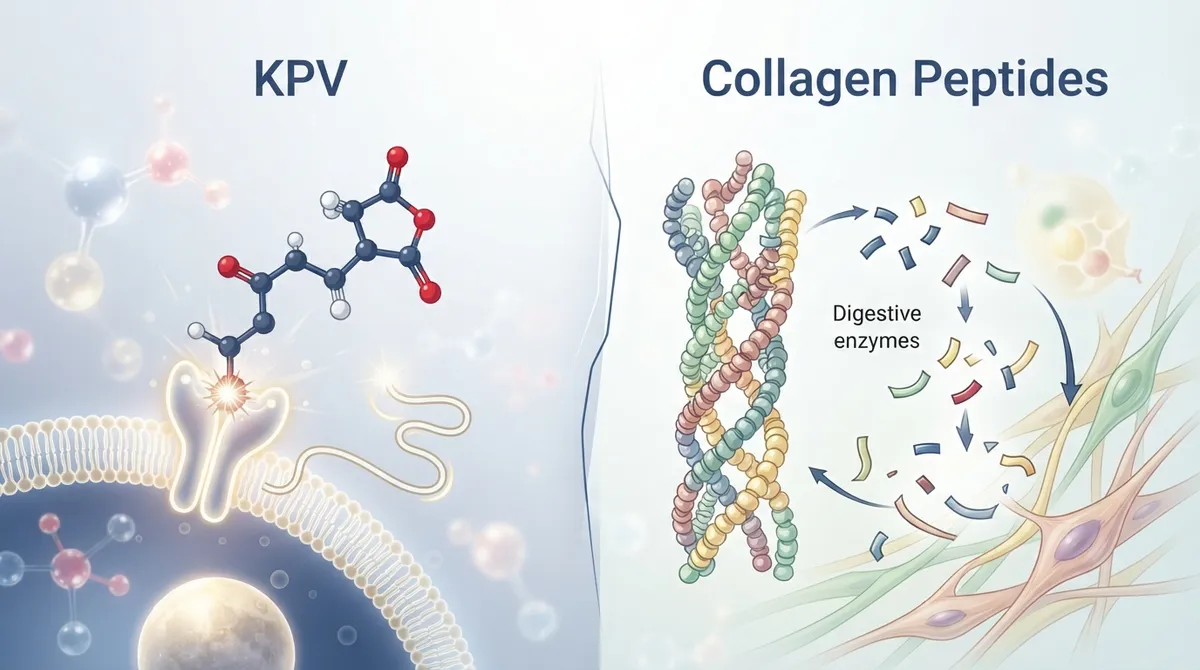
What Is KPV, and Why Is It Not Collagen?
KPV is a short chain of three amino acids: lysine, proline, and valine. These three letters give the peptide its name. KPV comes from a larger hormone called alpha-melanocyte-stimulating hormone, or α-MSH. Specifically, it represents the last three amino acids of that hormone.
Collagen peptides are completely different. They come from breaking down collagen protein, the main structural protein in skin, bones, and connective tissue. Collagen peptides contain many more amino acids arranged in long chains. KPV is a signaling peptide, not a structural building block like collagen.
This distinction matters. Marketing that blends the two terms can mislead consumers into thinking KPV offers the same well-studied skin and joint benefits as collagen. It does not. The two peptides work through entirely different mechanisms in the body.
Key Differences at a Glance
|
Feature |
KPV |
Collagen Peptides |
|---|---|---|
|
Structure |
3 amino acids (tripeptide) |
Long chains, often 2-40+ amino acids |
|
Origin |
Fragment of alpha-MSH hormone |
Broken down from collagen protein |
|
Primary Use |
Marketed for inflammation, gut, skin |
Nutrition support for skin, joints |
|
FDA Status |
Not approved for any medical use |
Widely sold as a dietary supplement |
|
Human Trial Data |
Very limited |
Multiple randomized trials |

How Is KPV Marketed in Wellness Circles?
Online wellness sellers often promote KPV as an anti-inflammatory peptide. Claims range from soothing gut inflammation to calming skin conditions like dermatitis. Some marketers even suggest it helps with broader inflammatory diseases.
The problem is that most of this evidence comes from lab dishes and animal studies. Very few controlled human trials exist. A small number of older studies looked at topical or localized KPV delivery, including some exploratory work related to ulcerative colitis. These studies were limited in size and scope. They are not enough to prove KPV works safely or effectively in people.
Practitioner-reported dosing found online commonly ranges from about 200 to 500 micrograms taken under the skin, or 500 to 1,500 micrograms taken by mouth each day. These numbers are not backed by FDA approval or solid clinical evidence. They should never be treated as medical guidance.
Why Preclinical Research Cannot Replace Human Trials
Preclinical studies suggest KPV may interact with inflammatory pathways connected to α-MSH signaling and gut inflammation. This is interesting science. But it does not mean a supplement sold online will treat any disease in a real patient.
- Cell studies show how a compound behaves in a controlled dish, not in a living body.
- Animal studies help researchers understand possible mechanisms, but animals differ from humans in many ways.
- Only large, well-designed human trials can confirm real-world safety and effectiveness.
- Without those trials, dosing, timing, and risk levels remain unknown for humans.
- Unapproved products may also carry contamination or potency risks that have not been tested.
What Does the Science Say About Collagen Peptides?
Unlike KPV, collagen peptides have a stronger research base. A 2026 systematic review and meta-analysis of randomized trials found real benefits. Oral collagen supplementation improved skin hydration and elasticity in study participants. It also reduced water loss through the skin, a sign of better skin barrier function.
A separate 2023 review found collagen peptide supplementation was linked to modest fat loss and increased lean muscle mass over time. Researchers also noted small improvements in LDL cholesterol and blood pressure, though they found no clear effect on blood sugar. Study authors called for longer trials, since much of the data covered only eight to twelve weeks.
- Collagen peptides show measurable improvements in skin hydration and elasticity.
- Studies report modest reductions in body fat and gains in fat-free mass.
- Some trials link collagen intake to small drops in LDL cholesterol and blood pressure.
- No strong evidence yet supports collagen's effect on blood sugar control.
- Most positive results come from trials lasting two to three months.
None of these collagen findings apply to KPV. They involve a different protein family, different doses, and different study designs. Confusing the two peptides in marketing materials creates false expectations for consumers.
Is KPV Approved or Regulated for Medical Use?
No. KPV has no FDA-approved medical indication. There is no standardized clinical dosing guideline. No prescription formulation has been officially approved for any condition. Products sold online as "KPV" are often labeled as research chemicals, not medicine.
This labeling matters. Research chemicals are not held to the same manufacturing standards as approved drugs or regulated supplements. Identity, potency, sterility, and contamination risks can be difficult or impossible to verify without independent lab testing.
Questions to Ask Before Trying Any Unregulated Peptide
- Has this compound been tested in large human clinical trials?
- Is it approved by the FDA for any medical condition?
- Does the seller provide third-party lab testing results?
- What are the known risks of contamination or incorrect dosing?
- Could this interact with medications I already take?
- Would a licensed physician recommend this for my specific health concern?
If you cannot confidently answer these questions, it is wise to pause before purchasing or using any unregulated peptide product.
Who Should Be Extra Cautious?
Certain groups face higher risks when considering unapproved peptides like KPV. Extra caution is appropriate for:
- Pregnant or breastfeeding individuals
- Children and adolescents
- People managing chronic diseases such as diabetes or autoimmune conditions
- Anyone currently taking immunomodulating medications
- Patients on multiple prescription drugs with potential interaction risks
For these groups especially, self-treating with an unapproved product could delay proper diagnosis or interfere with existing treatment plans. A conversation with a primary care provider is always the safer first step.
How Should Wellness-Minded Patients Approach Trending Peptides?
Trends move fast in the wellness world. Tech-savvy patients researching new therapies often find themselves comparing products across social media, forums, and unverified retailers. The best approach combines curiosity with caution.
Start by separating marketing language from clinical evidence. Look for peer-reviewed studies, not testimonials. Ask whether a claim comes from a human trial or an animal study. And always loop in a healthcare provider before starting anything new, especially injectable or oral peptide products bought without a prescription.
Steps for Evaluating Any Wellness Peptide Claim
- Identify the exact source of the claim (marketing site, lab study, or clinical trial).
- Check whether human data exists, not just cell or animal research.
- Confirm FDA approval status for the specific use being marketed.
- Review third-party testing for purity and potency, if available.
- Discuss the product with a primary care provider familiar with your health history.
- Weigh the unknown risks against any proposed benefit before purchasing.
This process takes a little more time than clicking "buy now." But it protects you from wasting money on unproven products, or worse, exposing yourself to unknown health risks.
Where Does InCare Fit Into This Conversation?
InCare, with locations in Tampa and Riverview, focuses on evidence-based primary care and wellness services. Our providers help patients sort through trending health claims, including confusing peptide marketing, so you can make informed decisions grounded in real science.
If you are curious about legitimate, medically supervised wellness options, our team offers services like DNA gene testing, body composition analysis, and IV hydration therapy. These services rely on established science and technology, not unverified research chemicals. For those interested in structured peptide-based options, our physicians can also discuss what peptides are and how they fit into a longevity plan under proper medical supervision.
What Sets a Medically Supervised Approach Apart
|
Approach |
Unregulated Online Peptides |
Medically Supervised Wellness Care |
|---|---|---|
|
Oversight |
None; self-administered |
Licensed physician involvement |
|
Product Verification |
Often unclear or unavailable |
Sourced through regulated channels |
|
Personalization |
One-size-fits-all dosing claims |
Tailored to individual health history |
|
Safety Monitoring |
Minimal to none |
Ongoing clinical follow-up |
Our patients in Tampa and Riverview trust our team because we prioritize transparency. You can read what real patients say by visiting our InCare location on Google, where our clinic maintains a strong reputation built on honest, science-based care.
Practical Takeaways for Wellness Seekers
KPV and collagen peptides serve different purposes and carry very different levels of evidence. Collagen peptides have real, if modest, research support for skin and body composition benefits. KPV remains an experimental compound with promising lab research but insufficient human data.
- Never assume "peptide" claims are automatically backed by strong science.
- Collagen peptides have more human trial data than KPV, but effects are still modest.
- KPV is not FDA approved and lacks standardized dosing guidelines.
- Unregulated online products carry real risks around purity and safety.
- Always consult a licensed provider before starting any new peptide or supplement.
Staying informed protects both your health and your finances. Wellness trends will keep evolving, but the need for evidence-based guidance never changes.
Ready to Talk to a Provider Who Puts Facts First?
If you have questions about peptides, collagen, or any other wellness trend, our physicians at InCare are ready to help you separate fact from marketing. You can follow our updates and patient stories on Facebook and Instagram, or see quick wellness tips on Tik Tok. For deeper reading on peptide safety standards, resources from the National Center for Biotechnology Information and the U.S. Food and Drug Administration offer additional independent context.
Whether you live in Tampa, Riverview, or anywhere nearby, our team is here to guide you through primary care, wellness services, and honest conversations about trending health products. Book your appointment today or reach out to our team with your questions. Your health deserves clear answers, not confusing marketing claims.
FAQs
Q: What is KPV peptide, and is it the same as a collagen peptide?
A: KPV is a three-amino-acid peptide made of lysine, proline, and valine, derived from alpha-melanocyte-stimulating hormone. It is not a collagen peptide. Collagen peptides come from a different protein source and have a much larger, well-studied evidence base for skin and joint support.
Q: Is KPV FDA approved or available by prescription?
A: No, KPV is not FDA approved for any medical use and has no standardized prescription formulation. Products sold online are typically labeled as research chemicals, which means quality, purity, and safety cannot be reliably confirmed.
Q: What does research say about KPV for gut or skin conditions?
A: Most KPV research comes from cell and animal studies, with only limited exploratory human data involving topical or local delivery. This evidence is not sufficient to prove KPV effectively treats conditions like ulcerative colitis, dermatitis, or other inflammatory diseases in people.
Q: Are there standardized doses for KPV supplements?
A: No official, evidence-based dosing guidelines exist for KPV. Online sources sometimes cite ranges like 200 to 500 micrograms subcutaneously or 500 to 1,500 micrograms orally daily, but these figures are not FDA approved and should not be treated as medical advice.
Q: How can consumers spot unsafe or unverified peptide products?
A: Look for third-party lab testing, clear sourcing information, and transparency about manufacturing standards. If a seller cannot provide verified purity results or clinical backing, the product carries a higher risk of contamination or incorrect dosing.