
Key Takeaways
- Daytime fatigue (low energy) and excessive daytime sleepiness (dozing off) are different problems; fatigue without true sleepiness often points to medical, hormonal, nutritional, or mental-health causes.
- Start with a primary care clinician, who can review your sleep habits, medications, and health history, then decide whether labs, a sleep study, or a sleep-medicine referral is needed.
- Track your sleep for one to two weeks, noting bedtime, wake time, night wakings, naps, caffeine, and alcohol, and bring this diary to your appointment.
- Loud snoring, gasping at night, morning headaches, dry mouth, or a partner noticing breathing pauses can signal sleep apnea, which can cause fatigue even after a full night in bed.
- See a doctor if tiredness lasts more than a few weeks, you doze off during quiet activities, or you have an urge to move your legs at night.
- If you struggle to stay awake while driving, stop the activity and seek prompt medical advice; seek urgent care for chest pain, shortness of breath, fainting, or new confusion.
You wake up after a full night in bed and still feel drained by mid-morning. Coffee helps for an hour, then the fog returns. If this sounds familiar, you are not alone, and you are not simply "lazy." Ongoing tiredness is one of the most common reasons adults seek medical care, and it deserves a careful look.
Many people search for a daytime fatigue sleep doctor in Tampa without knowing where to begin. The good news is that the first step is often simpler than expected. A primary care clinician can review your sleep habits, symptoms, medications, and health history, then decide whether you need testing or a sleep specialist.
This guide explains the difference between feeling tired and feeling sleepy, the common causes behind both, and what a medical evaluation looks like. It also covers when to act quickly and how InCare helps Tampa and Riverview patients sort through the possibilities.
Fatigue vs. Excessive Daytime Sleepiness: Why the Difference Matters
People often use "tired" and "sleepy" as if they mean the same thing. Doctors treat them as two separate problems, and the difference guides which tests make sense.
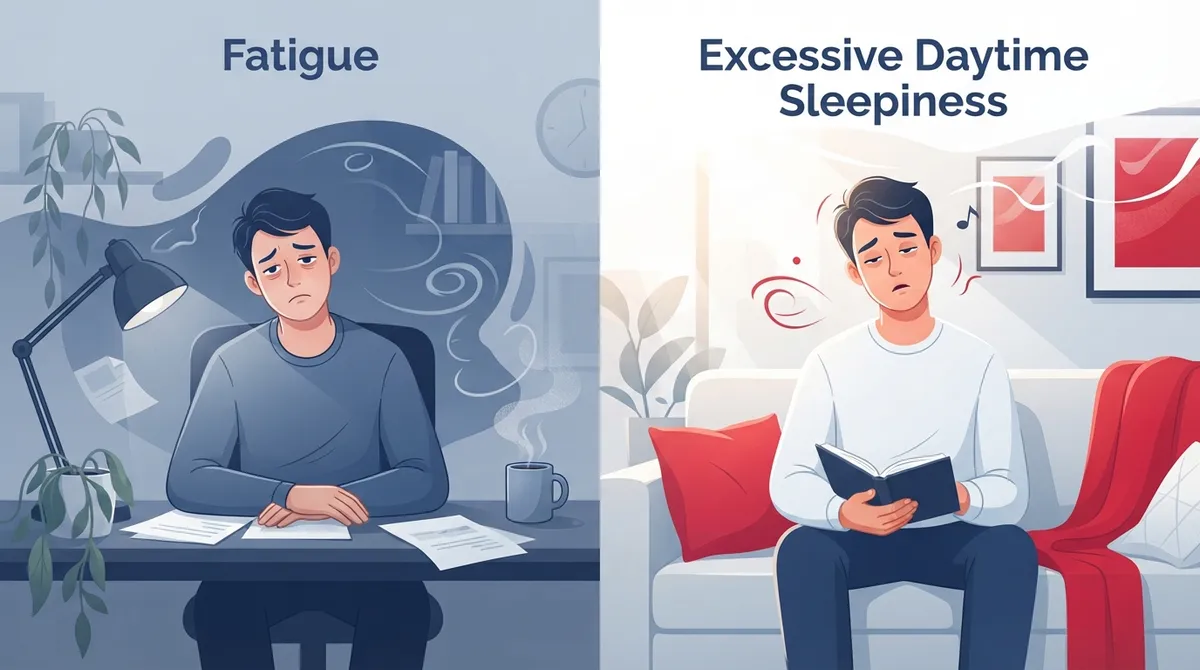
Daytime fatigue means low energy, weariness, or a lack of drive. You may feel worn out but still be unable to nap. Excessive daytime sleepiness means an increased tendency to doze off, such as nodding off in meetings, while reading, or at a red light.
Both can come from poor sleep. However, fatigue without true sleepiness often points toward medical, hormonal, nutritional, or mental-health causes. True sleepiness is more likely to signal a sleep disorder.
|
Feature |
Daytime Fatigue |
Excessive Daytime Sleepiness |
|---|---|---|
|
Main feeling |
Low energy, weariness |
Strong urge to fall asleep |
|
Can you nap easily? |
Often not |
Usually yes |
|
Common clues |
Poor motivation, body aches, low mood |
Dozing while sitting still or driving |
|
Possible causes |
Anemia, thyroid issues, stress, depression, medications |
Sleep apnea, narcolepsy, insufficient sleep |
A clinician will ask which of these describes you best. Your answer shapes the entire workup.
What Causes Daytime Tiredness?
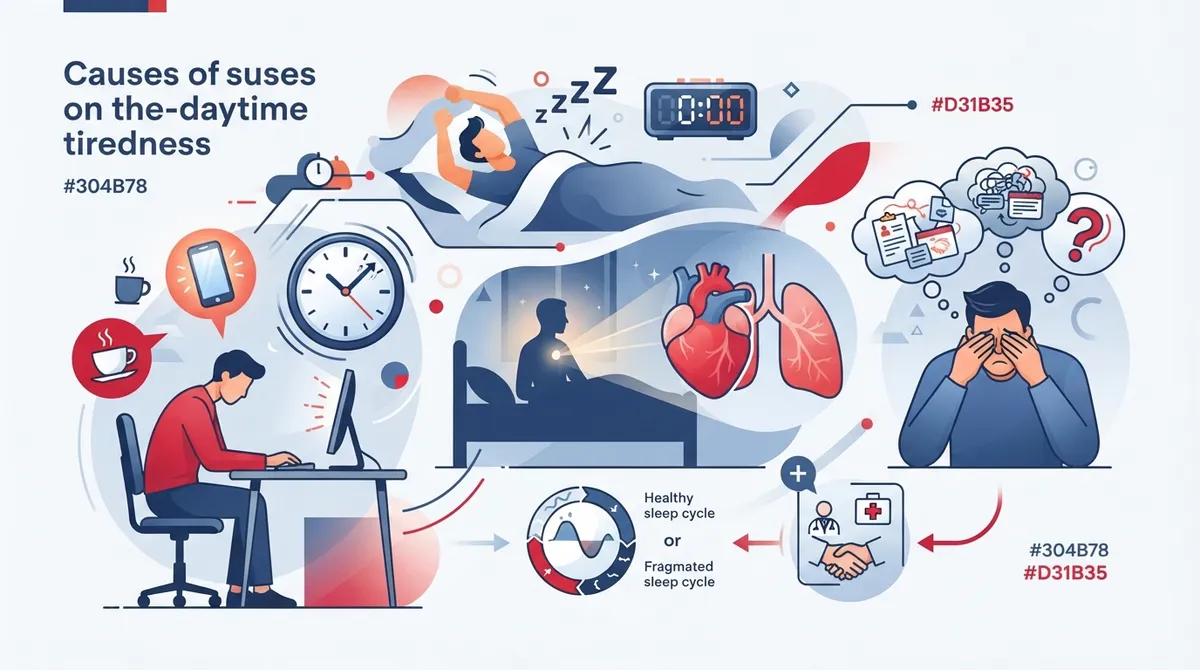
Persistent tiredness rarely has a single cause. A careful clinician looks at the full picture instead of assuming a sleep disorder from the start. Common contributors include:
- Insufficient or irregular sleep: Short nights, late weekends, and shift work can leave you in constant sleep debt.
- Insomnia: Trouble falling or staying asleep leads to poor rest even when you spend enough hours in bed.
- Obstructive sleep apnea: Breathing repeatedly pauses during sleep, which fragments rest.
- Restless legs syndrome: An urge to move the legs at night can disrupt sleep.
- Narcolepsy: A less common condition that causes sudden, strong sleep attacks.
- Medications and substances: Some prescriptions, alcohol, and late caffeine can affect sleep or cause drowsiness.
- Medical and mental-health conditions: Thyroid problems, anemia, diabetes, depression, and anxiety can all drain energy.
Because the list is long, guessing rarely works. A structured evaluation saves time and avoids unnecessary testing.
Could Sleep Apnea Cause Fatigue If You Sleep Through the Night?
Yes. Many people with sleep apnea do not remember waking up. The breathing pauses can happen dozens of times an hour, pulling the brain out of deep sleep without full awareness. You may log eight hours and still wake unrefreshed.
Clues that suggest sleep apnea include loud snoring, gasping at night, morning headaches, a dry mouth, and a partner who notices pauses in your breathing. If these sound familiar, read our guide on whether sleep apnea can cause daytime fatigue for signs and next steps. Not everyone with sleep apnea snores, and not everyone who snores has it, so testing is the only way to know.
Which Doctor Should You See for Daytime Fatigue in Tampa?
For most adults, the best starting point is a primary care doctor. A primary care clinician can look at your whole health, not just your sleep. That matters because fatigue so often has more than one cause.
During a visit, your clinician can:
- Review your sleep schedule, caffeine use, and daily routine.
- Ask about symptoms such as snoring, leg discomfort, mood changes, and weight shifts.
- Review every medication and supplement you take.
- Perform a physical examination.
- Order basic labs when appropriate to look for common medical causes.
- Decide whether you need a sleep study or a referral to a sleep-medicine specialist.
This approach keeps care coordinated. If you do need a specialist, your primary care team can send the right information ahead of time. You can learn more about how this works in our article on primary care versus a sleep specialist.
When Should Daytime Tiredness Be Evaluated?
Everyone has an off day. However, certain patterns call for a medical visit instead of waiting it out. Consider scheduling an evaluation if:
- Tiredness lasts more than a few weeks despite adequate time in bed.
- You fall asleep during quiet activities, such as reading or watching television.
- A partner notices loud snoring or pauses in your breathing.
- Fatigue affects your work, mood, or relationships.
- You wake with headaches or a dry mouth most mornings.
- You feel an irresistible urge to move your legs at night.
For a deeper look at timing, see how to know when to see a doctor for poor sleep.
Safety First: Drowsy Driving and Urgent Warning Signs
If you struggle to stay awake while driving or doing other safety-sensitive tasks, stop that activity. Drowsiness at the wheel is dangerous, and it is a reason to seek medical advice promptly. Do not rely on open windows or loud music to push through.
Sudden or severe symptoms need faster attention. Seek urgent care if your tiredness comes with chest pain, shortness of breath, fainting, new confusion, severe headache, or weakness on one side of the body. InCare offers urgent care for situations that cannot wait for a routine appointment.
What Happens During a Sleep-Medicine Evaluation?
If your primary care clinician suspects a sleep disorder, the next step may be a sleep-medicine consultation. A specialist will review your history in more detail and may use a sleepiness questionnaire to measure how drowsy you feel.
Testing depends on the suspected condition. Options may include:
- An overnight sleep study: You sleep in a lab while sensors track breathing, heart rate, oxygen levels, and sleep stages.
- Home sleep testing: In selected cases, a portable device records key measures in your own bed.
- Additional daytime testing: Used less often, for suspected conditions such as narcolepsy.
Not every person with fatigue needs a sleep study. A good clinician matches the test to your symptoms, which avoids cost and inconvenience when testing will not help. Our overview of how sleep apnea is diagnosed walks through the usual steps.
Sleep Care Options in the Tampa Area
Tampa offers several sleep-medicine resources. USF Health lists sleep-disorder care at its Morsani Center and other Tampa locations, with general appointment information at 813-821-8038. AdventHealth describes its Sleep Center Tampa at 13601 Bruce B. Downs Boulevard, Suite 151, and patients can call 813-615-7410 for details.
Locations, clinicians, availability, insurance participation, and referral requirements can change. Always confirm current services and coverage directly before you book. For a broader look at local choices, see our 2026 guide to sleep clinics in Tampa and our article on the sleep medicine doctor in Tampa.
How to Prepare for Your Appointment
A little preparation makes your visit far more useful. Bring or track the following for one to two weeks:
- A sleep diary: Record bedtime, wake time, night wakings, and naps.
- Caffeine and alcohol: Note how much you have and when.
- A medication list: Include prescriptions, over-the-counter products, and supplements.
- Symptom notes: Write down snoring, gasping, leg discomfort, headaches, and mood changes.
- Partner observations: A bed partner can describe breathing pauses you may not notice.
- Safety concerns: Mention any drowsiness while driving.
Clear information helps your clinician narrow the possibilities faster, so you spend less time guessing.
Everyday Habits That Support Better Energy
While you wait for answers, steady habits can protect your sleep. These steps will not replace a medical evaluation, but they often help:
- Keep a regular sleep and wake time, even on weekends.
- Limit caffeine after midday.
- Avoid heavy meals and alcohol close to bedtime.
- Keep the bedroom cool, dark, and quiet.
- Put screens away for an hour before bed.
- Get daylight and movement early in the day.
If these changes do not improve how you feel within a few weeks, that is a clear sign to move forward with a visit.
Why Choose InCare for Daytime Fatigue Concerns?
InCare combines primary care, urgent care, and advanced wellness services in one connected practice, with locations in Tampa and Riverview. That means your sleep complaint is not treated in isolation. Your clinician can look at metabolism, hormones, weight, medications, and overall health together.
Services such as metabolic breath analysis and in-house lab testing support a fuller picture of why energy may be low. If a sleep study or specialist is the right next step, your care team can coordinate the referral so nothing falls through the cracks. Patients also tell us they value the friendly staff and the time clinicians take to listen, which is reflected in our 4.8 out of 5 rating on Google. You can read InCare reviews on Google to see what other patients say.
If you are a busy parent, a working professional, or someone who simply has not had a checkup in a while, this whole-person approach saves time. One visit can sort out whether you need labs, a sleep study, or lifestyle changes. Telemedicine appointments are also available when a virtual visit fits your schedule better.
The Bottom Line on Finding Help
Constant tiredness is not something you have to accept. Start by noting whether you feel low on energy or truly sleepy, track your sleep for a week or two, and book a visit with a primary care clinician who will look at the full picture. From there, your clinician can decide whether you need labs, a sleep study, or a referral to a sleep-medicine specialist.
Staying informed also helps. You can follow InCare health tips on Instagram, Facebook, and TikTok for practical wellness guidance.
Ready to find out why you are so tired? Book your appointment with InCare today, or contact our team with questions. You can also call 813-553-3330 to speak with our staff in Tampa or Riverview.
FAQs
Q: What kind of doctor should I see for daytime fatigue in Tampa?
A: A primary care doctor is the best first stop. They review your sleep habits, medications, and health history, run an exam, and decide whether labs, a sleep study, or a sleep-medicine referral is needed.
Q: Can a primary care doctor refer me to a sleep specialist in Tampa?
A: Yes. A primary care clinician can assess your symptoms and coordinate testing or referral to sleep-medicine services in the Tampa area. Referral and insurance requirements vary, so confirm details with the specialist's office.
Q: What should I track or bring to an appointment about daytime fatigue?
A: Bring a one- to two-week sleep diary, a list of all medications and supplements, notes on caffeine and alcohol use, and any symptoms such as snoring or leg discomfort. Observations from a bed partner can also help.
Q: When should daytime tiredness be evaluated by a doctor?
A: See a doctor if tiredness lasts more than a few weeks, you doze off during quiet activities, or a partner notices loud snoring or breathing pauses. If you struggle to stay awake while driving, stop and seek prompt medical advice.


