Key Takeaways
- VO2 max testing is optional for most healthy adults; it is not a routine primary care screening, and evidence does not support it as a general screening test for people without symptoms.
- Strongest reasons to test: unexplained shortness of breath or fatigue during exercise, known heart or lung disease needing a clearer picture, or building a rehab or training plan.
- A clinical test (CPET) adds heart rhythm, breathing, and carbon-dioxide data, which helps separate heart, lung, circulation, and conditioning causes that a watch estimate cannot.
- Postpone maximal testing if you have chest pain, new or worsening symptoms, uncontrolled high blood pressure, an irregular heart rhythm, or a recent illness or fever.
- Read results against your own past scores and predicted values for your age, sex, and size; a high or low number does not rate your worth or guarantee health outcomes.
- Before testing, talk with a clinician, know the specific question you want answered, rest from hard workouts the day before, and plan a follow-up to review the numbers.
VO2 max testing is getting a lot of attention in 2026. Wearables estimate it. Longevity podcasts talk about it. Friends post their scores online. But a quick watch estimate is not the same as a clinical measurement, and not everyone needs one. So who should get VO2 max testing, and who can safely skip it?
VO2 max is the highest rate at which your body can take in and use oxygen during hard exercise. It is a direct snapshot of how well your heart, lungs, blood vessels, and muscles work together. In a clinical setting, it is usually measured during a supervised cardiopulmonary exercise test (CPET). That test adds heart rhythm, breathing, and carbon-dioxide data to the oxygen numbers.
This guide explains who benefits most from VO2 max testing, who may not need it, how the test works, and how to use the results. If you live near Tampa or Riverview, it also shows how a primary care team can help you decide.
What VO2 Max Testing Actually Measures
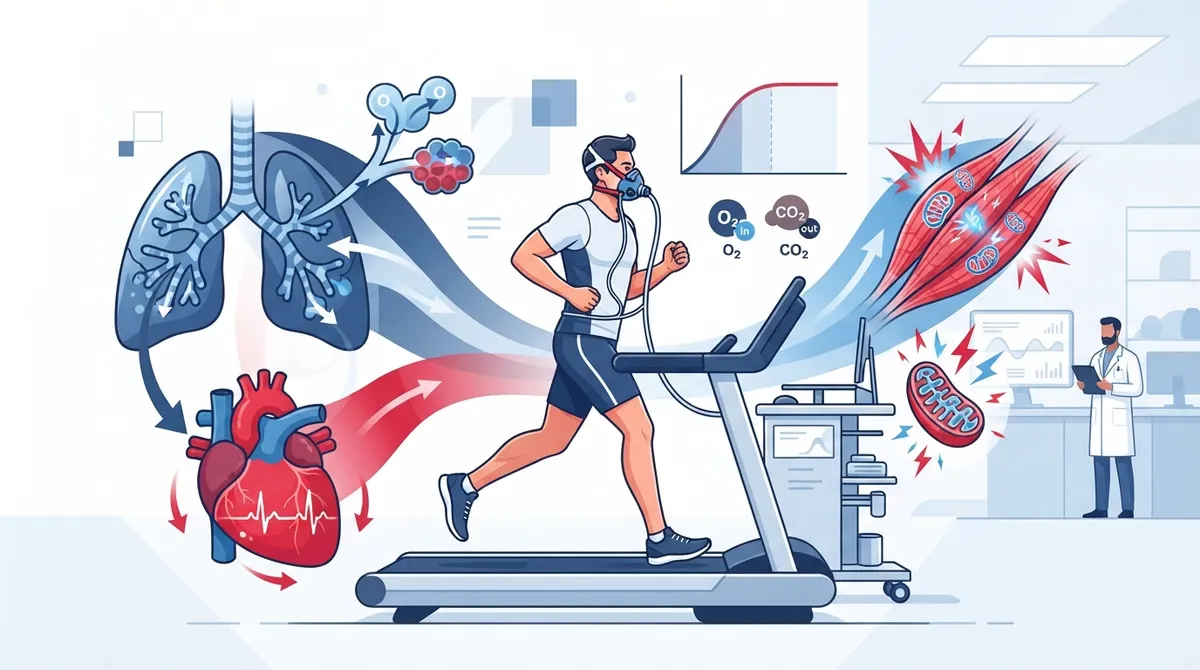
During a VO2 max test, you walk, run, or pedal while the workload slowly gets harder. A mask or mouthpiece measures the air you breathe in and out. Staff track your heart rhythm and effort the whole time. Most protocols are designed to reach peak effort in about 8 to 12 minutes, according to a review in Mayo Clinic Proceedings.
The result tells you how much oxygen your body can use at its peak. It also shows how your body responds as effort rises. In a full clinical test, the data can help separate heart, lung, circulation, and fitness-related causes of limits on exercise.
One point matters up front. VO2 max is a useful measure, but it does not diagnose disease on its own. It also does not guarantee future health outcomes. Age, sex, body size, test protocol, effort, and equipment all affect how a score should be read.
Is VO2 Max Testing Right for Every Healthy Adult?
No. For most healthy adults, VO2 max testing is optional. It is not a routine screening test in primary care. Medical policy summaries note that evidence is not strong enough to support CPET as a general screening or first-line test for people without symptoms.
That does not mean the test has no value. It means the test works best when there is a clear question to answer. A good rule: get tested when the result will change what you or your clinician do next.
Good reasons to test include:
- You have unexplained symptoms during exercise.
- You have a known heart or lung condition and need a clearer picture.
- You are building a rehab or training plan and want measured data.
- You want a precise baseline to track fitness over time.
If none of these fit, a standard physical, a talk with your doctor, and regular activity may serve you just as well. Our guide on what happens during an annual physical exam explains what a routine checkup already covers.
Who Should Consider VO2 Max Testing?
Several groups tend to get real value from testing. The right choice depends on your health history and your goals.
|
Group |
Why Testing May Help |
Typical Question It Answers |
|---|---|---|
|
People with unexplained exercise symptoms |
Helps sort out cardiac, lung, circulation, and conditioning causes |
Why do I get so short of breath or tired? |
|
People with heart or lung disease |
Measures functional capacity and guides rehab |
How much exercise is safe and useful for me? |
|
Athletes and serious fitness enthusiasts |
Sets a measured baseline and individual training zones |
How should I structure my training? |
|
Adults focused on longevity and prevention |
Tracks aerobic fitness as a long-term marker |
Is my fitness improving as I age? |
|
People starting a new exercise or weight loss plan |
Gives a safe, data-based starting point |
What intensity should I begin with? |
People With Unexplained Shortness of Breath or Fatigue
This is one of the strongest medical reasons for testing. Suppose you feel winded on stairs, tire quickly on walks, or notice your stamina dropping. Your clinician will start with a history, exam, and basic tests first. If those do not explain the problem, CPET can help.
The test shows how your body responds under load. That can point toward a heart issue, a lung issue, a circulation problem, or simple deconditioning. It gives your doctor clues that a resting test cannot.
If you are having symptoms now, do not wait for a performance test. Start with a medical visit. Our team can evaluate you through primary care, and for sudden or severe symptoms, urgent care is the right place to begin.
People With Known Heart or Lung Conditions
If you have a diagnosed condition, testing may help your clinician measure your functional capacity. Examples include heart failure, coronary artery disease, COPD, pulmonary hypertension, and interstitial lung disease.
In these cases, testing can:
- Clarify what limits your exercise.
- Guide a safe exercise prescription in rehabilitation.
- Track how you respond to treatment over time.
In selected advanced heart failure cases, specialists use peak oxygen uptake to help judge prognosis and plan advanced therapies. That is a specialist-directed use. It is not a reason for everyone with heart disease to be tested.
Lung health matters here too. A simple breathing test often comes first. Learn more in our article on spirometry testing at a primary care clinic.
Athletes and Fitness-Focused Adults
Runners, cyclists, triathletes, and gym regulars often ask for VO2 max testing. For them, it can set a baseline and help shape training. The test can show the heart rates and paces where your body shifts from steady effort to hard effort. That helps you train smarter and avoid guessing.
For healthy people, though, context is key. A high or low number does not rate your worth as an athlete. Genetics, age, and body size all play a role. The most useful comparison is you against your own past results.
You can learn more about how this testing supports performance in our post on how PNOE testing enhances VO2 max performance.
Longevity and Prevention-Minded Adults
Many people in our community are proactive about health. They want to know where they stand before problems begin. If that sounds like you, VO2 max testing can be a reasonable optional tool.
Here is the honest framing. Aerobic fitness is widely linked with good health, and tracking it can be motivating. But no study we reviewed shows that routine VO2 max screening, by itself, improves health outcomes in healthy people. Use it as one piece of a larger plan, not as a stand-alone verdict.
A fuller prevention plan might also include cancer screening, DNA gene testing, and body composition analysis. Together, these give a broader picture than any single number.
People Starting a Weight Loss or Exercise Program
If you are new to exercise or restarting after a long break, a measured baseline can help. It can show a safe starting intensity and give you a benchmark to beat in a few months. This is especially helpful for busy parents and professionals who want to use limited workout time well.
Pairing fitness data with metabolic data can sharpen the plan. InCare offers metabolic breath analysis and structured weight loss programs that use this kind of information to personalize your approach.
Who Should Skip or Postpone VO2 Max Testing?
A maximal test means hard effort. That is not safe for everyone at every moment. A clinician should review your symptoms, medical history, and medications first. Some conditions require postponing the test or choosing a different approach.
Talk to your doctor before testing if you have:
- Chest pain, new or worsening symptoms, or recent changes in your health.
- An unstable or recently changed heart or lung condition.
- Uncontrolled high blood pressure or an irregular heart rhythm.
- A recent illness, fever, or infection.
- Joint or muscle injuries that make hard exercise unsafe.
Acute or unstable conditions may make testing unsafe or require delay. This is why testing should be done by qualified staff with proper monitoring and emergency capability. A watch app or a gym machine cannot replace that safety net.
How to Prepare for a VO2 Max Test
A little preparation helps you get an accurate result and stay safe. Follow these steps:
- Talk with your clinician. Share your symptoms, history, and medicines. Ask whether testing makes sense for you.
- Confirm your goal. Know what question you want the test to answer.
- Rest well. Avoid hard workouts the day before so you can give a true effort.
- Dress for exercise. Wear comfortable clothes and supportive shoes.
- Eat light. Skip a heavy meal right before the test, and follow any guidance from your care team.
- Plan to review results. Schedule time to talk through the numbers with a clinician.
How to Read Your Results
A number alone does not tell the whole story. One clinical review describes a peak VO2 below 85% of the predicted value as abnormal. Even so, the meaning depends on the reference equation, test quality, effort, and your overall health.
When you get your report, ask these questions:
- How does my result compare with predicted values for my age, sex, and size?
- Did I reach a true peak effort?
- What limited me: heart, lungs, muscles, or conditioning?
- What should I do differently in my training or treatment?
- When should I retest to track progress?
Use the answers to build a practical plan. That might mean new heart rate zones, a rehab schedule, a referral for more testing, or a simple fitness goal for the next three months.
Why Primary Care Is a Smart Starting Point
You do not have to figure this out alone. A primary care team can help you decide whether VO2 max testing fits your situation. They can also rule out safety concerns before you push your limits.
At InCare, our clinicians combine hands-on medical care with modern testing tools. That means your fitness data is read in the context of your full health history, not in isolation. You can meet our providers or learn more about our approach on the VO2 max testing in Tampa and Riverview page. For a deeper look at the service itself, see InCare's advanced testing for lifelong health gains.
If you have visited us, you can read what patients say and see InCare reviews on Google. We are proud of our 4.8-star rating, and we are always glad to hear how we can serve Tampa and Riverview better. You can also follow our updates on Instagram, Facebook, and TikTok.
The Bottom Line
So, who should get VO2 max testing? It makes the most sense for people with unexplained exercise symptoms, people with known heart or lung disease, athletes and fitness-minded adults who want measured training data, and prevention-focused patients who want a clear baseline. It is not a required test for every healthy adult, and it should never replace a medical evaluation when you have symptoms.
The best next step is a conversation. A clinician can look at your history, goals, and risk, then tell you whether testing will give you useful answers. If you are in the Tampa or Riverview area and want that guidance, book your visit with InCare today, or contact our team with any questions. Your health goals deserve a plan built on real data and real expertise.
FAQs
Q: Who should consider VO2 max testing?
A: VO2 max testing is most useful for people with unexplained shortness of breath or fatigue, those with known heart or lung disease, athletes seeking individualized training data, and prevention-focused adults who want a measured fitness baseline. A clinician should confirm that testing is appropriate and safe for you.
Q: Is VO2 max testing recommended as a routine health screening?
A: No. For most healthy adults, VO2 max testing is optional and not a routine primary care screening. Medical policy summaries state that evidence is insufficient to support cardiopulmonary exercise testing as a general screening or first-line test.
Q: Can a VO2 max test explain shortness of breath?
A: It can help when initial evaluation has not found a cause. Cardiopulmonary exercise testing records heart, lung, and breathing responses during effort, which helps clinicians separate cardiac, pulmonary, circulatory, and conditioning-related contributors.
Q: Is VO2 max testing safe, and who should postpone it?
A: A maximal test involves strenuous effort, so it should be done with qualified staff and appropriate monitoring. People with chest pain, unstable heart or lung conditions, uncontrolled blood pressure, or a recent illness should talk with a clinician first, as testing may need to be delayed.
Q: How should I use my VO2 max result?
A: Interpret the number in context of your age, sex, body size, test protocol, and effort. Review it with a clinician, then use it to set training zones, guide rehab, or track progress by retesting over time.