
Key Takeaways
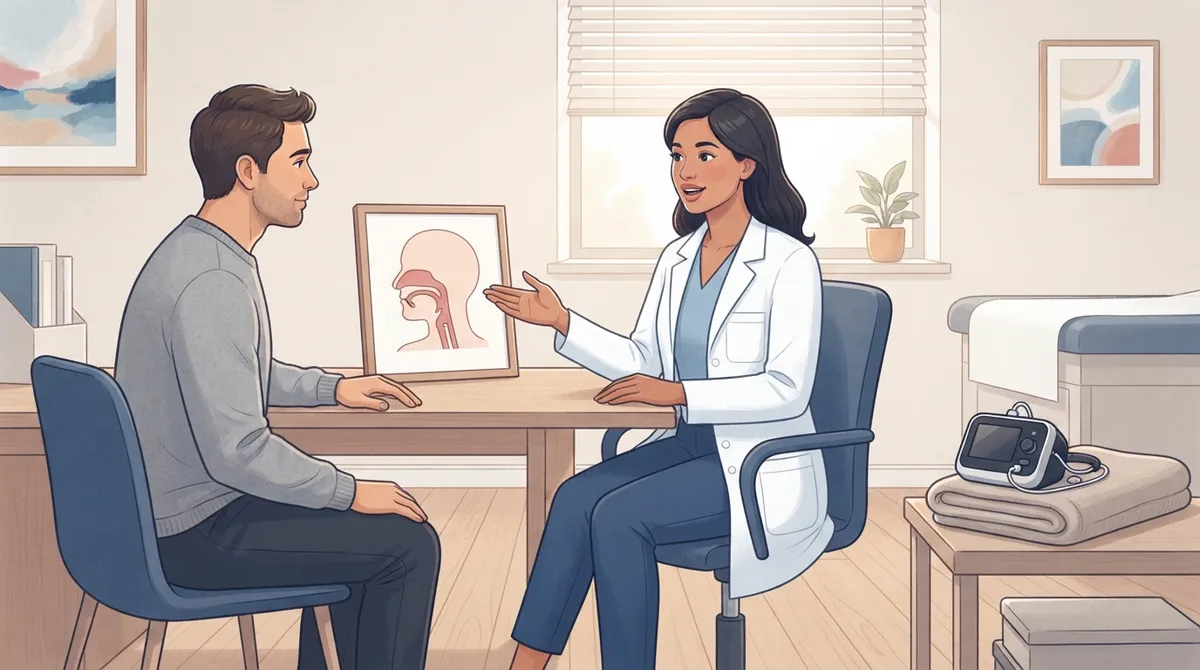
- Primary care clinics are the most common first stop for sleep apnea screening in Riverview, FL, where a clinician can review symptoms, medical history, and risk factors before recommending further testing.
- Screening only estimates risk; it cannot diagnose sleep apnea. Confirmation requires an in-lab polysomnogram or a technically adequate home sleep apnea test.
- The AASM recommends annual screening for adults with heart failure, resistant high blood pressure, atrial fibrillation, type 2 diabetes, or stroke, and screening for those with a BMI of 30 or higher.
- Warning signs worth raising with a clinician include loud frequent snoring, witnessed breathing pauses, gasping or choking during sleep, daytime sleepiness, and morning headaches, even if you have only one or two.
- In-lab sleep studies are generally preferred over home tests for people with significant heart or lung disease, chronic opioid use, prior stroke, or severe insomnia.
- Before a screening visit, record your symptoms, ask a partner about nighttime breathing, list all medications, and note caffeine and alcohol habits to help your clinician assess your risk accurately.
Loud snoring, restless nights, and foggy mornings are easy to dismiss. For many adults in Tampa Bay, they are also early signs of a real medical issue. When people ask who provides sleep apnea screening in Riverview, the best starting point is often a primary care clinic. A primary care team can review symptoms, check risk factors, and decide what comes next.
InCare, a primary care and wellness clinic at 11922 Boyette Rd, Riverview, FL 33569, is one place to begin that conversation. Screening is not a diagnosis. It is a first step that shows whether more testing makes sense. This guide explains who offers screening, what the visit looks like, which tests confirm the condition, and when a sleep specialist should step in. Services can change, so always confirm current offerings with any clinic before booking.
Who Provides Sleep Apnea Screening in Riverview?
Several types of providers can screen adults for obstructive sleep apnea (OSA). The most common first stop is a primary care clinic. Sleep specialists and sleep centers handle confirmed testing and treatment planning.
Note that "Riverview" can refer to more than one place in the United States. This article focuses on Riverview, Florida, in Hillsborough County. Always confirm the city and the clinic's current services before you book.
Primary Care Clinics
A primary care provider knows your full health history. That context matters, because sleep apnea often travels with other conditions. High blood pressure, type 2 diabetes, heart disease, and weight gain are all linked to it.
At InCare, the Riverview primary care team can review your symptoms, sleep habits, medical history, and risk factors. If the picture suggests sleep apnea, the team can guide you toward testing or a referral. You can read more about how local care works in our guide on sleep apnea screening in Riverview, FL.
Sleep Specialists and Sleep Centers
Sleep medicine doctors focus on sleep disorders. They run in-lab sleep studies, interpret results, and set up treatment such as CPAP therapy. Many patients reach them through a referral from primary care. Our article on finding the best sleep doctor in Riverview explains how to choose one.
Telehealth Visits
Some screening conversations can happen by video. A virtual visit works well for reviewing symptoms and risk factors. It cannot replace objective testing, but it can save time on the first step.
Why Screening Matters More Than Most People Think
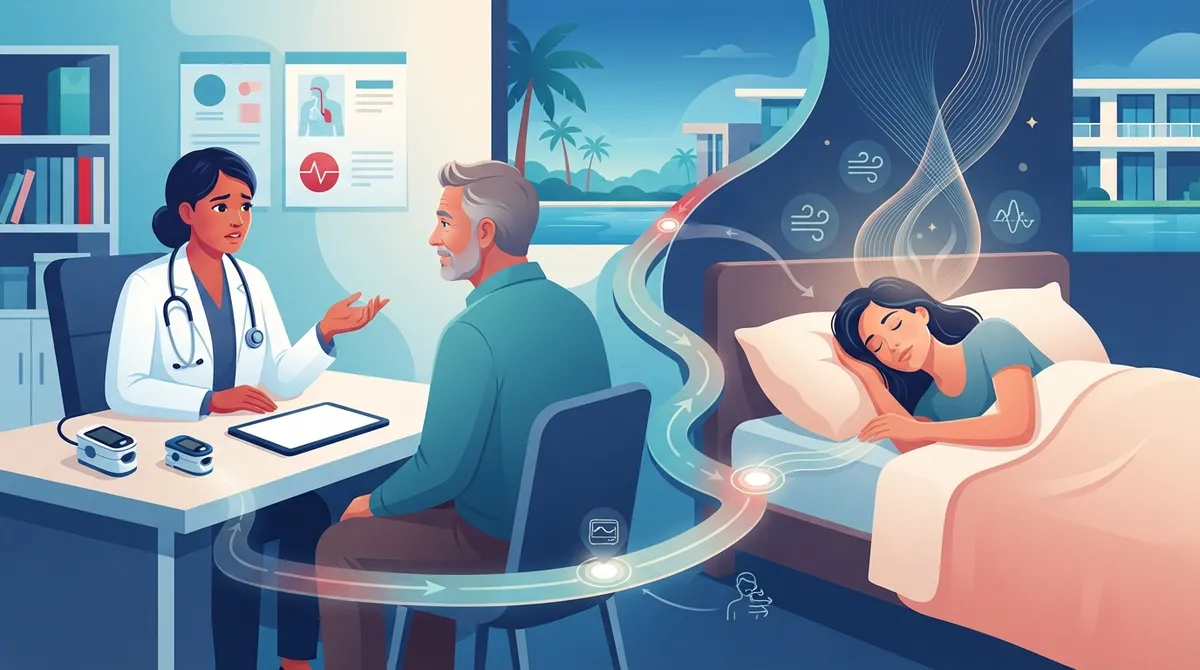
Sleep apnea causes breathing to pause or become shallow during sleep. Each pause can wake the brain briefly, even if you never remember it. Over time, this strains the heart, blood vessels, and metabolism.
Untreated sleep apnea can affect daytime energy, mood, focus, and driving safety. It is also tied to higher risk of hypertension and other chronic conditions. Learn more in our post on how untreated sleep apnea affects your health.
The American Academy of Sleep Medicine (AASM) advises screening adults who have certain high-risk conditions. These include heart failure, elevated or resistant blood pressure, atrial fibrillation, type 2 diabetes, and stroke. For those groups, the AASM recommends annual screening. Other risk factors include a BMI of 30 or higher, coronary artery disease, pulmonary hypertension, nocturnal arrhythmias, and preparing for bariatric surgery.
Warning Signs That Should Prompt a Screening Conversation
You do not need every symptom to ask for screening. Even one or two signs are worth mentioning to a clinician. Common warning signs include:
- Loud, frequent snoring
- Pauses in breathing that a partner has seen
- Gasping or choking during sleep
- Excessive daytime sleepiness or fatigue
- Morning headaches or a dry mouth on waking
- Trouble concentrating or memory lapses
Not every snorer has sleep apnea. Our post on whether snoring always means sleep apnea covers the difference. If tiredness is your main concern, see how sleep apnea can cause daytime fatigue.
What Happens at a Sleep Apnea Screening Appointment?
A primary care screening is a risk assessment. It is usually quick and low stress. Here is what a typical visit looks like:
- Symptom review. Your clinician asks about snoring, daytime sleepiness, and any witnessed breathing pauses.
- Medical history. The team looks at blood pressure, weight, diabetes, heart health, and current medications.
- Risk questionnaire. Tools such as STOP-BANG or the Berlin questionnaire estimate your risk level.
- Physical check. Your provider may measure blood pressure, BMI, and neck size, and look at your airway.
- Next-step plan. Based on the findings, the clinician recommends objective testing, a specialist referral, or lifestyle changes.
A questionnaire alone cannot diagnose sleep apnea. It only helps decide whether more testing is needed. If you are unsure when to seek help for poor sleep in general, read how to know when to see a doctor for poor sleep.
How Is Sleep Apnea Confirmed?
Diagnosis needs objective testing. According to AASM guidance, adults with suspected OSA generally have one of two options: an in-lab polysomnogram or a technically adequate home sleep apnea test (HSAT).
|
Test Type |
Where It Happens |
Best For |
Key Notes |
|---|---|---|---|
|
Home sleep apnea test (HSAT) |
Your own bed |
Adults with signs of moderate-to-severe OSA and no major complicating conditions |
A negative or inconclusive result may need an in-lab follow-up |
|
In-lab polysomnogram |
Sleep center |
People with significant heart or lung disease, prior stroke, chronic opioid use, or severe insomnia |
Records more body signals under staff supervision |
Guidance favors in-lab testing for people with significant cardiorespiratory disease, possible respiratory muscle weakness or hypoventilation, chronic opioid use, prior stroke, or severe insomnia. If a home test is negative, inconclusive, or technically inadequate but suspicion remains, a follow-up in-lab study is the usual next step. A primary care clinician can help decide which path fits you. For a deeper comparison, see home versus in-lab sleep studies in Tampa.
Do You Need a Referral to See a Sleep Specialist?
It depends on your insurance and the specialist's policies. Many plans require a referral from a primary care provider. Even when a referral is optional, starting with primary care has benefits. Your clinician can gather your history, order the right labs, and send a clear summary to the specialist.
This coordination saves time and reduces repeat testing. It also helps when sleep apnea overlaps with other conditions like high blood pressure or diabetes. For more on this approach, see primary care versus a sleep specialist.
Who Is Most Likely to Benefit From Screening?
Sleep apnea affects many kinds of adults. A few groups may find screening especially useful.
Busy Professionals and Young Families
If you juggle work, kids, and a packed calendar, fatigue can feel normal. It may not be. Poor sleep quality can hide behind a busy schedule. A short screening visit can tell you whether something medical is behind the tiredness.
Adults With Weight or Metabolic Concerns
Excess weight raises sleep apnea risk, and sleep apnea can make weight loss harder. Our clinic offers medical weight loss support alongside primary care. You can learn how the two connect in can weight loss help sleep apnea.
People With High Blood Pressure or Diabetes
These conditions are on the AASM's high-risk list. If you have either one, ask your clinician about screening at your next visit. It pairs well with a regular wellness exam. See how to get the most from preventive care visits in 2026.
Adults Who Skip Traditional Checkups
Many younger adults and women without an established primary care doctor never mention sleep issues. A comprehensive wellness visit is a natural place to bring it up. It lets one clinician look at the whole picture instead of one symptom at a time.
What Happens After a Positive Screening?
A positive screening does not mean you have sleep apnea. It means more testing is wise. Your clinician will usually suggest a sleep study. If the study confirms OSA, treatment options depend on severity and your health profile.
- CPAP therapy keeps the airway open with gentle air pressure.
- Oral appliances reposition the jaw to help airflow.
- Lifestyle changes such as weight management, limiting alcohol, and sleep position changes can help.
- Other approaches may be available when CPAP is not a good fit.
Explore options in our guide to alternatives to CPAP for sleep apnea, or see sleep apnea treatment options in Riverview.
How to Prepare for Your Screening Visit
A little preparation makes the visit more useful. Try these steps:
- Write down your symptoms and how often they happen.
- Ask a partner or family member what they notice at night.
- List your medications, including sleep aids and pain medicines.
- Note your caffeine and alcohol habits.
- Bring recent blood pressure readings if you track them.
Having this information ready helps your clinician judge your risk more accurately. It can also shorten the path to testing.
Why Choose InCare for Your Sleep Apnea Screening in Riverview
InCare combines personalized primary care with advanced wellness tools. The Riverview clinic can review your symptoms, health history, and risk factors, then guide you toward the right testing. Patients appreciate the friendly staff and the time clinicians take to listen. The practice holds a 4.8 out of 5 rating on Google across 359 reviews. You can visit us on Google — InCare to read what patients say.
Because InCare also offers urgent care, weight loss programs, and preventive screenings, your sleep concerns fit into a full health plan. That means one team can look at blood pressure, metabolism, and sleep together. For a broader look at the care model, see 9 things to know about InCare Riverview. Follow clinic updates on Instagram or Facebook, and watch short wellness tips on TikTok.
Key Takeaways
Sleep apnea screening is a simple first step with real value. In Riverview, a primary care clinic like InCare can start the process. Screening finds risk. Objective testing confirms the diagnosis. A sleep specialist steps in when the case needs deeper evaluation.
If you snore loudly, wake up gasping, or feel exhausted despite a full night in bed, do not wait. Early screening can protect your heart, your energy, and your quality of life. Confirm current services and appointment availability directly with the clinic before you go.
Ready to take the first step? Book your appointment with InCare today, or contact our team with any questions about sleep apnea screening in Riverview.
FAQs
Q: Who provides sleep apnea screening in Riverview, Florida?
A: Primary care clinics, sleep specialists, and sleep centers can all provide screening or testing. InCare's Riverview clinic at 11922 Boyette Rd is one place to start. Confirm current services and availability directly with the clinic before booking.
Q: Can a primary care doctor screen me for sleep apnea?
A: Yes. A primary care clinician can review your symptoms, sleep habits, and risk factors, and may use a questionnaire such as STOP-BANG. Screening estimates risk only, so a diagnosis still requires an in-lab study or a technically adequate home sleep apnea test.
Q: Does a sleep apnea questionnaire diagnose the condition?
A: No. Questionnaires such as STOP-BANG or Berlin help identify people at higher risk. Obstructive sleep apnea must be confirmed with objective testing when clinically indicated.
Q: When is an in-lab sleep study needed instead of a home test?
A: An in-lab study is usually preferred for people with significant heart or lung disease, possible hypoventilation, chronic opioid use, prior stroke, or severe insomnia. It may also follow a negative, inconclusive, or inadequate home test when suspicion remains.
Q: What symptoms should prompt sleep apnea screening?
A: Loud snoring, witnessed pauses in breathing, gasping or choking during sleep, and excessive daytime sleepiness are common warning signs. Risk also rises with obesity, high blood pressure, heart disease, and diabetes.


