
Key Takeaways
- A trusted Tampa medical cannabis doctor must have an active, unrestricted Florida license and be listed on the official OMMU qualified-physician list; verify both yourself before booking.
- Florida requires an in-person exam for initial certification, and a quality visit includes a full medical history, medication and supplement review, risk discussion, and a follow-up plan.
- Physician certifications are generally valid for 210 days (about seven months), and the state ID card is a separate application with its own fee, so plan renewals early.
- Red flags include guaranteed approval, no in-person exam, no medication review, pressure to buy specific products, and no follow-up plan; cheap prices alone do not indicate quality.
Searching for a medical cannabis doctor in Tampa can feel confusing. Dozens of clinics advertise quick approvals, low prices, and same-day cards. Yet price and speed say little about clinical quality. So who is a trusted medical cannabis doctor in Tampa, and how can you tell before you book?
The short answer is this. A trusted doctor holds an active Florida license, is currently qualified by the state's Office of Medical Marijuana Use (OMMU), and treats the visit as real medicine. That means a full history, a medication review, a frank talk about risks, and a plan for follow-up care. For busy professionals, young families, and wellness-minded patients across Tampa, that approach matters far more than a fast signature.
This guide explains what Florida law requires, how to verify a physician, what a quality evaluation looks like, and why a primary care foundation protects your health. We also cover costs, renewals, and red flags, so you can choose with confidence in 2026.

What Does Florida Require of a Medical Cannabis Doctor?
Florida sets clear rules for who may certify patients. A physician must hold an active, unrestricted Florida license. The physician must also complete the state-required education and examination, then be listed as qualified by OMMU.
Here is what that means in practice:
- Active Florida license: The doctor cannot have restrictions on their medical license.
- State qualification: The physician must appear on the official OMMU qualified-physician list.
- Registry access: Certifications are entered into the Florida Medical Marijuana Use Registry.
- Clinical judgment: The doctor must conclude that likely benefits outweigh health risks for you.
Clinic advertising alone is not proof. Always check the individual physician, not just the clinic name.
How Can You Verify a Tampa Medical Cannabis Doctor?
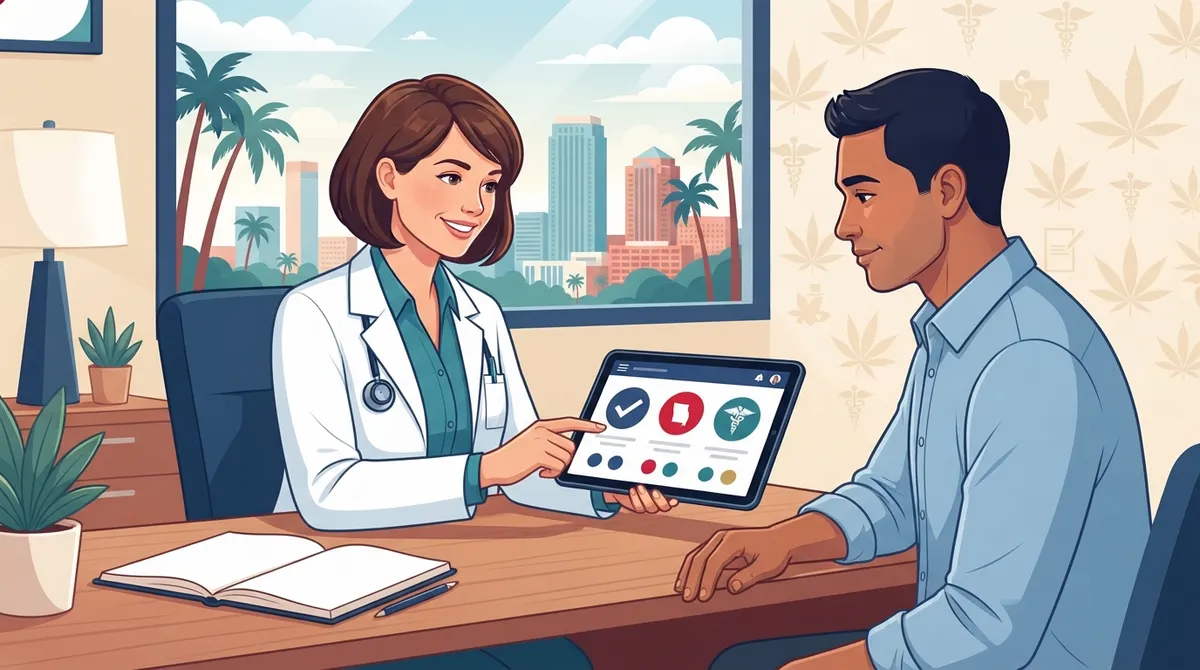
Verification takes only a few minutes. Follow these steps before you book any visit:
- Get the physician's full name. Ask the clinic who will perform your evaluation.
- Search the OMMU qualified-physician list. Confirm the doctor is currently listed, since status can change.
- Check the Florida license. Use the Florida Department of Health license lookup to confirm the license is active and unrestricted.
- Review disciplinary history. The same lookup shows any public actions.
- Confirm the visit format. The first certification requires an in-person exam.
- Ask about fees up front. Request the full cost, including follow-ups.
Tampa has several clinics that advertise medical marijuana evaluations. Names you may see in search results include Doctor Springs in downtown Tampa, CannaMD, MMJ Health, and Dr. Green Relief. These are examples of what appears online, not endorsements. Verify each certifying physician yourself.
Which Conditions Qualify for Medical Cannabis in Florida?
Eligibility is both a clinical and a legal decision. Florida's listed qualifying conditions include:
- Cancer
- Epilepsy
- Glaucoma
- HIV/AIDS
- Post-traumatic stress disorder (PTSD)
- Amyotrophic lateral sclerosis (ALS)
- Crohn's disease
- Parkinson's disease
- Multiple sclerosis
- Terminal conditions
- Chronic nonmalignant pain associated with a qualifying condition
A physician may also certify a condition of the same kind or class as a listed condition when statutory criteria are met. Qualification is never automatic. The doctor must review your records and decide if certification is appropriate.
Demand is high. A 2026 analysis of Florida registry data in JMIR Public Health and Surveillance reported 779,673 qualifying patients in 2025 before exclusions. The median patient age was 46. PTSD, chronic pain, and multiple sclerosis were the most prevalent qualifying-condition categories. Many patients use medical cannabis alongside other care, which makes medical oversight even more important.
What Does a Quality Evaluation Look Like?
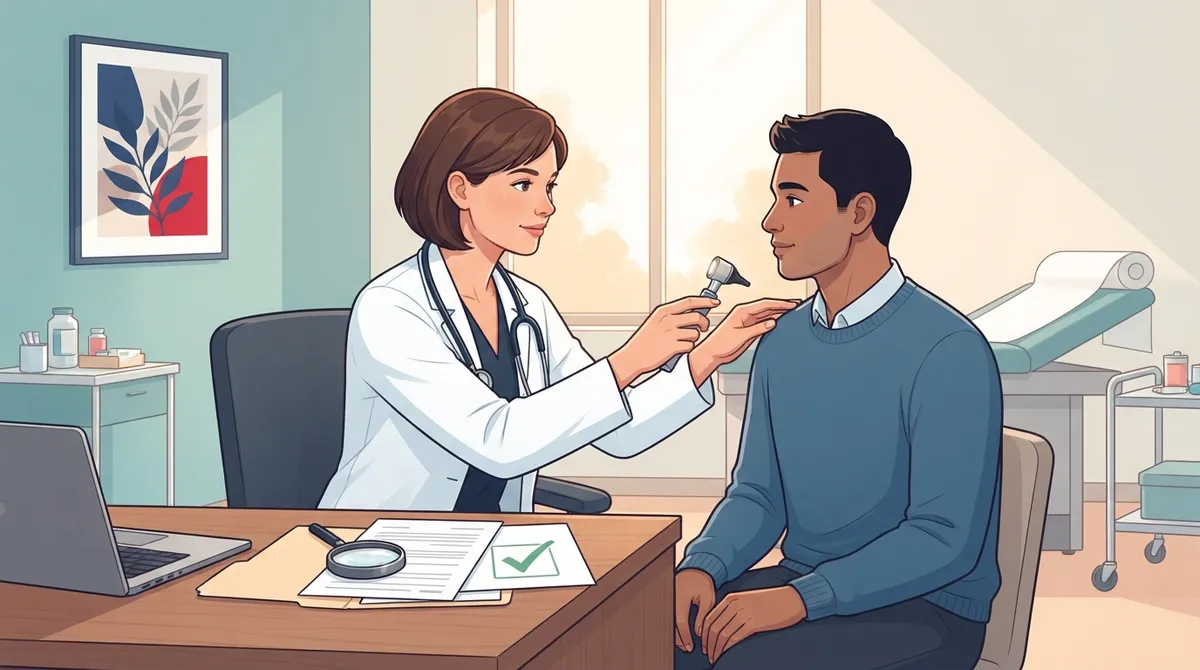
A trusted doctor does not rush you. Florida requires an in-person examination for your initial certification. During that visit, a thorough physician will:
- Take a complete medical and family history
- Review prior records, imaging, and test results
- Go over every medication and supplement you take
- Discuss possible benefits, risks, and side effects
- Explain drug interactions and safer alternatives
- Set clear goals and a follow-up schedule
This is where a primary care mindset stands out. Cannabis can interact with common medicines, including some blood thinners, sedatives, and seizure medications. It may also affect mood, sleep, heart rate, and driving safety. A doctor who knows your whole health picture can spot those issues early.
If you want a deeper look at how InCare approaches medical cannabis guidance in Tampa, our team explains the process step by step. You can also read our guide to medical cannabis and natural relief for background on how it is used.
Certification vs. State ID Card: What Is the Difference?
Many patients mix these up. They are two separate steps.
|
Step |
Who Handles It |
What Happens |
|---|---|---|
|
Physician certification |
OMMU-qualified doctor |
In-person exam; certification entered in the state registry |
|
State ID card application |
You, through the state |
Complete the application and pay the state fee |
|
Purchasing products |
Licensed treatment center |
Buy only from a licensed Florida medical marijuana treatment center |
Your doctor's certification is not a card. You must still apply for the state ID card after the certification is entered in the registry. Always confirm current instructions and fees directly with OMMU, since requirements can change.
How Much Does a Medical Cannabis Visit Cost in Tampa?
Advertised prices vary. Search results from Tampa-area clinic pages quoted new-patient evaluation fees from about $149 to $199. One clinic listed a $169 promotional price and a $249 regular price. A Tampa clinic page also quoted a Florida state application fee of $77.75.
Keep these points in mind:
- Clinic prices are provider-specific and may change.
- State fees are separate from the doctor's visit fee.
- Cheap does not equal trustworthy. Quality care takes time.
- Ask whether follow-up visits and renewals cost extra.
Confirm every amount in writing before your appointment.
How Often Must You Renew?
Florida physician certifications are generally valid for 210 days, about seven months. Plan ahead so your certification does not lapse. A trusted doctor will remind you, schedule follow-ups, and review how treatment is working. Check current OMMU instructions for the ID-card renewal process as well.
This follow-up rhythm is a good sign. It shows the doctor treats cannabis as one part of your care plan, not a one-time transaction.
Why Does a Primary Care Foundation Matter?
Medical cannabis is not right for everyone. A primary care physician looks at the full picture, including chronic conditions, medications, mental health, and lifestyle. That whole-person view is the best safeguard when you add something new to your routine.
At InCare, we focus on prevention and whole-body optimization, and we are the clinic Tampa patients turn to for coordinated, personalized care. Our team combines state-of-the-art technology with medical expertise. Patients can start with primary care, then add services such as cancer screening or DNA gene testing to build a plan that fits their goals. You can meet the clinicians on our providers page.
Coordinated care also helps with pain and anxiety, two reasons many people explore cannabis. Our articles on medical cannabis for chronic pain and anxiety and sleep explain how a physician-guided approach works. If you are comparing options, our overview of the medical marijuana card process in Tampa is a helpful next read.
What Red Flags Should You Avoid?
Protect yourself by watching for warning signs:
- Guaranteed approval: No honest doctor can promise certification before an exam.
- No in-person exam for a first visit: Florida requires one for initial certification.
- No medication review: Skipping this is a safety risk.
- Pressure to buy products: Your doctor should not push specific brands.
- Vague credentials: If you cannot confirm OMMU status, move on.
- No follow-up plan: Quality care includes monitoring.
Online reviews help, but they do not prove clinical quality. A clinic's location or low price does not establish state qualification either. Check the license first, then read reviews. You can see what patients say about us when you visit our InCare listing on Google.
What Should You Bring to Your Evaluation?
Preparation makes the visit smoother and safer. Bring:
- A valid government photo ID showing Florida residency
- Medical records or imaging that document your condition
- A list of all medications, vitamins, and supplements
- Names of your other doctors, so care can be coordinated
- Your questions about risks, dosing goals, and alternatives
Be honest about your history, including past substance use and mental health concerns. Accurate information helps your doctor protect you.
Making Your Final Choice
The most trusted medical cannabis doctor in Tampa is the one who passes verification and then earns your confidence in the exam room. Look for a current OMMU listing, an active Florida license, a thorough in-person evaluation, clear fees, and a real follow-up plan. Choose a practice that sees you as a whole person, not a transaction.
Follow us for health tips on Facebook, Instagram, and TikTok. When you are ready to talk with a physician who puts prevention and personalized care first, book your appointment with InCare or contact our team with questions. Your health deserves careful, trustworthy guidance in Tampa and Riverview.
FAQs
Q: How do I verify that a Tampa medical marijuana doctor is qualified in Florida?
A: Search the official Florida Office of Medical Marijuana Use qualified-physician list for the doctor's name, then confirm an active, unrestricted license through the Florida Department of Health lookup. Do not rely on clinic advertising alone, since a physician's status can change.
Q: Does Florida require an in-person visit for a first medical marijuana certification?
A: Yes. Florida law requires an in-person examination for a patient's initial physician certification. The doctor must review your history and decide whether a qualifying condition exists and whether likely benefits outweigh the risks.
Q: What is the difference between a physician certification and a Florida medical marijuana ID card?
A: The certification is entered into the state registry by a qualified physician after your exam. The ID card is a separate step in which you complete the state application and pay the state fee. Products must then be purchased from a licensed Florida treatment center.
Q: How often do Florida medical marijuana certifications need to be renewed?
A: Physician certifications are generally valid for 210 days, or about seven months. Confirm renewal timing with your physician and check current OMMU instructions for the ID-card renewal process.
Q: Can a primary care doctor help assess medical cannabis risks and medication interactions?
A: Yes. A primary care physician reviews your full history, medications, and chronic conditions, which helps identify possible interactions and safer alternatives. Coordinated care gives you stronger oversight than a stand-alone certification visit.