

Key Takeaways
- Verify any Tampa peptide doctor's active Florida medical license and specialty through the state's public lookup before booking, and confirm a physician or licensed prescriber evaluates you personally.
- Ask which exact peptide is proposed, what condition it treats, and whether it is FDA-approved or compounded; a generic 'peptide protocol' is a red flag.
- FDA approval applies only to a specific product and indication, and compounded peptides are not FDA-reviewed for safety, effectiveness, or quality before marketing.
- Most evidence for popular peptides like BPC-157 is preclinical, and FDA materials say clinical safety information is insufficient, so treat wellness marketing claims with skepticism.
- Avoid any product labeled 'research use only' for human use, and avoid clinics that offer guaranteed results, pressure prepayment for large packages, or lack a written lab and follow-up plan.
- Request a written cost breakdown covering consultation, labs, medication, and follow-up, and ask which pharmacy supplies compounded drugs and how its quality is checked.
Search for a peptide doctor in Tampa and you will find a long list of clinics, spas, and online sellers. Some offer real medical care. Others mostly sell products. That gap matters, because "peptide therapy" is not one treatment. It is a broad label that covers many different drugs, each with its own purpose, evidence, and risk.
If you want to recommend a peptide doctor in Tampa to a friend, or find one for yourself, start with the right question. The question is not "Who sells the most peptides?" It is "Who will evaluate my health, explain the evidence honestly, and monitor me safely?"
This guide walks you through what to look for in 2026. You will learn what separates a qualified clinician from a menu of products, how FDA-approved and compounded drugs differ, which questions to ask, and what a responsible consultation should include. It is written for busy adults who want clear answers before they commit.

What Does a Peptide Doctor Actually Do?
A peptide doctor is a licensed clinician who prescribes or oversees peptide-based treatments. Peptides are short chains of amino acids. Some are well-established medicines. Others are promoted in wellness circles with far less proof behind them.
A good peptide doctor does not start with a product. They start with you. They review your history, medications, labs, and goals. Then they decide whether a peptide fits at all. Sometimes the best answer is a different treatment.
Here is the key point: a generic "peptide protocol" is a red flag. A responsible clinician names the exact drug, the exact condition it is meant to treat, and the evidence that supports it.
Peptide Therapy Is Not One Treatment
Peptides differ in four important ways:
- Intended use: some treat diabetes or weight, others are marketed for recovery or aging.
- Evidence: some have large human trials, others have only animal or lab data.
- Regulatory status: some are FDA-approved, others are compounded or sold as research chemicals.
- Route and risk: injections, nasal sprays, and creams carry different safety questions.
Because of this, lumping every peptide together leads to poor decisions. Ask your clinician to be specific every time.
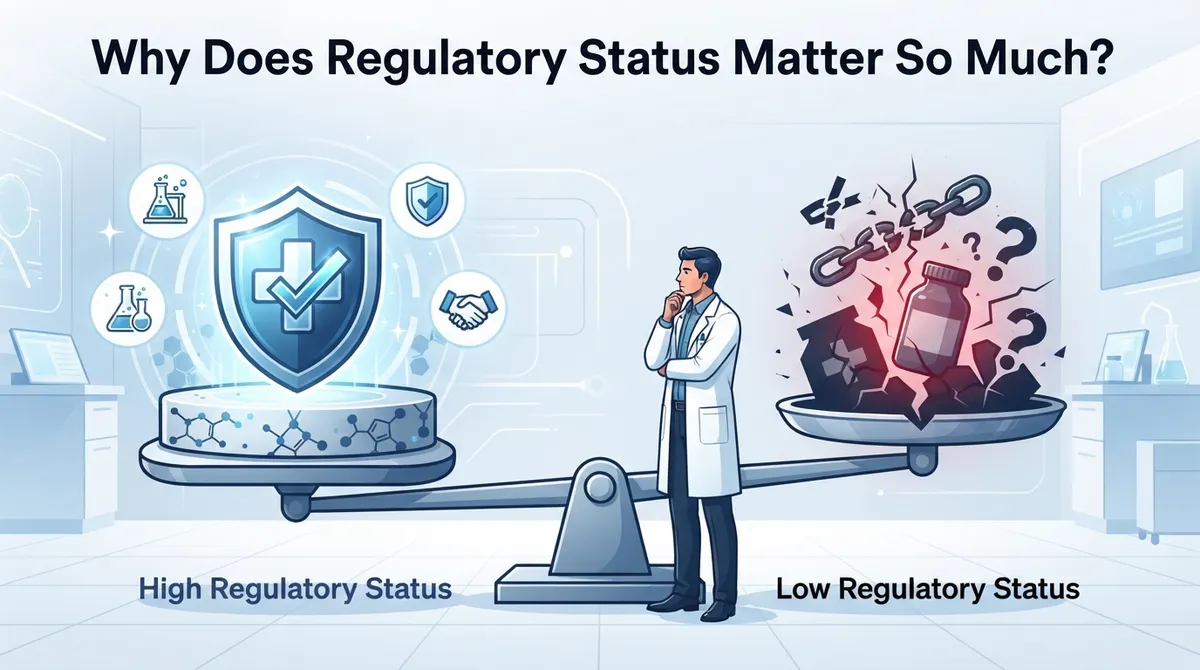
Why Does Regulatory Status Matter So Much?
This is the most important concept to understand before you book a visit. Some peptide-based medicines have FDA-approved formulations for specific conditions. That approval applies to the particular product and indication. It does not prove that other peptides, or compounded copies, are safe or effective.
The FDA states that compounded drugs are not FDA-approved. They are also not reviewed by the FDA for safety, effectiveness, or quality before they are marketed. Compounding can be appropriate when a patient has a specific medical need. But it can carry risks, such as contamination or incorrect strength.
FDA-Approved vs. Compounded vs. Research-Use-Only
|
Product Type |
FDA Review Before Marketing? |
What to Know |
|---|---|---|
|
FDA-approved peptide medicine |
Yes, for a specific product and condition |
Approval applies only to that indication and formulation |
|
Compounded peptide |
No |
Made by a pharmacy for a patient-specific need; quality and strength depend on the pharmacy |
|
"Research use only" product |
No |
Not intended for human use; avoid entirely |
A trustworthy doctor will tell you which category your proposed treatment falls into. If a clinic cannot or will not answer, treat that as a warning. For a deeper look at this topic, read our comparison of FDA-approved vs. compounded peptides.
What Does the Evidence Say About Popular Peptides?
Marketing often runs ahead of science. Many peptides promoted for recovery, anti-aging, or performance have limited human data. It helps to look at one well-known example.
BPC-157 is widely discussed for injury recovery. Yet most of the evidence is preclinical, meaning it comes from lab or animal work. An FDA briefing document for its advisory committee states that the available clinical safety information is not enough to characterize its safety profile. FDA materials also raise concerns about possible impurity or immune-reaction risks for certain compounded peptides, including BPC-157.
This does not mean every peptide is unsafe. It means evidence and concerns vary by peptide and by route. No single claim applies to all of them. If you want to learn more, see our guides on BPC-157 buying mistakes and what the evidence really shows for recovery peptides.
How Do You Find a Qualified Peptide Doctor in Tampa?
Follow these steps in order. They help you separate real medical care from a sales pitch.
- Verify the license. Confirm the clinician holds an active Florida medical license through the state's public lookup. Check their specialty too.
- Confirm who evaluates and prescribes. Ask whether a physician or other licensed prescriber sees you personally, or whether staff simply sell packages.
- Ask about the exact product. Request the drug name, the condition it targets, and whether it is FDA-approved or compounded.
- Ask about the pharmacy. If the product is compounded, find out which pharmacy supplies it and how quality is checked.
- Review the monitoring plan. You should get a written follow-up schedule, lab plan, and a process for reporting side effects.
- Compare more than one clinic. Do not choose based on price or promotions alone.
Tampa search results list providers that advertise peptide services, including a South Tampa medical spa and our clinic, InCare. These are provider claims and directory listings, not independent endorsements. Always confirm current services, credentials, and prescribing practices directly before you book.
What Questions Should You Ask Before Starting?
Bring a short list to your first visit. A confident, ethical clinician welcomes these questions.
- What exact peptide are you proposing, and why this one for me?
- Is it FDA-approved for my condition, or is it compounded?
- What does human research actually show, and what is still unknown?
- What are the risks, side effects, and alternatives?
- Which pharmacy supplies it, and can I see documentation?
- How will you monitor me, and when is the next check-in?
- What happens if I have a reaction?
Our 15 questions to ask a peptide therapy clinic in Tampa goes deeper if you want a longer checklist.
What Should a Responsible Consultation Include?
A strong consultation looks like a real medical visit, not a product demo. Expect the following:
- A full review of your medical history, current medications, and supplements
- Relevant lab work or testing tied to your goals
- A plain-language talk about evidence, alternatives, and risks
- Clear disclosure of product status and sourcing
- A documented plan for monitoring and follow-up
This is where primary care shines. A physician who knows your whole health picture can spot drug interactions, underlying conditions, and safer first steps. That is why many patients start with a primary care doctor in Tampa before considering any peptide at all.
Red Flags to Avoid
Walk away if you notice any of these signs:
- A one-size-fits-all peptide "stack" offered without an exam
- Products labeled "research use only" but sold for human use
- Promises of guaranteed results, fast fixes, or miracle recovery
- No clear answer on who prescribes or which pharmacy supplies the drug
- Pressure to prepay for a large package
- No follow-up plan or lab monitoring
Our article on peptide clinic mistakes in Tampa covers more of these pitfalls in detail.
Why Choose a Primary Care Practice for Peptide Guidance?
Peptides work best when they are one tool within a larger health plan. A primary care and wellness practice can look at the full picture: blood pressure, metabolism, hormones, sleep, and prevention. That context is hard to get from a clinic that only sells one type of service.
At InCare, Dr. Naveen Paddu practices as an internal-medicine and primary-care physician, and our team combines medical expertise with advanced wellness tools in Tampa and Riverview. Services such as metabolic breath analysis, body composition scanning, DNA gene testing, and weight loss programs help build the data behind each recommendation. You can learn more about Dr. Paddu and what to expect in Tampa, or read about our approach to peptide care at InCare. As always, verify current offerings and credentials directly with us before you decide.
Patients also consider reputation. You can see what InCare patients say on Google and compare it with other options. Reviews help, but they are only one input alongside credentials and clinical process.
How Much Does Peptide Therapy Cost in Tampa?
Costs vary widely. Price depends on the drug, the dose, whether it is compounded, and how much monitoring is included. A low sticker price can hide missing lab work or follow-up. A higher price does not guarantee better care either.
Ask for a written breakdown of consultation fees, labs, medication, and follow-up visits. For a closer look, see what monthly peptide therapy costs in Tampa.
Who Is Peptide Therapy Not Right For?
Peptides are not a fit for everyone. Pregnancy, certain cancers, uncontrolled medical conditions, and some medication combinations can raise risk. Athletes should also check anti-doping rules before using any peptide. A careful clinician screens for these issues first and may recommend a different path, such as lifestyle changes, proven medications, or further testing.
If your goal is weight loss, for example, there are evidence-backed medical options to discuss. Our overview of how to evaluate peptide therapy for wellness safely explains how to weigh benefits against unknowns.
Conclusion: Choose Care, Not Just a Product
The best way to recommend a peptide doctor in Tampa is to recommend a process. Look for a licensed clinician who examines you, names the exact drug, explains whether it is FDA-approved or compounded, discloses the pharmacy, and commits to a follow-up plan. Be cautious of any clinic that sells a generic protocol or avoids direct questions.
You can also follow our work on Instagram, Facebook, and TikTok for wellness updates. When you are ready to talk with a physician-led team in Tampa or Riverview, book a visit with InCare or contact our team with your questions. We will help you decide whether peptides make sense, and what safer steps to take first.
FAQs
Q: How do I find a qualified peptide doctor in Tampa?
A: Start by verifying the clinician's active Florida medical license and specialty through the state's public lookup. Then ask who evaluates and prescribes, which exact peptide is proposed, whether it is FDA-approved or compounded, and how follow-up is handled. Compare more than one provider before you decide.
Q: Are peptide therapies FDA-approved?
A: Some peptide-based medicines are FDA-approved for specific conditions, but approval applies only to that product and indication. Many peptides promoted for wellness are not approved, and compounded drugs are not reviewed by the FDA for safety, effectiveness, or quality before marketing.
Q: Is BPC-157 safe or effective for injury recovery?
A: Evidence for BPC-157 is largely preclinical, and FDA briefing material states that available clinical safety information is insufficient to characterize its safety profile. Marketing claims should not be treated as established clinical benefits, so discuss risks and alternatives with a licensed physician.
Q: What should a peptide consultation and follow-up plan include?
A: A responsible visit includes a review of your medical history, medications, goals, and relevant testing. It should also cover the evidence, risks, alternatives, and product status, followed by a documented monitoring and follow-up plan.
Q: What does "research use only" mean on a peptide product?
A: It means the product is not intended for human use and has not been approved or reviewed for patient safety. You should avoid any peptide sold with this label for injection or consumption, and choose a licensed clinician who uses a verified pharmacy instead.


