

Key Takeaways
- Choose a clinic that requires a full medical evaluation with labs before any prescription, and that clearly explains whether its medication is FDA-approved or compounded.
- Wegovy and Zepbound are FDA-approved for chronic weight management, while Ozempic and Mounjaro are approved for type 2 diabetes, though they share active ingredients.
- Semaglutide and tirzepatide carry boxed warnings for thyroid C-cell tumors and are contraindicated with a personal or family history of medullary thyroid carcinoma or MEN 2.
- Compounded GLP-1 drugs are not reviewed by the FDA for safety, effectiveness, or quality, so ask why compounding is needed and how the product is sourced and tested.
Searching for a GLP-1 clinic in Tampa can feel overwhelming. Ads promise fast results, social media is full of before-and-after photos, and prices vary widely. Behind the noise is a simple question: how do you find safe, medically sound care for weight management?
Florida has a real need for good options. CDC data reported adult obesity prevalence in Florida of 27.1% in 2024, and state surveys showed 35.8% of adults were overweight. For many people, lifestyle change alone has not been enough. Prescription medication, used under close medical supervision, can help some of them.
This guide explains what a GLP-1 clinic should offer, who may qualify, how the medicines differ, and what to ask before you start. It is written for busy adults, young families, and wellness-minded patients who want clear answers. Clinic offerings and costs change, so always confirm details directly and speak with a licensed clinician.
What Does a GLP-1 Clinic in Tampa Actually Do?
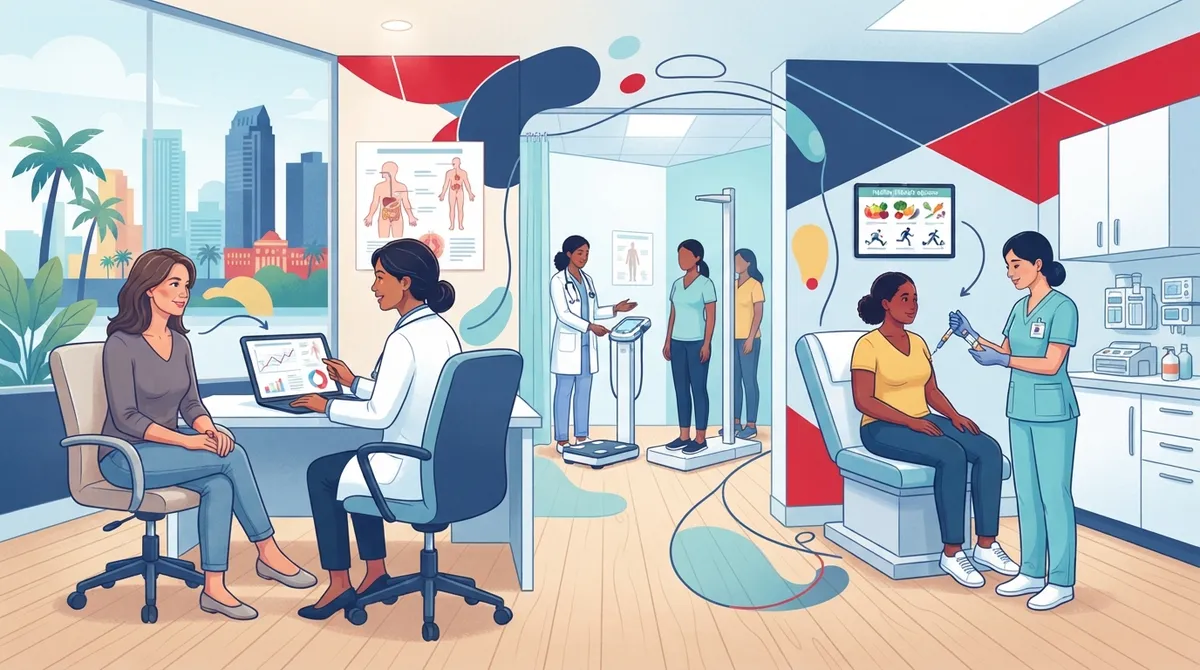
A GLP-1 clinic provides medical evaluation and ongoing follow-up for people considering prescription medication for chronic weight management. The medication is only one part of care. A responsible program also covers nutrition, physical activity, and behavior change.
Think of it as a medical relationship, not a one-time purchase. A good clinic reviews your history, orders labs when needed, explains risks, and checks in as your dose changes. That is why many patients prefer a practice that already offers primary care alongside weight management. Your clinician can see the full picture, including blood pressure, blood sugar, sleep, and other medicines.
For a deeper look at how structured programs work, read What Does a Weight Management Clinic Actually Do?
Which Medications Are Approved for Weight Management?
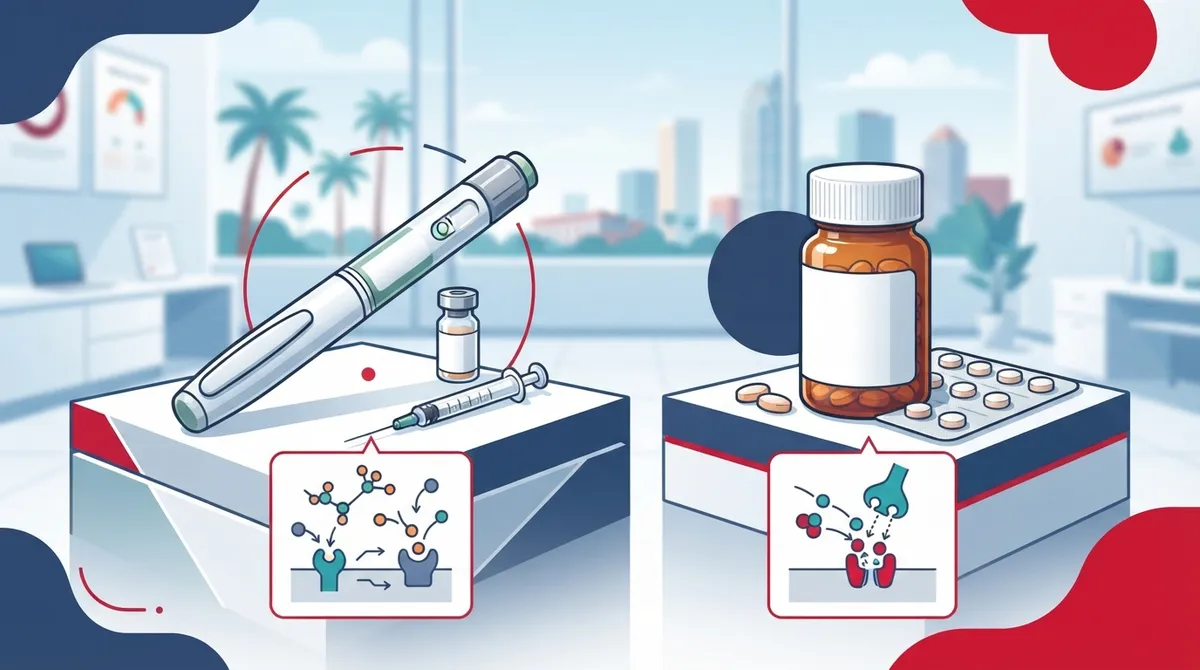
The FDA has approved several medicines for chronic weight management. Three are GLP-1-based: liraglutide (Saxenda), semaglutide (Wegovy), and tirzepatide (Zepbound). NIDDK lists six approved options in total, including non-GLP-1 medicines such as orlistat, phentermine/topiramate, and naltrexone/bupropion.
Brand names cause a lot of confusion. Ozempic and Mounjaro are approved for type 2 diabetes. Wegovy and Zepbound carry the obesity labels. The table below shows the basics.
|
Brand |
Active Ingredient |
FDA Label Focus |
|---|---|---|
|
Wegovy |
Semaglutide |
Chronic weight management |
|
Ozempic |
Semaglutide |
Type 2 diabetes |
|
Zepbound |
Tirzepatide |
Chronic weight management |
|
Mounjaro |
Tirzepatide |
Type 2 diabetes |
|
Saxenda |
Liraglutide |
Chronic weight management |
Want to compare the two most common options? See 6 Facts on Tirzepatide vs Semaglutide Weight Loss. If you are unsure how these drugs work in the body, What Is GLP-1? How It Works and Who It Helps in 2026 is a helpful starting point.
Who Qualifies for GLP-1 Treatment?
Eligibility depends on the specific medicine and your individual health. Common adult criteria for weight-management medication include:
- A body mass index (BMI) of 30 or higher, or
- A BMI of 27 or higher with at least one weight-related condition, such as high blood pressure, type 2 diabetes, or high cholesterol
These are general thresholds. Your clinician must check the current product label and review your medical history, other medicines, and goals. A BMI number alone never decides your care.
Some people should not use these medicines. Semaglutide and tirzepatide carry boxed warnings about thyroid C-cell tumors. They are contraindicated for anyone with a personal or family history of medullary thyroid carcinoma or multiple endocrine neoplasia syndrome type 2. They are also not recommended during pregnancy for weight loss. If you plan to become pregnant, discuss it with your clinician first. For more detail, see 15 Semaglutide Contraindications Every Patient Should Know.
What Should You Expect at a First Appointment?
A quality first visit is thorough. It should never feel rushed or like a sales pitch. Here is a typical flow:
- Health history review. Your clinician asks about weight history, medical conditions, family history, and current medicines.
- Physical exam and measurements. This includes weight, blood pressure, and often body composition.
- Lab work. Tests may check blood sugar, cholesterol, kidney function, liver function, and thyroid markers.
- Candid conversation about options. You discuss which medicine fits, including non-GLP-1 choices when appropriate.
- A plan for nutrition and activity. Medication works best with a reduced-calorie eating plan and more movement.
- A follow-up schedule. You leave knowing when you will be seen next and who to call with questions.
To get more from this visit, review What to Expect at a Weight Loss Consult in 2026.
How Is Dosing Handled?
These medicines are not started at full strength. Doses rise gradually to help your body adjust and to limit side effects. For example, the Zepbound prescribing information lists a 2.5 mg once-weekly starting dose for four weeks. The dose is then increased in 2.5 mg steps at intervals of at least four weeks, as appropriate.
Your clinician decides the pace based on how you feel and how you respond. Never adjust your dose on your own. Learn more in How to Increase Your Tirzepatide Dose Safely in 2026.
What Are the Side Effects and Risks?
Most side effects involve the digestive system. Common ones include nausea, diarrhea, vomiting, constipation, and abdominal discomfort. These often ease as the body adapts, but they can be significant.
Product labeling also warns about less common but serious risks:
- Gallbladder disease
- Pancreatitis
- Dehydration that leads to kidney injury
- Severe allergic reactions
- Thyroid C-cell tumor warnings (boxed warning for semaglutide and tirzepatide)
Seek care right away for severe stomach pain, persistent vomiting, signs of an allergic reaction, or a neck lump. If nausea is your main concern, see 10 Semaglutide Side Effects Patients Must Know (2026).
FDA-Approved Products vs. Compounded Versions
This is one of the most important topics when you compare clinics. FDA-approved medicines go through review for safety, effectiveness, and quality. Compounded drugs do not. The FDA does not review compounded versions before they are marketed.
Before you start any compounded product, ask these questions:
- Why is compounding needed instead of an approved product?
- Who dispenses the medication, and how is it sourced?
- What testing supports its quality?
- What happens if I have a reaction?
Clear answers are a good sign. Vague answers are a warning. For more on this issue, read 15 Compounded Semaglutide Tampa Mistakes to Avoid in 2026.
How Much Does GLP-1 Treatment Cost, and Does Insurance Help?
Costs vary by medication, dose, clinic fees, and your insurance. Coverage for weight-loss medicine differs widely between plans. Some cover obesity medicines, some cover them only for diabetes, and some exclude them.
Before you commit, ask the clinic for a written breakdown that separates visit fees, lab costs, and medication costs. Ask what happens to your costs if your dose changes. Helpful reading includes How to Budget for Tirzepatide Costs in 2026 and How Much Does Semaglutide Cost in Tampa & Riverview?
How to Judge a GLP-1 Clinic: A Quick Checklist
Use this table to compare any clinic you are considering.
|
What to Check |
What Good Looks Like |
|---|---|
|
Clinician credentials |
Licensed physician or advanced practitioner you can verify |
|
Medical evaluation |
History, exam, and labs before any prescription |
|
Medication transparency |
Clear about FDA-approved vs. compounded products |
|
Lifestyle support |
Nutrition and activity guidance built into care |
|
Follow-up |
Scheduled visits and a direct line for questions |
|
Pricing |
Itemized costs with no pressure to prepay |
|
Exit plan |
A real plan for long-term weight maintenance |
Be cautious of any clinic that promises guaranteed results, skips lab work, or pushes you toward the highest dose. You may also like 8 Mistakes to Avoid at a Premium Weight Loss Center.
What Happens If You Stop?
This question matters, and honest clinics address it early. Weight regain is common after stopping these medicines, because they treat a chronic condition rather than cure it. A good program plans for this from day one. That means building habits, protecting muscle, and agreeing on a long-term maintenance strategy with your clinician.
Do not stop suddenly without guidance. Read Why Does Weight Return After Stopping Tirzepatide? and How Can You Keep Weight Off for Good After 2026? to prepare.
Why Primary Care Matters for GLP-1 Treatment
Weight is tied to nearly every part of your health. Blood pressure, blood sugar, sleep apnea, joint pain, and hormones all play a role. When one team manages all of this, your care stays coordinated and safer.
InCare is a primary care and wellness clinic with locations in Tampa and Riverview. The practice combines medical expertise with technology such as body composition analysis, metabolic breath analysis, and DNA gene testing. These tools help your clinician personalize your plan instead of guessing. Patients also have access to urgent care, cancer screenings, and virtual visits, so everything stays under one roof. InCare holds a 4.8 out of 5 rating on Google, and you can see what InCare patients say on Google.
If you want to understand how a primary care doctor supports weight goals, see 14 Ways a Primary Care Doctor Aids Weight Loss (2026). For more on structured, physician-led programs, read 11 Reasons Medical Weight Loss Clinics Work Better in 2026.
You can also follow InCare for wellness tips on Instagram, Facebook, and TikTok.
Conclusion: Choose Care You Can Trust
The right GLP-1 clinic in Tampa evaluates you carefully, explains the difference between approved and compounded products, supports lifestyle change, and stays with you for the long term. Medication can be a powerful tool, but only when it is paired with medical oversight and a realistic plan.
Ready to talk with a clinician who looks at your whole health? Book your visit with InCare or contact our team with questions. We will help you decide whether GLP-1 treatment is right for you.
FAQs
Q: How do I find a medically supervised GLP-1 clinic in Tampa?
A: Look for licensed clinicians you can verify, a required medical evaluation with labs, and clear information about FDA-approved versus compounded products. A clinic that also offers primary care can coordinate your overall health. Confirm services and costs directly before booking.
Q: What is the difference between Wegovy and Ozempic, or Zepbound and Mounjaro?
A: Wegovy and Zepbound are FDA-approved for chronic weight management. Ozempic and Mounjaro are approved for type 2 diabetes. Each pair shares an active ingredient, semaglutide or tirzepatide, but the labeled uses differ.
Q: Are compounded semaglutide or tirzepatide FDA-approved?
A: No. Compounded drugs are not FDA-approved and do not go through FDA review for safety, effectiveness, or quality before marketing. Ask why compounding is needed, who dispenses it, and how it is sourced.
Q: What happens if I stop taking a GLP-1 medication?
A: Many people regain weight after stopping, because obesity is a chronic condition. Work with your clinician on a maintenance plan that includes nutrition, activity, and a safe way to taper or continue treatment.
Q: Does insurance cover GLP-1 medications for weight loss in Florida?
A: Coverage varies by plan. Some plans cover obesity medicines, others cover them only for diabetes, and some exclude them entirely. Ask your insurer and the clinic for a written cost breakdown before you start.


