
Key Takeaways
- Andropause is a nontechnical term; clinicians evaluate symptoms as possible male hypogonadism, which requires both compatible symptoms and consistently low testosterone on lab testing.
- Diagnosis requires two fasting morning testosterone tests, since about 30% of men with an initial low result have normal levels when retested.
- Many conditions mimic low testosterone, including poor sleep or sleep apnea, depression, thyroid disease, type 2 diabetes, excess weight, and medications, and these should be ruled out first.
- Testosterone therapy can suppress sperm production and is generally not appropriate for men planning to have children soon, so discuss fertility goals before starting.
- The FDA's February 2025 label update removed the class-wide cardiovascular boxed warning but added warnings about increased blood pressure, making regular blood pressure checks essential during treatment.
- Testosterone is not a general anti-aging treatment; the FDA and Endocrine Society limit use for age-related decline without an established medical cause.
Many men notice a slow shift in their late 30s, 40s, and beyond. Energy dips, drive fades, workouts stop paying off, and mood feels flat. The popular label for this is "andropause," and many men search for andropause treatment in Tampa hoping for a quick fix. The reality is more careful and more useful than that.
"Andropause" is a nontechnical term. Clinicians generally evaluate these symptoms as possible male hypogonadism, which means testosterone that is truly and consistently low alongside matching symptoms. Fatigue, low libido, and low mood have many causes, so good care starts with a clear diagnosis, not a prescription. This guide explains how evaluation works, when therapy is considered, what the 2025 FDA label changes mean, and how a primary care team can help. It is written for busy professionals, health-conscious adults, and families who want clear, evidence-based answers.
What Is Andropause, and Is It the Same as Low Testosterone?
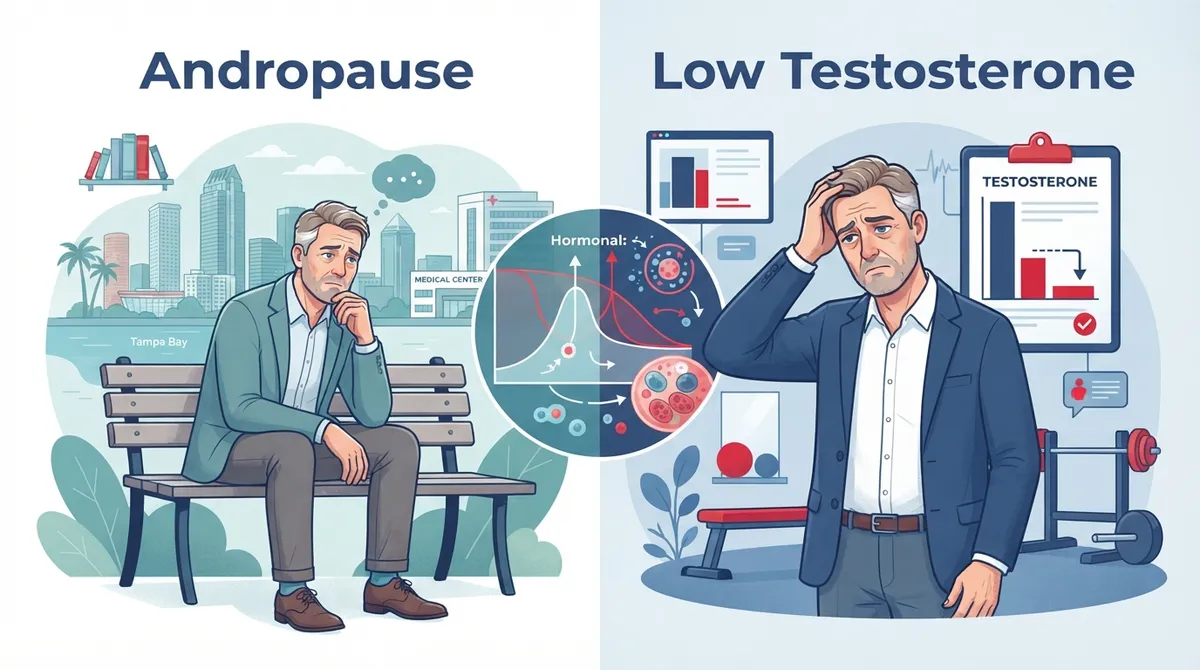
Andropause is a popular term, not a formal medical diagnosis. It suggests a sudden drop in male hormones, similar to menopause in women. In men, the change is usually gradual, and it does not happen to everyone.
When a clinician hears "andropause," the working question is whether the patient has male hypogonadism. This is a condition where the body does not make enough testosterone and the patient has matching symptoms. A man can feel tired and unmotivated with normal testosterone. A man can also have a low lab number and feel fine. That is why symptoms and labs must be read together.
Common symptoms that may prompt an evaluation
- Low sex drive or fewer spontaneous erections
- Erectile difficulties
- Ongoing fatigue or low energy
- Low mood or reduced motivation
- Loss of muscle mass or strength
- Increased body fat, especially around the waist
None of these symptoms point only to low testosterone. Poor sleep, stress, depression, medications, thyroid problems, diabetes, and excess weight can cause the same picture. A proper andropause treatment plan in Tampa begins by looking at all of these. If low desire is your main concern, our guide on when to see a doctor for low libido explains the key warning signs.

How Is Low Testosterone Diagnosed?
The Endocrine Society recommends diagnosing hypogonadism only when two things are present: compatible symptoms or signs, and consistently, clearly low testosterone on lab testing. One without the other is not enough.
Testosterone levels swing during the day and from day to day. They are highest in the morning. For that reason, testing is done on a morning, fasting blood sample measuring total testosterone. The Endocrine Society reports that about 30% of men whose first test falls in the low range have normal levels when retested. A single low result should never be treated as a final answer.
The standard testing pathway
- Symptom and history review. Your clinician looks at sleep, weight, mood, sexual health, medications, chronic conditions, and fertility goals.
- First morning blood test. A fasting total testosterone level is drawn early in the day.
- Repeat morning test. A second test on a separate morning confirms whether the low result is real.
- Added testing when needed. If the total level sits near the lower limit, or a condition may change sex hormone-binding globulin, free testosterone may be checked.
- Cause-finding labs. When low testosterone is confirmed, luteinizing hormone (LH) and follicle-stimulating hormone (FSH) help show whether the problem starts in the testes or in the pituitary or hypothalamus.
Depending on the findings, further evaluation may follow. In-house lab access can make this process faster and easier to follow. You can read more in our comparison of in-house and external lab testing services, and our guide to choosing a comprehensive hormone panel in Tampa.
What Else Can Mimic Andropause?
Before any hormone is prescribed, a thorough clinician rules out other causes. This step protects you from taking a long-term treatment you may not need.
|
Possible Cause |
How It Can Look Like Low Testosterone |
What Primary Care May Do |
|---|---|---|
|
Poor sleep or sleep apnea |
Fatigue, low libido, low mood |
Sleep screening and referral for testing |
|
Excess weight or metabolic syndrome |
Low energy, lower testosterone levels |
Weight management and metabolic labs |
|
Depression or chronic stress |
Low drive, flat mood, low energy |
Mood screening and support |
|
Thyroid disease |
Fatigue, weight change, low mood |
Thyroid testing |
|
Type 2 diabetes |
Fatigue, erectile problems |
A1c, glucose, and treatment plan |
|
Medications |
Reduced libido or erectile function |
Medication review and adjustment |
Sleep deserves special attention. Untreated severe sleep apnea is a reason to hold off on starting testosterone, and it can cause many of the same symptoms. If you snore or wake unrefreshed, see how to know when to see a doctor for poor sleep. Weight also matters, and a structured plan can sometimes lift symptoms on its own. Learn more about how a primary care doctor aids weight loss.
When Is Testosterone Therapy Considered?
Testosterone therapy may be considered for men who have symptoms and confirmed deficiency. The decision follows a frank talk about expected benefits, risks, alternatives, and monitoring. It is not a general anti-aging treatment.
The Endocrine Society recommends against routine treatment of men whose levels are low only because of aging, without an appropriate clinical diagnosis. The FDA's labeling also limits use for age-related decline alone. That is an important point for any man comparing clinics. A careful provider confirms the diagnosis first.
Situations where therapy is generally not started
- Prostate cancer or breast cancer
- Elevated hematocrit (thick blood)
- Untreated severe sleep apnea
- Uncontrolled heart failure
- Recent heart attack or stroke
- Certain prostate findings that need more evaluation first
- Plans to have children in the near future
Does Testosterone Therapy Affect Fertility?
Yes. Testosterone therapy can suppress sperm production, and it is generally not appropriate for men planning to have children soon. This surprises many patients, because testosterone is a male hormone and people assume it supports fertility.
If fertility matters to you now or in the near future, tell your clinician at the first visit. Other approaches may fit better, and a specialist referral may be wise. Reading about male factor infertility options can help you prepare questions for that visit.
What Are the Treatment Options?
When therapy is appropriate, several FDA-approved testosterone formulations exist. These include gels, injections, and certain oral or nasal products. The right choice depends on your health, lifestyle, preferences, and lab results.
|
Formulation |
General Features |
Points to Discuss |
|---|---|---|
|
Topical gel |
Applied daily to the skin |
Skin transfer risk to others; consistent daily routine |
|
Injection |
Given on a scheduled basis |
Levels can rise and fall between doses |
|
Oral or nasal products |
Certain FDA-approved options |
Dosing schedule and blood pressure effects |
Dosing and monitoring are always individualized. Lifestyle care also matters. Better sleep, regular strength training, weight loss, and managing stress can improve energy and drive, whether or not therapy is used. For a closer look at care models, see who provides medically supervised TRT in Tampa Bay and how to start medically supervised TRT in Tampa safely.
What Did the FDA's 2025 Label Changes Say?
In February 2025, the FDA issued class-wide labeling changes for testosterone products. After reviewing the TRAVERSE trial, the agency removed the class-wide boxed warning about increased cardiovascular outcomes. That was a notable update, and it offered some reassurance to patients and clinicians.
Other parts of the label did not loosen. The FDA kept its limit on using testosterone for age-related hypogonadism without an established medical cause. It also required new warnings about increased blood pressure, based on postmarket studies showing a rise across testosterone products as a class. In plain terms, blood pressure monitoring is now an important part of treatment follow-up. If you already manage hypertension, review proven strategies for blood pressure management before you start.
What Monitoring Is Needed During Treatment?
Safe therapy depends on follow-up. Skipping it is one of the most common and most avoidable mistakes. A typical monitoring plan checks several things on a regular schedule set by your clinician.
- Symptom response and side effects
- Testosterone levels
- Hematocrit, to watch for blood thickening
- Prostate risk, as appropriate for your age and history
- Blood pressure
Missing follow-ups can hide problems that are easy to fix when caught early. Our article on TRT follow-up mistakes covers what to avoid.
What Should You Expect at a Tampa Primary Care Visit?
A strong evaluation looks at the whole person, not just a hormone number. For men searching for andropause treatment in Tampa, a primary care team can serve as the first and most coordinated stop. If a specialist is needed, such as an endocrinologist or urologist, your primary care clinician can guide that referral and keep your care connected.
A typical first visit may include
- A review of symptoms, sleep, weight, mood, sexual health, and stress
- A review of medications, chronic conditions, and fertility goals
- A physical exam
- Laboratory testing, including repeat morning testosterone when indicated
- A clear plan that explains your results and next steps
At InCare, our Tampa and Riverview clinics combine primary care with advanced wellness tools. We take a whole-body approach that can include metabolic breath analysis, body composition tracking, and DNA gene testing to build a fuller picture of your health. Many men find that addressing weight, sleep, and metabolic health brings real improvement alongside any hormone decision. Patients rate us 4.8 out of 5 on Google, and you can read InCare reviews on Google to see what neighbors say about their visits.
As with any clinic, verify clinician credentials, testing practices, and follow-up policies directly before you commit. Ask how diagnosis is confirmed and how monitoring is handled. Our guides on choosing a reputable TRT clinic in Tampa and choosing the best primary care doctor in Tampa offer practical checklists.
Lifestyle Steps That Support Hormone Health
Whether or not you ever need therapy, daily habits shape how you feel. These steps have broad health benefits and may ease symptoms that resemble andropause.
- Prioritize sleep. Aim for consistent, restful sleep and get snoring evaluated.
- Build muscle. Strength training supports body composition, energy, and metabolic health.
- Manage weight. Reducing excess abdominal fat can improve many markers of men's health.
- Limit alcohol and avoid tobacco. Both can affect hormones and overall wellness.
- Keep up with preventive care. Annual physicals and screenings catch problems early. See how to support healthy testosterone production after 40.
Take the Next Step With a Clear Plan
Andropause treatment in Tampa works best when it starts with the right question: what is really causing my symptoms? Careful testing, repeat morning labs, a review of other causes, and honest talk about benefits and risks protect your health and your time. Therapy is one tool, used only when the diagnosis is clear and monitoring is in place.
If you want a thorough, personalized evaluation, our team at InCare is ready to help. Book your visit online or contact our team with questions. You can also follow our health tips on Instagram, Facebook, and TikTok. This article is for education and does not replace personal medical advice.
FAQs
Q: What is the difference between andropause and low testosterone?
A: Andropause is a popular, nontechnical term for age-related hormone changes in men. Clinicians evaluate these symptoms as possible male hypogonadism, which requires both compatible symptoms and repeatedly low morning testosterone. Many men with similar symptoms have normal testosterone, so testing is essential.
Q: Why are two morning blood tests needed to diagnose low testosterone?
A: Testosterone levels vary through the day and from day to day, and they peak in the morning. The Endocrine Society reports that about 30% of men with an initial low result have normal levels when retested. A repeat fasting morning test confirms whether the deficiency is real before any treatment begins.
Q: Can testosterone therapy affect fertility?
A: Yes. Testosterone therapy can suppress sperm production and is generally not appropriate for men who plan to have children soon. If fertility is a goal, discuss it with your clinician before starting, because other approaches or a specialist referral may be a better fit.
Q: What monitoring is required during testosterone therapy?
A: Follow-up commonly assesses symptoms, testosterone levels, hematocrit, prostate risk as appropriate, side effects, and blood pressure. The FDA's 2025 label update added warnings about increased blood pressure, which makes regular blood pressure checks an important part of safe treatment.
Q: What should I expect at a Tampa primary care visit for possible low testosterone?
A: Expect a review of your symptoms, sleep, weight, mood, medications, chronic conditions, and fertility goals, along with a physical exam and lab testing. Your clinician will look for other causes of fatigue and low drive before recommending any hormone treatment, and will explain next steps clearly.


