

Key Takeaways
- No clinic can promise a longer life or reverse aging, and "longevity" is a marketing term rather than a standard medical specialty, so the label alone says little about care quality.
- Established prevention, such as blood pressure, cholesterol, and diabetes checks, vaccines, and age-appropriate cancer screenings, has the strongest evidence and should form the foundation of any longevity plan.
- Before paying for hormone therapy, peptides, IV drips, or add-on tests, ask what evidence supports it, whether it is approved for that use, and whether the result will change your care.
- Daily habits like regular strength and cardio exercise, nutritious eating, 7-9 hours of sleep, avoiding tobacco, and staying socially connected matter more than any clinic treatment.
Search for a longevity medicines clinic in Riverview, and you will find a wide mix of results. Some are primary care practices. Others are medspas, hormone clinics, or IV bars. All of them use the word "longevity," yet they offer very different care.
That is because longevity medicine is a broad marketing term, not one standard medical specialty. No clinic can promise a longer life or reverse aging. What a good clinic can do is help you find risks early, manage them, and build habits that support healthy aging.
This guide explains what a longevity medicines clinic in Riverview should offer. It also shows how to tell proven prevention from hype, and which questions to ask before you pay for any service. Whether you are a busy parent, a professional focused on optimizing your health, or a young adult curious about prevention, the same rule applies: start with the basics that work.
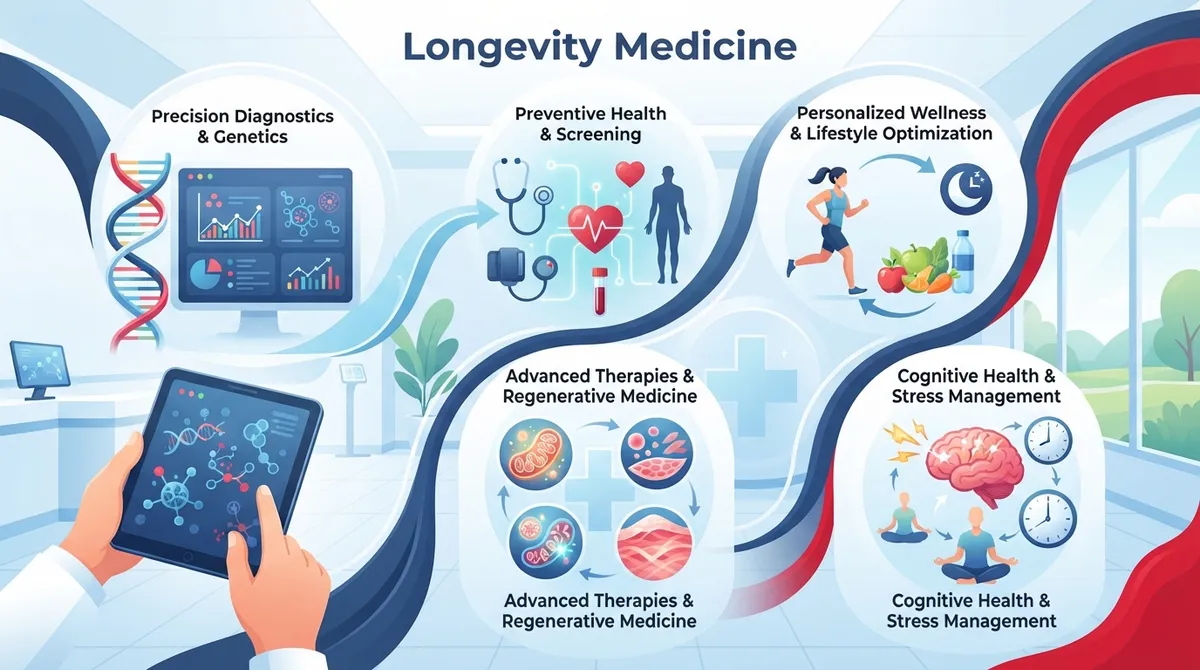
What Does Longevity Medicine Really Mean?
Longevity medicine has no single definition. Some clinics use it to describe preventive primary care. Others use it for hormone therapy, weight management, peptides, IV infusions, or cosmetic treatments.
In Riverview, services sold under this label range widely. A clinic's menu does not prove that a treatment prevents disease or extends life. The label tells you very little. The details of care tell you much more.
A sound approach to longevity starts with why longevity medicine starts with primary care. The reason is simple. Most of the gains in healthy aging come from catching problems early and managing them well over time.
Established Prevention vs. Emerging Treatments
It helps to sort services into two groups:
- Established prevention: blood pressure checks, cholesterol and diabetes screening, vaccines, cancer screenings, and chronic condition management.
- Emerging or marketed interventions: peptides, some supplements, IV infusions, advanced biomarker panels, and anti-aging hormone programs.
Both groups may have a place. But they do not carry the same level of evidence. A trustworthy clinic is honest about that difference.

Why Primary Care Is the Foundation of Longevity
A strong longevity plan begins with a full medical picture. That means a visit that covers your history, your family history, your medications, your symptoms, and your personal risk factors.
From there, a clinician can focus on what matters most for you. For most adults, that includes:
- Blood pressure, cholesterol, and blood sugar checks.
- Age- and risk-appropriate cancer screenings.
- Recommended vaccinations.
- Management of chronic conditions such as diabetes or hypertension.
- A review of sleep, activity, nutrition, and mental well-being.
This is the core of primary care, and it is where the strongest evidence for living well longer exists. You can read more in our guide on why preventive health care is the key to a longer life.
Longevity Services You May See in Riverview
Riverview-area providers describe a range of offerings. Some local listings emphasize physician-led medspa and longevity services. Others focus on family medicine, preventive care, hormone therapy, and weight management. InCare, located on Boyette Road, focuses on primary care, screening, weight management, and wellness services. Always confirm current services, credentials, and locations directly with any provider.
The table below compares common service types and how to think about each one.
|
Service |
What It Is |
What to Ask |
|---|---|---|
|
Preventive primary care |
Screenings, vaccines, chronic disease management |
Which screenings fit my age and risk? |
|
Cancer screening |
Early detection tests based on guidelines |
Which tests do I need and how often? |
|
Medical weight management |
Physician-guided plans, sometimes with medication |
What are the risks and how will progress be tracked? |
|
Hormone therapy |
Treatment for a diagnosed hormone deficiency |
What is the clinical indication and follow-up plan? |
|
Genetic testing |
Analysis of inherited risk markers |
Will the result change my care? |
|
IV hydration and vitamins |
Fluids and nutrients given by infusion |
What is the goal and what are the limits? |
|
Peptides |
Emerging therapies with varied evidence |
Is it approved for this use, and what are the risks? |
Cancer Screening and Early Detection
Finding cancer early is one of the most proven ways to protect long-term health. A good clinic matches screening to your age, sex, and family history. Learn more about cancer screening options and when each test makes sense.
Weight Management and Metabolic Health
Excess weight raises the risk of diabetes, heart disease, and sleep problems. Medical weight loss differs from dieting because it uses testing, medical oversight, and follow-up. Tools such as metabolic breath analysis and body composition analysis can show how your body uses energy and where fat and muscle sit. Explore InCare's weight loss program to see how a physician-guided plan works.
Genetic Testing and Personal Risk
DNA testing can reveal inherited tendencies. Still, a result only helps if it changes your care. Ask whether a test will lead to a clear action before you pay for it. DNA gene testing works best when a clinician helps you interpret it.
How to Judge Hormone Therapy, Peptides, and IV Drips
These services draw the most interest and the most confusion. Here is a plain way to think about them.
Hormone therapy should rest on a clinical indication and a full assessment. Age alone is not a reason. It should never be sold as a way to reverse aging. Discuss benefits, risks, alternatives, and follow-up with a qualified clinician. For a deeper comparison, see BHRT vs. traditional HRT.
Peptides vary widely in evidence and regulatory status. Some are approved for specific uses. Many marketed for longevity are not. Our guide to what peptides are and what they can do explains the difference, and our peptide therapy safety guide covers key risks.
IV therapy can help with hydration and certain deficiencies. It should not be assumed to prevent disease or extend life. Review common IV hydration mistakes before you book, or learn about IV hydration and vitamin drips at InCare.
Supplements and Add-On Tests
Supplements, advanced panels, and extra tests should earn their place. Ask whether the result will change what your clinician does. If not, the cost may not be worth it.
Seven Questions to Ask Before You Start
Use this checklist with any longevity clinic in Riverview:
- Who is the clinician, and what are their credentials?
- What medical history and testing will you review before recommending treatment?
- What evidence supports this treatment for my specific goal?
- Is it approved for this use, and what are the known risks and drug interactions?
- How will you monitor my results and any side effects?
- What will it cost, and does insurance cover any of it?
- What happens if the treatment does not help?
Clear, calm answers are a good sign. Vague promises, pressure to buy packages, or claims of guaranteed results are warning signs. Our article on 10 things to look for in a wellness clinic offers more guidance.
Everyday Habits Still Matter Most
No clinic treatment can replace the basics. Healthy aging rests on habits you control:
- Regular physical activity, including strength and cardio work.
- Nutritious eating with plenty of whole foods.
- Seven to nine hours of sleep for most adults.
- Avoiding tobacco and limiting alcohol.
- Staying socially connected and caring for your mental health.
Fitness testing can add a useful data point. For example, VO2 max testing measures cardiorespiratory fitness, which is closely tied to long-term health. The right clinic helps you turn results like these into a simple, realistic plan.
Why Choose InCare for Longevity-Focused Care in Riverview?
InCare is a personalized primary care and wellness clinic serving Riverview and Tampa. The practice combines state-of-the-art technology with medical expertise, and it puts prevention first. Patients can access primary care, urgent care, cancer screening, weight loss programs, metabolic and body composition testing, DNA gene testing, and IV hydration, all under one roof or through virtual visits.
That whole-body approach matters. Instead of chasing single trends, you work with a care team that looks at your full health picture, orders the right tests, and follows up. You can learn about the providers who guide your care, or read about what to look for in a longevity clinic. You can also see what patients say by reading InCare reviews on Google through Visit us on Google — InCare, and follow updates on Instagram, Facebook, and TikTok.
Take the First Step Toward Healthier Aging
The best longevity medicines clinic in Riverview is the one that is honest, evidence-based, and focused on you. Start with a strong primary care foundation. Add advanced services only when they make sense for your goals and risks. Verify credentials, ask hard questions, and avoid anyone who promises to reverse aging.
Ready to build a personalized prevention plan? Book Now to schedule your visit, or contact the InCare team with your questions. You can also find more location details before you come in.
FAQs
Q: What does a longevity medicines clinic in Riverview offer?
A: Services vary widely by clinic. They can range from preventive primary care and cancer screening to weight management, hormone therapy, IV infusions, and peptides. Always confirm current services and clinician credentials directly with the provider.
Q: Are hormone therapy, peptides, or IV drips proven to slow aging?
A: No. Evidence varies by treatment, and none is proven to reverse aging or guarantee a longer life. Ask what evidence supports a treatment for your specific goal, whether it is approved for that use, and how risks will be monitored.
Q: Does longevity medicine include primary care and preventive screenings?
A: A sound longevity approach should. Blood pressure, cholesterol, diabetes risk, vaccines, and age-appropriate cancer screenings are the best-established tools for healthy aging, and they work best when guided by a primary care clinician.
Q: How do I choose a safe, evidence-based longevity clinic?
A: Verify the clinician's credentials, ask for the evidence behind each recommended treatment, and review how results and side effects will be tracked. Be cautious of clinics that promise guaranteed results or push large packages.
Q: Does insurance cover longevity medicine or wellness services?
A: Coverage depends on your plan and the service. Primary care visits and many screenings are often covered, while add-on wellness services may not be. Ask about costs and coverage before you begin any treatment.