Key Takeaways
- BPC-157 and TB-500 are marketed for tendon, muscle, and wound healing, but their support comes mainly from lab and animal studies, with no robust human proof of faster recovery.
- BPC-157 is prohibited at all times under the WADA 2026 Prohibited List, so tested athletes should avoid it and check current anti-doping rules before using any peptide.
- FDA materials note insufficient safety data for BPC-157, along with concerns about immune reactions, impurities, and injection-site reactions; 'research use only' products offer no reliable assurance of purity or sterility.
- Growth hormone secretagogues like CJC-1295 and ipamorelin are not established recovery tools and should be used only under medical supervision for diagnosed deficiencies.
- Proven recovery basics include an accurate diagnosis, guided physical therapy, deep sleep, adequate protein and vitamin D, and checking for low testosterone or thyroid issues that may slow healing.
- See a clinician if pain persists after one to two weeks of rest, or if you notice swelling, numbness, weakness, or recovery that keeps stalling.
Scroll through social media or a gym locker room in 2026, and you will hear about peptides for recovery. BPC-157, TB-500, ipamorelin, and CJC-1295 are marketed as shortcuts to faster healing and better sleep. The promises are bold. The science is far less certain.
So what peptides are used for recovery, and do they work? This guide gives you a clear, balanced answer. We cover the compounds people talk about most, what research actually shows, the safety concerns, and what proven options can help you heal. If you are a busy professional, a parent, or an athlete trying to bounce back, you deserve facts before you inject anything.
At InCare, we believe good recovery starts with a clear diagnosis and a plan built around you. Here is what you need to know.
What Are Peptides and Why Are They Linked to Recovery?
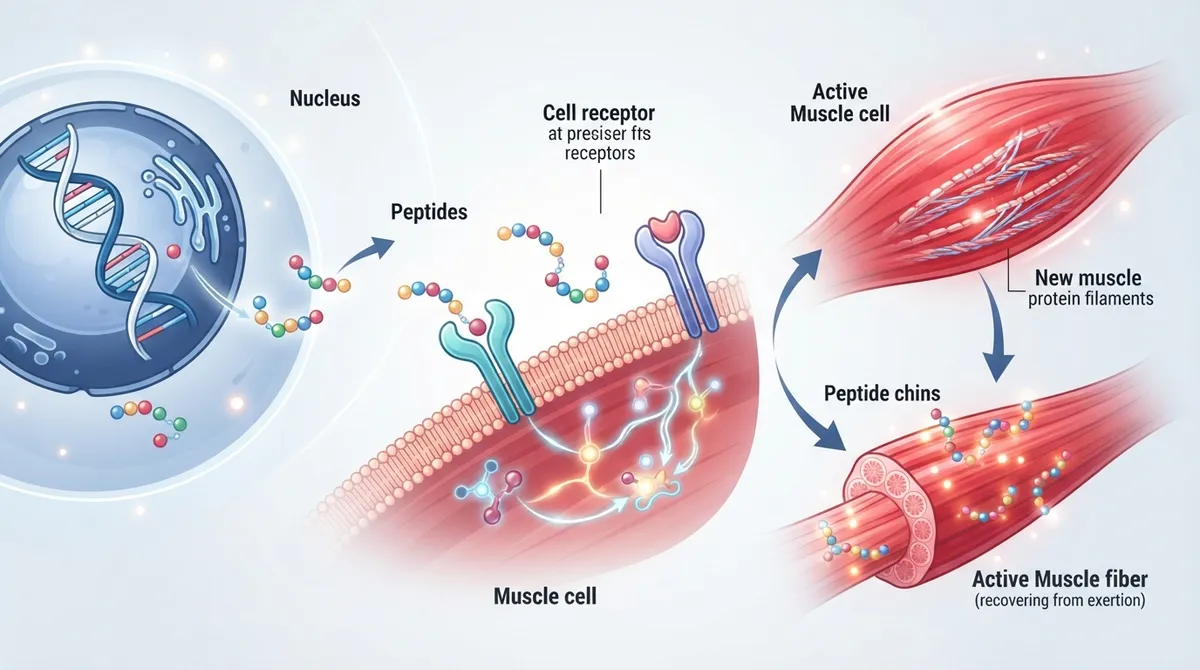
Peptides are short chains of amino acids. Your body makes thousands of them naturally. Some act as hormones, like insulin. Others act as signals that tell cells what to do.
That signaling role is why peptides draw interest for healing. If a peptide could tell tissue to repair faster, recovery could speed up. That idea is appealing, but it is still a theory for most products sold today.
The phrase "peptides for recovery" is a wellness-market term, not a single medical treatment. It covers many different compounds with different proposed actions. They should not be treated as interchangeable. For a broader overview, see our guide on what peptides are and how they relate to longevity and wellness.
What Peptides Are Used for Recovery?
Several peptides come up again and again when people discuss recovery. They fall into two broad groups: tissue-repair peptides and growth hormone-related peptides.
BPC-157
BPC-157 is the most talked-about recovery peptide. It is marketed for tendon, muscle, ligament, and gut healing. Most of the support comes from lab and animal studies. High-quality human trials showing real benefit are lacking.
BPC-157 is not FDA-approved to treat injuries, pain, inflammation, or digestive conditions. It is also prohibited at all times under the World Anti-Doping Agency (WADA) 2026 Prohibited List, which took effect January 1, 2026. Athletes who compete under anti-doping rules should avoid it. You can read more in our deeper look at BPC-157 facts every wellness patient should know.
TB-500 and Thymosin Beta-4
TB-500 is a product related to thymosin beta-4, a protein found naturally in the body. It is promoted for muscle repair, flexibility, and wound healing. As with BPC-157, evidence comes mostly from laboratory and animal research.
TB-500 is not an FDA-approved recovery treatment. Animal data does not prove it helps people heal faster. Learn more in how to understand TB-500 before you consider it.
Growth Hormone Secretagogues
This group includes CJC-1295, ipamorelin, sermorelin, and tesamorelin. They are designed to nudge the body to release more of its own growth hormone. They are sometimes marketed for muscle repair, fat loss, or deeper sleep.
Growth hormone therapy is appropriate for diagnosed deficiency under medical supervision. It is not an established anti-aging or routine recovery tool. If you are curious, we explain the basics in what ipamorelin is and whether it is right for you and what CJC-1295 actually does.
GHK-Cu and Other Wellness Peptides
GHK-Cu, a copper peptide, is often discussed for skin repair and wound healing. Other names, like KPV and thymosin alpha-1, are linked to inflammation or immune support. Most have limited human data for recovery. See how to use GHK-Cu safely for skin and wellness for more detail.
Recovery Peptides at a Glance
|
Peptide |
Marketed For |
Human Evidence |
FDA Status for Recovery |
|---|---|---|---|
|
BPC-157 |
Tendon, muscle, gut healing |
Largely preclinical; no high-quality human proof |
Not approved |
|
TB-500 |
Muscle repair, flexibility |
Animal and lab research only |
Not approved |
|
CJC-1295 |
Growth hormone release, sleep |
Limited; not shown to improve routine recovery |
Not approved for recovery |
|
Ipamorelin |
Muscle repair, sleep |
Limited human data for recovery goals |
Not approved for recovery |
|
GHK-Cu |
Skin and wound healing |
Small studies, mostly topical use |
Not approved as injectable |
What Does the Evidence Really Show?
This is where honesty matters. For BPC-157 and TB-500, no robust human efficacy statistic exists. Claims of faster healing should not be treated as established clinical outcomes.
FDA briefing materials state there is insufficient clinical safety information to characterize BPC-157's safety profile. They also note not enough evidence to conclude it works for the condition evaluated.
Animal studies are a starting point. They are not proof. Many compounds that look promising in rats never help people. That is why careful human trials matter.
Safety Concerns You Should Know
Peptide injections carry real risks, especially when the product is unapproved. Here are the main concerns:
- Limited human safety data. Long-term effects are largely unknown.
- Immune reactions. FDA materials raise concerns about immunogenicity, meaning the body may react to the peptide.
- Impurities. Peptide products can contain contaminants from manufacturing.
- Reported side effects. FDA materials describe injection-site redness and swelling, and one report of shortness of breath. The FDA cautions that such reports do not prove cause.
Products labeled "research use only" are not approved or shown safe for human use. With these items, you may have no reliable assurance of identity, purity, strength, or sterility. Our article on BPC-157 contamination risks explains why sourcing matters so much.
Are Recovery Peptides Legal for Athletes?
Athletes face an extra layer of risk. BPC-157 is listed as prohibited at all times under category S0 of the WADA 2026 Prohibited List. Other peptide hormones and growth factors may also be banned.
If you compete in any tested sport, check the current list and talk with your sport's anti-doping authority before using any peptide. A positive test can end a season or a career. Regulations also change, so confirm current rules before acting on any claim.
Approved Medicine vs. Experimental Products
A responsible conversation about peptides starts with one question: is this an approved medicine or an experimental product?
- FDA-approved peptide drugs. Some peptides are real, approved medicines for specific conditions. Insulin and certain GLP-1 medications are examples. They are approved for defined uses with known risks.
- Compounded products. These are made by pharmacies for individual patients. Their legal and quality status can shift, and they lack the full review of approved drugs.
- Research-use-only products. These are not intended for people at all. Avoid them.
Understanding which category a product falls into helps you weigh risk and benefit. Our guide on FDA-approved vs. compounded peptides walks through the differences.
Evidence-Based Ways to Support Recovery
The good news is that proven strategies work well for most people. Before reaching for an unproven injection, consider these steps.
- Get an accurate diagnosis. A slow-healing "strain" may be a tendon tear, a nutrient problem, or a hormone issue. Treatment depends on the cause.
- Follow a rehabilitation plan. Guided physical therapy and progressive loading are the foundation of tendon and muscle recovery.
- Protect your sleep. Deep sleep is when much tissue repair happens. See how to speed up muscle recovery the smart way.
- Fuel your body. Enough protein, calories, vitamin D, and hydration support healing.
- Review medications and hormones. Low testosterone, thyroid issues, or poor blood sugar control can slow recovery.
- Use approved treatments. Your clinician can recommend anti-inflammatory strategies, injections, or procedures that are backed by evidence.
How a Primary Care Clinic Can Help
A primary care clinic can look at the whole picture. That means checking labs, hormones, sleep, nutrition, and medications that may be getting in the way of healing.
For busy families and professionals in Tampa and Riverview, this is often the fastest route to real answers. Primary care lets you review your history, order the right tests, and build a plan with one trusted team. Tools like body composition analysis and metabolic breath analysis can show how your body uses energy. IV hydration and vitamin drips may also support wellness goals when appropriate.
If you are weighing peptide options, a clinician can explain the uncertainty, the product risks, and what is approved versus experimental. To explore that conversation, read about peptides in primary care and what works versus what is risky. Our team also shares more on peptide therapy in Tampa.
InCare has earned a 4.8 out of 5 rating from patients on Google. You can see what our InCare patients say on Google and learn why so many choose us for thoughtful, personalized care. You can also follow our updates on Instagram, Facebook, and TikTok.
When to See a Clinician About an Injury
Do not wait if you notice any of these signs:
- Pain that has not improved after one to two weeks of rest and basic care
- Swelling, bruising, or a joint that feels unstable
- Numbness, tingling, or weakness in a limb
- Recovery that stalls or keeps setting back
- Fatigue, low mood, or poor sleep that seems to hold you back
For urgent injuries, urgent care can evaluate you quickly. For ongoing issues, a primary care visit helps find the root cause.
Conclusion: Recovery Starts With Facts, Not Hype
So, what peptides are used for recovery? People most often use BPC-157, TB-500, and growth hormone-related peptides like CJC-1295 and ipamorelin. But these are experimental for recovery, lack strong human evidence, and are not FDA-approved for healing injuries. BPC-157 is also banned for athletes under WADA rules.
The safest path is to start with a diagnosis, proven rehabilitation, good sleep, and nutrition, and to talk openly with a clinician about any peptide you are considering. The team at InCare is ready to help you build a recovery plan grounded in evidence. Book your appointment today, or contact our team with questions.
FAQs
Q: What peptides are commonly marketed for injury or workout recovery?
A: The most common are BPC-157, TB-500 (a thymosin beta-4 related product), and growth hormone secretagogues such as CJC-1295 and ipamorelin. These are experimental for recovery, and none is FDA-approved to treat injuries or speed healing.
Q: Does BPC-157 work for tendon, muscle, or ligament injuries in humans?
A: Support for BPC-157 comes mainly from lab and animal research. High-quality human clinical evidence showing benefit is lacking, so claims of faster healing should not be treated as proven.
Q: Are recovery peptides banned for athletes?
A: BPC-157 is prohibited at all times under the WADA 2026 Prohibited List, and other peptide hormones and growth factors may also be banned. Athletes should check the current list and consult their sport's anti-doping authority before use.
Q: Are peptide injections safe, and what are the possible risks?
A: Safety data in humans is limited for many recovery peptides. FDA materials note concerns such as immune reactions and impurities, and reported effects include injection-site redness and swelling. Products sold as "research use only" may lack reliable quality control.
Q: What evidence-based treatments can support recovery from an injury?
A: Accurate diagnosis, guided rehabilitation, quality sleep, proper nutrition, and approved medical treatments form the foundation of recovery. A primary care clinician can also check for hormone, nutrient, or metabolic issues that may be slowing healing.