

Key Takeaways
- Metabolic weight loss in Tampa is clinician-supervised care that starts with your medical history, medications, and metabolic risk factors, not a standalone diet or a promise to 'reset' metabolism.
- A first visit typically includes a health history, medication review, physical exam with weight and blood pressure, and labs only when clinically appropriate, followed by shared goal setting.
- Prescription options like GLP-1 medications may be considered only for eligible patients after a clinician weighs benefits, risks, and contraindications, and should never be started or stopped without medical guidance.
- When choosing a Tampa provider, verify clinician credentials, ask what visits and follow-up are included, request clear fees, and be wary of guaranteed results or fixed packages that skip your history.
If you have tried diet after diet and the scale still will not move, you are not alone. Weight is shaped by biology, sleep, stress, medications, and daily habits, not willpower alone. That is why many Tampa adults now look for metabolic weight loss: a medically supervised approach that looks at your whole health picture first.
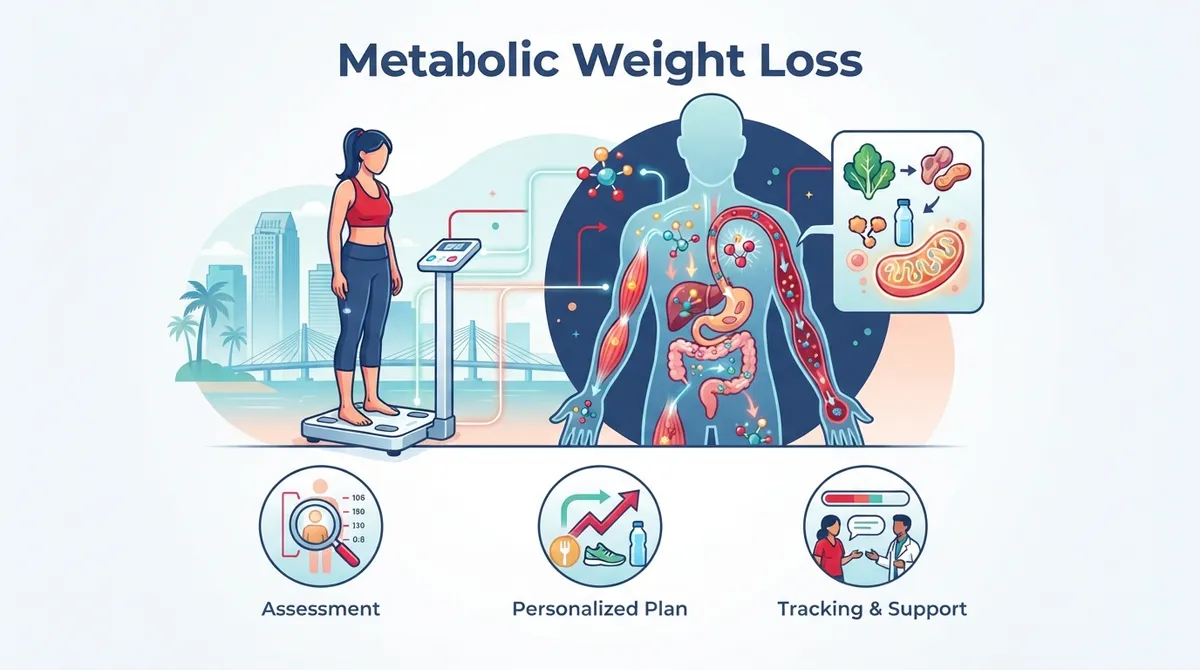
Metabolic weight loss in Tampa generally means clinician-guided weight management. It considers your medical history, weight history, medications, metabolic risk factors, nutrition, activity, and follow-up. It is not a standalone diet, and it is not a promise to "boost" or "reset" your metabolism.
In Florida, the stakes are real. State survey data from 2024 showed that 35.8% of adults were overweight, and 27.1% of adults aged 18 to 39 had obesity. This guide explains what metabolic weight loss involves, what a first visit looks like, when prescription options may be considered, and how to choose a Tampa provider you can trust.
What Does Metabolic Weight Loss Mean in Tampa?
In a primary care and wellness setting, metabolic weight loss is individualized, medically supervised weight management. It combines assessment, sustainable lifestyle support, and regular follow-up. Prescription treatment is added only when it is clinically appropriate.
The word "metabolic" points to how your body uses energy and how weight connects to blood sugar, blood pressure, cholesterol, sleep, and hormones. A good program treats weight as one part of overall health. It also uses respectful, non-stigmatizing language, because weight is influenced by many biological and social factors.
Local programs differ. What a clinic describes on its website is a provider-reported service, not independent proof of results. Always ask what is included and how progress is measured.
What It Is Not
- A crash diet or a short-term cleanse
- A guarantee of fast or fixed results
- A one-size-fits-all package of tests and treatments
- A claim to "reset" your metabolism or fix hormones without testing
How Does Medical Weight Loss Differ From Dieting?
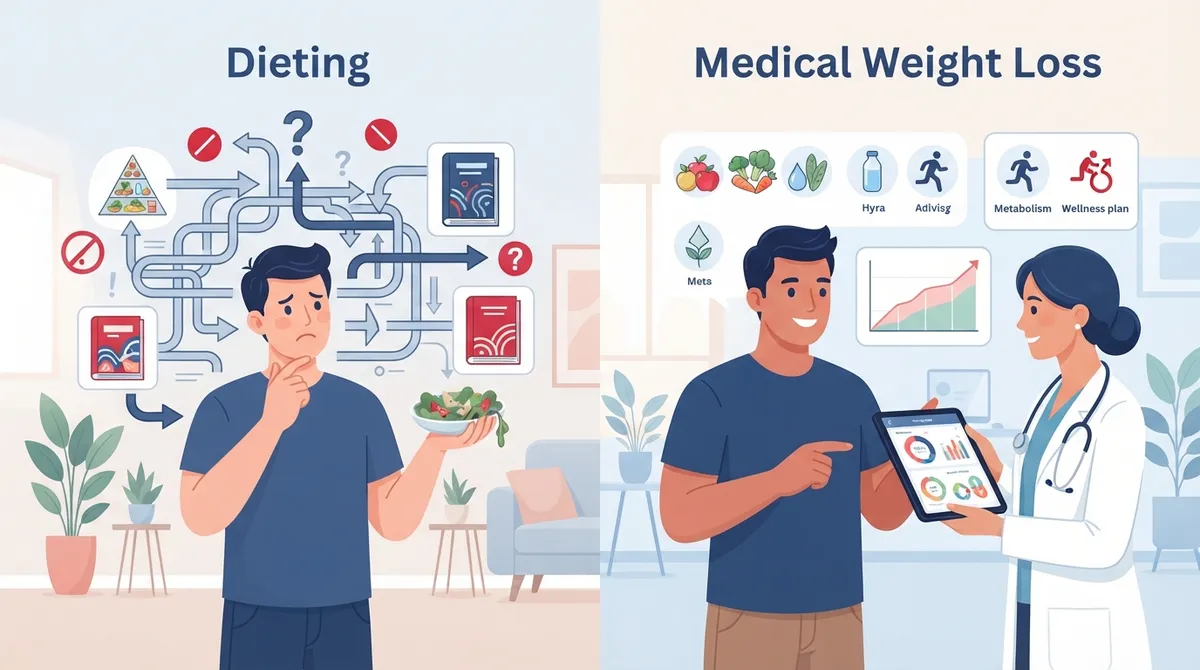
Dieting usually focuses on cutting calories for a short time. Medical weight management looks at why weight has been hard to change and builds a plan around you. For a deeper comparison, see what makes medical weight loss different from dieting.
|
Feature |
Typical Dieting |
Medically Supervised Approach |
|---|---|---|
|
Starting point |
A popular plan or trend |
Medical history, exam, and review of medications |
|
Personalization |
Low |
High, based on your health and goals |
|
Monitoring |
Self-tracked |
Scheduled follow-up with a clinician |
|
Medication option |
Not available |
Considered when appropriate |
|
Long-term support |
Often limited |
Ongoing lifestyle and behavior guidance |
What Happens at a First Consultation?
A sound initial visit is a conversation and a clinical assessment. Testing is individualized, so not every patient gets the same workup. Here is a common flow:
- Health history review: Your clinician asks about weight history, past attempts, sleep, stress, family history, and current symptoms.
- Medication review: Some prescriptions can affect weight, so your full list is checked.
- Physical exam and measurements: This usually includes weight and blood pressure.
- Lab testing when appropriate: Blood work may be ordered if your history suggests it would help.
- Shared goal setting: You and your clinician agree on realistic targets and a follow-up schedule.
Many Tampa adults start this process with a trusted primary care team that already knows their health history. That continuity matters, because weight often links to blood pressure, blood sugar, and other long-term conditions. Our guide on how primary doctors help manage chronic illnesses explains this connection.
Which Tools Can Add Insight Into Your Metabolism?
Some clinics use technology to better understand your body. These tools can support decisions, but they do not replace a clinical exam. They should be used only when they add value for you.
- Metabolic breath analysis: A breath-based test that estimates how your body uses energy. Learn more about metabolic breath analysis.
- Body composition analysis: Imaging that separates fat from lean mass, which is more useful than weight alone. See our overview of body composition testing.
- DNA gene testing: Personalized insights into health tendencies. Read about DNA gene testing.
For tech-savvy patients, these tools make progress visible beyond the scale. They also help busy families and wellness seekers focus on measurable change, such as improving lean mass or fitness, rather than chasing a single number.
What Lifestyle Support Is Part of a Program?
Treatment usually centers on sustainable habits. Medication, when used, works alongside these habits rather than replacing them. A multidisciplinary program may involve primary care clinicians, dietitians, and behavioral health support. Tampa General Hospital, for example, describes a program with bariatric, dietetic, and psychological support, regular follow-up, and medication when indicated.
Core Pillars of Care
- Nutrition: Balanced eating you can keep up, not a restrictive plan that fades in weeks.
- Physical activity: A realistic routine that fits your schedule and fitness level.
- Behavior and sleep: Stress, sleep, and daily routines often decide long-term success.
- Follow-up and monitoring: Regular check-ins to adjust the plan as your body changes.
Timing of meals can also play a role. Our tips on meal timing for weight loss are a helpful starting point for busy schedules.
Are GLP-1 Medications an Option?
Prescription anti-obesity medicines, including GLP-1-based options, may be considered for eligible patients. A clinician first weighs benefits, risks, contraindications, and your preferences. They are not right for everyone, and no drug should be presented as guaranteed or suitable without an evaluation.
Weight-management medicines can cause side effects, and some require ongoing treatment. Patients should talk with their prescriber about expected benefits, risks, costs, monitoring, and what may happen if treatment stops. Never start, change, or stop a prescription without medical guidance.
To learn more, explore these resources on GLP-1 medications and weight loss in 2026, semaglutide in Tampa, and weight loss injection costs.
How Often Are Follow-Up Visits and Labs Needed?
There is no single standard. Follow-up depends on your health, goals, and whether medication is involved. Tampa General Hospital reports weekly office visits and monthly laboratory testing for enrolled patients in its program, but those are program details, not a rule for all weight-loss care. Your clinician should explain the schedule that fits you and why.
How Do You Choose a Metabolic Weight Loss Provider in Tampa?
With many options in the area, a few checks help you compare clinics fairly. Before booking, verify the details directly with the provider.
- Check credentials: Confirm the licensed clinicians who will guide your care. You can review our providers to see what clear credential information looks like.
- Ask what is included: Find out about visits, testing, nutrition support, and follow-up.
- Ask about costs and coverage: Request clear fees for visits, labs, and any medication. Coverage varies, so confirm with your insurer.
- Look for individualized care: Be cautious of fixed packages that skip your medical history.
- Avoid big promises: Any claim of guaranteed results or a "metabolism reset" is a red flag.
- Confirm follow-up: Ongoing support is where lasting change happens.
Our article on mistakes to avoid when choosing a weight loss clinic offers a helpful checklist. You can also compare options through medical weight loss treatment in Tampa.
Why Choose InCare for Metabolic Weight Loss in Tampa?
InCare is a personalized primary care and wellness clinic that combines modern technology with medical expertise. With locations in Tampa and Riverview, the team focuses on prevention and whole-body health, not quick fixes. Patients can pair weight management with primary care, advanced screenings, and wellness services in one place.
That connected approach suits many Tampa residents. High-income wellness seekers can add metabolic and body composition insights. Busy young families can manage preventive care and weight goals together. Women without a primary care home can start with a full wellness visit. You can learn about our weight loss program and see our locations. Many patients also read our testimonials and share feedback on Google, where InCare patients review our Tampa care.
You can stay connected with the clinic for health updates on Instagram, Facebook, and TikTok.
Conclusion: Take the First Step Toward Sustainable Health
Metabolic weight loss in Tampa is about understanding your body, not chasing a trend. The best programs begin with a careful assessment, build realistic habits, use medication only when appropriate, and keep you supported over time. Results vary from person to person, and the right plan is the one built around you.
If you are ready for individualized, physician-guided care, book your visit with InCare today. You can also contact our team with questions before you begin.
FAQs
Q: What does metabolic weight loss mean in Tampa?
A: In Tampa primary care and wellness settings, it generally means clinician-supervised weight management. It considers your medical history, medications, metabolic risk factors, nutrition, activity, and follow-up. It is not a standalone diet or a promise to boost metabolism.
Q: What happens at a medical weight loss consultation?
A: A typical visit includes a health history, medication review, physical exam, and weight and blood pressure checks. Lab testing may be ordered when clinically appropriate. You and your clinician then set realistic goals and a follow-up plan.
Q: Are GLP-1 medications right for everyone?
A: No. GLP-1-based medicines may be considered for eligible patients after a clinician reviews benefits, risks, and contraindications. They can cause side effects and should only be started, changed, or stopped under medical guidance.
Q: Does insurance cover medical weight loss in Tampa?
A: Coverage varies by plan and provider. Visits, labs, and prescription medications may be covered differently, so confirm details with your insurer and ask the clinic for clear fee information before you begin.
Q: How can I compare Tampa weight loss clinics?
A: Verify clinician credentials, ask what services and follow-up are included, and request clear costs. Be cautious of fixed packages that skip your medical history, and of any clinic that promises guaranteed results.