
Key Takeaways
- A primary care doctor (PCP) is your first call for health concerns and provides ongoing, whole-person care, including prevention, illness treatment, and chronic condition management.
- Visit your PCP for yearly checkups and screenings even when you feel healthy, since regular visits catch silent problems like high blood pressure or high blood sugar early.
- A PCP coordinates your care by referring you to the right specialist and sharing records, which prevents gaps, repeated tests, and conflicting advice.
- Family medicine, internal medicine, pediatric, and geriatric doctors can all serve as PCPs, so choose based on your age and needs; nurse practitioners and physician assistants may also provide primary care.
- When choosing a PCP, first confirm the clinic accepts your insurance and is taking new patients, then weigh location, communication style, and access to same-day or virtual visits.
- Because many areas face primary care shortages, with 7.2% of U.S. counties lacking a primary care physician in 2023, establish a PCP relationship early before appointments become hard to get.
Have you ever felt sick and not known who to call first? Or have you wondered who should track your health from year to year? The answer for most people is a primary care doctor. This guide explains what a primary care doctor is, what they do, and how to find the right one for you.
A primary care doctor is often called a PCP. Think of your PCP as the home base for your health. You see this clinician for checkups, new symptoms, ongoing conditions, and prevention. Many busy adults, young families, and health-minded professionals skip this step until a problem appears. That can cost time, money, and peace of mind.
In 2026, primary care looks different than it did a decade ago. Many clinics now offer virtual visits, same-day appointments, and advanced wellness testing. Below, you will learn what a PCP does, which types of doctors can serve as one, and what to expect at your first visit. You will also see how a modern clinic like InCare brings all of this together under one roof.
What Is a Primary Care Doctor?
A primary care doctor is a clinician who serves as your first point of contact for health concerns. They provide ongoing, broad-based care over time. This includes prevention, wellness, treatment of common illnesses, and management of long-term conditions.
The Institute of Medicine describes primary care as care that addresses most personal health needs. It also builds a lasting partnership with the patient. It considers your family and community too. In short, your PCP knows you, not just your symptoms.
Here is a simple way to remember it:
- First contact: You call your PCP first when something feels off.
- Continuous care: Your PCP follows your health over the years.
- Coordinated care: Your PCP helps connect you with specialists when needed.
- Whole-person care: Your PCP looks at the full picture, not one organ or one issue.
You can read more about this approach in our guide to comprehensive primary care.
What Does a Primary Care Doctor Do?
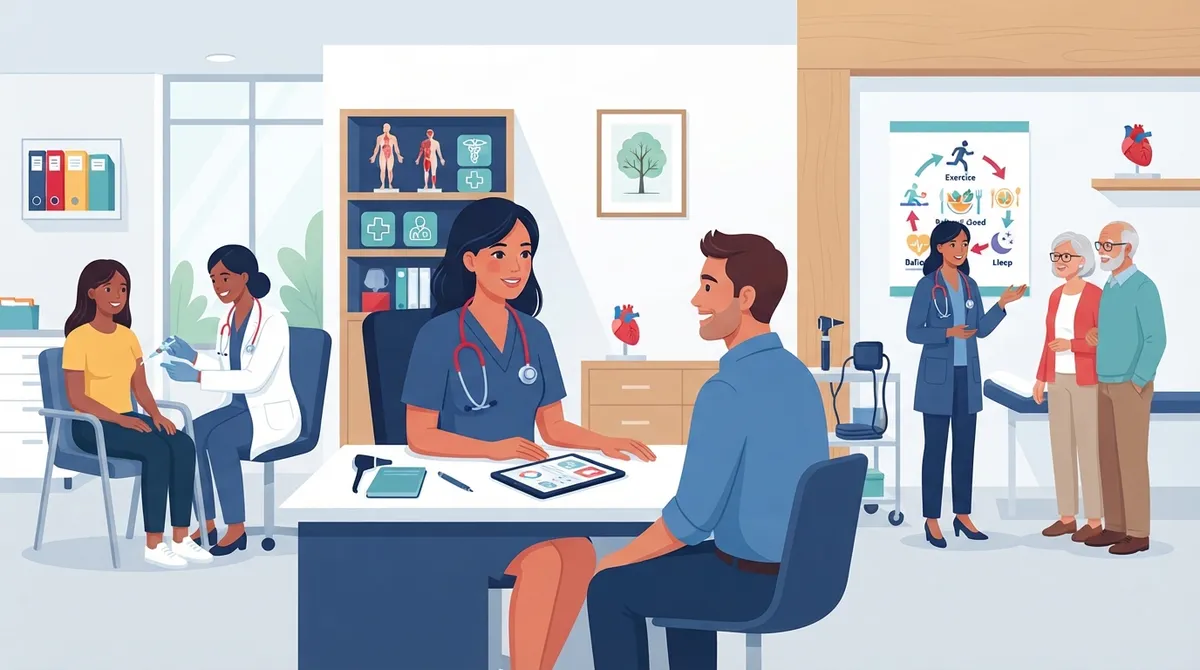
A primary care doctor handles a wide range of health needs. Their work falls into a few main areas.
Prevention and Wellness
Prevention is the heart of primary care. Your PCP helps you stay well before problems start. This includes yearly checkups, vaccines, and health screenings. It also includes advice on diet, sleep, stress, and exercise. Learn what to expect in our overview of an annual physical exam.
Treatment of Common Illnesses
Colds, flu, sinus infections, rashes, and minor injuries are common reasons to see a PCP. Your doctor can diagnose the problem, treat it, and tell you when to seek more urgent help.
Management of Chronic Conditions
Many adults live with conditions such as high blood pressure, diabetes, or asthma. A PCP monitors these conditions, adjusts medicines, and helps you avoid complications. See how this works in our article on how primary doctors help manage chronic illnesses.
Care Coordination and Referrals
Sometimes you need a specialist, such as a cardiologist or dermatologist. Your PCP helps you find the right one. They also share information so your care stays connected. This prevents gaps, repeated tests, and mixed messages. Our post on fragmented care versus coordinated care explains why this matters.
Screenings and Early Detection
Early detection saves lives. Your PCP can order screenings for cancer, heart disease, diabetes, and more, based on your age and risk. At InCare, patients can also access advanced cancer screening services.
Types of Doctors Who Can Be a Primary Care Provider
Not all primary care doctors have the same training. The right type depends on your age and needs. The table below compares the most common options.
|
Type of Doctor |
Who They Treat |
Best For |
|---|---|---|
|
Family Medicine Physician |
Infants, children, adults, and seniors |
Families who want one doctor for everyone |
|
Internal Medicine Physician (Internist) |
Adults only |
Adults with complex or chronic conditions |
|
Pediatrician |
Newborns through adolescents |
Children and teens |
|
Geriatrician |
Older adults |
Seniors with multiple health needs |
Primary care teams may also include nurse practitioners and physician assistants. Depending on state law and clinic setting, these clinicians can diagnose, treat, and manage ongoing care. Because of this, the phrase "primary care doctor" is often used loosely. Not every primary care provider is a physician, but each one plays an important role.
To learn more about specific roles, read about the key roles of an internal medicine physician or pediatric family medicine.
Primary Care Doctor vs. Specialist
A common question is how a PCP differs from a specialist. The main difference is scope. A PCP looks at your overall health. A specialist focuses on one body system or condition.
|
Feature |
Primary Care Doctor |
Specialist |
|---|---|---|
|
Scope |
Broad, whole-person care |
Narrow, focused on one area |
|
Visit Type |
Checkups, new symptoms, ongoing care |
Specific diagnosis or treatment |
|
Referral Needed? |
Usually no |
Often yes |
|
Relationship |
Long-term |
Often short-term or condition-based |
Both are valuable. However, your PCP acts as the guide who keeps everything on track. For a deeper look, see general practitioner versus specialist.
Why Having a Primary Care Doctor Matters
You may feel healthy and wonder if you need a PCP at all. The answer is yes. A strong relationship with a primary care doctor offers real benefits.
- Earlier detection: Regular visits help catch problems when they are easier to treat.
- Better continuity: Your doctor knows your history, so care is faster and more accurate.
- Lower stress: You know exactly who to call when something comes up.
- Smarter referrals: You avoid wasted visits and unnecessary tests.
- Personalized prevention: Your plan fits your age, family history, and goals.
Our article on why having a primary care doctor is essential covers this in more detail. You can also check whether you need a PCP based on your own situation.
The State of Primary Care in the United States
Access to primary care is a growing national concern. According to the Health Resources and Services Administration (HRSA), the U.S. had 340,319 actively working primary care physicians in 2023. That is about 34.3% of all active physicians. The national ratio was 101 primary care physicians per 100,000 people.
Still, gaps remain. HRSA reports the following:
- 7.2% of U.S. counties had no primary care physician in 2023.
- As of December 2025, there were 8,466 designated primary care shortage areas. These areas cover about 92 million residents, or roughly 27% of the population.
- HRSA projects a shortage of 70,610 full-time-equivalent primary care physicians by 2038.
These numbers show why finding a PCP early matters. Doctors who are accepting new patients can fill up fast. If you need help, read how to find doctors accepting new patients near you.
What to Expect at a Primary Care Visit
Many people feel nervous before a first visit. Knowing the steps can help. Here is what a typical visit looks like.
- Check-in and history: You share your medical history, medicines, allergies, and family health background.
- Vitals: A staff member checks your blood pressure, heart rate, weight, and temperature.
- Conversation: You and your doctor talk about symptoms, habits, goals, and concerns.
- Physical exam: Your doctor examines you based on your needs.
- Testing and screening: Your doctor may order blood work or other tests.
- Plan: You leave with clear next steps, prescriptions, or referrals.
To prepare, bring a list of medicines and questions. Our guide to a new patient appointment offers a helpful checklist. You can also read what happens during an annual wellness visit.
Modern Primary Care: Beyond the Basics
Today, many patients want more than a basic checkup. Tech-savvy professionals, busy families, and wellness-focused adults look for proactive care. They want data, speed, and convenience. Modern primary care meets these needs in several ways.
Virtual Visits and Same-Day Access
Telehealth lets you see your doctor from home. It saves time for parents, commuters, and anyone with a packed schedule. Many clinics also offer same-day appointments for urgent concerns.
Advanced Wellness Testing
Some clinics now pair standard care with tools that give deeper insight into your body. Examples include DNA gene testing, metabolic breath analysis, and body composition analysis. These tools support prevention and help tailor your plan.
Weight Management and Wellness Support
Many adults want help with weight, energy, and long-term health. A PCP can guide you toward safe, doctor-led options. Explore weight loss programs and IV hydration and vitamin drips that fit into a whole-body plan.
How to Choose the Right Primary Care Doctor
Choosing a PCP is a personal decision. You want someone you trust and feel comfortable with. Use this checklist to guide your search.
- Insurance: Confirm the clinic accepts your plan and is taking new patients.
- Location: Pick an office close to home or work so visits are easy.
- Type of doctor: Match the specialty to your age and needs.
- Communication style: Choose a doctor who listens and explains things clearly.
- Access: Ask about same-day visits, virtual care, and after-hours options.
- Services: Look for a clinic that offers screenings, wellness testing, and urgent care in one place.
Avoid common pitfalls by reading mistakes to avoid when choosing a primary care doctor. You can also use our list of signs you have found the right primary care practice.
Where Primary Care Is Delivered
Primary care happens in several settings. These include private physician offices, community health centers, and telehealth platforms. HRSA reports that federally supported health centers provide affordable primary and preventive care, often with sliding-fee scales. In fiscal year 2024, nearly 1,400 grantees operated more than 15,500 sites. They served over 31 million patients.
If you live in the Tampa Bay area, you have local options. InCare serves patients in Tampa and Riverview, Florida. The clinic combines primary care, urgent care, and advanced wellness services. It uses modern technology and a personal, prevention-first approach. Patients can learn more about primary care at InCare, meet the providers, or view our locations. Many patients also share their feedback on our InCare Google profile.
You can also follow InCare for health tips on Facebook, Instagram, and TikTok.
Primary Care for Different Life Stages
Your health needs change as you age. A good PCP adapts with you.
- Young adults: Focus on vaccines, mental health, sexual health, and building healthy habits.
- Women and men in midlife: Focus on screenings, hormones, stress, and chronic disease prevention.
- Families: Focus on well-child visits, school physicals, and shared care for parents and kids.
- Older adults: Focus on medicine review, mobility, memory, and preventive screenings.
Families can read about family primary care. Parents can also explore pediatric primary care. Adults can learn about adult primary care priorities.
Take the Next Step With a Primary Care Doctor
A primary care doctor is your first call, your long-term guide, and your partner in prevention. They treat everyday illness, manage chronic conditions, and connect you with specialists when you need them. Most of all, they know you well enough to catch small problems before they grow.
If you live in Tampa or Riverview, InCare offers the kind of modern, personal primary care that today's patients want. From checkups and urgent care to advanced wellness testing, you can get it all in one trusted place.
Ready to build a lasting relationship with a doctor who knows you? Book your visit with InCare today, or contact our team with any questions.
FAQs
Q: What does a primary care doctor do?
A: A primary care doctor is your first point of contact for health concerns. They provide checkups, screenings, vaccines, and treatment for common illnesses. They also manage chronic conditions and refer you to specialists when needed.
Q: What is the difference between a primary care doctor and a specialist?
A: A primary care doctor treats a wide range of health needs and looks at your overall well-being. A specialist focuses on one body system or condition, such as the heart or skin. Your primary care doctor usually helps you find the right specialist.
Q: Do I need a primary care doctor if I feel healthy?
A: Yes. Regular visits help catch silent problems early, such as high blood pressure or high blood sugar. A primary care doctor also builds a record of your health, which makes future care faster and more accurate.
Q: Can a nurse practitioner or physician assistant be my primary care provider?
A: In many cases, yes. Nurse practitioners and physician assistants can provide primary care as part of a team, depending on state rules and the clinic setting. Many patients see both a physician and an advanced practice clinician for different needs.
Q: How do I choose a primary care doctor?
A: Start by checking that the clinic accepts your insurance and is taking new patients. Then consider the doctor's specialty, location, communication style, and access to same-day or virtual visits. Choose someone you feel comfortable talking to about your health.


