
Key Takeaways
- Kisspeptin remains investigational and unapproved by the FDA; it exists only in clinical trials, not on pharmacy shelves or as approved treatments for fertility, hormonal balance, or weight loss.
- Unregulated compounded kisspeptin products sold online lack safety oversight and regulatory approval, carrying unknown risks outside monitored clinical trial settings.
- Early research shows kisspeptin may trigger ovulation in IVF while potentially lowering ovarian hyperstimulation syndrome (OHSS) risk by activating the body's natural hormone pathways instead of using high-dose external hormones.
- Over 150 human subjects have participated in kisspeptin trials with some success—including 12 pregnancies in one IVF study—but larger, more diverse trials are required before regulatory approval consideration.
- Patients curious about kisspeptin should consult primary care providers, search ClinicalTrials.gov for legitimate registered trials in their area, and explore proven alternative treatments already backed by decades of clinical evidence.
- Kisspeptin targets reproductive hormone signaling through the KISS1 receptor pathway, affecting LH and FSH production; current research focuses on infertility, hypogonadism, and puberty disorders in specialist research centers only.
If you have searched for ways to boost fertility, restore hormone balance, or optimize reproductive health, you may have come across kisspeptin. This naturally occurring hormone has generated buzz in medical research circles, but most of what exists today lives inside a kisspeptin clinical trial rather than on a pharmacy shelf. Understanding the difference between promising research and an approved treatment matters, especially if you are considering your options for hormone health, fertility support, or overall wellness optimization.
At InCare, our primary care team believes patients deserve clear, honest information about emerging therapies. This article breaks down what kisspeptin is, what current research shows, and why patients should be cautious about unregulated products claiming to offer kisspeptin benefits outside of a monitored clinical trial setting.
What Is Kisspeptin and Why Does It Matter?
Kisspeptin is a hormone made in the brain. It activates a receptor called KISS1, sometimes called GPR54, found on hypothalamic reproductive neurons. When kisspeptin binds to this receptor, it triggers the release of gonadotropin-releasing hormone, known as GnRH.
GnRH then signals the pituitary gland to release two other hormones: luteinizing hormone (LH) and follicle-stimulating hormone (FSH). These two hormones control key reproductive functions in both men and women, including ovulation, sperm production, and testosterone levels.
Because kisspeptin sits at the top of this hormone chain, researchers believe it may help unlock treatments for conditions tied to low reproductive hormone activity. This is why so much current research centers on a kisspeptin clinical trial rather than everyday clinical use.
How Kisspeptin Research Started
Scientists first identified kisspeptin's role in reproduction over a decade ago. Since then, human studies have expanded from basic hormone testing to more complex applications, including fertility treatment and puberty disorders. Most of this research still happens in specialized reproductive endocrinology centers and academic hospitals, not in typical wellness clinics.
What Conditions Are Being Studied in Kisspeptin Clinical Trials?
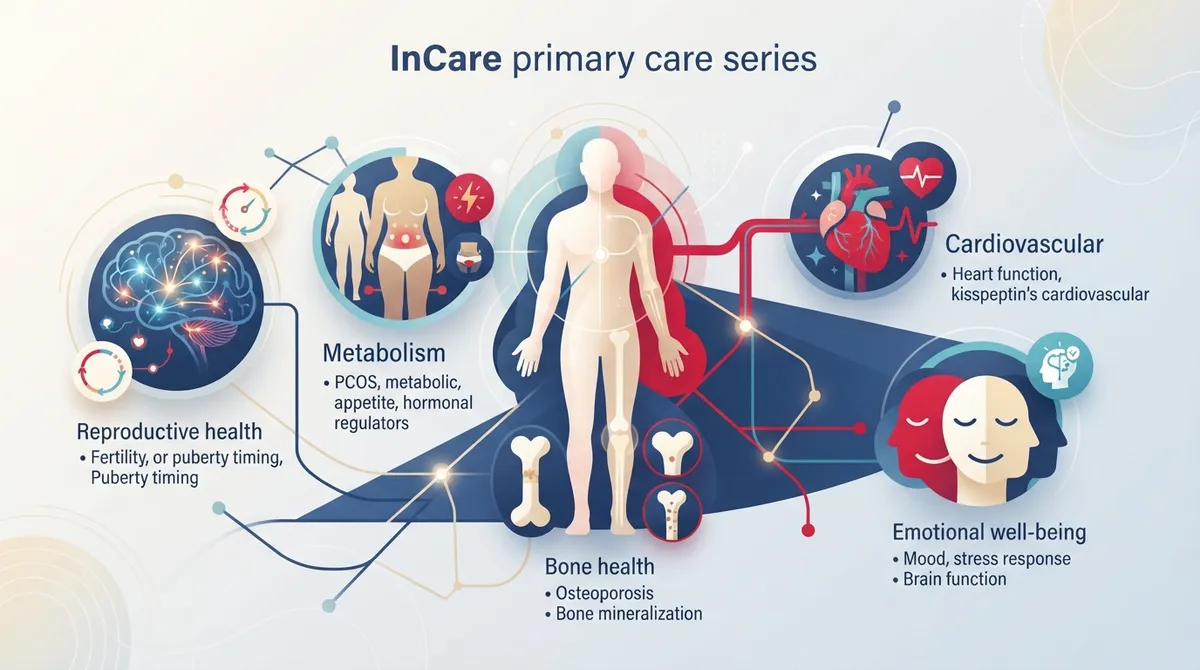
Human research on kisspeptin has focused almost entirely on reproductive health. Here are the main areas under investigation:
- Infertility and ovulation induction in women undergoing fertility treatment
- Hypogonadotropic hypogonadism, a condition where the brain fails to signal the body to produce enough sex hormones
- Hyperprolactinemia, a hormone imbalance that can affect fertility and menstrual cycles
- Puberty disorders, including delayed or early puberty tied to the KISS1/GPR54 pathway
- General GnRH neuron function in both healthy volunteers and patients with reproductive disorders
Each of these areas requires close monitoring because kisspeptin directly affects a sensitive hormone system. This is one reason why kisspeptin trials remain limited to specialist research settings rather than routine primary care visits.
Kisspeptin as an Alternative to hCG in Fertility Treatment
One of the more promising research areas involves in vitro fertilization, or IVF. During IVF, doctors often use human chorionic gonadotropin (hCG) to trigger final egg maturation before retrieval. Some patients face a risk called ovarian hyperstimulation syndrome (OHSS) when using hCG.
Researchers are studying whether kisspeptin can trigger ovulation just as effectively while lowering OHSS risk. The idea is that kisspeptin stimulates the body's own natural GnRH and gonadotropin pathways, rather than introducing an external hormone at high doses.
What Happens During a Kisspeptin Clinical Trial?
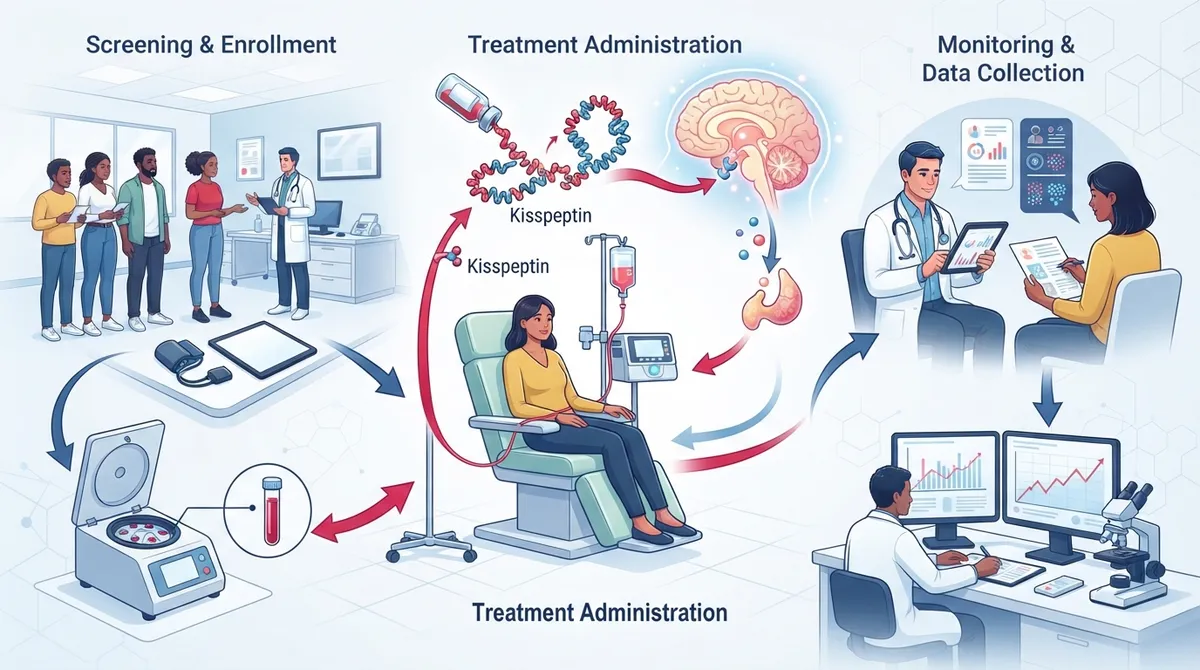
Patients considering participation in a kisspeptin clinical trial should understand the general structure of these studies. While every protocol differs, most follow a similar pattern:
- Screening and eligibility review, often requiring a diagnosis such as infertility or hypogonadotropic hypogonadism
- Baseline hormone testing to measure LH, FSH, and other reproductive markers
- Administration of kisspeptin through intravenous, subcutaneous, or pulsatile delivery methods
- Frequent blood draws to track hormone response over minutes to hours
- Follow-up monitoring for outcomes like ovulation, follicle development, or pregnancy in fertility-focused studies
Dosing varies significantly across studies. There is no standard, approved dosing protocol for general use outside of a clinical trial.
Examples of Registered Kisspeptin Studies
Several kisspeptin clinical trial protocols are currently registered and provide insight into how this research works. The table below summarizes a few notable examples.
|
Study Identifier |
Focus Area |
Administration Method |
Key Outcomes Measured |
|---|---|---|---|
|
NCT05896293 |
Idiopathic hypogonadotropic hypogonadism |
Pulsatile subcutaneous, every 60 to 240 minutes for two weeks |
LH-pulse amplitude, follicular maturation, ovulation |
|
NCT01667406 |
IVF ovulation trigger |
Intravenous, doses from 1.6 to 12.8 nmol/kg |
Oocyte maturation, pregnancy rates, OHSS risk |
|
NCT02956447 |
Hyperprolactinemia physiology |
Varies by protocol |
Hormone response patterns |
|
NCT04012632 |
Early puberty and KISS1/GPR54 pathway |
Varies by protocol |
Puberty timing markers |
|
NCT07224490 |
GnRH neuron function, including post-COVID-19 syndrome |
Single intravenous bolus, 0.313 to 13.19 micrograms/kg |
LH response comparisons |
These studies show how carefully controlled kisspeptin research remains. Dosing ranges, timing, and monitoring protocols differ widely depending on the health question being studied.
What Does the Current Evidence Show?
According to registry documentation, kisspeptin has been given to more than 150 human subjects across various studies. This includes both healthy volunteers and patients with reproductive health conditions. One trial protocol reported 12 successful pregnancies following kisspeptin administration during IVF-related research, without adverse effects tied directly to kisspeptin in that specific study.
These numbers sound encouraging, but they represent early research signals. They do not prove that kisspeptin works broadly or safely for the general population. Larger trials with more diverse patient groups are still needed before any regulatory body could consider approving kisspeptin for widespread use.
Common Outcomes Tracked in Kisspeptin Research
Researchers typically look at short-term and long-term markers to judge how well kisspeptin performs. These include:
- LH and FSH hormone spikes within minutes to hours after dosing
- Ovarian follicle growth and maturation in fertility studies
- Successful ovulation timing
- Pregnancy outcomes in IVF-related trials
- Signs of ovarian hyperstimulation syndrome as a safety marker
Is Kisspeptin Approved for Clinical Use?
No. Kisspeptin remains an investigational compound. It has not received approval from the FDA or other major regulatory agencies for routine treatment of infertility, low testosterone, menopause symptoms, or weight management. Every study referenced here operates under a registered clinical trial protocol with strict oversight.
This distinction matters because some online sellers market compounded kisspeptin products for fertility, anti-aging, or sexual health purposes. These products are not backed by regulatory approval and carry unknown risks since they fall outside monitored trial conditions.
Why Primary Care Providers Recommend Caution
Primary care clinicians play an important role in helping patients understand which treatments are backed by solid evidence. When patients ask about kisspeptin, a responsible provider will explain the following:
- Kisspeptin research is promising but still limited to specialist trial settings
- Compounded or online kisspeptin products lack safety oversight
- Hormone therapies require careful monitoring to avoid unintended side effects
- Established treatments for fertility, low testosterone, or menopause already exist and carry proven safety records
If you are curious about hormone health, your InCare provider can walk you through options that are currently available and supported by strong clinical evidence, rather than experimental compounds still under study.
Kisspeptin vs. Established Hormone Therapies
Many patients wonder how kisspeptin compares to treatments already used in clinics today. The table below offers a general comparison.
|
Factor |
Kisspeptin |
Established Hormone Therapies (e.g., hCG, TRT) |
|---|---|---|
|
Regulatory Status |
Investigational, trial-only |
FDA approved for specific indications |
|
Availability |
Limited to research centers |
Widely available through licensed clinics |
|
Evidence Base |
Early-stage human studies |
Decades of clinical data |
|
Typical Use Case |
IVF trigger, hypogonadotropic hypogonadism research |
TRT for low testosterone, hCG for ovulation triggering |
Patients interested in testosterone replacement therapy or fertility support today have access to proven options that do not require enrollment in a research protocol.
Could Kisspeptin Support Weight Loss or Metabolic Health?
Some researchers are exploring whether kisspeptin's role in hormone signaling might connect to metabolic health, since reproductive hormones and metabolism often interact. However, no strong clinical evidence currently supports using kisspeptin for weight loss or metabolic optimization outside of research settings.
If weight management is your goal, InCare offers evidence-based options like medical weight loss programs, metabolic breath analysis, and body composition tracking. These services use proven technology to help you reach your goals safely, without relying on experimental compounds.
Steps to Take If You Are Curious About Kisspeptin
If kisspeptin research has caught your attention, here is a practical path forward:
- Talk with a primary care provider about your specific hormone health concerns
- Ask about proven treatment options already available for your condition
- Search ClinicalTrials.gov to see if a legitimate, registered kisspeptin trial is recruiting in your area
- Avoid purchasing compounded kisspeptin products online without medical supervision
- Schedule regular hormone testing to track your baseline health over time
Following these steps helps protect your health while staying informed about emerging research.
Why Choose InCare for Your Hormone and Wellness Needs
InCare combines advanced technology with personalized medical expertise across our Tampa and Riverview locations. Whether you need DNA gene testing, cancer screenings, or guidance on hormone health, our team focuses on prevention and whole-body optimization backed by solid evidence.
We understand that patients want cutting-edge options, but we also believe in transparency about what is proven versus what remains experimental. Our providers, including Dr. Pramjeet Ahluwalia and Dr. Naveen Paddu, take time to explain your options clearly so you can make informed decisions about your care.
You can also explore patient experiences and visit us on Google — InCare to see reviews from our Tampa and Riverview community members. We maintain a strong reputation for friendly service and quality care across both locations.
Stay Connected With InCare
Follow our team for wellness tips and updates on Facebook, check out patient stories on Instagram, or catch quick health insights on Tik Tok. These channels give you a behind-the-scenes look at how our clinics support patients every day.
Final Thoughts on Kisspeptin Clinical Trials
Kisspeptin represents an exciting area of reproductive hormone research, but it remains firmly in the investigational stage. Current studies focus on fertility, puberty disorders, and hormone signaling within tightly controlled clinical trial environments. No approved kisspeptin product exists for general use in fertility, weight loss, or hormone optimization today.
If you want expert guidance on hormone health, fertility support, or overall wellness, our team is ready to help you explore proven, safe options tailored to your needs. Reach out to our care team today to schedule a consultation, or book your appointment now to start your personalized wellness journey with InCare in Tampa or Riverview.
FAQs
Q: What is kisspeptin and how does it affect fertility?
A: Kisspeptin is a hormone that activates the KISS1 receptor in the brain, triggering the release of GnRH, LH, and FSH. These hormones control ovulation and sperm production, which is why researchers are studying kisspeptin as a potential fertility treatment.
Q: Is kisspeptin approved by the FDA for clinical treatment?
A: No. Kisspeptin has not received FDA approval and remains an investigational compound. All current human use happens within registered clinical trials under specialist supervision.
Q: Can kisspeptin help women ovulate or improve IVF outcomes?
A: Early research suggests kisspeptin may trigger ovulation during IVF while potentially lowering the risk of ovarian hyperstimulation syndrome. However, this remains an active area of study rather than a standard treatment option.
Q: What happens during a kisspeptin clinical trial?
A: Patients typically undergo screening, baseline hormone testing, and controlled kisspeptin administration through intravenous, subcutaneous, or pulsatile methods. Researchers then track hormone responses and outcomes like ovulation or pregnancy over the study period.
Q: Should primary care clinicians prescribe or recommend compounded kisspeptin?
A: No. Compounded kisspeptin products lack regulatory oversight and safety testing. Primary care providers should direct patients toward established, proven treatments or legitimate registered clinical trials instead.