

Key Takeaways
- Loud, habitual snoring with gasping, choking, witnessed breathing pauses, or daytime sleepiness may signal obstructive sleep apnea and deserves medical evaluation.
- Snoring alone cannot confirm or rule out sleep apnea; only objective sleep testing, either at home or in a sleep lab, can diagnose it.
- Untreated sleep apnea is linked to high blood pressure, cardiovascular disease, stroke, and impaired daytime alertness that can raise accident risk.
- A primary care clinician is often the easiest starting point: they can screen your risk, arrange testing or a specialist referral, and coordinate follow-up care.
- Common treatments include PAP (such as CPAP), custom oral appliances, and weight management when appropriate, with the best plan depending on test results and preferences.
- Seek care sooner if you fall asleep while driving, have witnessed breathing pauses with severe sleepiness, or have high blood pressure that does not respond to treatment.
Snoring is common, and many people dismiss it as a harmless nuisance. But when loud, habitual snoring comes with gasping, choking, or constant daytime tiredness, it may point to something more serious: obstructive sleep apnea (OSA). For busy professionals, parents, and wellness-minded adults across Tampa, the real question is not just "Why do I snore?" but "Is my sleep affecting my health?"
The challenge is that snoring alone cannot confirm or rule out sleep apnea. Only objective sleep testing can do that. The good news is that you do not have to figure this out alone. A primary care clinician can review your symptoms, assess your risk, arrange testing, and guide you toward the right treatment.
This guide explains how snoring and sleep apnea differ, which warning signs matter, how testing works in the Tampa area, and what treatment options exist. It also shows how primary care fits into the process, so you can take the first step with confidence in 2026.
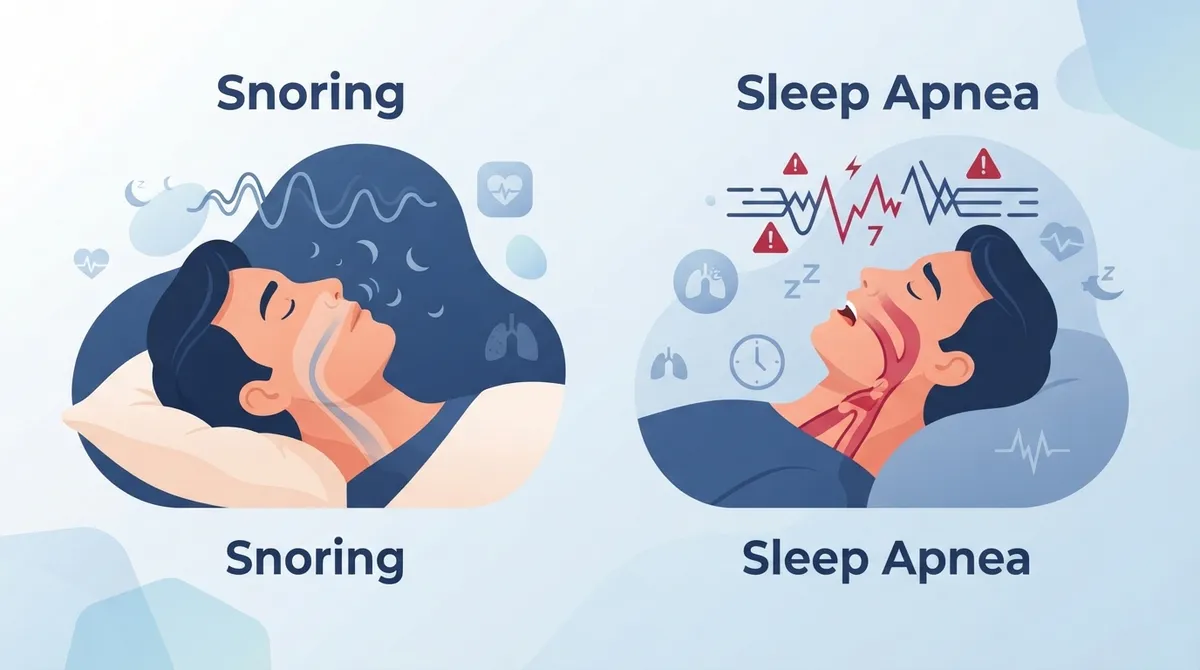
Snoring vs. Sleep Apnea: What Is the Difference?
Snoring happens when relaxed tissues in the throat vibrate as you breathe during sleep. It can result from nasal congestion, alcohol, sleep position, or weight. Many people snore now and then without any health problem.
Obstructive sleep apnea is different. In OSA, the airway narrows or closes repeatedly during sleep. Breathing pauses, oxygen levels may drop, and your brain briefly wakes you to restart breathing. You may not remember these awakenings, but they fragment your sleep and strain your body.
Here is a simple way to compare the two:
|
Feature |
Simple Snoring |
Possible Sleep Apnea |
|---|---|---|
|
Sound |
Occasional or mild |
Habitual and loud |
|
Breathing pauses |
Not typical |
Often witnessed by a partner |
|
Gasping or choking |
Rare |
Common |
|
Daytime sleepiness |
Usually minimal |
Often significant |
|
Diagnosis |
Not required |
Requires objective sleep testing |
If your snoring sits on the right side of this table, it is worth a conversation with a clinician.
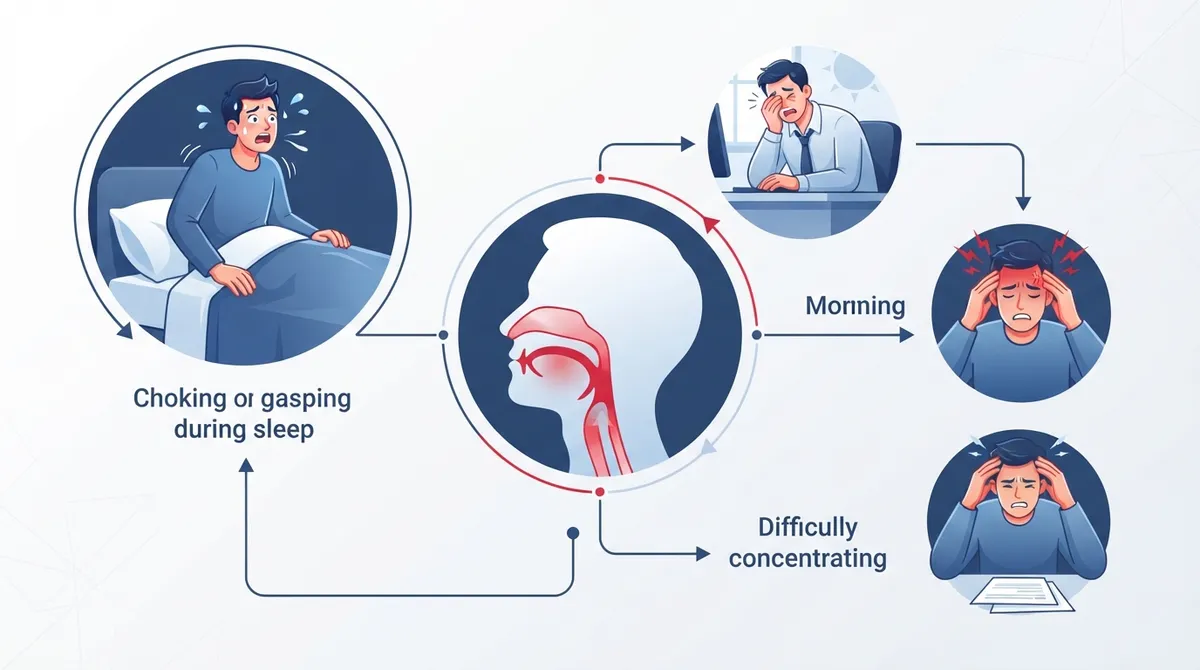
Warning Signs of Sleep Apnea Beyond Snoring
Snoring is only one clue. Sleep apnea often shows up in other ways, and some people with OSA do not snore loudly at all. Watch for these signs:
- Pauses in breathing that a partner or family member notices
- Gasping or choking sounds during sleep
- Excessive daytime sleepiness, even after a full night in bed
- Morning headaches or a dry mouth when you wake
- Trouble focusing, memory lapses, or irritability
- Waking often during the night, including trips to the bathroom
- High blood pressure that is hard to control
Any one of these signs deserves attention, especially when two or more appear together. If poor sleep has become a pattern, this guide on how to know when to see a doctor for poor sleep can help you decide on timing.
Why Untreated Sleep Apnea Matters
Sleep apnea is not just about feeling tired. Untreated OSA is associated with several health concerns, including:
- High blood pressure
- Cardiovascular disease
- Stroke
- Impaired daytime alertness, which can raise the risk of accidents
These links are why clinicians take sleep complaints seriously. A primary care clinician can look at your full picture, including blood pressure, weight, medications, and other conditions, to judge how urgent your symptoms are. You can learn more in this overview of how untreated sleep apnea affects your health.
How Primary Care Fits Into Sleep Apnea Care
For many adults in Tampa, primary care is the easiest and most practical starting point. You do not need to guess which specialist to call first. A primary care clinician can:
- Review your symptoms, sleep habits, and medical history
- Check medications and risk factors that may affect breathing during sleep
- Use a screening questionnaire to estimate your risk
- Arrange diagnostic testing or refer you to a sleep specialist
- Follow up on results and help coordinate treatment
It is important to know that screening questionnaires help assess risk, but they do not diagnose sleep apnea. Only objective testing can do that. Your clinician uses the screening step to decide who needs testing and how soon.
At InCare, our team combines comprehensive primary care with advanced wellness tools, so sleep concerns are viewed alongside your weight, blood pressure, metabolic health, and overall prevention goals. If you are unsure where to begin, this guide to sleep apnea near me in Tampa explains the first steps in plain language.
How Sleep Apnea Is Diagnosed
Sleep apnea is diagnosed through objective sleep testing. According to American Academy of Sleep Medicine (AASM) criteria, a diagnosis generally involves at least 5 predominantly obstructive respiratory events per hour along with relevant symptoms or associated conditions, or more than 15 events per hour. A clinician interprets the results and decides on next steps.
Depending on your health and circumstances, testing may take place at home or in a sleep laboratory. Here is how the two options compare:
|
Testing Option |
Where It Happens |
Who It May Suit |
|---|---|---|
|
Home sleep apnea test |
In your own bed, using a portable device |
Adults with a high likelihood of OSA and no major complicating conditions |
|
In-lab sleep study |
Overnight at a sleep center with staff monitoring |
People with other medical conditions or unclear results from home testing |
Tampa General Hospital reports that its Sleep Disorders Center offers adult and pediatric evaluation, in-lab and home sleep studies, and ongoing care. Tampa-area patients can ask a primary care clinician about referral options, insurance coverage, and whether home testing is a good fit.
What to Expect During a Home Sleep Test
A home test is usually simple. You pick up or receive a small device, wear sensors that track breathing, oxygen levels, and heart rate, and sleep in your own bed. You return the device, and a clinician reviews the data. Many people find this option more comfortable than sleeping in an unfamiliar room.
What to Expect During an In-Lab Study
In a lab study, you spend the night at a sleep center. Technologists place sensors on your body and monitor your sleep from another room. This approach captures more detailed information and is often chosen when your health history is more complex.
Treatment Options for Sleep Apnea
Treatment is individualized. The right plan depends on your test results, symptoms, health, and preferences. Common options include:
- Positive airway pressure (PAP), including CPAP: A device that keeps your airway open with gentle air pressure. AASM guidance supports PAP for adults with OSA and excessive sleepiness.
- Oral appliances: Custom devices that reposition the jaw or tongue. They may be considered for adults who prefer them or cannot tolerate PAP, with dental and sleep-clinician involvement and follow-up testing to confirm they work.
- Weight management: When appropriate, losing excess weight can reduce airway collapse and improve symptoms.
- Specialist evaluation: For selected patients, procedures may be discussed after review by a sleep or ear, nose, and throat specialist.
Follow-up matters as much as the device itself. Comfort, mask fit, and consistent use all affect results, and your clinician can help troubleshoot problems early. If CPAP does not suit you, you can explore alternatives to CPAP for sleep apnea with your care team.
Weight, Metabolic Health, and Sleep
Sleep and weight influence each other. Excess weight can narrow the airway, and poor sleep can disrupt hormones that control hunger and energy. For many adults, addressing one helps the other. Research reviews have looked at whether weight loss can help sleep apnea, and many clinicians treat weight management as one part of a broader plan.
This is where a full-service clinic can add value. InCare offers medical weight loss programs, metabolic breath analysis, and body composition tracking, which can support a whole-body approach alongside sleep evaluation. For readers who want to understand the weight side of care, see why medical weight loss clinics work better.
How to Choose Where to Start in Tampa
Tampa residents have several paths. A primary care visit is often the most efficient, because the same clinician can screen your risk, order or arrange testing, and keep your overall health in view. Others may go directly to a sleep medicine specialist, especially if symptoms are severe or a clinician already suspects another sleep disorder.
Consider these questions when you compare options:
- Can I book an appointment quickly, including evenings or virtual visits?
- Does the practice arrange both home and in-lab testing, or refer smoothly?
- Will someone follow up on my results and help with treatment?
- Does the team address related issues such as blood pressure, weight, and fatigue?
- Is my insurance accepted for evaluation, testing, and treatment?
If you want a closer look at specialist options, this resource on finding a sleep medicine doctor in Tampa walks through what to look for. If you live near Riverview, you can also read about finding a sleep apnea doctor in Riverview.
Preparing for Your Appointment
A little preparation makes your visit more useful. Before you go, try to:
- Ask a partner or family member to describe your snoring and any breathing pauses
- Write down symptoms such as morning headaches, fatigue, and trouble concentrating
- Bring a list of medications and supplements
- Note your usual bedtime, wake time, and any naps
- Track alcohol, caffeine, and late meals, since they can affect sleep
This information helps your clinician judge your risk and decide which type of sleep test makes sense. Because insurance rules vary, it also helps to ask about coverage for testing and treatment before you schedule.
When to Seek Care Sooner
Some symptoms call for prompt evaluation. Contact a clinician soon if you experience:
- Falling asleep while driving or during other active tasks
- Witnessed breathing pauses combined with severe daytime sleepiness
- Chest pain, new shortness of breath, or severe morning headaches
- High blood pressure that does not respond well to treatment
A clinician can assess whether your symptoms warrant faster testing. If you feel acutely unwell, seek urgent medical attention.
Take the Next Step Toward Better Sleep
Snoring may be harmless, but habitual loud snoring with gasping, witnessed pauses, or daytime sleepiness deserves a closer look. Sleep apnea is diagnosed only through objective testing, and effective treatments exist once the cause is clear. For many people in Tampa, a primary care visit is the simplest way to start.
InCare offers personalized primary care with locations in Tampa and Riverview, plus virtual options for busy schedules. Our team looks at the whole picture, from sleep and weight to blood pressure and prevention. You can book an appointment online or contact our team with questions. You can also see what our InCare patients say on Google and follow our updates on Instagram, Facebook, and TikTok.
FAQs
Q: Does loud snoring mean I have sleep apnea?
A: Not necessarily. Snoring is common, and many people who snore do not have sleep apnea. However, habitual loud snoring, especially with witnessed breathing pauses, gasping, or daytime sleepiness, should be evaluated, because only objective sleep testing can confirm or rule out the condition.
Q: How do I get tested for sleep apnea in Tampa?
A: Start with a primary care clinician who can review your symptoms, assess your risk, and arrange testing or a specialist referral. Testing may be done at home or in a sleep laboratory, depending on your health. Tampa General Hospital reports offering both in-lab and home sleep studies.
Q: Can my primary care doctor help with sleep apnea?
A: Yes. A primary care clinician can screen your risk, review medications and medical history, and arrange diagnostic testing or referral. They can also help coordinate follow-up care, including addressing weight, blood pressure, and treatment adherence.
Q: What treatments are available for sleep apnea besides CPAP?
A: Positive airway pressure is a common first-line treatment, but other options exist. These may include an oral appliance, weight management when appropriate, or specialist evaluation for selected procedures. Your clinician will recommend a plan based on your test results and preferences.
Q: When should I see a sleep specialist for snoring?
A: Consider a specialist if you have severe daytime sleepiness, witnessed breathing pauses, or symptoms that persist despite initial care. A primary care clinician can help you decide whether a referral is the right next step.


