

Key Takeaways
- Retatrutide is investigational and not FDA-approved; no confirmed drug-related pancreatitis cases occurred in a 48-week phase 2 trial of 338 patients, but larger studies are needed to rule out rare risks.
- Patients with risk factors—personal history of pancreatitis, gallstones, heavy alcohol use, high triglycerides, or family history of pancreatic disease—should avoid unapproved retatrutide from unregulated sources.
- Pancreatitis diagnosis requires at least two of three criteria: characteristic upper abdominal pain radiating to the back, lipase/amylase levels three times normal, and imaging showing pancreatic inflammation; enzyme elevation alone does not confirm it.
- Most common retatrutide side effects are gastrointestinal (nausea, vomiting, diarrhea, constipation), which overlap with early pancreatitis warning signs, requiring providers to ask detailed questions rather than assume routine side effects.
- Seek immediate medical care for severe upper abdominal pain radiating to the back, persistent vomiting, fever with stomach pain, or abdominal tenderness; if you used unapproved retatrutide, inform your doctor and request baseline pancreatic enzyme testing.
- FDA-approved GLP-1 medications like semaglutide and tirzepatide have years of post-marketing safety data and physician oversight, making them safer alternatives than unregulated online retatrutide sources lacking medical supervision.
Retatrutide has become one of the most talked-about weight loss drugs in wellness circles across Tampa and Riverview. Patients often ask a simple but important question: does this new injectable raise the risk of pancreatitis? It is a fair concern, especially since retatrutide works on some of the same hormone pathways as approved GLP-1 medicines like semaglutide and tirzepatide. This article breaks down what the science actually shows, how retatrutide compares to approved treatments, and what steps a primary care team should take to keep patients safe.
At InCare, our providers believe patients deserve clear, honest answers about emerging treatments. Retatrutide is still investigational. It has not received FDA approval, and it is not something a licensed clinic can prescribe for everyday weight management. Still, many people are curious about it, and some may have already been exposed to it through unregulated online sources. Understanding the real pancreatitis risk data—and what to do if symptoms appear—matters for anyone considering this drug or already using it.

What Is Retatrutide and How Does It Work?
Retatrutide is an experimental, once-weekly injectable medicine. It targets three different hormone receptors: GIP, GLP-1, and glucagon. This triple-action approach is designed to reduce appetite, improve blood sugar control, and boost calorie burning all at once. Some researchers call it a triple agonist because of this broad activity.
Because it acts on more pathways than standard GLP-1 drugs, early trial results have shown strong weight loss results. However, more receptor activity can also mean a different side effect profile. This is part of why pancreatitis has become a common question among patients exploring medical weight loss options.
Why Pancreatitis Concerns Come Up With Incretin Drugs
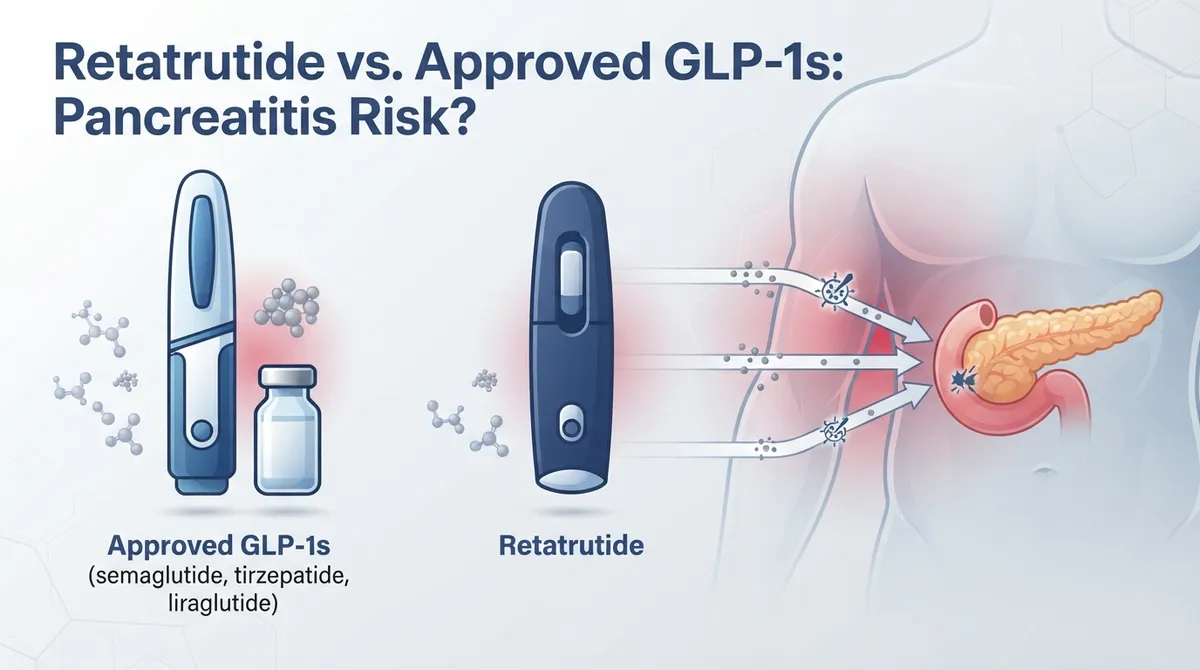
Pancreatitis is inflammation of the pancreas. It can cause severe abdominal pain, nausea, and vomiting. Approved GLP-1 medicines carry label warnings about reported cases of acute pancreatitis, even though large studies have not proven a clear causal link in most patients. Because retatrutide shares GLP-1 receptor activity, it makes sense that patients and providers want data on this specific risk before wider use begins.
What the Current Research Actually Shows
The clearest data we have comes from a 48-week phase 2 obesity trial. Researchers followed 338 adults using doses of retatrutide ranging from 1 mg to 12 mg weekly, compared against a placebo group, according to Jastreboff et al., published in the New England Journal of Medicine in 2023. No confirmed drug-related pancreatitis cases were reported in that trial.
That is reassuring, but it does not mean the risk is zero. The study group was relatively small, and the follow-up period was less than one year. Rare side effects, including pancreatitis, often do not show up until a drug is tested in thousands of people over several years. Larger phase 3 trials and longer-term studies are still needed before regulators or clinicians can give a confident answer.
Common Side Effects Seen So Far
The most frequently reported side effects in retatrutide trials have been gastrointestinal. These include:
- Nausea
- Vomiting
- Diarrhea
- Constipation
- Reduced appetite
These effects tended to increase with higher doses. This creates a tricky overlap: common GI symptoms can look similar to early pancreatitis warning signs. That is one reason primary care providers need to ask detailed questions rather than assume every stomach issue is a routine side effect.
Retatrutide vs. Approved GLP-1 Medicines: A Quick Comparison
|
Factor |
Retatrutide |
Approved GLP-1/GIP Drugs (e.g., Semaglutide, Tirzepatide) |
|---|---|---|
|
FDA Approval Status |
Investigational, not approved |
Approved for specific uses |
|
Receptor Targets |
GIP, GLP-1, and glucagon |
GLP-1 alone or GLP-1/GIP dual action |
|
Pancreatitis Data |
No confirmed cases in phase 2 trial; long-term data pending |
Labeled warning based on post-marketing reports |
|
Common Side Effects |
Nausea, vomiting, diarrhea, constipation |
Similar GI symptoms reported |
|
Legal Prescribing |
Not available through routine prescriptions |
Available by prescription through licensed providers |
This comparison shows why patients should be cautious. Retatrutide may offer strong results in future approved forms, but right now it lacks the safety history that approved treatments already have. If you are exploring GLP-1 therapy safely, our primary care team can walk you through FDA-approved options that fit your health goals.
How Doctors Diagnose Pancreatitis
Pancreatitis is not diagnosed from symptoms alone. According to the revised Atlanta classification from 2012, doctors typically look for at least two of these three signs:
- Characteristic abdominal pain, often in the upper stomach and radiating to the back
- Blood tests showing lipase or amylase levels at least three times the normal upper limit
- Imaging results, such as a CT scan, that show signs of pancreatic inflammation
It is worth noting that mild, temporary increases in lipase or amylase can happen with incretin-based therapies without pancreatitis actually being present. A high enzyme level alone does not confirm the diagnosis. This is why lab results need to be interpreted alongside symptoms and, when needed, imaging studies.
Warning Signs That Need Immediate Attention
Anyone using an incretin-based medicine, whether approved or investigational, should know the warning signs of pancreatitis. Seek urgent medical care if you experience:
- Severe, persistent pain in the upper abdomen
- Pain that spreads to the back
- Repeated vomiting that will not stop
- Fever along with stomach pain
- Tenderness when the abdomen is touched
- Trouble keeping fluids down or signs of dehydration
If any of these symptoms appear, stop taking the suspected medication and get evaluated right away. Our urgent care team in Tampa and Riverview can quickly assess abdominal pain, order lab work, and coordinate imaging if pancreatitis is suspected.
Why Retatrutide Is Not Available at InCare (Yet)
Because retatrutide has not completed FDA review, it should not be prescribed, compounded, or purchased from online "research peptide" sellers for wellness use. Products sold this way are not regulated for purity, dosage accuracy, or safety. Patients who use these products take on real risk without medical oversight.
InCare only offers weight loss treatments that are backed by evidence and delivered under proper medical supervision. If retatrutide receives approval in the future, our providers will evaluate the data carefully before considering it as part of our treatment options. In the meantime, we offer proven, physician-guided weight loss programs that use FDA-approved medications and personalized plans.
What To Do If You Have Already Used Retatrutide
If you have used retatrutide from an unregulated source, tell your doctor. This is not about judgment. It is about safety. A thorough medication history helps your care team watch for warning signs and order the right tests if needed. Here are three steps to take:
- Schedule a visit with a primary care provider and be upfront about what you have taken
- Report any stomach pain, nausea, or vomiting, even if it seems mild
- Ask about baseline lab work, including a metabolic panel and pancreatic enzyme levels if symptoms are present
Who Should Be Extra Cautious
Some patients carry a higher baseline risk for pancreatitis regardless of medication. These include people with:
- A personal history of pancreatitis
- Gallstones or gallbladder disease
- Heavy alcohol use
- Very high triglyceride levels
- A family history of pancreatic conditions
If you fall into one of these groups, it is especially important to avoid unapproved treatments like retatrutide outside of a formal clinical trial. Discuss your full health history with a trusted provider before starting any new weight loss or metabolic treatment.
What This Means for Weight Loss Patients Today
The excitement around retatrutide is understandable. Early results suggest it may lead to significant weight loss, possibly more than some current options. But excitement should not outweigh caution. Right now, there is not enough long-term safety data to fully understand rare risks like pancreatitis.
Patients considering weight loss support have safer, proven paths available today. Our team can guide you through science-backed treatments, monitor your progress with body composition analysis, and adjust your plan as needed. We also offer DNA gene testing to help personalize your approach to metabolism and weight management.
The Value of Medical Supervision
Whether you are curious about GLP-1 therapy or already managing a chronic condition, medical supervision matters. A qualified provider can:
- Review your full medical history for risk factors
- Order appropriate baseline labs before starting treatment
- Monitor for side effects during your treatment course
- Adjust dosing safely based on your response
- Coordinate urgent care if a serious symptom develops
This kind of oversight is exactly why unregulated peptide sources carry so much risk. Without a licensed provider watching for warning signs, problems like pancreatitis can go unnoticed until they become severe.
Staying Informed as Retatrutide Research Continues
Phase 3 trials and longer cardiovascular outcome studies are underway for retatrutide. These larger studies will give a much clearer picture of rare risks, including pancreatic and gallbladder events. Until that data is available and regulators complete their review, it is inaccurate to claim retatrutide is either completely safe or definitely linked to pancreatitis.
Our team stays current on emerging treatments so we can give you accurate, balanced information. You can also follow updates and patient education content through our Instagram page or our Facebook community, where we share wellness tips relevant to Tampa Bay patients. For quick video explainers on topics like GLP-1 therapy, check out our TikTok channel as well.
Conclusion: Make an Informed Choice About Weight Loss Treatment
Retatrutide may eventually become an approved option for weight management, but it is not there yet. Current data has not confirmed a specific pancreatitis risk, but the studies are too small and too short to rule one out completely. Until more research is available, the safest path is working with a licensed provider who can offer FDA-approved treatments and monitor you closely.
If you have questions about weight loss options, GLP-1 therapy, or symptoms you are experiencing, do not wait. Reach out to our care team today to discuss a treatment plan built around your health history and goals. You can also schedule your appointment online at our Tampa or Riverview location. Curious what other patients say about their experience? Feel free to visit us on Google — InCare and read real reviews from people we have helped on their wellness journey.
FAQs
Q: Does retatrutide cause pancreatitis?
A: Current evidence has not confirmed that retatrutide causes pancreatitis. In the published 48-week phase 2 obesity trial, no confirmed drug-related pancreatitis cases were reported. However, the trial was too small and too short to rule out a rare risk, so larger and longer studies are still needed.
Q: What were the pancreatitis findings in retatrutide clinical trials?
A: The phase 2 obesity trial published in the New England Journal of Medicine in 2023 followed 338 adults for up to 48 weeks and found no confirmed drug-related pancreatitis cases. Gastrointestinal side effects like nausea and vomiting were common, but pancreatitis was not established as a specific risk in that study.
Q: How common are elevated lipase and amylase levels with retatrutide?
A: Asymptomatic increases in pancreatic enzymes like lipase and amylase can occur with incretin-based therapies, including retatrutide. These elevations alone do not diagnose pancreatitis; doctors typically require abdominal pain and enzyme levels at least three times normal, often alongside imaging findings.
Q: Is retatrutide FDA approved or legally available by prescription?
A: No, retatrutide is not FDA approved and is not legally available through routine prescriptions. It remains an investigational drug still undergoing clinical trials, so it should not be prescribed, compounded, or purchased from unregulated online sellers.
Q: How does retatrutide's pancreatic safety compare with semaglutide or tirzepatide?
A: Approved GLP-1 medicines like semaglutide and tirzepatide carry label warnings about reported pancreatitis cases, based on years of post-marketing data. Retatrutide lacks this long-term safety history since it is still investigational, making direct comparisons difficult until phase 3 results and regulatory review are complete.