
Key Takeaways
- Choose primary care for ongoing, recurring, chronic, or preventive needs, since your doctor knows your history and can track patterns over time that a one-time urgent care visit would miss.
- Choose urgent care for new, non-life-threatening problems like sore throat, ear pain, mild flu, or minor sprains when your primary care office cannot see you soon enough.
- Go straight to the ER or call 911 for chest pain, severe breathing trouble, stroke signs, uncontrolled bleeding, loss of consciousness, seizures, or severe allergic reactions.
- Call your primary care office first for any new, non-severe concern; many offices offer same-day visits, telehealth, or guidance on where to go.
- Follow up with your primary care doctor after any urgent care or ER visit to confirm treatment is working, update records, and catch complications early.
- Contact your clinician promptly if you are pregnant, immunocompromised, have a serious chronic illness, or care for a very young child or older adult, since mild-seeming symptoms can change fast.
You wake up with a cough that will not quit, or your knee has ached for weeks. Now you face a common choice. Should you book a visit with your regular doctor, or walk into an urgent care clinic? Many people guess, and the wrong guess can mean extra costs, longer waits, or gaps in your care. Knowing when you should see a primary care doctor instead of urgent care helps you get the right help at the right time.
The short answer is simple. Choose primary care for ongoing, recurring, or preventive needs. Choose urgent care for a new, non-life-threatening problem that cannot wait. Choose the emergency room for true emergencies. This guide breaks down each option in plain language. It also explains how a clinic like InCare, which offers both services under one roof in Tampa and Riverview, can make the decision easier.
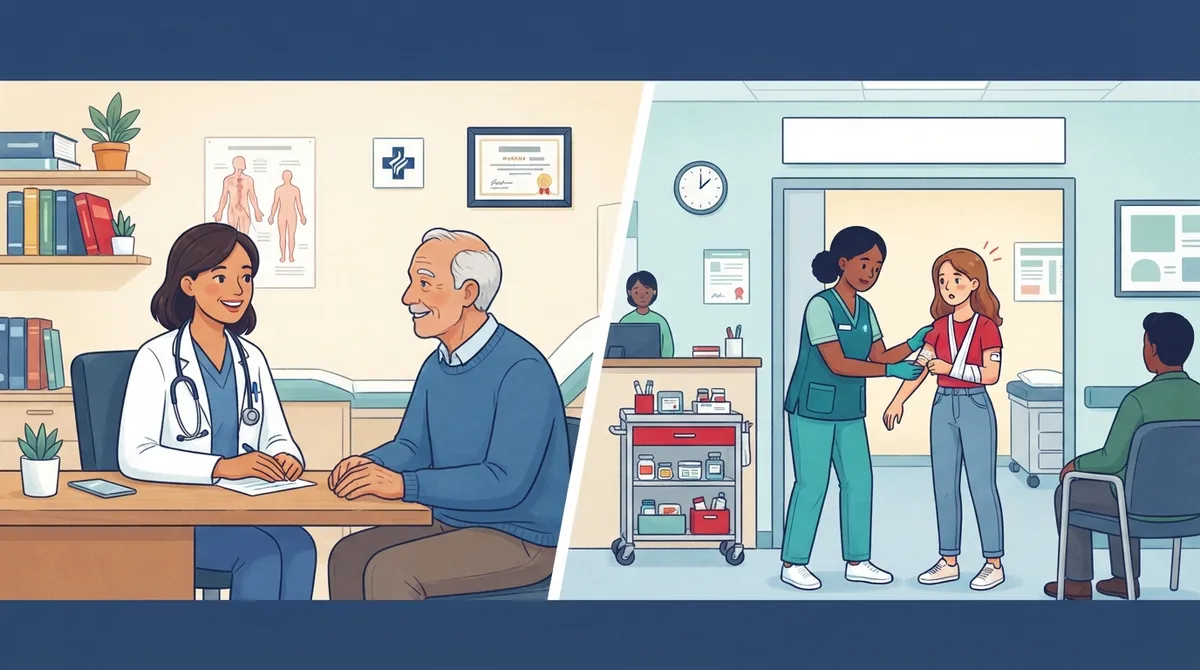
The Quick Answer: Primary Care vs. Urgent Care
Think of primary care as your health home base. Think of urgent care as your backup when something unexpected happens and your doctor cannot see you. Both are valuable. They simply serve different purposes.
Federal data shows how common urgent care has become. According to the CDC's National Center for Health Statistics, 6% of people had at least one urgent care center visit in the prior 12 months, based on 2024 data. The same report found that 19.0% had visited a retail health clinic. Another CDC brief found that 8.6% of adults named an urgent care center or a store-based clinic as their usual source of care. These numbers show that many people rely on quick-access care. They also show why understanding the difference matters.
What Primary Care Does Best
A primary care doctor knows your history, your medicines, and your family background. That context lets them spot patterns that a one-time visit can miss. Primary care is built for:
- Routine checkups and annual physicals
- Vaccinations and preventive screenings
- Managing chronic conditions like diabetes, high blood pressure, and asthma
- Medication reviews and refills
- Follow-up after an illness, injury, or hospital stay
- Symptoms that keep coming back or slowly get worse
You can learn more about this type of care on the primary care page at InCare.
What Urgent Care Does Best
Urgent care is designed for prompt help with a new problem that is not life-threatening. It is useful when your regular office is closed or booked, and you do not want to wait. Common reasons include:
- Sore throat or ear pain
- Mild fever in an otherwise healthy person
- Uncomplicated urinary symptoms
- Minor cuts or burns
- Sprains and possible minor fractures
- Flu-like illness or a mild respiratory infection
Services and age limits vary by clinic, so it helps to check before you go. You can see what is available through InCare's urgent care services.
When You Should Choose a Primary Care Doctor
If your concern is not an emergency and it can wait for an appointment, primary care is usually the best first step. Here are the clearest situations where primary care wins.
1. Your Symptoms Are Ongoing or Keep Returning
A single sinus infection is one thing. Sinus trouble that returns every month is another. Recurring headaches, repeated stomach pain, ongoing fatigue, or a cough that lingers for weeks all point toward a bigger picture. A primary care doctor can look at your full history, order the right tests, and find the root cause. An urgent care visit may treat the symptom today, but it will not track the pattern over time.
2. You Are Managing a Chronic Condition
If you live with diabetes, high blood pressure, thyroid disease, COPD, or another long-term illness, your primary care doctor should lead your care. These conditions need regular monitoring, lab work, and medication adjustments. Learn how this works in practice in How Primary Doctors Help Manage Chronic Illnesses.
3. You Need Preventive Care
Urgent care is not built for prevention. Primary care is. Annual wellness visits, cancer screenings, vaccines, cholesterol checks, and blood sugar tests all belong in your primary care routine. Early detection saves lives, and a doctor who knows your risk factors can tailor screening to you. See what a typical visit includes in What Happens During an Annual Wellness Visit?
4. You Need a Medication Review or Refill
Your primary care doctor can check for drug interactions, adjust doses, and make sure your prescriptions still fit your health. Urgent care may provide a short-term bridge, but it is not the place for long-term medication planning.
5. You Want Help With Weight, Hormones, or Whole-Body Wellness
Goals like weight loss, metabolic health, and healthy aging need steady guidance. They are not one-visit fixes. A clinic that offers medical weight loss, body composition tracking, and metabolic testing can build a plan around your data and follow your progress.
6. You Are Recovering After a Visit Elsewhere
If you saw urgent care or the ER, follow up with your primary care doctor. They can confirm that treatment is working, update your records, and catch complications early. This step is often skipped, and it is one reason care becomes fragmented. For more on this, read Fragmented Care vs. Coordinated Care: Which Wins?
When Urgent Care Is the Better Choice
Primary care is not always an option. Sometimes you need help today. Urgent care makes sense when all of the following are true:
- The problem is new or came on suddenly.
- It is not life-threatening.
- Your primary care office cannot see you soon enough.
- You want care without a long emergency room wait.
Even then, a quick call to your primary care office is smart. Many offices can offer a same-day visit, a telehealth appointment, or advice on where to go. At InCare, patients can look into same-day appointments for fast primary care when needed. For a deeper look at what these clinics can handle, see What Can Urgent Care Services Actually Treat for You?
When to Skip Both and Go to the Emergency Room
Some symptoms are too serious for either office. Call 911 or go to the nearest emergency room for:
- Chest pain or pressure
- Severe difficulty breathing
- Signs of a stroke, such as sudden face drooping, arm weakness, or trouble speaking
- Uncontrolled bleeding
- Loss of consciousness or a seizure
- A severe allergic reaction
- Sudden, severe pain
Do not drive yourself if you are in immediate danger. Call the local emergency number. For more on avoiding costly missteps, read 7 Urgent Care Mistakes That Could Cost You Your Health.
Side-by-Side Comparison
This table gives you a fast way to compare your options.
|
Situation |
Primary Care |
Urgent Care |
Emergency Room |
|---|---|---|---|
|
Annual physical or screening |
Best choice |
Not designed for this |
No |
|
Chronic condition management |
Best choice |
No |
Only for a crisis |
|
Recurring or worsening symptom |
Best choice |
Short-term help only |
Only if severe |
|
Sore throat, ear pain, mild flu |
Good if available soon |
Good if office is closed |
No |
|
Sprain or minor cut |
Possible |
Good choice |
No |
|
Chest pain or stroke signs |
No |
No |
Call 911 |
|
Medication review |
Best choice |
Short-term only |
No |
Special Cases: When to Contact a Clinician Quickly
Some people need extra caution. If you are pregnant, have a weakened immune system, live with a serious chronic illness, or care for a very young child or an older adult, do not wait and guess. Symptoms that seem mild can change fast in these groups. Call your clinician promptly. They can tell you whether to come in, use telehealth, or seek urgent or emergency care.
The same rule applies when symptoms are getting worse quickly. If you are unsure and see no emergency warning signs, call your primary care office or a nurse advice line. That one call often saves time and worry.
Why Having a Primary Care Doctor First Makes Everything Easier
People who have an established doctor tend to find the whole system easier to use. Your records are in one place. Your doctor knows your baseline, so changes stand out. Referrals are simpler, and follow-up is built in. If you do not have a doctor yet, you can learn why it matters in Why Having a Primary Care Doctor Is Essential for Health, or check Do You Need a PCP?
This is especially helpful for busy families, young professionals, and anyone who prefers modern tools like online booking and virtual visits. A good practice should fit your schedule, not fight it. Many people start by choosing the right general practitioner and then build from there.
How InCare Brings Both Options Together
One challenge with the primary care versus urgent care decision is that most people have to pick between two separate places. InCare removes that split. With locations in Tampa and Riverview, plus virtual appointments, InCare offers primary care, urgent care, and advanced wellness services in one connected practice. That means your visit history stays in one record, and the team that treats today's cough also knows your long-term goals.
InCare goes beyond basic visits. Patients can access cancer screenings, DNA gene testing, metabolic breath analysis, IV hydration and vitamin drips, and more. The focus is prevention and whole-body health, not just fixing problems after they appear. With a 4.8 out of 5 rating from 359 Google reviews, patients often praise the friendly staff and the quality of care from Dr. Ahluwalia. You can read InCare reviews on Google to see what neighbors in Tampa and Riverview are saying. To meet the full team, visit the providers page. You can also follow clinic updates on Instagram, Facebook, and TikTok.
A Simple Decision Checklist
When you are not sure where to go, walk through these questions in order:
- Is this life-threatening? If yes, call 911 or go to the ER.
- Is it ongoing, recurring, or part of a chronic condition? If yes, see primary care.
- Is it preventive, like a checkup, screening, or vaccine? If yes, see primary care.
- Is it new, not severe, and can your doctor see you soon? Call your primary care office first.
- Is it new, not severe, and your doctor is unavailable? Urgent care is a reasonable choice.
- Still unsure? Call your primary care office or a nurse line for guidance.
Keep in mind that urgent care centers differ in staff, equipment, and the conditions they treat. A clinic may refer you to the ER if you need services it cannot provide. Calling ahead helps avoid delays.
Take the Next Step Toward Better Care
Knowing when to see a primary care doctor instead of urgent care puts you in control of your health. Use primary care for ongoing needs, prevention, and follow-up. Use urgent care for new, non-severe problems when your doctor is not available. Use the ER for emergencies. And when you have one trusted team that handles it all, every choice gets easier.
Ready to build a lasting relationship with a doctor who knows you? Book your visit with InCare today, or contact our team with questions. We are here in Tampa and Riverview, and online, whenever you need us.
FAQs
Q: When should I call my primary care doctor instead of going to urgent care?
A: Call your primary care doctor for non-emergency concerns that can wait for an appointment. This includes ongoing or recurring symptoms, chronic condition management, preventive care, medication reviews, and follow-up visits. Your doctor can also tell you whether a same-day visit, telehealth, or urgent care is the best fit.
Q: Can urgent care treat a urinary tract infection, ear infection, or sore throat?
A: Yes. Urgent care commonly treats sore throat, ear pain, and uncomplicated urinary symptoms. Services and age limits vary by clinic, so it is wise to call ahead. If these problems keep returning, follow up with your primary care doctor to find the cause.
Q: When should I go to the emergency room instead of urgent care?
A: Go to the emergency room or call 911 for chest pain, severe trouble breathing, stroke signs, uncontrolled bleeding, loss of consciousness, seizure, severe allergic reaction, or sudden severe pain. These symptoms can be life-threatening and need immediate emergency care.
Q: What should I do if I am unsure whether my symptoms are an emergency?
A: If you see no emergency warning signs, call your primary care office or a nurse advice line for direction. If symptoms are severe or rapidly worsening, seek emergency care right away. People who are pregnant, immunocompromised, very young, or older should contact a clinician promptly.
Q: Should I follow up with my primary care doctor after an urgent care visit?
A: Yes. A follow-up visit helps confirm that your treatment is working and updates your medical records. It also lets your doctor catch complications early and adjust your long-term care plan if needed.


