Key Takeaways
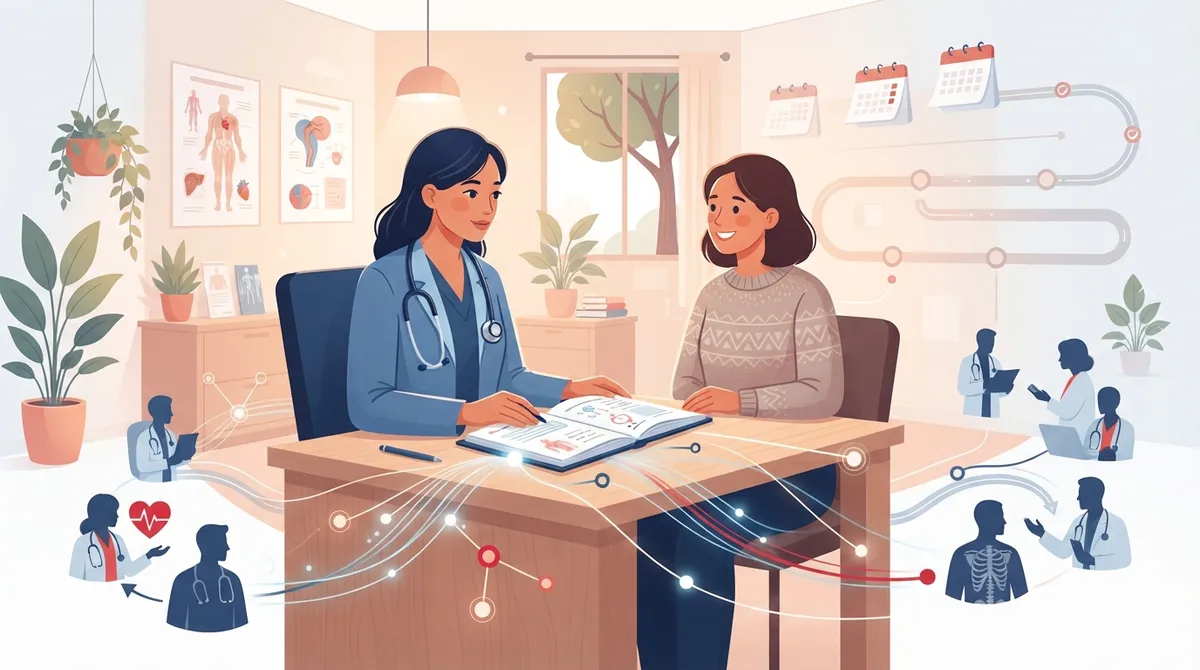
- Primary care doctors build long-term relationships tracking your health history over months and years, enabling them to spot patterns and catch problems early rather than treating isolated visits.
- Primary care doctors coordinate specialist referrals and manage information between providers, reducing conflicting advice and duplicate testing while ensuring all your care fits into one unified treatment plan.
- Most healthy adults need at least one annual wellness visit, while patients with chronic conditions like diabetes or high blood pressure require visits every three to six months for ongoing monitoring and medication adjustments.
- Primary care doctors handle preventive care, diagnose and treat common illnesses, manage chronic conditions, and increasingly offer wellness services like DNA testing and personalized health programs beyond traditional sick visits.
Choosing where to turn for a health concern can feel confusing. Do you need a specialist, an urgent care visit, or a regular doctor? Understanding what a primary care doctor does can save you time, money, and unnecessary stress. It also helps you build a health partnership that lasts for years, not just one visit.
Whether you're a busy parent managing your family's checkups, a young professional exploring wellness options, or someone who hasn't had a regular doctor in years, this guide breaks down exactly what a primary care doctor does. We'll also compare this role to specialists so you know when each one fits your needs. At InCare, our team in Tampa and Riverview blends this traditional role with modern tools to give patients better, faster answers.

What Does a Primary Care Doctor Actually Do?
A primary care doctor is usually your first stop for almost any health concern that isn't a life-threatening emergency. They build long-term relationships with patients, tracking your health history over months and years rather than a single visit. This ongoing relationship helps them spot patterns and catch problems early.
Primary care physicians often specialize in family medicine, internal medicine, pediatrics, or geriatrics. Some clinics, like InCare, also combine internal medicine expertise with wellness-focused care to treat the whole person, not just symptoms.
Core Responsibilities of a Primary Care Doctor
Here are the main jobs a primary care doctor handles for patients:
- Preventive care and wellness visits. This includes routine checkups, immunizations, and health counseling designed to stop problems before they start.
- Diagnosing and treating common illnesses. From colds and infections to minor injuries, your doctor evaluates symptoms and creates a treatment plan.
- Managing chronic conditions. Diabetes, high blood pressure, and other long-term issues require ongoing monitoring, medication adjustments, and lifestyle guidance.
- Coordinating specialist referrals. When you need more specialized care, your primary doctor connects you with the right expert and helps manage information between providers.
- Tracking your full health picture. Physical, behavioral, and even social factors all play a role in your wellbeing, and a good primary doctor considers all of them.
To learn more about how these visits work in practice, check out What Happens During an Annual Wellness Visit? for a step-by-step breakdown.
Primary Care Doctor vs. Specialist: Key Differences
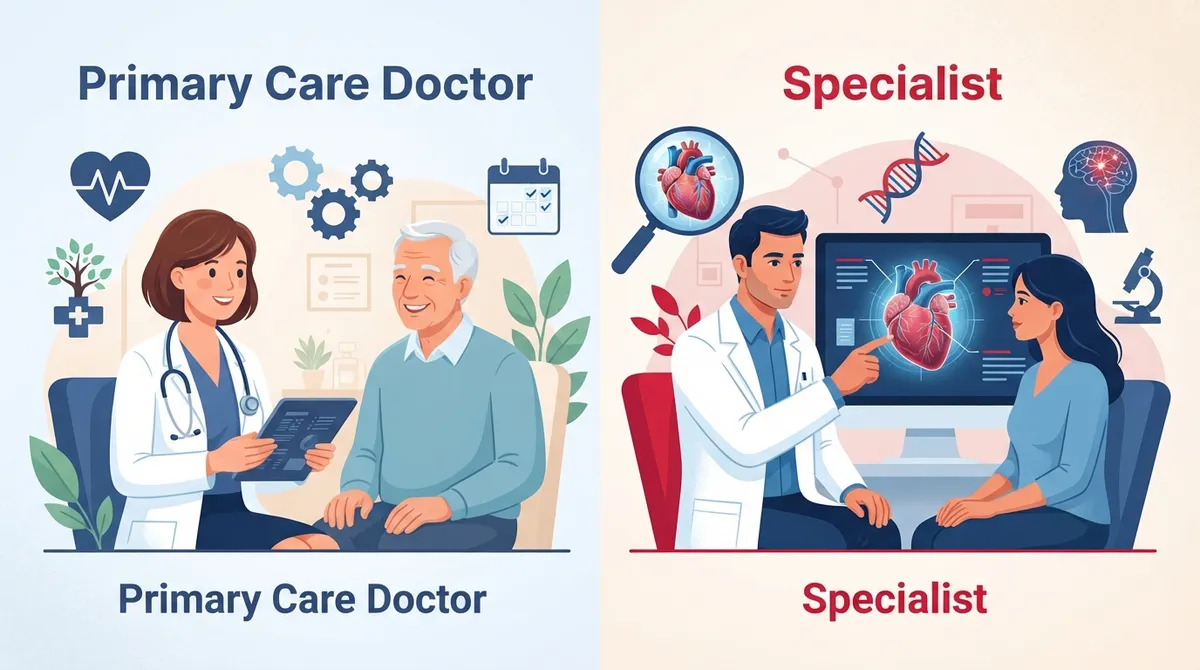
Many patients wonder whether they should see a primary care doctor or go straight to a specialist. The answer usually depends on the type and complexity of your health concern.
|
Factor |
Primary Care Doctor |
Specialist |
|---|---|---|
|
Scope of Care |
Broad, whole-body health |
Narrow, focused on one system or condition |
|
First Point of Contact |
Yes, for most concerns |
Usually requires a referral |
|
Relationship Length |
Long-term, ongoing |
Often short-term or condition-specific |
|
Preventive Focus |
High, includes screenings and wellness |
Lower, focused on treatment |
|
Care Coordination |
Manages referrals and follow-ups |
Reports back to primary doctor |
A specialist, like a cardiologist or dermatologist, has deep expertise in one area of medicine. Your primary care doctor is the one who decides when that specialized knowledge is needed and connects the dots between all your care providers. This is especially important for people managing multiple health issues at once. Learn more in our article on Fragmented Care vs. Coordinated Care: Which Wins?
When Should You See a Primary Care Doctor Instead of Urgent Care?
Knowing where to go can save you time and money. Urgent care is best for sudden, non-life-threatening issues like a sprained ankle or minor cut. Primary care is better for ongoing management, checkups, and health concerns that need a deeper look.
- Choose primary care for annual physicals, chronic disease management, and preventive screenings.
- Choose urgent care for sudden illness or injury that needs same-day attention but isn't an emergency.
- Choose your primary doctor when you need a prescription refill or ongoing medication management.
- Choose primary care when you want a long-term health partner who knows your full medical history.
InCare offers both options in one place, so patients never have to guess. Our urgent care services handle same-day needs, while our primary care team builds lasting relationships focused on prevention.
How Primary Care Fits Into Whole-Body Wellness
Modern primary care goes beyond treating illness. Many clinics now combine traditional medical care with wellness services designed to optimize your overall health. This shift matters, especially as more patients seek proactive solutions rather than waiting until something goes wrong.
Preventive Screenings and Early Detection
Primary care doctors play a critical role in catching health issues before they become serious. This includes cancer screening services, blood pressure checks, and lab work that flags problems early. Early detection often makes the difference between a simple treatment and a complicated one.
Personalized Wellness Programs
Many patients now look to their primary care provider for more than just sick visits. Services like DNA gene testing, body composition analysis, and weight loss programs are becoming part of comprehensive primary care. These tools give patients a clearer picture of their health risks and help build personalized treatment plans instead of one-size-fits-all advice.
IV Hydration and Recovery Support
Some primary care clinics, including InCare, also offer IV hydration and vitamin drips to support energy levels and recovery. While this isn't part of traditional primary care, it reflects a growing trend toward whole-body optimization rather than just disease treatment.
Do You Need a Referral to See a Specialist?
This depends on your insurance plan and the type of specialist you need. Many insurance plans require a referral from your primary care doctor before covering specialist visits. Even when a referral isn't required, having your primary doctor coordinate the process often leads to better outcomes.
Your primary care doctor can also help interpret specialist recommendations and make sure they fit into your overall treatment plan. This coordination reduces the risk of conflicting advice or duplicate testing. For a deeper look at chronic disease coordination, see How Primary Doctors Help Manage Chronic Illnesses.
How Often Should You See Your Primary Care Doctor?
Most healthy adults benefit from at least one annual wellness visit. However, patients managing chronic conditions like diabetes or high blood pressure often need more frequent visits, sometimes every three to six months. Your doctor will recommend a schedule based on your age, health history, and current conditions.
According to the Milbank Memorial Fund's 2024 primary care scorecard, the number of primary care physicians per 100,000 people in the U.S. actually declined slightly between 2012 and 2021. This makes it even more important to build a strong relationship with a doctor who knows your history and can act quickly when something changes.
Primary Care Doctor vs. Primary Care Provider: What's the Difference?
These terms are often used interchangeably, but there's a technical difference. A primary care doctor is specifically a physician, someone who completed medical school and residency training. A primary care provider is a broader term that can include nurse practitioners and physician assistants as well.
Both can deliver excellent primary care, and many clinics use a team-based approach where doctors, nurse practitioners, and physician assistants work together. What matters most is finding a provider you trust who takes time to understand your health goals.
Why Choosing the Right Primary Care Partner Matters
Not all primary care clinics offer the same level of service. Some focus purely on treating illness, while others take a broader approach that includes wellness optimization and preventive screenings. When choosing a provider, consider:
- How easy it is to schedule same-day or virtual appointments
- Whether the clinic offers wellness services beyond basic checkups
- How well the practice coordinates care with specialists
- The overall patient experience and communication style
At InCare, patients in Tampa and Riverview benefit from experienced physicians like those featured on our team page, combined with modern tools like metabolic breath analysis and hair restoration services. This blend of traditional primary care and advanced wellness sets InCare apart as a trusted choice for whole-body health. You can also read what patients say about their experience by visiting our InCare location on Google.
Making the Most of Your Primary Care Relationship
To get the most value from your primary care doctor, come prepared to each visit. Bring a list of medications, note any new symptoms, and be honest about lifestyle habits like diet, sleep, and stress. This helps your doctor give you accurate advice tailored to your life, not just generic recommendations.
Follow up on referrals promptly and ask questions if something doesn't make sense. Your primary care doctor works best as a partner, not just a service provider. The more open communication you maintain, the better your long-term health outcomes will be. You can also follow health tips and updates from InCare on Facebook, Instagram, and TikTok for practical wellness advice between visits.
Ready to Build a Lasting Primary Care Relationship?
Understanding what a primary care doctor does is the first step toward better, more proactive health management. Whether you need help managing a chronic condition, want preventive screenings, or are ready to explore advanced wellness services, having the right doctor makes all the difference.
InCare combines traditional primary care with cutting-edge wellness technology at our Tampa and Riverview locations. Ready to experience the difference for yourself? Book your appointment today or reach out to our team with any questions about our services.
FAQs
Q: What is the difference between a primary care doctor and a specialist?
A: A primary care doctor provides broad, ongoing care for your overall health and serves as your first point of contact. A specialist focuses on one specific area of medicine and typically sees patients after a referral for a targeted issue.
Q: What conditions can a primary care doctor treat?
A: Primary care doctors treat common illnesses like colds, infections, and minor injuries. They also manage chronic conditions such as diabetes and high blood pressure, and provide preventive care like screenings and immunizations.
Q: Can a primary care doctor prescribe medication and order tests?
A: Yes, primary care doctors can prescribe medications, order lab work, and request imaging tests. They use these tools to diagnose conditions and monitor your health over time.
Q: Do I need a referral from my primary care doctor to see a specialist?
A: It depends on your insurance plan. Many plans require a referral for specialist visits to be covered, and your primary care doctor helps coordinate that process.
Q: How often should I see my primary care doctor?
A: Most healthy adults benefit from an annual wellness visit. Patients managing chronic conditions often need more frequent checkups, sometimes every three to six months, depending on their needs.