
Key Takeaways
- Dr. Naveen Paddu is listed as an internal medicine and primary care physician at InCare in Tampa, but the sources do not confirm he recommends any specific supplement brand or protocol.
- Physician-guided supplement decisions start with your history, medications, and lab results, which allows interaction checks and testing for real deficiencies before buying anything.
- Supplements are not regulated like prescription medicines, so check ingredient facts on NIH Office of Dietary Supplements fact sheets and bring every product you take to your doctor.
- Call InCare at 813-553-3330 before your visit to ask what supplement-related services are offered and what an appointment requires.
Searching for "Dr. Naveen Paddu supplements Tampa" usually means one thing: you want to know whether a trusted local physician can help you choose vitamins and supplements safely. It is a smart question. The supplement aisle is crowded, labels are confusing, and not every product is right for every body.
Dr. Naveen Paddu is an internal medicine and primary care physician with InCare in Tampa. His public profile describes comprehensive care that includes reviewing medical history, medications, lab results, and health goals. The available sources do not confirm that he recommends or sells any specific supplement brand, so this guide does not attribute product lists to him. Instead, it compares two paths: doctor-guided supplement decisions and do-it-yourself buying. Both are common in 2026, but they lead to very different outcomes for safety, cost, and results.
Whether you are a busy parent, a wellness-focused professional, or someone exploring prevention for the first time, this comparison will help you decide how to move forward.

What We Know About Dr. Naveen Paddu and InCare
Before comparing approaches, it helps to separate verified facts from assumptions. Dr. Naveen Paddu is listed as an internal medicine and primary care physician at InCare Integrated Medical Care. The Tampa office is at 1213 N Franklin St, Tampa, FL 33602, and the clinic lists weekday hours of 8 a.m. to 5 p.m.
InCare describes a broader wellness model. That includes preventive care, chronic-condition follow-up, testing, weight and wellness services, and hormone or peptide care. Supplement guidance fits naturally inside this kind of whole-person care, but the specifics should always be confirmed directly with the clinic.
- Verified: Dr. Paddu practices internal medicine and primary care in Tampa.
- Verified: InCare reviews medical history, medications, lab results, and health goals.
- Not verified: Any specific supplement protocol, product list, or brand endorsement.
The best next step is simple. Call the clinic at 813-553-3330 and ask what supplement-related services are available and what an appointment requires.
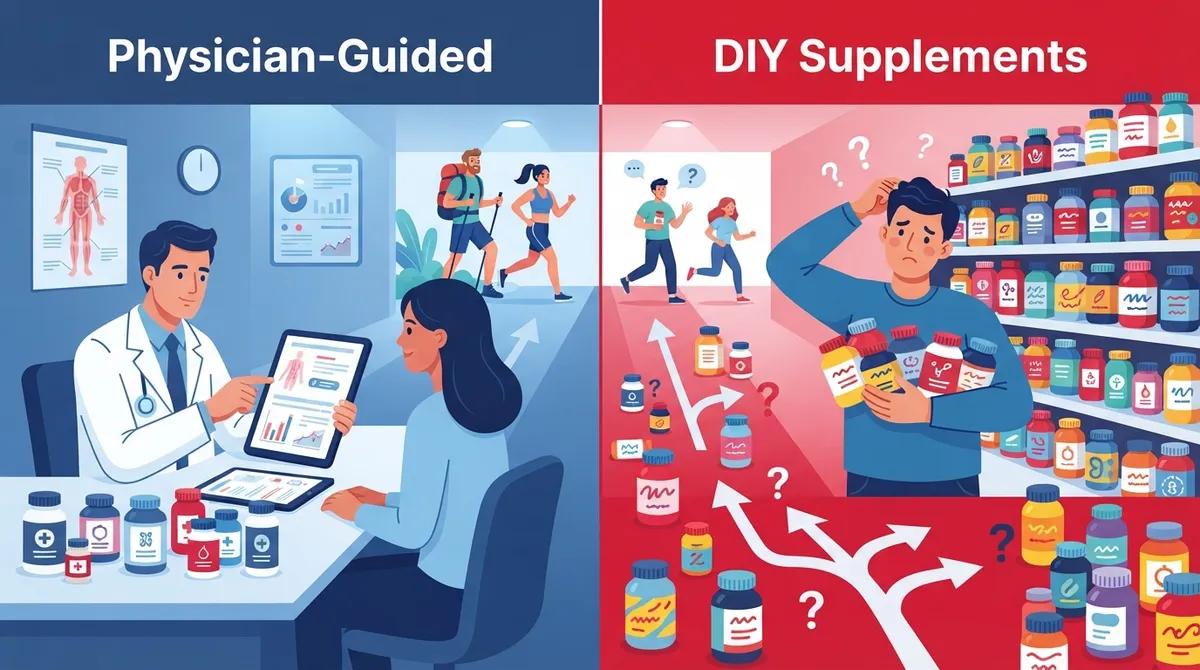
The Two Paths: Physician-Guided vs. DIY Supplements
Most people fall into one of two groups. Some ask a physician first. Others buy what looks promising online or at a store. Here is how the two paths compare.
|
Factor |
Physician-Guided Approach |
DIY Approach |
|---|---|---|
|
Starting point |
Medical history, labs, and goals |
Marketing, reviews, or trends |
|
Drug interaction check |
Yes, against your medication list |
Rarely done |
|
Testing for deficiencies |
Lab work guides the decision |
Guesswork |
|
Dose personalization |
Based on your results |
Based on the label |
|
Follow-up |
Planned re-checks |
Usually none |
|
Cost control |
Fewer unnecessary products |
Risk of overbuying |
The table shows a pattern. Physician-guided care starts with data about you. DIY care starts with a product. That difference shapes everything that follows.
Why Supplements Need Medical Context
Dietary supplements are not a substitute for prescribed treatment or a balanced diet. They are also not regulated like prescription medicines. The U.S. National Institutes of Health Office of Dietary Supplements offers independent fact sheets, and the FDA accepts reports of suspected adverse events. These public resources are worth bookmarking.
Even common supplements can cause trouble in the wrong situation. Some can affect how blood thinners work. Others may interfere with thyroid medication, blood pressure treatment, or diabetes care. A clinician who sees your full chart can spot these conflicts early.
Common Risks of Unsupervised Supplement Use
- Interactions: Certain products change how prescription drugs are absorbed or processed.
- Duplication: Taking several products with overlapping ingredients can push you past safe limits.
- Masking symptoms: A supplement may hide a problem that needs real diagnosis.
- Quality gaps: Labels do not always match what is inside the bottle.
None of this means supplements are bad. It means they work best when matched to a real need.
How a Primary Care Visit Can Shape Your Supplement Plan
A good supplement conversation does not begin with a product. It begins with a health review. At a comprehensive visit, a primary care physician typically looks at your history, current medications, allergies, diet, and relevant test results.
InCare offers preventive and testing services that can support this process. For example, an annual wellness visit gives your doctor a baseline. From there, lab work can show whether a nutrient gap is real. Advanced options such as DNA gene testing may add personalized insight for patients who want a deeper look.
- Review your history. Your doctor looks at conditions, medications, and past results.
- Run targeted tests. Labs help confirm or rule out a deficiency.
- Discuss your goals. Energy, weight, sleep, or prevention each point in a different direction.
- Build a plan. Only products with a clear purpose make the list.
- Follow up. Results are re-checked so the plan stays accurate.
This process saves money over time. You buy fewer products, and each one has a reason.
Supplements and Weight, Energy, and Hormone Goals
Many Tampa patients ask about supplements for weight management, energy, or hormone health. These are areas where marketing claims run far ahead of evidence. A physician can help you sort fact from hype.
InCare's public site describes weight loss programs, metabolic breath analysis, and body composition analysis. These tools measure what is actually happening in your body. That matters because a supplement chosen for "slow metabolism" makes little sense if testing shows your metabolism is normal.
Likewise, IV hydration and vitamin drips are an option some patients explore for wellness. Whether any of these services fits you is a medical decision. It should rest on your health profile, not on a trend.
How to Judge Whether a Supplement Claim Is Reliable
Whether you consult a doctor or not, you can sharpen your own judgment. Use this checklist before buying any product.
- Look for specific ingredients and amounts. Vague "proprietary blends" hide how much of each ingredient you get.
- Check for independent testing. Third-party verification adds confidence in quality.
- Be cautious with big promises. Claims like "cures" or "reverses" are warning signs.
- Read the NIH fact sheets. The Office of Dietary Supplements summarizes the evidence by ingredient.
- Bring the bottle to your doctor. A quick review can catch problems before they start.
These steps help, but they cannot replace personal medical review. A product that is safe for one person can be risky for another.
Who Benefits Most From Physician Guidance
Some groups gain more from a doctor-led approach than others. If you fit any of these descriptions, a clinic visit is especially worthwhile.
- Anyone taking prescription medication. Interaction checks are essential.
- Busy families. One visit can cover multiple health questions and save time.
- Women without a primary care relationship. A full wellness review goes beyond reproductive care.
- Tech-savvy and data-driven patients. Testing gives you numbers instead of guesses.
- Younger adults exploring prevention. A baseline now makes future changes easier to measure.
InCare also offers virtual visits, which suits patients who prefer a convenient first conversation. Confirm availability with the clinic when you call.
Questions to Ask Before You Start Any Supplement
Come to your appointment prepared. These questions make the visit more productive.
- Do I have a documented deficiency that this supplement would address?
- Could this product interact with my current medications?
- What dose is appropriate for me, and for how long?
- What results should I expect, and when should we re-test?
- Are there food-based or lifestyle changes that would work as well?
Bring a complete list of everything you take. That includes vitamins, herbs, protein powders, and over-the-counter medicines. Accuracy here protects you.
The Verdict: Which Path Wins?
For most people, the physician-guided path wins on safety, personalization, and long-term value. DIY buying can feel faster and cheaper at first. But without testing or interaction checks, you may spend more on products you do not need and take on risks you cannot see.
That said, the choice is not all or nothing. Many patients keep a simple routine and simply ask their doctor to review it once or twice a year. That small step adds a strong safety layer.
InCare is built for this kind of whole-body, prevention-focused care. With locations in Tampa and Riverview, a patient-centered approach, and a strong patient satisfaction record, the clinic is a solid starting point for anyone who wants supplement decisions grounded in real medical review. You can also see what InCare patients say on Google, and follow the clinic on Instagram, Facebook, and TikTok for wellness updates.
Ready to take the guesswork out of supplements? Book your appointment with InCare today, or contact the team to ask about supplement-related care and availability.
FAQs
Q: Does Dr. Naveen Paddu in Tampa recommend supplements?
A: Dr. Paddu is listed as an internal medicine and primary care physician with InCare in Tampa. The available public sources do not confirm any specific supplement protocol or brand, so contact the clinic at 813-553-3330 to ask what guidance is offered.
Q: Can a primary care doctor review my supplements for interactions with prescription medications?
A: Yes. A primary care physician can compare your supplements against your medication list, allergies, and lab results. Bring every product you take to your appointment so nothing is missed.
Q: Are supplements regulated the same way as prescription medicines?
A: No. Dietary supplements are not reviewed and approved by the FDA before sale in the same way prescription drugs are. You can check ingredient facts through the NIH Office of Dietary Supplements and report suspected adverse events to the FDA.
Q: Where is Dr. Naveen Paddu's Tampa office and how do I book?
A: InCare's Tampa office is at 1213 N Franklin St, Tampa, FL 33602, with weekday hours of 8 a.m. to 5 p.m. You can call 813-553-3330 or book online through InCare's scheduling page.