
Key Takeaways
- Personalized medicine in primary care means tailoring prevention, screening, and treatment to your history, risk factors, goals, and circumstances, and it does not require genetic testing.
- Pharmacogenomic testing can inform certain medication or dose choices, but the FDA notes that for many gene-drug associations, benefit to patients has not been established, so it should not replace clinical judgment.
- Do not use direct-to-consumer genetic test results alone to diagnose a condition or to start, stop, or change treatment; bring them to a qualified clinician for review and possible confirmation.
- Before agreeing to advanced testing, ask what decision the result will change, what the limits and chance of an unclear result are, who will interpret it, and what it will cost.
- When comparing Tampa practices, verify board certification in primary care, confirm which services are medical versus optional, and check insurance or membership terms directly before committing.
- Coverage varies: routine primary care and many preventive screenings are commonly covered, while advanced testing, wellness services, and membership fees may follow different billing rules, so call both the practice and your insurer first.
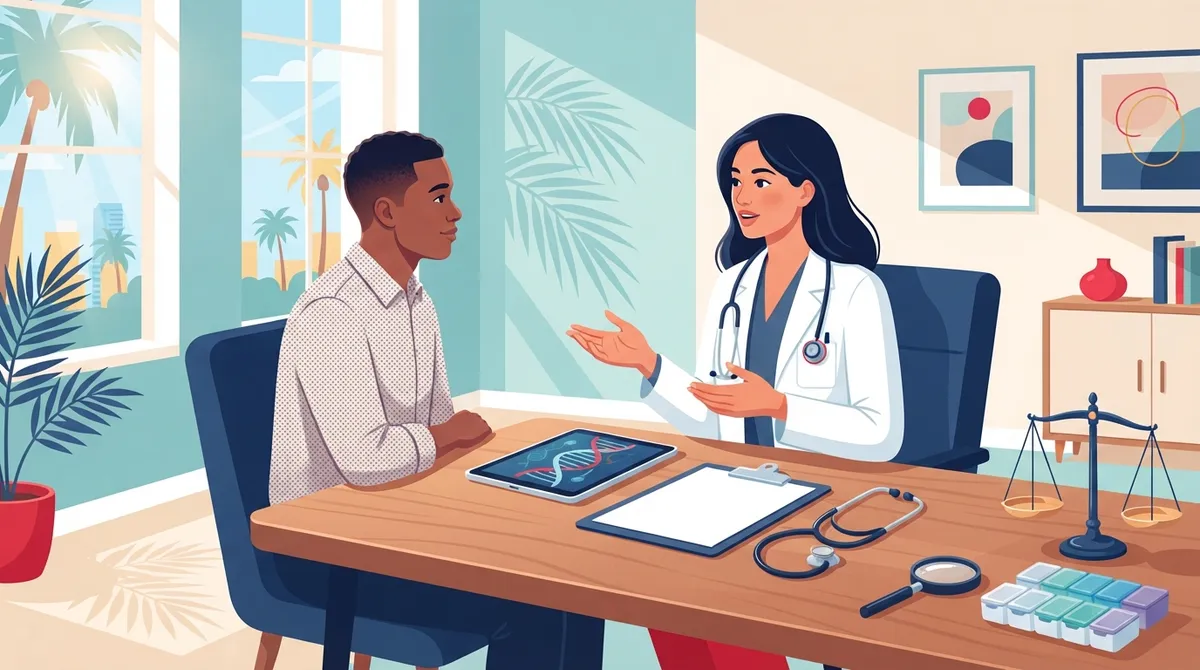
Many patients in Tampa are tired of rushed visits and one-size-fits-all advice. They want a doctor who knows their history, listens to their goals, and builds a plan that fits their life. That is the core idea behind working with a personalized medicine doctor in Tampa.
The term is often misunderstood. In primary care, personalized medicine usually means tailoring prevention, screening, diagnosis, and treatment to your medical history, risk factors, preferences, and circumstances. It does not always mean genetic testing or an expensive specialty program. Some clinicians do use tools like pharmacogenomic testing for certain medication decisions, but the foundation is individualized care.
This guide explains what a personalized medicine doctor does, what tests may be used, what limits to understand, and how to choose the right practice. It is written for busy professionals, young families, wellness seekers, and anyone who has not yet built a lasting relationship with a primary care provider.

What Does a Personalized Medicine Doctor Do?
A personalized medicine doctor is typically a primary care physician who tailors care to the individual instead of following a generic template. The goal is to match screening, lifestyle guidance, and treatment to your actual risks and priorities.
Specific services vary by clinician and practice. A visit often includes several core elements:
- Health history review: past conditions, surgeries, and current symptoms.
- Medication review: prescriptions, supplements, and possible interactions.
- Family history: inherited risks that may change screening timing.
- Lifestyle assessment: sleep, nutrition, activity, stress, and work demands.
- Preventive care planning: age- and risk-based screenings and vaccines.
- Individualized plan and follow-up: clear next steps, not a one-time handout.
For a closer look at what a standard visit covers, see What Does a Primary Care Doctor Do? A 2026 Guide.
Personalized Medicine vs. Traditional Primary Care
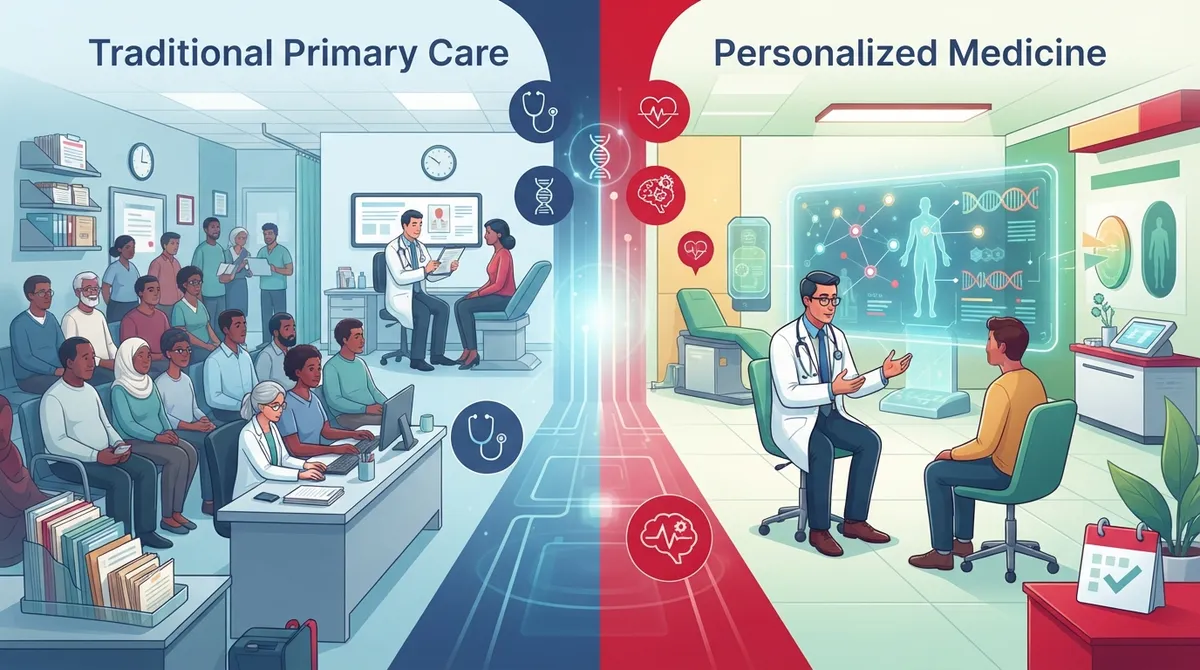
Traditional primary care can also be personal. The difference is often in time, tools, and approach. Personalized care puts more weight on prevention, risk analysis, and ongoing optimization rather than only treating problems after they appear.
|
Feature |
Traditional Visit |
Personalized Approach |
|---|---|---|
|
Focus |
Treating current problems |
Prevention and risk reduction |
|
Screening |
Standard schedules |
Adjusted for family history and risk |
|
Treatment plan |
General protocols |
Tailored to goals and circumstances |
|
Follow-up |
As needed |
Planned, with progress tracking |
|
Tools |
Basic exam and labs |
May include advanced testing when appropriate |
Neither model is automatically better for every person. The best fit depends on your health needs, your time, and how involved you want to be in planning your care.
Does Personalized Medicine Always Involve Genetic Testing?
No. This is one of the most common misconceptions. Many personalized plans never involve a genetic test. A thoughtful review of your history, labs, and goals can drive highly individualized care on its own.
Genetic testing is one tool among many. It can be useful in selected situations, but it should be ordered for a clear reason and interpreted by a qualified clinician. If a practice promises that a single test will reveal your ideal treatment, ask for the evidence behind that claim.
Understanding Pharmacogenomic Testing
Pharmacogenomic testing looks at how certain genetic variants may affect the way your body processes or responds to specific medicines. It can help inform medication or dose choices in selected gene and drug situations.
There are important limits to keep in mind:
- It is not a general test that predicts which treatment will work best for everyone.
- The FDA notes that a listed gene and drug association does not automatically mean testing is recommended before prescribing.
- For many associations, evidence that testing improves clinical outcomes has not been established.
- Genetics is only one factor in medication response. Age, other medicines, kidney and liver function, and lifestyle also matter.
In short, pharmacogenomic results can be helpful context, but they should never replace clinical judgment. Medicare coverage rules also exist for this type of testing, so coverage depends on the specific situation and plan.
Direct-to-Consumer Genetic Tests: Use Caution
Mail-in genetic kits are popular, especially among younger adults curious about their health. They can be interesting, but they come with real limits.
According to the FDA, direct-to-consumer tests vary in the evidence supporting their claims. Results should not be used alone to diagnose a condition or to start, stop, or change treatment. The National Human Genome Research Institute also notes that these tests may not assess all disease-causing variants, and a potentially actionable result may need confirmation through clinical testing and professional interpretation.
If you already have a consumer test result, bring it to your appointment. A qualified clinician can help you decide whether it needs follow-up. You can learn more from the FDA guidance on direct-to-consumer tests.
Services That Support a Personalized Plan
Depending on your needs, a personalized primary care practice may offer tools that add detail to your picture of health. InCare, with locations in Tampa and Riverview, combines primary care with advanced wellness services, including:
- Annual physicals, chronic condition management, and preventive screenings
- Cancer screenings for early detection
- Metabolic breath analysis to assess metabolism
- Body composition analysis with 3D imaging
- DNA gene testing for personalized health insights
- Medical weight loss programs
- IV hydration and vitamin therapy
Not every service is right for every patient. A good clinician will explain why a test is recommended, what the results can and cannot tell you, and how they will change your plan. To learn more about one of these tools, read What Does a Metabolic Breath Test Show About Your Body?
Personalized Care Models in Tampa
Tampa offers several care models that people describe as personalized. They are not the same, so it helps to know the differences.
|
Model |
Typical Features |
Questions to Ask |
|---|---|---|
|
Traditional primary care |
Insurance-based, standard visit length |
Which plans are accepted? How soon can I be seen? |
|
Concierge or membership care |
Longer visits, added access, annual fee |
What does the fee cover? Is insurance still billed? |
|
Integrated wellness clinic |
Primary care plus advanced testing and wellness services |
Which services are medical and which are optional? |
Fees, insurance participation, and services change over time, so confirm current details directly with any practice. For a deeper look at membership models, see Boutique Medicine Tampa: Costs, Models and How to Choose.
How to Choose a Personalized Medicine Doctor in Tampa
Use this simple process to compare your options:
- Verify credentials. Confirm the clinician is licensed and board certified in a primary care specialty.
- Review the services. Make sure the practice covers prevention, chronic care, and the wellness tools you care about.
- Ask about evidence. A trustworthy provider can explain why a test or therapy is recommended and what the limits are.
- Check costs and coverage. Ask about insurance, membership terms, and any out-of-pocket charges before you commit.
- Consider access. Look at location, hours, same-day options, and virtual visits.
- Read patient feedback. Look for patterns about listening, follow-through, and staff friendliness.
If you are just starting your search, How to Find the Best Doctor in Tampa for Your Needs offers more detail on comparing practices.
Questions to Ask Before Genetic or Pharmacogenomic Testing
Before agreeing to any advanced test, ask your doctor these questions:
- Why is this test being recommended for me specifically?
- What decision will the result change?
- What are the limits and the chance of an unclear result?
- Who will interpret the result, and will there be a follow-up visit?
- What will it cost, and will insurance cover it?
- How will my results be stored and protected?
Clear, honest answers are a good sign. Vague promises are a reason to slow down.
Who Benefits Most From Personalized Primary Care?
Personalized care can help many types of patients:
- Busy professionals who want efficient, prevention-focused care and clear plans.
- Young families who need one practice for routine care, screenings, and weight management support.
- Wellness-minded adults interested in proactive testing and whole-body optimization.
- Young adults and women without an established primary care relationship who want comprehensive wellness visits beyond reproductive care.
If you have never had a regular doctor, starting now is easier than you might think. Our guide on How to Establish Care With a New Doctor in 2026 walks through the first steps.
What Makes InCare a Strong Choice in Tampa
InCare is a personalized healthcare clinic that combines state-of-the-art technology with medical expertise. The practice offers primary care, urgent care, and advanced wellness services with locations in Tampa and Riverview, plus virtual appointments. That mix lets patients handle routine visits, quick illnesses, and long-term wellness goals in one place.
Patients often mention the friendly staff and the quality of care. InCare holds a 4.8 out of 5 rating on Google from hundreds of reviews. You can visit us on Google and read InCare reviews to see what patients say. You can also follow the clinic on Instagram for updates and wellness tips.
Is Personalized Medicine Covered by Insurance?
Coverage varies. Routine primary care visits and many preventive screenings are commonly covered by insurance, though details depend on your plan. Advanced testing, wellness services, and membership fees may have different billing rules. Pharmacogenomic testing may be covered only in specific clinical situations.
The safest step is to call the practice and your insurer before scheduling. Ask what is covered, what requires prior approval, and what you would pay out of pocket.
Take the Next Step Toward Personalized Care
Personalized medicine is about more than technology. It is about a doctor who knows you, explains the evidence honestly, and builds a plan around your goals. Whether you are seeking preventive care, weight loss support, or advanced wellness testing, the right partner makes the process clearer and less stressful.
Ready to meet a care team that puts your needs first? Book your appointment with InCare today, or contact our team with questions about services at our Tampa and Riverview locations. You can also follow InCare on Facebook for the latest news.
FAQs
Q: What does a personalized medicine doctor do in primary care?
A: A personalized medicine doctor tailors prevention, screening, diagnosis, and treatment to your medical history, risk factors, and goals. Visits typically include a review of your health history, medications, family history, and lifestyle, followed by an individualized plan and follow-up.
Q: Does personalized medicine always involve genetic testing?
A: No. Many personalized care plans rely on history, labs, screenings, and shared decision-making without any genetic test. Genetic or pharmacogenomic testing may be used in selected situations, but it should have a clear purpose and be interpreted by a qualified clinician.
Q: Can pharmacogenomic testing help choose or adjust my medications?
A: It can inform medication or dose choices for certain gene and drug combinations. However, the FDA notes that for many associations the benefit of testing has not been established, and genetics is only one factor in how you respond to a medicine.
Q: Are direct-to-consumer genetic test results reliable enough to guide treatment?
A: Not on their own. The FDA states that results should not be used alone to diagnose a condition or to start, stop, or change treatment. Discuss any relevant results with a qualified healthcare professional, who may recommend confirmation through clinical testing.
Q: How do I find a personalized primary care doctor in Tampa?
A: Verify the clinician's credentials, compare services and costs, and ask how they use testing and what evidence supports it. Confirm current insurance or membership terms directly with each practice, and read patient reviews to gauge communication and follow-through.


