
Key Takeaways
- "Performance medicine" is a marketing term, not a standardized specialty, so verify each Tampa doctor's active Florida license, training, and who supervises your treatment before booking.
- Proven foundations come first: CDC guidelines call for 150 minutes of moderate aerobic activity weekly plus muscle-strengthening on two days, yet only about one in four adults meets both.
- Treat add-ons like peptides, IV infusions, and exosomes with caution; ask about the evidence, risks, alternatives, and FDA status, and be wary of guaranteed results or large upfront packages.
- A primary care foundation makes performance care safer, since a doctor who knows your full history can catch issues like thyroid problems or rising blood pressure behind fatigue or plateaus.
If you want to feel stronger, recover faster, and protect your long-term health, you may have searched for a performance medicine doctor in Tampa. The phrase is popular, but it can be confusing. In 2026, "performance medicine" is a marketing term rather than a single, standardized medical specialty. It usually describes personalized care that supports fitness, recovery, metabolic health, and prevention.
That wide meaning makes your choice important. Some clinics build care on solid primary care. Others lean heavily on add-on therapies with limited proof. This guide explains what a performance medicine doctor in Tampa does, which services have strong evidence, and which questions to ask before you book. You will also learn how a primary care-based model, like the one at InCare, can give you a safer and more complete foundation.

What Does a Performance Medicine Doctor Do?
A performance medicine doctor helps you improve physical capacity, energy, recovery, and long-term wellness. The work often begins with a detailed review of your health history, medications, sleep, nutrition, exercise habits, stress, and symptoms. From there, the doctor builds a plan that fits your goals and your risks.
Performance care is not only for athletes. Busy professionals, new parents, and active adults also use it to manage fatigue, weight, and early warning signs of chronic disease. The best programs treat performance as a result of good health, not a replacement for it.
Depending on the clinician, a visit may include:
- A full medical history and medication review
- Standard lab work and cardiometabolic risk assessment
- Body composition and fitness measures such as strength, balance, mobility, and aerobic capacity
- Preventive screening and vaccine review
- A written plan for nutrition, activity, sleep, and follow-up
Performance Medicine vs. Primary Care vs. Sports Medicine
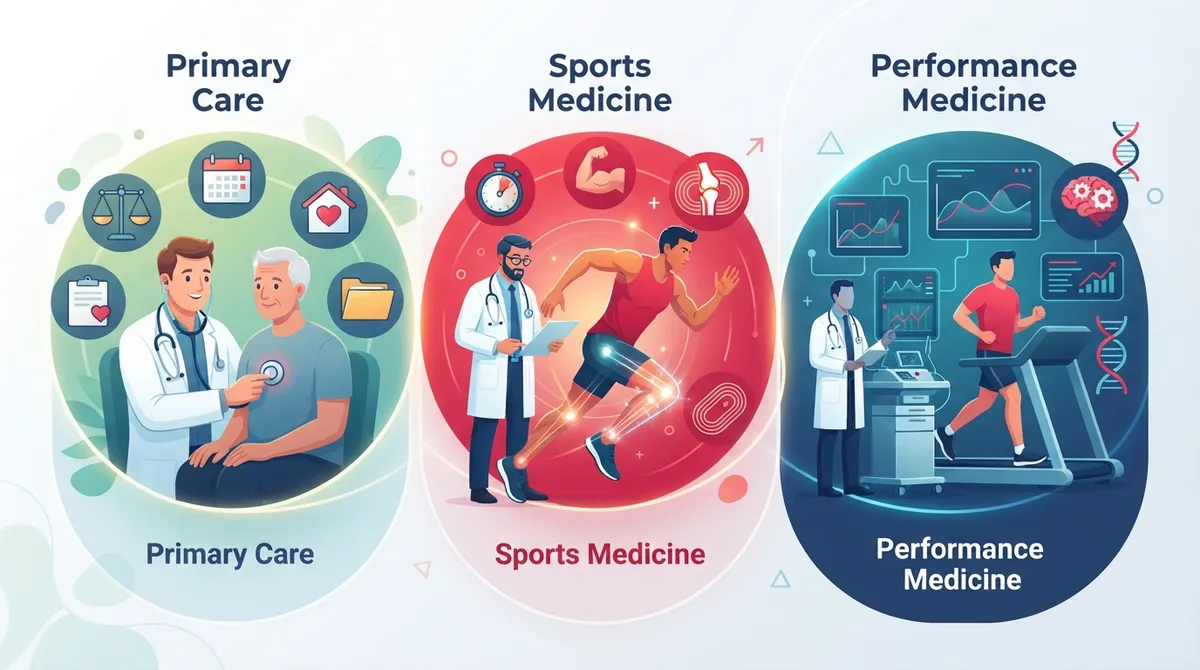
These terms overlap, which is why many patients feel unsure where to start. The table below shows the usual differences.
|
Care Type |
Main Focus |
Typical Services |
Best For |
|---|---|---|---|
|
Primary Care |
Whole-person health and prevention |
Physicals, screenings, chronic disease care, labs, referrals |
Anyone who wants a long-term medical home |
|
Sports Medicine |
Injury diagnosis and treatment |
Musculoskeletal exams, rehab plans, return-to-play guidance |
Athletes and active people with injuries |
|
Performance Medicine |
Capacity, recovery, and optimization |
Fitness testing, metabolic review, recovery planning, optional add-ons |
People who want to optimize health proactively |
Many Tampa practices blend these approaches. Some operate as concierge medicine or longevity programs. Others focus on regenerative therapies. Because the label is flexible, the details of each practice matter more than the name on the door.
Start With Proven Foundations
Strong performance care rests on basics that have decades of research behind them. These are the steps that matter most, and they cost far less than advanced add-ons.
Physical Activity
The CDC recommends that adults get at least 150 minutes of moderate-intensity aerobic activity each week, or 75 minutes of vigorous activity. Adults should also do muscle-strengthening activity on at least two days per week. Some activity is always better than none.
Most people fall short. The CDC reports that 24.5% of U.S. adults had no leisure-time physical activity in 2023. CDC summaries also note that only about one in four adults fully meet both the aerobic and muscle-strengthening guidelines. A good performance plan closes that gap first.
Sleep, Nutrition, and Stress
Poor sleep can undermine training, mood, and weight control. If you struggle with rest, it helps to know how to know when to see a doctor for poor sleep. Nutrition and stress management also shape energy and recovery, and a doctor can help you set realistic targets.
Screening and Risk Management
Blood pressure, cholesterol, blood sugar, vaccines, and cancer screenings protect your future performance. Skipping them to chase optimization is a poor trade. Reviewing cancer screening guidelines by age and risk in 2026 is a smart early step.
Testing a Performance Doctor May Recommend
Tests should answer a clear question. They should not be ordered just to create a long list of numbers. Common and useful options include the following.
- Standard blood work: Lipids, blood sugar or A1C, thyroid, vitamin levels, kidney and liver function, and a complete blood count.
- Cardiometabolic risk review: Blood pressure, waist measures, and family history.
- Body composition analysis: Tracks muscle and fat rather than weight alone.
- Metabolic and aerobic testing: Tools like VO2 max testing estimate your aerobic fitness.
- Hormone evaluation: Appropriate when symptoms and a medical history support it.
For a closer look at what a thorough visit can include, see what an executive physical exam in Tampa includes.
Evidence-Based Care vs. Optional Add-Ons
This is where patients most need caution. Some Tampa-area practices advertise hormone therapy, peptides, IV infusions, PRP, exosomes, hyperbaric oxygen, and red-light therapy. Availability does not prove that a treatment works, fits every patient, or is FDA-approved for your specific goal.
|
Category |
Examples |
What to Ask |
|---|---|---|
|
Established preventive care |
Screenings, vaccines, blood pressure and cholesterol management, exercise, nutrition, sleep |
Is this tailored to my risks and age? |
|
Medically indicated treatments |
Treatment for diagnosed low testosterone, diabetes, or thyroid disease |
What labs confirm I need this, and how will you monitor me? |
|
Optional or emerging add-ons |
Peptides, exosomes, IV infusions, PRP, recovery devices |
What is the evidence, the risks, the alternatives, and the regulatory status? |
If a clinic is open about the limits of the evidence, that is a good sign. If it promises dramatic results with no discussion of risk, that is a warning sign. Our guides on peptides for athletes and medically supervised TRT in Tampa Bay explain how to separate hype from medical reality.
How to Choose a Performance Medicine Doctor in Tampa
Use this checklist to compare practices. It protects your health and your budget.
- Verify the license. Confirm an active Florida license for every clinician who will treat you.
- Check training and board certification. Look for primary care, internal medicine, family medicine, or relevant specialty training.
- Ask who evaluates and supervises treatment. Know whether a physician, nurse practitioner, or other staff member oversees your care.
- Review the evidence. Ask for plain-language reasons behind each recommendation.
- Confirm follow-up. Good care tracks your results over time with repeat testing and adjustments.
- Understand the total cost. Ask what insurance covers, what requires a membership, and what is cash pay.
If you want more help narrowing the field, read how to choose the best primary care doctor in Tampa in 2026 and our overview of boutique medicine in Tampa.
Why a Primary Care Foundation Matters
Performance goals are easier to reach when one team understands your whole health picture. A primary care doctor can spot a thyroid problem behind your fatigue, a sleep issue behind your plateau, or a blood pressure trend before it becomes serious. That context makes any advanced service safer.
InCare was built around this idea. The practice combines primary care, urgent care, and advanced wellness services with state-of-the-art technology. Patients can access body composition analysis, metabolic breath analysis, DNA gene testing, cancer screenings, weight loss programs, and IV hydration. All of it connects to one medical record and one care team in Tampa and Riverview.
Patients also value the human side of care. InCare holds a 4.8 out of 5 rating on Google across 359 reviews, with patients often praising the friendly staff and the quality of care from Dr. Ahluwalia. You can read InCare reviews on Google to see what patients say. To follow our latest wellness tips, visit us on Instagram or Facebook.
What to Expect at a Performance-Focused Visit
A strong first visit feels organized and unhurried. You should expect questions about your goals, your daily routine, and your health history. The doctor should explain which tests make sense and why. You should leave with a clear plan, not a stack of unexplained products.
Bring a list of medications and supplements, past lab results, and your top three goals. Examples include more energy, steady weight loss, better endurance, or fewer aches after workouts. Clear goals help your doctor measure progress and adjust the plan.
Convenience matters too. Busy professionals and families often prefer a practice with same-day options and virtual visits. Learn about same-day annual physicals in Tampa if your schedule is tight.
Red Flags to Avoid
Protect yourself by watching for these warning signs:
- Promises of guaranteed results or fast transformations
- Pressure to buy large treatment packages up front
- Treatments started without baseline labs or a medical history
- No plan for follow-up testing or safety monitoring
- Vague answers about credentials, supervision, or FDA status
Take the Next Step Toward Better Performance
The best performance medicine doctor in Tampa is the one who starts with your health, not a product menu. Look for verified credentials, clear evidence, honest conversations about risk, and steady follow-up. Build on proven habits first, then add advanced tools only when they make sense for you.
If you want a personalized, technology-supported plan built on strong primary care, we would be glad to help. Book your visit with InCare today, or contact our team with questions. We serve patients in Tampa and Riverview, and you can call 813-553-3330 to get started.
FAQs
Q: What does a performance medicine doctor do?
A: A performance medicine doctor helps you improve physical capacity, recovery, metabolic health, and long-term wellness. The visit usually includes a health history review, lab work, fitness or body composition measures, and a personalized plan for activity, nutrition, and sleep.
Q: Is performance medicine a recognized medical specialty?
A: No. In Tampa and elsewhere, performance medicine is a broad marketing term, not a single standardized specialty. The care may come from primary care, sports medicine, concierge, or regenerative medicine practices, so you should verify each provider's license, training, and approach.
Q: Are peptides, hormone therapy, and IV infusions evidence-based and safe?
A: It depends on the treatment, the indication, and the patient. Some therapies, such as treatment for confirmed low testosterone, have clear medical uses. Others are emerging or unproven for performance goals, so ask about the evidence, risks, alternatives, and FDA status before starting.
Q: How can I check a Tampa doctor's license and board certification?
A: You can look up an active Florida license through the state's health care practitioner lookup. You can also confirm board certification through the relevant specialty board. Ask the practice who evaluates and supervises your treatment.
Q: Does insurance cover performance medicine?
A: Coverage varies. Standard primary care visits, screenings, and many lab tests are often covered by insurance. Concierge memberships, advanced add-on therapies, and some testing may be cash-pay, so ask for a full cost breakdown before you begin.