Key Takeaways
- Florida requires an in-person physical exam for the initial medical cannabis certification; a clinic offering instant online approval is a red flag.
- Certification is not guaranteed: a physician must confirm a qualifying condition and judge that likely benefits outweigh health risks before entering it in the state registry.
- Florida's physician certification and the state OMMU ID card are separate steps; you must apply for the ID card after certification and buy only from a licensed treatment center.
- Bring a Florida-residency photo ID, a list of diagnoses with dates, a complete medication list including supplements, and records of prior treatments and what helped.
- Qualifying conditions include cancer, epilepsy, glaucoma, HIV/AIDS, PTSD, ALS, Crohn's, Parkinson's, multiple sclerosis, chronic nonmalignant pain, and terminal conditions; Florida generally prohibits certification for marijuana use during pregnancy.
- Consult fees are set by each clinic, not the state, so confirm the consult fee, renewal fee, and whether the OMMU ID card fee is included before booking.
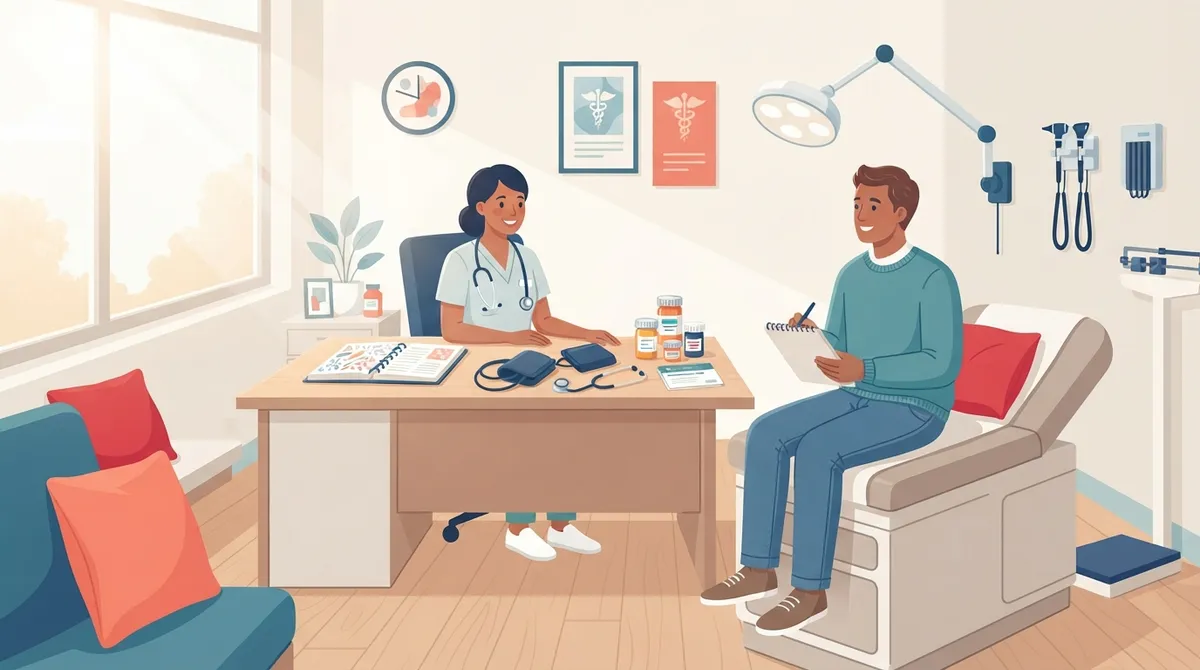
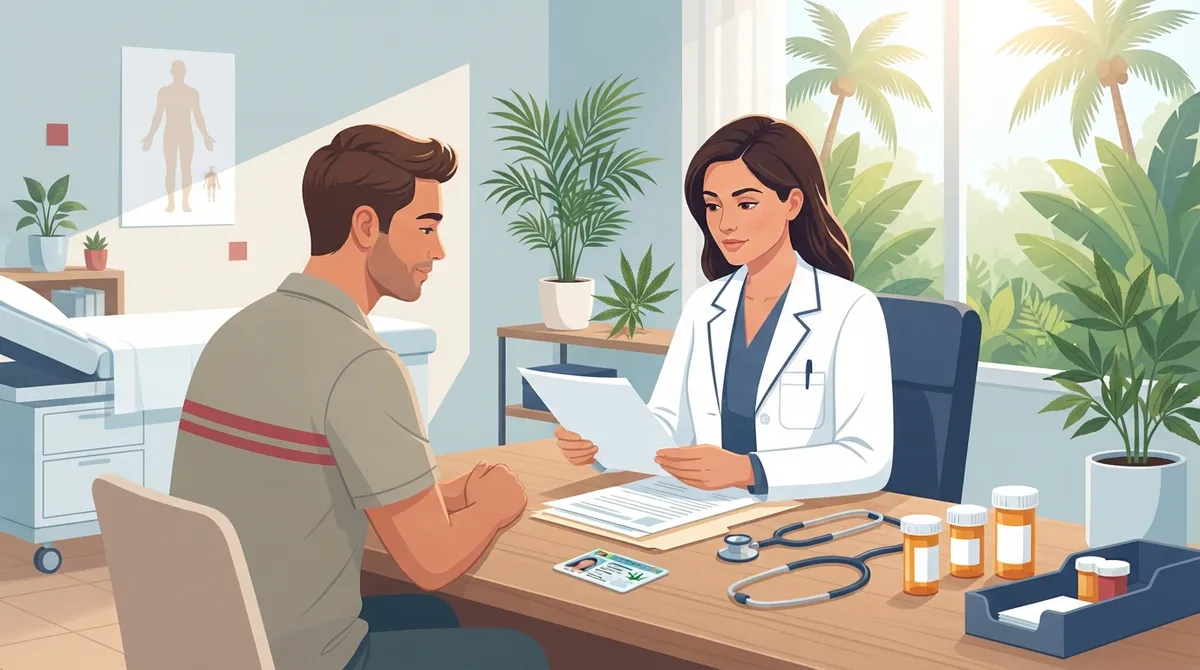
If you are considering medical cannabis, the first step is a physician-led evaluation. A new patient medical cannabis consult in Tampa is a clinical visit, not a quick approval. A licensed physician reviews your health history, confirms whether you have a qualifying condition, explains the risks, and decides whether certification is appropriate.
Florida's program continues to grow. The state's Office of Medical Marijuana Use (OMMU) reports hundreds of thousands of active patients, and a dated weekly update from October 9, 2026 listed 942,370 active ID cards. That growth means more patients are asking the same practical questions. Who qualifies? What should I bring? What happens after the visit?
This guide answers those questions in plain language. You will learn how the consult works, what Florida law requires, how the state ID card fits in, and how to prepare. Rules and fees change, so confirm current details with the clinic and OMMU before you book.
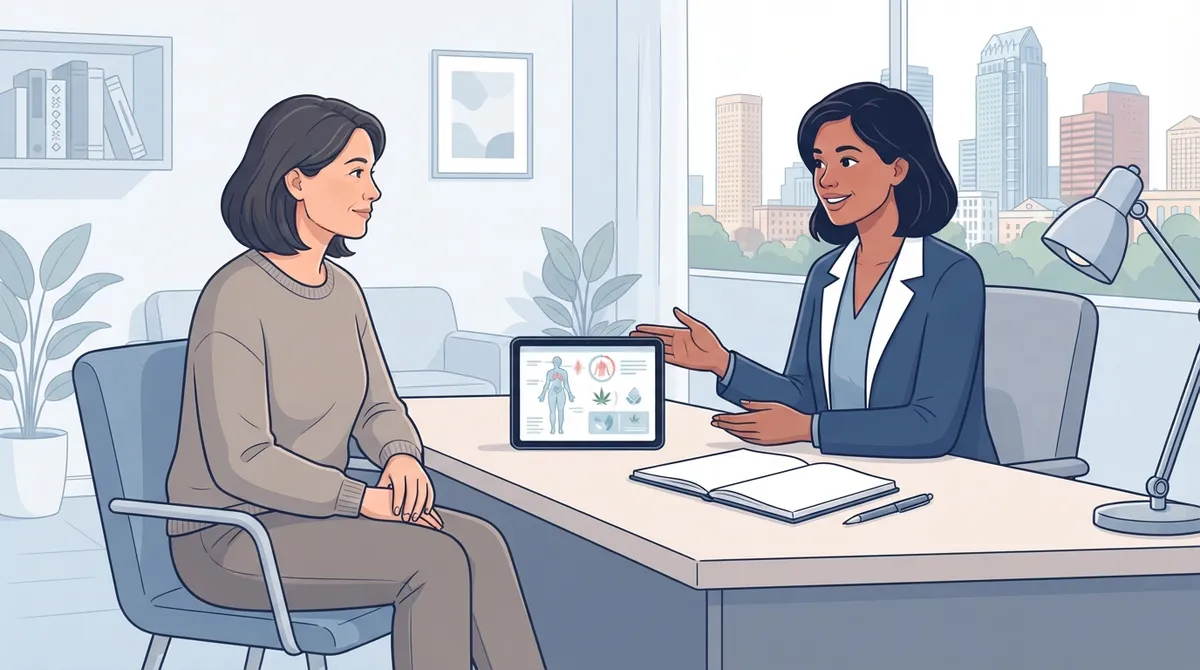
What a New Patient Medical Cannabis Consult Involves
A consult is a medical evaluation. It is the same kind of careful review you would expect from a primary care visit. The physician is not simply issuing a document. They are deciding whether medical cannabis is a reasonable and safe option for you.
Under Florida law, a qualified physician must examine you, review your medical history, diagnose a qualifying condition, and determine that the likely benefits outweigh the health risks. If those conditions are met, the physician can enter a certification and treatment orders in the state registry.
A consult is not a guaranteed approval. A physician may decide that cannabis is not appropriate for you. Reputable clinics make that decision based on clinical judgment, not on a promise made at booking.
What the physician will typically cover
- Your current symptoms and diagnosed conditions
- Past treatments and how well they worked
- Your current medications and supplements
- Your controlled-substance prescription history
- Pregnancy status, where relevant
- Risks, side effects, and what the evidence does and does not show
- Informed written consent
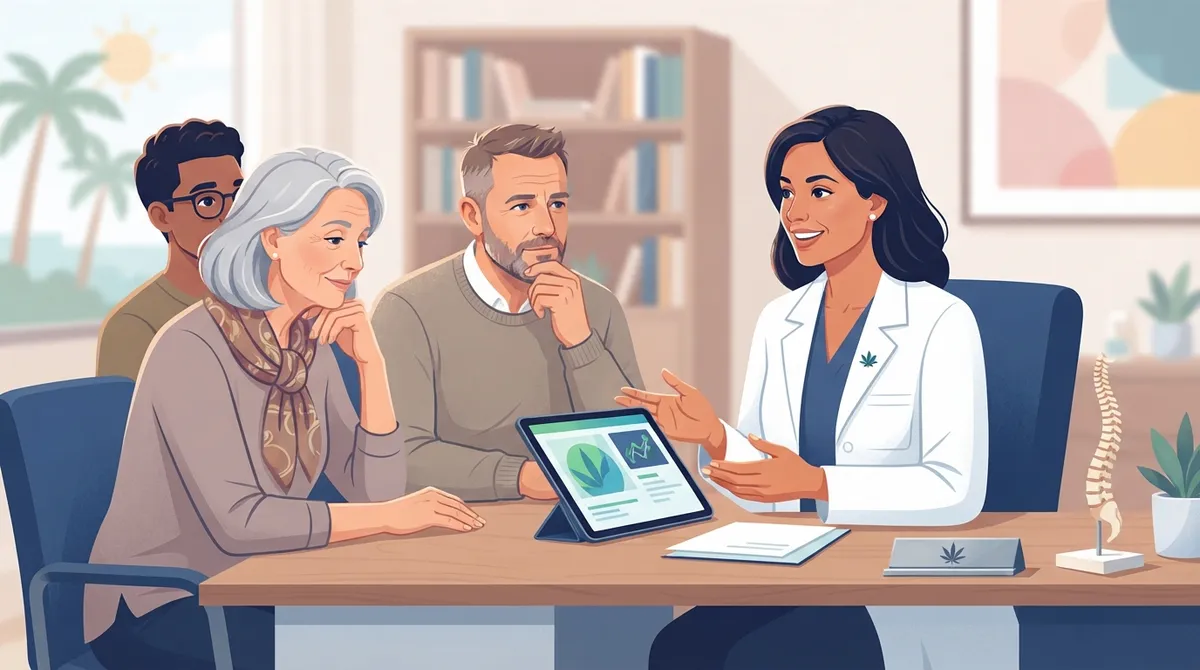
Who Qualifies for Medical Cannabis in Florida
Florida limits certification to specific conditions. The physician must document the diagnosis and the basis for certification. Qualifying conditions include:
- Cancer
- Epilepsy
- Glaucoma
- HIV/AIDS
- Post-traumatic stress disorder (PTSD)
- Amyotrophic lateral sclerosis (ALS)
- Crohn's disease
- Parkinson's disease
- Multiple sclerosis
- Chronic nonmalignant pain
- Terminal conditions
- Conditions comparable to those listed
For a comparable condition, the physician must document why it is similar to a listed condition. Analysis of Florida registry data has found that PTSD, chronic pain, and multiple sclerosis are among the most common qualifying conditions recorded.
You must also be a Florida permanent or seasonal resident. Florida generally prohibits certification for marijuana use during pregnancy, with a statutory exception for low-THC cannabis.
Is the First Visit In Person?
Yes. Florida requires an in-person physical examination for the initial certification. Telehealth may be allowed for later follow-up examinations, subject to current law. Because telehealth rules can change, ask the clinic what applies to renewals before you rely on a virtual visit.
This requirement matters for Tampa-area patients who see online ads promising instant approval. A legitimate first certification starts with an in-person exam by a qualified physician.
How the Process Works, Step by Step
The process has two separate parts. The physician certification is one part. The state ID card is another. Many patients confuse them.
- Book your consult. Choose a clinic with a qualified physician and confirm current fees, what is included, and what to bring.
- Attend the in-person evaluation. The physician examines you, reviews your records, and discusses risks and benefits.
- Receive certification, if appropriate. The physician enters your certification and treatment orders in the Medical Marijuana Use Registry.
- Apply for your state ID card. You apply through OMMU. The state's 2026 annual report estimates about 5 business days to process a complete application and about 5 business days for card printing.
- Purchase from a licensed treatment center. You may buy only from a Florida-licensed Medical Marijuana Treatment Center (MMTC), within your physician's orders and legal limits.
Processing times are estimates and can vary. Incomplete applications take longer, so double-check your information before you submit.
What to Bring to Your First Appointment
Good preparation makes the visit faster and more useful. The clinician decides what documentation is needed, but most patients should plan to bring the following.
- A government-issued photo ID that shows Florida residency
- A list of diagnoses and the dates you received them
- A complete medication list, including supplements
- Records of prior treatments, including what helped and what did not
- Imaging results or specialist notes, if you have them
- A list of questions you want answered
If you already have a primary care relationship, ask your doctor for a records summary. If you do not, this is a good time to establish one. Our guide on what to expect at a new patient appointment can help you prepare.
Why a Primary Care Setting Makes a Difference
Medical cannabis is a medical decision. It can interact with other medications, affect alertness and driving, and may not suit every health profile. A primary care and wellness practice is well placed to evaluate those factors because it sees the whole picture.
Responsible counseling in a primary care setting should include:
- Possible interactions with your current medications
- Impairment and driving risks
- Safe storage, especially in homes with children or pets
- Product and route considerations
- Planned follow-up to check whether it is working
- Coordination with your other clinicians
Cannabis should never be presented as a cure or as a replacement for evidence-based care. A good physician will treat it as one possible tool within a broader plan.
At InCare, patients in Tampa and Riverview can connect cannabis questions to a broader wellness plan that may include primary care, preventive screenings, and chronic condition management. You can also read more about InCare's medical cannabis guidance in Tampa and how medical cannabis is used for relief.
Medical Cannabis Consult vs. Standard Primary Care Visit
The two visits overlap, but they have different goals. This table shows how they compare.
|
Feature |
Medical Cannabis Consult |
Standard Primary Care Visit |
|---|---|---|
|
Main goal |
Decide whether certification is appropriate |
Diagnose, treat, and prevent illness |
|
Exam requirement |
In-person exam required for initial certification |
Varies by visit type |
|
Key paperwork |
Informed written consent and registry entry |
Visit notes and treatment plan |
|
Follow-up |
Required for ongoing certification and renewal |
Based on your health needs |
|
Separate state step |
Patient applies for OMMU ID card |
None |
How to Choose a Tampa Clinic Wisely
Not every clinic offers the same level of care. Use these checks to protect your time, money, and health.
- Confirm the physician is qualified. Florida requires certification by a qualified physician. Ask about credentials.
- Ask about the in-person exam. A clinic that skips the initial exam is a red flag.
- Request clear pricing. Consult fees are set by each clinic, not the state. Ask what is included and whether the state ID card fee is separate.
- Ask about follow-up and renewals. Understand the schedule, cost, and whether telehealth is available for later visits.
- Look for honest counseling. Avoid any provider who promises approval or guaranteed results.
- Check reviews and reputation. Patient feedback helps. You can read InCare reviews on Google to see how our Tampa-area patients describe their experience.
InCare maintains a 4.8 out of 5 rating on Google across 359 reviews, with patients highlighting friendly staff and attentive physicians. You can meet our team on the providers page and see our Tampa and Riverview locations.
Costs and Timing: What to Expect
The state does not set consult prices. Fees vary by clinic, and renewal charges are separate. Before you book, confirm the current consult fee, the renewal fee, and whether the OMMU ID card application fee is included or paid directly to the state.
Plan for a few moving parts. The visit itself is one step. Registry entry, your ID card application, and card processing follow. If you are managing a flare-up of pain or another symptom, ask the clinic whether other care can begin right away while the cannabis process moves forward.
For quick access to other care, InCare also offers urgent care and comprehensive medical care under one roof.
Safety Points Every Patient Should Know
Medical cannabis is not risk free. Understanding the basics helps you use it responsibly.
- Impairment: Cannabis can affect coordination and reaction time. Do not drive if you feel impaired.
- Medication interactions: It can interact with sedatives, blood thinners, and other drugs. Tell your physician everything you take.
- Mental health: Discuss any history of anxiety, psychosis, or substance use disorder.
- Storage: Keep products locked and out of reach of children and pets.
- Evidence limits: Research is still developing, and results vary by condition and person.
If you take multiple prescriptions, our article on prescription management tips can help you keep your medication list organized before your visit.
Who Tends to Seek a Cannabis Consult
Patients come from many backgrounds. Some are working professionals who want a clear medical answer without wasting time. Others are parents balancing family health with their own chronic symptoms. Some are younger adults exploring options after reading about cannabis online and wanting guidance from a physician instead of the internet.
Whatever your reason, the best consults share one trait. They treat you as a whole person. That means looking beyond a single symptom and checking sleep, stress, nutrition, medications, and long-term goals. Staying active in preventive care keeps cannabis decisions grounded in your overall health.
You can also follow InCare for health tips on Instagram, and see our community updates on Facebook and TikTok.
Conclusion: Take the Next Step With Confidence
A new patient medical cannabis consult in Tampa is a medical evaluation with a clear purpose. A qualified physician reviews your history, confirms a qualifying condition, explains risks, and decides if certification fits your care. After that, you apply for your state ID card and buy only from a licensed treatment center.
The best preparation is simple. Gather your records, list your medications, confirm current fees, and choose a clinic that treats cannabis as part of whole-person care. InCare brings that approach to Tampa and Riverview, combining personalized primary care with modern wellness services.
Ready to talk with a physician? Book your appointment with InCare today, or contact our team with questions before you schedule.
FAQs
Q: What should I bring to a first medical cannabis consultation in Tampa?
A: Bring a government-issued photo ID showing Florida residency, a list of your diagnoses, and a complete medication list. Add prior treatment records, imaging results, or specialist notes if you have them. The clinician decides what documentation is needed.
Q: Does Florida require an in-person visit for a first medical cannabis certification?
A: Yes. Florida requires an in-person physical examination for the initial certification. Telehealth may be used for later follow-up examinations, subject to current law, so confirm renewal rules with your clinic.
Q: How do I apply for a Florida medical marijuana ID card after my appointment?
A: After your physician enters your certification in the state registry, you apply for your ID card through the Office of Medical Marijuana Use (OMMU). The state's 2026 annual report estimates about 5 business days to process a complete application and about 5 business days for card printing.
Q: Can a Tampa medical cannabis doctor approve me during the first appointment?
A: Possibly, but approval is never guaranteed. The physician must confirm a qualifying condition and determine that likely benefits outweigh the risks. If you qualify, the certification is entered in the state registry, and you then apply separately for your ID card.
Q: What does a new patient medical cannabis consultation cost in Tampa?
A: The state does not set consult prices, so fees vary by clinic. Ask each provider about the consult fee, renewal charges, and whether the state ID card application fee is included or paid directly to OMMU.