
Key Takeaways
- Nattokinase is an enzyme from fermented soybeans studied for clot-breaking activity, while vitamin K2 is a nutrient that helps clotting factors work; they act differently and do not balance each other.
- Vitamin K2 can lower warfarin's effect and drop the INR, raising clot risk, so warfarin users should keep vitamin K intake steady and never start or stop these products on their own.
- Nattokinase may raise bleeding risk when combined with anticoagulants or antiplatelet drugs like aspirin or clopidogrel, so share every supplement with your prescriber.
- A 3-year placebo-controlled trial of 265 healthy adults found no significant benefit for atherosclerosis progression or major cardiovascular events from nattokinase.
- Check labels for MK-4 or MK-7 (vitamin K2 content) and fibrinolytic units (FU) for nattokinase, and choose products with independent third-party testing.
- Tell your surgical team about every supplement you use well before a procedure, and let your clinician decide whether to pause nattokinase or vitamin K2 and for how long.
Walk through any supplement aisle in 2026, and you will see nattokinase and vitamin K2 on the same shelf, often in the same bottle. Both come from natto, a traditional Japanese food made from fermented soybeans. Marketing often suggests they work as a team for heart and circulation health. The science is less clear, and the safety questions matter.
For many people, the real issue is not benefit. It is medication safety. Vitamin K can weaken warfarin. Nattokinase may affect how blood clots. If you take a blood thinner, or plan to have surgery, these products deserve a conversation with your doctor first.
This guide explains what nattokinase and vitamin K2 are, how they differ, and what research does and does not show. It also covers who should be careful and how to review your supplements with a clinician. You will leave with clear, practical steps instead of hype.
What Are Nattokinase and Vitamin K2?
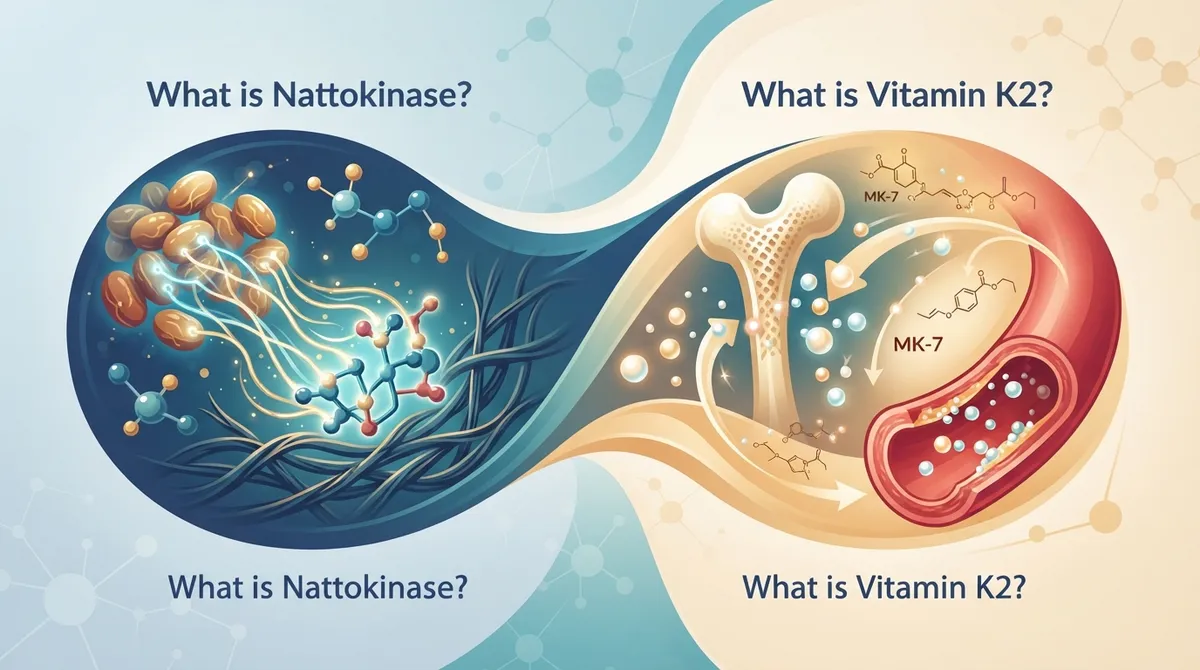
The two terms are often used as if they mean the same thing. They do not. Each one is a separate compound with its own effects in the body.
Nattokinase: The Enzyme
Nattokinase is an enzyme. It forms when a bacterium called Bacillus subtilis ferments soybeans to make natto. It is sold as a capsule or tablet. Supporters say it helps break down fibrin, a protein involved in blood clots. That idea is called fibrinolytic activity.
Vitamin K2: The Nutrient
Vitamin K2 is a group of compounds called menaquinones. Your body needs vitamin K to help blood clot normally. It also plays a role in bone and tissue health. Natto is one of the richest food sources of vitamin K2. Some supplements also add it on its own.
Why the Difference Matters
Nattokinase is an enzyme that may affect clotting. Vitamin K2 is a nutrient that helps clotting factors work. They act in different ways. Taking one does not cancel out or balance the other. That point is easy to miss on a supplement label.
|
Feature |
Nattokinase |
Vitamin K2 |
|---|---|---|
|
What it is |
Enzyme from fermented soybeans |
Fat-soluble vitamin (menaquinones) |
|
Main proposed role |
Fibrinolytic (clot-breaking) activity |
Supports clotting factors and bone proteins |
|
Found in natto |
Yes |
Yes |
|
Warfarin concern |
May raise bleeding risk |
Can lower warfarin effect and INR |
|
Proven to treat disease |
No |
Needed as a nutrient, not a heart treatment |
Does Nattokinase Contain Vitamin K2?
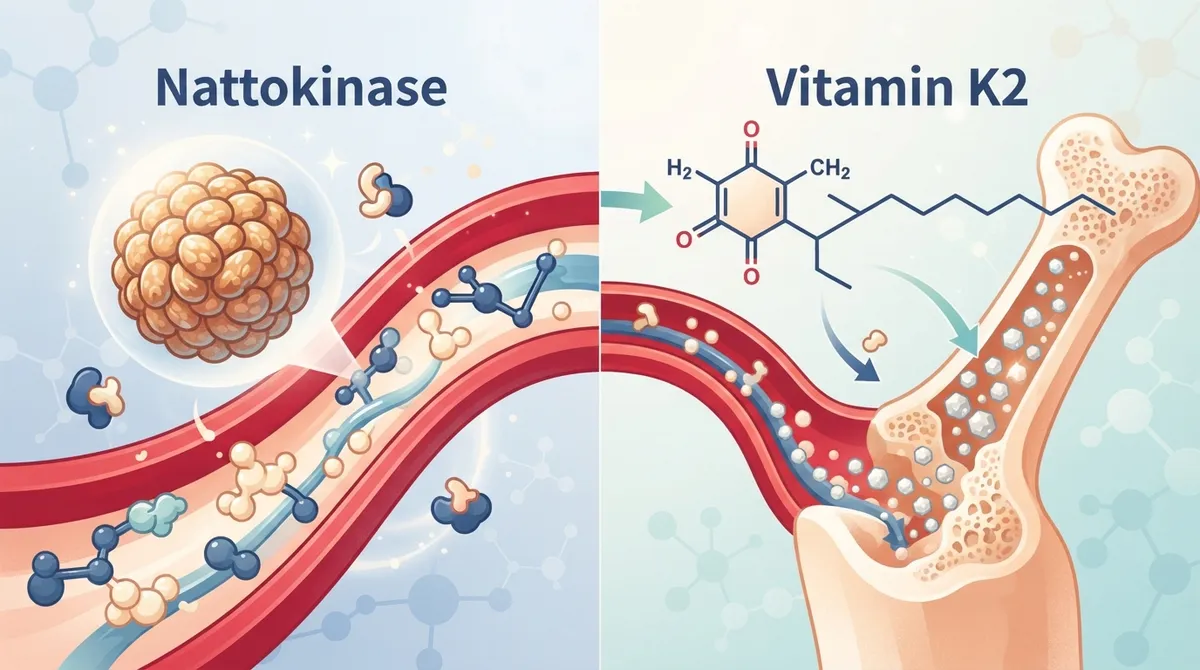
Natto, the food, contains both compounds. A nattokinase supplement may or may not contain vitamin K2. It depends on how the product is made.
Some makers filter out vitamin K2 during processing. Others do not. Some even add K2 on purpose. You cannot tell by the name alone. You need to read the label and, if you take a blood thinner, ask your pharmacist or clinician to review it.
Here is what to check on any product:
- Vitamin K2 or menaquinone content: Look for MK-4 or MK-7 on the label.
- Nattokinase units: Doses are often listed in fibrinolytic units (FU), not milligrams.
- Other ingredients: Combination products may include extra herbs or supplements that also affect clotting.
- Third-party testing: Supplement quality varies, so independent testing adds some confidence.
Can You Take Nattokinase and Vitamin K2 Together?
There is no established clinical evidence that taking them together gives a specific health benefit. Some people assume vitamin K2 "balances" nattokinase. Research does not support that idea. Vitamin K2 is not a proven antidote to nattokinase. It is also not a reliable way to offset its possible effects on clotting.
For a healthy adult who takes no blood thinners, the combination is not known to cause a specific problem. Even so, "not known to be harmful" is different from "proven helpful." Most people do not need either product to stay healthy. A balanced diet usually covers vitamin K needs.
The picture changes if you take certain medicines. In that case, the combination can create real risk.
The Warfarin Warning: Why Vitamin K Matters
Warfarin is a common blood thinner. It works by blocking vitamin K's role in forming clotting factors. Your doctor adjusts the dose using a blood test called the INR.
The NIH Office of Dietary Supplements notes that changes in vitamin K intake can alter warfarin response. Natto is a particularly rich source of vitamin K2. Eating it, or taking a supplement that contains K2, can lower warfarin's effect and drop the INR. That raises the risk of a clot.
For people on warfarin, consistency is the goal. Do not suddenly start or stop vitamin-K-rich foods or supplements. Do not avoid all vitamin K either. Keep your intake steady, and let your clinician manage the dose.
What About Other Blood Thinners?
Nattokinase may raise bleeding risk, especially alongside anticoagulants or antiplatelet medicines. This includes drugs such as aspirin, clopidogrel, and newer anticoagulants. The combination could add to bleeding tendency. Always share every supplement with the clinician who prescribes your medicine.
What Does the Research Say About Nattokinase?
Nattokinase has been studied for heart and circulation health. The results are limited and mixed. Here are key findings:
- A randomized, double-blind, placebo-controlled trial of 265 generally healthy adults tested nattokinase for 3 years. It found no significant benefit for progression of subclinical atherosclerosis or major cardiovascular events (Hodis et al., 2021).
- An open-label, self-controlled study in healthy volunteers, people with cardiovascular risk factors, and dialysis patients reported lower fibrinogen and coagulation factors VII and VIII. Its design does not prove real clinical benefit (Alshaeri et al., 2019).
- A 2023 systematic review found that nattokinase trials were generally small and varied. Short-term safety findings do not establish long-term safety or effectiveness for preventing heart attack or stroke.
In plain terms, nattokinase is not an FDA-approved treatment. It should never replace prescribed anticoagulants, antiplatelet drugs, or heart care. Lab changes in a small study do not always translate to fewer heart attacks or strokes.
Who Should Be Careful With These Supplements?
Some people face higher risk and should speak with a clinician before using nattokinase or vitamin K2. Take extra care if any of these apply to you:
- You take warfarin. Vitamin K2 can lower its effect, and nattokinase may change clotting.
- You take any blood thinner or antiplatelet drug. Added bleeding risk is possible.
- You have a bleeding disorder. Nattokinase may make bleeding harder to control.
- You have had a stroke. Clotting and bleeding balance is delicate.
- You have a peptic ulcer. Bleeding risk may rise.
- You have surgery planned. Clotting changes can complicate procedures.
If surgery is on your calendar, tell the surgical team about every supplement you use. Ask whether you should pause nattokinase or vitamin K2 and when. Do not decide on your own, especially if you take medicine for a heart or clotting condition.
How to Review Supplements With Your Primary Care Team
A medication and supplement review is one of the simplest ways to stay safe. It is also something a good primary care practice does well. Here is a practical process you can follow:
- Gather everything. Bring all bottles, including vitamins, herbs, and over-the-counter products. Photos of labels also work.
- Note the dose. Write down how much you take and how often.
- Share your health history. Mention any clotting problems, past strokes, ulcers, or planned procedures.
- Ask direct questions. Does this product contain vitamin K2? Could it interact with my medicine?
- Follow the plan. Do not stop or start anything until your clinician agrees.
This kind of review fits naturally into prescription management, where every medicine and supplement is looked at as one picture. It also fits into routine primary care visits.
Smarter Ways to Support Heart and Bone Health
Many people turn to nattokinase and vitamin K2 because they want to protect their hearts or bones. Those goals are worthwhile. The best-supported tools are often simpler than a supplement.
- Know your numbers. Blood pressure, cholesterol, and blood sugar guide real decisions. See these blood pressure management strategies for practical steps.
- Get screened. An annual physical exam can catch risks early.
- Eat a balanced diet. Leafy greens, fermented foods, and whole foods supply vitamin K naturally.
- Stay active and manage weight. Exercise and healthy weight lower heart risk.
- Use medicine when needed. If your doctor prescribes a statin or blood thinner, take it as directed.
Personalized testing can also help you decide what you truly need. Tools like DNA gene testing and a health risk assessment give a clearer view of your individual risks. That is often more useful than guessing with a supplement.
Why Supplement Quality and Labels Matter
Supplements are not reviewed by the FDA the way prescription drugs are. Product strength and purity can vary from one brand to the next. A bottle may contain more or less than the label claims. It may also contain extras you did not expect.
Keep these tips in mind:
- Choose products tested by an independent lab.
- Avoid brands that promise to "cure" or "dissolve" clots. No supplement can safely make that claim.
- Be wary of social media advice. Influencers rarely know your medical history or medicines.
- Keep the original bottle so you can share the exact product with your clinician.
Remember, "natural" does not mean "risk-free." Natto-based products can interact with medicine just as a prescription drug can.
How InCare Can Help You Make a Safe Choice
If you live in the Tampa Bay area, a personalized review can remove the guesswork. InCare is a primary care and wellness clinic with locations in Tampa and Riverview, Florida. The team combines medical expertise with modern technology to build a plan around your health, your medicines, and your goals.
You can sit down with a provider, bring in your supplement bottles, and talk through what makes sense for you. Learn more about InCare and meet the providers who can guide your care. You can also see what patients say, and read InCare reviews on Google. For clinic updates and wellness tips, follow InCare on Instagram, Facebook, and TikTok.
Busy schedule? InCare also offers telemedicine, so you can start the conversation from home. Families, young professionals, and anyone building a prevention-first routine can benefit from a single team that sees the whole picture.
Conclusion: Put Safety Before Hype
Nattokinase and vitamin K2 are two different products that often appear together. Nattokinase is an enzyme with limited, mixed evidence for heart health. Vitamin K2 is a nutrient that can weaken warfarin. Taking them together has no proven added benefit, and the risks are real for people on blood thinners or heading into surgery.
The safest path is simple. Read labels. Keep vitamin K intake steady if you take warfarin. Never replace prescribed heart or clotting medicine with a supplement. Share every product you take with your clinician.
Ready to review your supplements with a team that puts prevention first? Book your appointment with InCare today, or contact our team with questions. A short visit now can protect your health for years to come.
FAQs
Q: What is the difference between nattokinase and vitamin K2?
A: Nattokinase is an enzyme made during soybean fermentation, and it is studied for its effect on clotting. Vitamin K2 is a nutrient that helps clotting factors and bone proteins work. They are separate compounds with different effects.
Q: Does nattokinase interact with warfarin or other blood thinners?
A: Yes, it may. Nattokinase can raise bleeding risk when combined with anticoagulants or antiplatelet drugs. Any vitamin K2 in the product can also lower warfarin's effect and the INR, so check with your clinician first.
Q: Is nattokinase proven to prevent heart attack or stroke?
A: No. A 3-year placebo-controlled trial of 265 healthy adults found no significant benefit for atherosclerosis progression or major cardiovascular events. Nattokinase is not an FDA-approved treatment and should not replace prescribed care.
Q: Who should avoid nattokinase supplements?
A: People who take blood thinners should be especially careful. So should those with bleeding disorders, a prior stroke, or a peptic ulcer. Anyone planning surgery should also talk with a healthcare professional before use.
Q: Should I stop nattokinase or vitamin K2 before surgery?
A: Tell your surgical team about every supplement you take well before the procedure. They will advise whether to pause either product and for how long. Do not stop or start anything on your own if you have a heart or clotting condition.


