

Key Takeaways
- KP-10 is unapproved and unregulated with no established clinical dose; online sellers marketing it for fertility, testosterone, or weight loss are making unsupported claims based on only small, short-term studies.
- Unregulated KP-10 products carry serious risks including inconsistent concentration, contamination, unpredictable hormone stimulation, and unknown long-term effects on immune function and metabolism.
- Before considering any treatment, get a primary care evaluation with lab testing to confirm your actual diagnosis; treating a guess instead of a diagnosis wastes time and money.
- Proven alternatives exist for every KP-10 claim: supervised testosterone therapy for low T, clomiphene/letrozole for fertility, FDA-approved hormone therapy for menopause, and GLP-1 medications for weight loss.
- Testosterone replacement can suppress sperm production, making it inappropriate for men trying to conceive; fertility specialists offer preservation alternatives that clinicians should discuss during consultations.
- Verify any new treatment through your primary care provider using peer-reviewed evidence, not testimonials; confirm FDA approval status and track results with objective measurements rather than following social media trends.
If you have searched for kisspeptin-10, also known as KP-10, you may have found online sellers promising help for fertility, low testosterone, or weight loss. These claims sound appealing, but they can be misleading. KP-10 is still an investigational compound. It has no FDA approval and no established clinical dose. Before you consider any peptide, it helps to understand what real, evidence-based alternatives look like.
This guide breaks down what KP-10 actually does, why it is not a safe do-it-yourself option, and what proven treatments your care team may recommend instead. Whether you are dealing with fertility concerns, hormone imbalances, or weight management goals, there are established paths that do not involve unregulated injections. At InCare, our providers in Tampa and Riverview focus on goal-specific, medically supervised care rather than trends with unclear safety data.

What Is KP-10 and Why Does It Matter in Wellness Care
KP-10 is a short chain of 10 amino acids that comes from a larger protein called kisspeptin. It works by activating a receptor called KISS1R. This receptor plays a role in the hypothalamic-pituitary-gonadal axis, the system that controls reproductive hormones.
In simple terms, kisspeptin signals the brain to release GnRH. That hormone then tells the pituitary gland to release LH and FSH. Those two hormones drive sex hormone production in the ovaries and testes. This chain reaction is why researchers have studied KP-10 for fertility and hormone-related conditions.
- KP-10 is a 10-amino-acid peptide fragment of the larger kisspeptin protein
- It activates the KISS1R receptor to stimulate the reproductive hormone pathway
- Human studies have mostly been small, short-term, and early-phase
- No FDA-approved KP-10 formulation exists as of 2026
- There is no established standard clinical dose
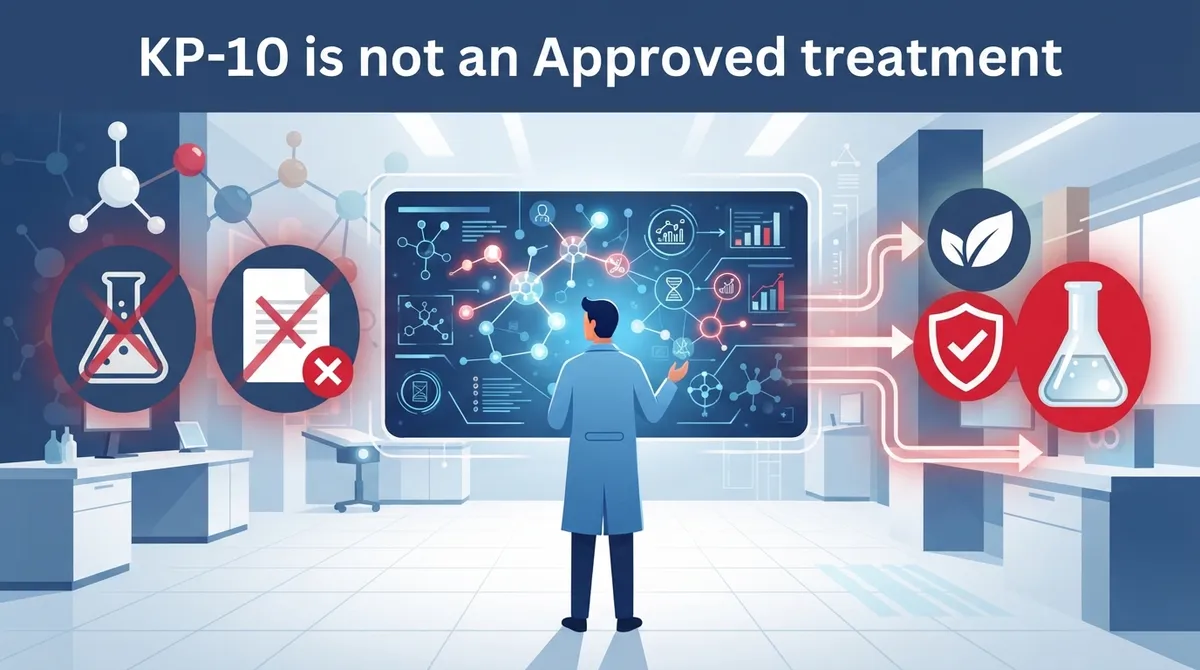
Why KP-10 Is Not an Approved Treatment
Many online sellers list KP-10 as "research use only." This label is not a technicality. It means the product has not gone through safety and effectiveness testing required for real patient use. Self-injecting a research chemical carries real risk.
Published studies on KP-10 have generally involved fewer than 30 participants and short infusion periods. These trials show that KP-10 can briefly raise LH and FSH levels under tightly controlled conditions. That is a meaningful scientific finding, but it does not prove that KP-10 improves pregnancy rates, sustains healthy testosterone, or supports weight loss over time.
Risks of Unregulated KP-10 Products
- Inconsistent or inaccurate concentration in the vial
- Possible contamination from unregulated manufacturing
- Unpredictable hormone stimulation, especially in people with existing reproductive conditions
- Unknown effects on immune function and metabolism
- No long-term safety data to guide dosing or monitoring
People who are pregnant, trying to conceive, or managing a pituitary, thyroid, or gonadal condition should never self-administer KP-10. A conversation with a primary care provider is the safer first step. You can read more background in our related article on kisspeptin and its role in fertility.
How to Choose the Right KP-10 Replacement Based on Your Goal
There is no single peptide that can safely replace KP-10 for every patient. The right option depends on what you are actually trying to achieve. A primary care evaluation should always come first, since treating the wrong problem wastes time and money.
- Schedule a consultation to review symptoms, medical history, and current medications
- Complete relevant lab testing, such as hormone panels or metabolic markers
- Discuss your specific goal: fertility, testosterone support, menopause symptoms, or weight loss
- Review FDA-approved treatment options tailored to your diagnosis
- Set a follow-up schedule to monitor progress and adjust the plan
This structured approach is far safer than trying an unregulated peptide and hoping for the best. Our primary care team walks through each of these steps with every new patient.
Evidence-Based Alternatives for Low Testosterone
If your main concern is low testosterone, KP-10 is not the answer. Standard, well-studied options exist and come with decades of clinical data behind them.
|
Concern |
Evidence-Based Option |
Key Consideration |
|---|---|---|
|
Confirmed low testosterone |
Clinician-supervised testosterone therapy |
Requires lab confirmation and symptom review |
|
Reversible causes (sleep, weight, medications) |
Lifestyle and medication review |
Often improves hormone levels without medication |
|
Men trying to conceive |
Fertility-preserving alternatives or specialist referral |
Testosterone therapy can suppress sperm production |
This last point deserves extra attention. Testosterone therapy can reduce sperm production, which matters if you or your partner hope to conceive soon. Our team discusses this trade-off during every consultation about testosterone replacement therapy so patients can make an informed choice.
Fertility-Focused Alternatives to KP-10
Couples exploring fertility treatment have several established options that do not rely on unregulated peptides. These treatments are managed by an obstetrician-gynecologist or reproductive endocrinologist and have measurable success data behind them.
- Ovulation-induction protocols using clomiphene or letrozole in appropriate patients
- Medically indicated gonadotropins for ovarian stimulation
- Approved ovulation-trigger medications used within IVF protocols
- Coordinated care between your primary care provider and a fertility specialist
Starting with a primary care visit helps identify whether a referral to a fertility specialist is needed. Our providers can help coordinate that next step and explain fertility support steps your primary care doctor offers.
Why Testing Comes Before Treatment
Jumping straight to a peptide or medication without testing is a common mistake. Hormone levels, thyroid function, and other markers can point to the real cause of symptoms. Skipping this step means treating a guess instead of a diagnosis.
Menopause Symptom Management Without KP-10
KP-10 has no approved role in treating menopause symptoms. Women experiencing hot flashes, mood changes, or sleep disruption have several better-studied paths available.
- FDA-approved hormone therapy when clinically appropriate
- Nonhormonal prescription options for specific symptoms
- Lifestyle adjustments including sleep hygiene and stress management
- Individualized treatment planning based on age, cardiovascular risk, and cancer history
Every woman's situation is different, which is why individualized care matters so much here. Our providers take clotting risk, reproductive history, and personal preference into account before recommending any hormone therapy.
Weight Management Alternatives That Actually Work
KP-10 has no meaningful evidence supporting weight loss or metabolic improvement. If weight management is your goal, proven options deliver far better, safer results.
- Nutrition and activity coaching tailored to your daily routine
- FDA-approved anti-obesity medications, including GLP-1-based therapies
- Ongoing monitoring through body composition tracking
- Metabolic assessment through tools like metabolic breath analysis
These approaches have years of clinical research behind them. Our weight loss program combines medical supervision with technology to track real progress, rather than relying on unproven peptides.
Comparing KP-10 to Approved Treatment Categories
|
Goal |
KP-10 Evidence |
Approved Alternative |
|---|---|---|
|
Fertility support |
Short-term hormone activation only |
Clomiphene, letrozole, gonadotropins |
|
Low testosterone |
No approved indication |
Supervised testosterone therapy |
|
Menopause symptoms |
No established benefit |
FDA-approved hormone therapy |
|
Weight loss |
Insufficient evidence |
GLP-1 medications, nutrition coaching |
Steps to Take Before Considering Any Peptide Therapy
If you are curious about peptide therapy in general, not just KP-10, a structured approach protects your health and your wallet.
- Confirm your specific health goal with a licensed clinician
- Request relevant blood work to identify the actual cause of symptoms
- Ask about FDA-approved options before considering anything experimental
- Verify product safety and regulatory status through your provider, not an online seller
- Schedule regular follow-up visits to track results and adjust treatment
Our clinic offers guidance on peptide therapy in Tampa for patients who want to understand which options, if any, are appropriate and properly regulated for their situation.
Should You See a Primary Care Doctor or a Specialist
Many patients wonder whether they need a specialist right away. In most cases, starting with primary care makes sense. A primary care provider can run initial tests, rule out simple causes, and refer you to a specialist only when needed.
- Primary care handles initial hormone screening and general health assessment
- Reproductive endocrinologists manage complex fertility cases
- Urologists may be involved for male fertility or hormone concerns
- Coordinated referrals prevent unnecessary appointments and costs
This is one reason InCare emphasizes coordinated, whole-body care. You can learn more about our approach through About Us or explore our Tampa and Riverview locations to find the office nearest you.
What Patients in Tampa and Riverview Should Know
Local patients often ask about wellness trends they see online, including peptide therapy. Our providers, including Naveen Paddu, MD, Pramjeet Ahluwalia, MD, and Teshy John, MD, take time to explain which treatments have solid evidence and which are still experimental.
Many patients also follow our updates on Facebook and Instagram for wellness tips grounded in current research. You can also see how other patients describe their experience by visiting us on Google, since real patient feedback often reflects the quality of care you can expect. Check out Visit us on Google — InCare to read reviews from people in Tampa and Riverview.
Building a Safer Wellness Plan
Regulatory status and product availability can change quickly in the wellness space. What is marketed today may be restricted tomorrow. This is exactly why working with a licensed clinician matters more than following trends found on social media or forums.
- Verify any new treatment through your primary care provider first
- Ask for peer-reviewed evidence, not testimonials
- Confirm FDA approval status before starting any medication
- Track your results with objective measurements, not just how you feel
If you want a second opinion on wellness trends, groups like the Endocrine Society and the U.S. Food and Drug Administration publish updated guidance that can help you separate solid science from marketing claims.
Final Thoughts on KP-10 Replacement Options
KP-10 remains an investigational peptide without FDA approval or a proven clinical benefit. If you are dealing with fertility concerns, low testosterone, menopause symptoms, or weight management goals, safer and better-studied treatments already exist. The right choice depends on your specific diagnosis, not a trending peptide sold online.
Our team at InCare is ready to walk through your options and build a plan based on your actual lab results and health history. To take the next step, get in touch with our team or schedule your appointment today at our Tampa or Riverview location. You can also follow our latest wellness updates on TikTok for quick, evidence-based tips.
FAQs
Q: What is KP-10 or kisspeptin-10 used for?
A: KP-10 is an investigational peptide studied for its ability to stimulate the reproductive hormone system. It has shown short-term increases in LH and FSH in small research studies, but it is not approved for fertility, testosterone, or weight loss treatment.
Q: Is kisspeptin-10 FDA approved or safe to buy online?
A: No, KP-10 is not FDA approved and has no established standard dose. Products labeled research use only should never be self-injected, since they lack safety testing and may contain inaccurate concentrations.
Q: What are the best KP-10 alternatives for low testosterone?
A: For confirmed low testosterone, clinician-supervised testosterone therapy is the standard, evidence-based option. Addressing reversible causes like poor sleep or medication side effects may also help before starting any hormone treatment.
Q: Can testosterone replacement therapy preserve fertility?
A: Testosterone therapy can actually reduce or impair sperm production, so it is not ideal for men hoping to conceive soon. Fertility-preserving alternatives or a referral to a reproductive specialist may be more appropriate in that situation.
Q: Should I see a primary care clinician or an endocrinologist before using KP-10?
A: Start with a primary care clinician who can review your symptoms, order relevant lab tests, and refer you to a specialist if needed. This step-by-step approach is safer than trying an unregulated peptide without proper evaluation.