

Key Takeaways
- Medicare Keystone 65 benefits vary significantly by specific plan, county, and provider network status—always verify your exact plan documents before assuming copays or coverage apply to you.
- The 2026 Basic Rx, Essential Rx, and Focus Rx plans offer $0 copays for primary care visits and covered preventive services, but separate cost-sharing applies to labs, imaging, procedures, and specialist referrals.
- Medical out-of-pocket limits ($8,500 in-network) and Part D drug caps ($2,100) are separate—the drug cap does not cover Part B drugs, so confirm your plan's specific limits.
- Before your next visit, confirm your doctor participates in your exact Keystone 65 plan using the official provider directory, as participation varies by plan even within the same insurer.
- HMO and HMO-POS plan types have different referral requirements and out-of-network coverage rules—read your Evidence of Coverage to understand whether specialist referrals are required.
- Schedule routine preventive care visits early in the year to catch health issues sooner and maximize the $0 cost-sharing benefit for eligible screenings and wellness services.
Medicare Keystone 65 can look simple on the surface, but the details matter. Many people see a low primary care copay and assume every visit and every service will cost the same. In reality, benefits depend on the exact plan, your county, and your doctor's network status. Knowing how to read these details can save you money and stress.
Medicare Keystone 65 is a family of Medicare Advantage plans offered by Independence Blue Cross (IBX) in Pennsylvania. These plans cover Medicare Part A and Part B services and may add extra benefits. For primary care and wellness, the plan rules decide which doctors you can see, what preventive care costs, and when you need a referral.
This guide explains how to understand Medicare Keystone 65, check your coverage, and get the most from your primary care visits. It is written for busy adults, caregivers, and anyone who wants clear steps for using Medicare benefits wisely. Always confirm final details in your own plan documents.
What Medicare Keystone 65 Actually Is
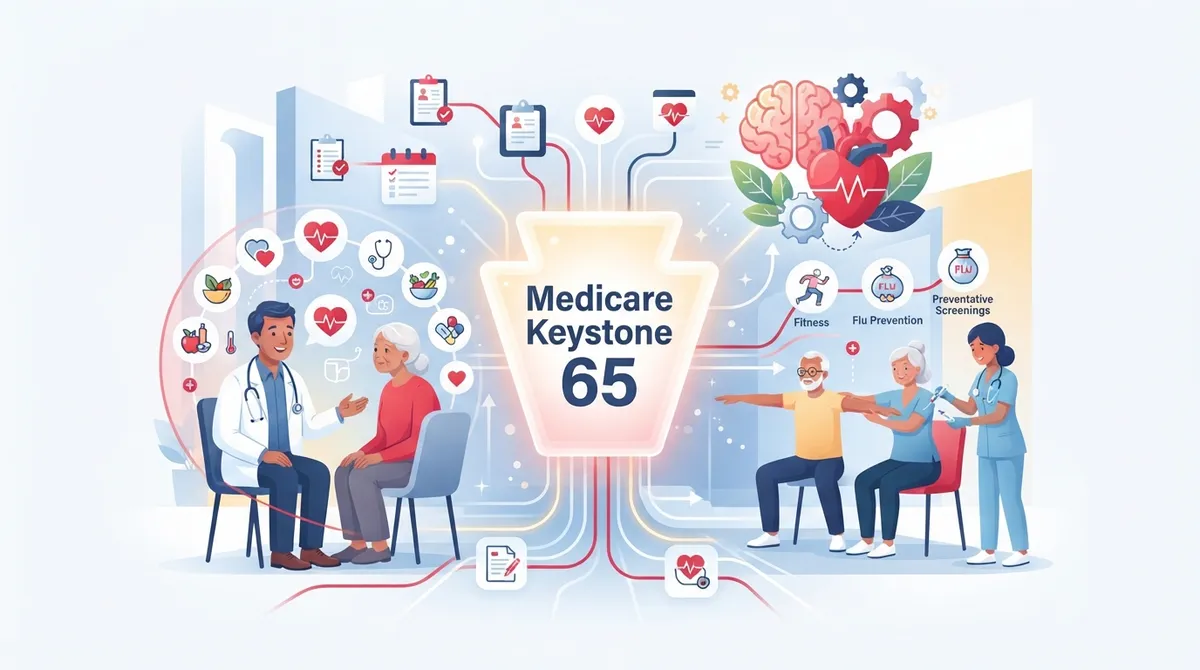
Medicare Keystone 65 refers to Medicare Advantage plans from Independence Blue Cross in Pennsylvania. It is not the same as products from other insurers. The exact plan name and service area matter because benefits change by plan and by county.
Some 2026 plan options include Part D prescription drug coverage. Others are medical-only plans. Plan designs include HMO and HMO-POS options, and each has its own network rules.
Key Facts at a Glance
- Plans cover Medicare Part A and Part B services and may include extra benefits.
- To enroll in the 2026 Keystone 65 Basic Rx HMO, Essential Rx HMO-POS, or Focus Rx HMO-POS, you must have Medicare Part A, be enrolled in Part B, and live in the plan's service area.
- The 2026 summary of benefits lists a $0 copay for primary care physician visits for those three plans.
- Covered preventive services that Original Medicare provides at no cost generally have a $0 copay, when coverage rules are met.
- The cited plan lists an $8,500 in-network annual medical out-of-pocket limit.
- Covered Part D drug costs are capped at $2,100 for the year under the applicable drug benefit.
The $8,500 medical limit and the $2,100 drug cap are separate. The drug cap does not apply to Part B drugs. Check the plan you choose, because limits and cost sharing vary.
Step-by-Step: How to Check Your Keystone 65 Coverage
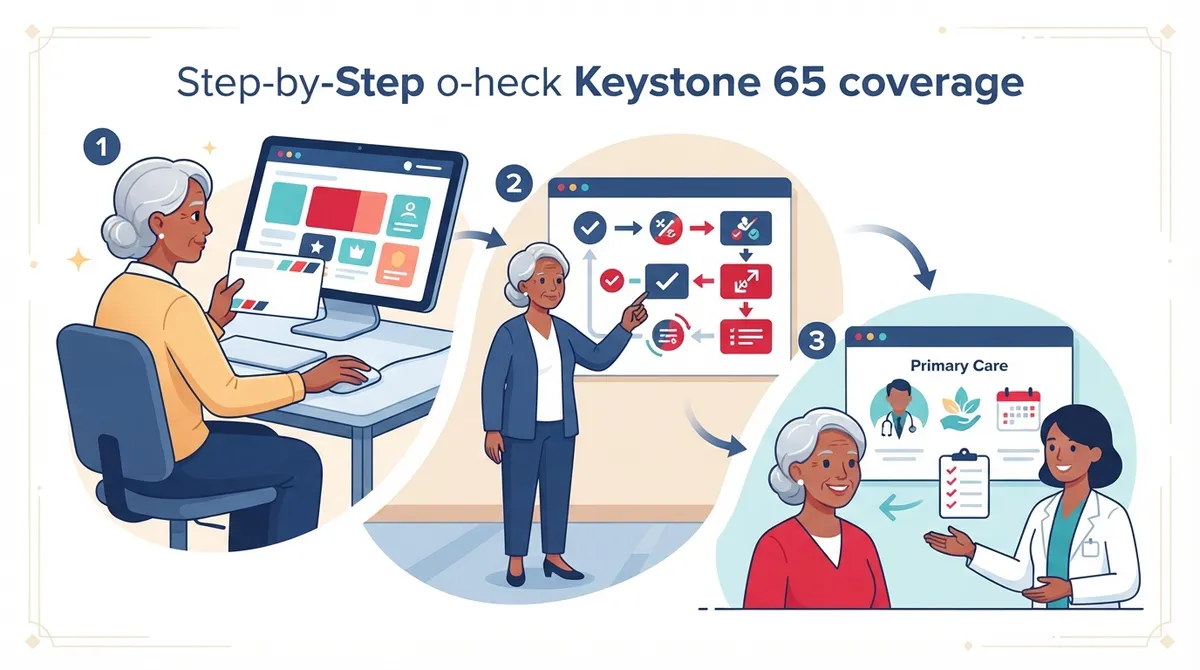
A few simple steps can prevent surprise bills. Follow this list before you book your next primary care visit.
- Find your exact plan name. Look at your member card or welcome packet. Names like Basic Rx, Essential Rx, and Focus Rx have different rules.
- Confirm your service area. Plans are tied to counties. Make sure your home address falls inside the plan's area.
- Read the Summary of Benefits. IBX publishes this document every year. It lists copays, the out-of-pocket limit, and extra benefits.
- Review the Evidence of Coverage. This longer document explains the full rules, including referrals and out-of-network care.
- Check the provider directory. Search for your primary care clinician and any preferred facilities.
- Look at the drug formulary. If your plan includes Part D, confirm that your medications are covered and note any tiers.
Do not rely on a general description of Keystone 65. Plan documents change each year, and the current-year versions are the final word.
HMO vs. HMO-POS: What the Difference Means for You
The plan type shapes how you use your benefits. Here is a simple comparison.
|
Feature |
HMO |
HMO-POS |
|---|---|---|
|
Network focus |
Care is generally within the plan network |
Network care plus limited point-of-service options |
|
Primary care doctor |
Usually chosen from the network |
Usually chosen from the network |
|
Referrals |
May be required for specialists |
Rules vary by plan; check your documents |
|
Out-of-network care |
Limited, often only for emergencies or urgent needs |
Some out-of-network coverage may be available for certain services |
Network rules, referral requirements, and out-of-network coverage differ by plan. Your best move is to read the Evidence of Coverage for your specific plan.
How to Use Your $0 Primary Care Benefit Wisely
A $0 primary care copay is a real advantage. The 2026 summary lists it for the Basic Rx, Essential Rx, and Focus Rx plans. But it should not be assumed for every Keystone 65 option or every service tied to a visit.
A copay for the office visit does not always cover labs, imaging, procedures, or specialist referrals. Those items may have separate cost sharing. Ask the office what is billed during your visit, and check your plan documents for details.
Smart Ways to Get Value From Primary Care
- Schedule routine visits early in the year so issues are caught sooner.
- Bring a list of medications, supplements, and symptoms.
- Ask which preventive services you are due for.
- Request a clear care plan for chronic conditions such as blood pressure or diabetes.
- Confirm in advance if a lab or test needs prior approval.
A good primary care relationship helps you stay ahead of problems. If you want to understand what a Medicare-focused practice does, see what a Medicare doctor actually does for you.
Preventive Care Under Medicare Keystone 65
Preventive care is one of the best uses of your plan. The cited 2026 summary lists $0 cost sharing for Original Medicare preventive services that are covered at zero cost sharing, when coverage rules are met. This can include wellness visits, screenings, and vaccines that qualify.
Preventive services support early detection. They help find concerns before symptoms start. But diagnostic or treatment services may have different cost sharing. For example, a screening may be free, while a follow-up test ordered because of a problem may not be.
Preventive Services to Ask About
- Annual wellness visit
- Cancer screenings, as covered by Medicare rules
- Blood pressure, cholesterol, and diabetes screening
- Recommended vaccines
- Bone density and other age-appropriate screenings
To learn what a yearly visit looks like, read what happens during an annual wellness visit. You can also avoid common errors with this guide on Medicare wellness visit mistakes.
Understanding Costs: Copays, Limits, and Drug Coverage
Costs under Medicare Advantage come from several parts. It helps to separate them so you know where your money goes.
|
Cost Item |
What to Know |
|---|---|
|
Primary care visit |
$0 copay listed for Basic Rx, Essential Rx, and Focus Rx in the 2026 summary |
|
Preventive services |
$0 cost sharing for services covered at zero cost under Original Medicare, when rules are met |
|
Medical out-of-pocket limit |
$8,500 in-network annual limit for the plan shown; confirm yours |
|
Part D drug cap |
$2,100 for covered Part D drugs; does not apply to Part B drugs |
|
Specialists, tests, procedures |
May have separate cost sharing; check the Summary of Benefits |
Always confirm numbers for your exact plan. A figure in a general guide may not match your plan.
How to Keep Your Current Primary Care Doctor
Many people ask, "Can I keep my doctor?" The answer depends on network status. Follow these steps.
- Ask your doctor's office if they participate in your exact Keystone 65 plan. Participation can differ by plan, not just by insurer.
- Verify in the official provider directory.
- Ask whether you need to select that doctor as your primary care physician.
- Confirm that your usual labs, imaging centers, and hospitals are also in-network.
- Check the referral process before booking any specialist.
If your doctor is not in the network, you may need to switch or accept higher costs, depending on your plan type. Compare options before you enroll or renew. For more help, review these traits of the best Medicare provider for primary care.
Common Mistakes to Avoid
- Assuming all plans are the same. Benefits vary by plan and county.
- Skipping the provider directory. A doctor may be in one plan's network but not another's.
- Ignoring referral rules. Seeing a specialist without a required referral may lead to denied claims.
- Confusing the drug cap with the medical limit. They are separate numbers.
- Forgetting the formulary. A drug may be covered at a higher tier or need prior approval.
If you want more depth on HMO rules, see common Medicare HMO doctor mistakes and how to use a Medicare HMO for better primary care.
Why Primary Care and Wellness Matter Most
Insurance only works well when you use it for the right care at the right time. A strong primary care team looks at your whole health. That includes screenings, chronic condition support, medication review, and lifestyle guidance.
InCare is a personalized healthcare clinic in Tampa and Riverview, Florida. It combines advanced technology with medical expertise for primary care, cancer screening, and wellness services. InCare holds a 4.8 out of 5 rating on Google across 359 reviews, and patients often praise the friendly staff and the care from Dr. Ahluwalia. You can see feedback and visit us through our InCare profile on Google.
Keystone 65 is an IBX plan tied to Pennsylvania service areas. If you live in the Tampa Bay region, insurance rules in your area may differ, so check which plans you can use here. InCare also follows the sequence of care that supports prevention, so you can review primary care services to see how a whole-health approach works. You can also stay connected with InCare on Facebook, Instagram, and TikTok for updates and health tips.
A Simple Checklist Before Your Next Visit
- Confirm your plan name and county.
- Check that your doctor is in the network.
- Review the Summary of Benefits for copays.
- Ask about referrals and prior approvals.
- Confirm drug coverage on the formulary.
- Make a list of questions and symptoms.
This short routine takes little time. It can prevent costly surprises and help you feel confident about your care.
Take the Next Step Toward Better Health
Medicare Keystone 65 can be a useful path to coverage, but only when you understand the rules of your exact plan. Read your Summary of Benefits, verify your network, and use preventive care every year. Those steps turn insurance into real health support.
If you want a care team that treats the whole person, we are here to help. Book your InCare appointment today to start building a primary care plan that fits your life. You can also contact our team with questions about services or locations.
FAQs
Q: What is Medicare Keystone 65, and who offers it?
A: Medicare Keystone 65 is a family of Medicare Advantage plans offered by Independence Blue Cross (IBX) in Pennsylvania. The plans cover Medicare Part A and Part B services and may include extra benefits. Plan options and availability vary by plan and county.
Q: Does Keystone 65 cover primary care visits, and what is the copay?
A: The 2026 summary of benefits lists a $0 copay for primary care physician visits for the Basic Rx HMO, Essential Rx HMO-POS, and Focus Rx HMO-POS plans. This is plan-specific, so do not assume it applies to every Keystone 65 option or to every service tied to a visit. Always confirm in your own plan documents.
Q: Do Keystone 65 plans cover preventive care and wellness visits?
A: The cited 2026 plans list $0 cost sharing for Original Medicare preventive services that are covered at zero cost sharing, when coverage rules are met. Diagnostic or treatment services may have different costs. Check the Summary of Benefits for the exact list.
Q: Can I keep my current primary care doctor with Keystone 65?
A: You can keep your doctor only if that doctor is in your specific plan's network. Network rules, referral requirements, and out-of-network coverage differ by HMO and HMO-POS plan. Verify your doctor in the official provider directory before you enroll or book a visit.
Q: Where can I find the most accurate Keystone 65 plan details?
A: IBX publishes annual plan documents, including the Summary of Benefits, Evidence of Coverage, provider directory, and drug formulary. Use the current-year versions for your exact plan and county. These documents are more reliable than any general description.


