

Key Takeaways
- Integrative health care coordinates conventional medical treatment with evidence-informed complementary approaches in one plan, rather than replacing standard care with alternatives.
- Always tell your primary care provider about every prescription, over-the-counter medicine, vitamin, herb, and supplement you take, since some interact with drugs or cause side effects.
- Build your plan around a solid baseline: a full wellness visit with history, medication review, and lab results, plus clear, specific health goals.
- Start with a few changes rather than many at once, so you can tell what is working, and set regular follow-ups to track symptoms, labs, and side effects.
- Check that a clinic has licensed physician leadership, explains the evidence behind each therapy, admits when evidence is weak, and reviews supplements at every visit.
- Expect most lifestyle and complementary approaches to take weeks to show effects, and check your insurance coverage for services like acupuncture or massage before starting.
Many people feel stuck between two worlds. One doctor treats the disease. A separate wellness practitioner offers advice on food, stress, and sleep. Rarely do the two talk to each other. Integrative health care aims to fix that gap. It brings conventional medicine and well-studied complementary approaches together in one coordinated plan.
The idea is gaining ground. According to an NIH analysis published in 2025, the share of U.S. adults using at least one of seven measured complementary health approaches rose from 19.2% in 2002 to 36.7% in 2022. That is a large shift, and it means many patients are already mixing approaches on their own. The risk is doing so without guidance.
This guide explains what integrative health care means in primary care. You will learn how to build a safe, evidence-informed plan, what to ask your clinician, and how to avoid common mistakes. Whether you are a busy parent, a tech-minded professional, or someone focused on prevention, these steps will help you get more from your care.

What Integrative Health Care Really Means
Integrative health care combines conventional medical care with complementary approaches in a coordinated way. It is not the same as using complementary therapies instead of standard treatment. The National Center for Complementary and Integrative Health (NCCIH) makes this distinction clearly. Complementary approaches are used together with conventional care, not as a replacement for it.
The model also takes a whole-person view. It looks at biological, behavioral, social, and environmental factors, not only a single disease or organ. A person with high blood pressure, for example, may benefit from medication, but also from better sleep, stress management, and nutrition support.
The World Health Organization describes integrative medicine as an interdisciplinary, evidence-based combination of biomedical and traditional or complementary knowledge and practices. Its Global Traditional Medicine Strategy for 2025 to 2034 stresses evidence, safety, regulation, and appropriate integration into health systems.
Integrative vs. Alternative vs. Complementary
These terms are often mixed up. The table below clears up the differences.
|
Term |
Meaning |
Relationship to Conventional Care |
|---|---|---|
|
Conventional care |
Standard medical treatment such as medication, screening, and procedures |
The foundation of treatment |
|
Complementary |
Non-standard approaches used alongside conventional care |
Added to the plan |
|
Alternative |
Non-standard approaches used in place of conventional care |
Replaces standard care |
|
Integrative |
Coordinated, evidence-informed combination of both |
Planned together by your care team |
How to Build an Integrative Health Care Plan: Step by Step
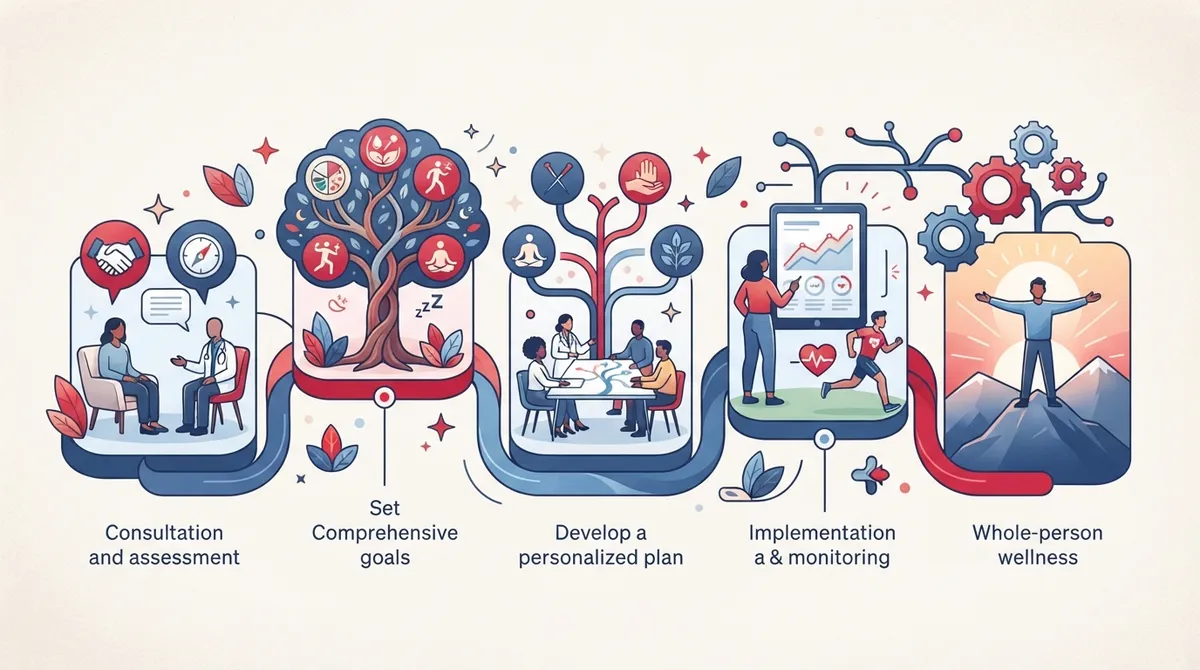
A good plan does not happen by accident. It takes clear goals, honest communication, and a clinician who can coordinate. Follow these steps.
- Start with a baseline. Book a full wellness visit so your clinician can review your history, medications, family risks, and current lab results.
- Name your goals. Be specific. You might want better energy, weight management, less back pain, or lower stress. Clear goals help your clinician choose the right tools.
- List everything you take or do. Include vitamins, herbs, supplements, teas, and therapies such as massage or acupuncture.
- Review the evidence together. Ask which approaches have good research behind them for your specific condition.
- Choose a few changes, not twenty. Start small so you can tell what is working.
- Set a follow-up schedule. Track symptoms, lab values, and side effects at regular check-ins.
- Adjust as you learn. Drop what does not help. Keep what does.
Step 1 in Detail: Get a Strong Foundation
Integrative care works best when it sits on top of solid primary care. That means preventive screenings, chronic disease management, and accurate testing. A resource like What Happens During an Annual Wellness Visit? shows what a thorough baseline looks like. Without this base, it is hard to know whether any added approach is helping.
Common Complementary Approaches in Primary Care
Complementary approaches fall into a few broad groups. Knowing the categories helps you ask better questions.
- Nutritional approaches: dietary changes, vitamins, minerals, and other supplements.
- Psychological approaches: mindfulness, meditation, and relaxation training.
- Physical approaches: massage, spinal manipulation, and acupuncture.
- Combined approaches: yoga and tai chi, which blend movement, breathing, and mental focus.
Use of these methods has grown. NIH data show that meditation use among U.S. adults rose from 7.5% in 2002 to 17.3% in 2022, making it the most used approach among those measured. Yoga use climbed from 5.0% to 15.8% over the same period. Acupuncture use grew from 1.0% to 2.2%.
Pain is a major driver. Among adults using any measured complementary approach, the share reporting use for pain management increased from 42.3% in 2002 to 49.2% in 2022. This tells us that many people look for options beyond medication alone, especially for chronic discomfort.
Where Technology Fits Into Integrative Care
Modern integrative care is not limited to traditional practices. Data-driven tools can make plans more personal and easier to measure. This is especially useful for patients who want proof that a change is working.
Examples of tools that support whole-body optimization include:
- Metabolic breath analysis to understand how your body burns fuel.
- Body composition analysis to track fat and muscle over time.
- DNA gene testing to reveal personal health predispositions.
- IV hydration and vitamin therapy when a clinician finds it appropriate for your needs.
These tools do not replace clinical judgment. They give your care team measurable information so decisions rest on data rather than guesswork.
Safety First: What to Tell Your Care Team
Natural does not always mean safe. Some herbs and supplements can cause side effects or interact with prescription drugs. Quality and dosing also vary widely between products. This is why open communication matters so much.
Before starting any new therapy, tell your primary care provider about:
- All prescription and over-the-counter medicines you take.
- Every vitamin, herb, powder, or supplement, including doses.
- Any therapy you plan to try, such as acupuncture or massage.
- Health conditions, pregnancy, or plans to have surgery.
- Any new symptoms after starting something new.
Evidence varies by therapy, condition, and outcome. For serious conditions, complementary approaches should never delay or replace proven treatment without a discussion with a qualified clinician. A coordinated plan keeps you protected. For help managing your medicines, see these prescription management tips for better health in 2026.
Who Benefits Most From an Integrative Approach
Integrative health care can fit many life stages and goals. Here is how it may help different groups.
|
Patient Group |
Common Goals |
How Integrative Care Helps |
|---|---|---|
|
Busy young families |
Preventive screenings, weight management, efficient visits |
One coordinated plan for the household saves time and avoids conflicting advice |
|
Tech-savvy professionals |
Data-backed wellness, virtual visits |
Measurable testing and telemedicine make tracking simple |
|
High-income wellness seekers |
Proactive optimization, early detection |
Advanced testing paired with expert interpretation |
|
Young adults exploring prevention |
Gene testing, lifestyle optimization |
Evidence-checked guidance replaces random online advice |
|
Women without a primary care home |
Whole-body wellness beyond reproductive care |
Comprehensive screenings and long-term relationship with one team |
Chronic Conditions and Integrative Support
People living with diabetes, high blood pressure, or chronic pain often gain the most. Medication and monitoring remain central. Nutrition, movement, sleep, and stress reduction add support. To learn how coordinated care helps long-term illness, read how primary doctors help manage chronic illnesses.
How to Find a Qualified Integrative Provider
Not every clinic that uses the word "integrative" delivers the same quality of care. Look for these signs.
- Licensed medical leadership. A physician should oversee the plan and coordinate with other providers.
- Evidence-based reasoning. Your clinician should explain why a therapy is recommended and what the research says.
- Honest limits. A trustworthy provider will tell you when evidence is weak or when a therapy is not right for you.
- Medication and supplement review. Every visit should include a check for interactions.
- Clear follow-up. Look for measured outcomes, not vague promises.
- Continuity. A long-term relationship with one team lets them see patterns and adjust.
If you are comparing options, this guide on what a wellness clinic does and why you need one explains what to expect. You can also review the key benefits of choosing a holistic health clinic.
Mistakes to Avoid
Even well-meaning patients can run into trouble. Watch for these pitfalls.
- Skipping conventional care. Stopping prescribed treatment without medical advice can be dangerous.
- Starting too many things at once. You will not know what helped or what caused a problem.
- Trusting social media claims. Viral advice often lacks solid research.
- Hiding supplement use. Your clinician cannot protect you from interactions they do not know about.
- Expecting instant results. Most lifestyle and complementary approaches take weeks to show effects.
- Assuming insurance will cover everything. Coverage for services like acupuncture or massage varies, so check your plan first.
Why Coordination Beats Fragmented Care
When different providers work in silos, details get lost. One may prescribe a drug that clashes with a supplement another recommended. Integrative care reduces that risk by putting a primary clinician at the center. If you want to see the contrast, read fragmented care versus coordinated care. A single, connected plan is safer and easier to follow.
This coordination is also what the research community calls for. NCCIH emphasizes collaboration among providers and a whole-person approach as the path toward better health outcomes.
Putting It All Together: A Sample Plan
Here is how a patient focused on energy and weight might use an integrative plan with their clinician.
- Complete a wellness visit with labs and a medication review.
- Use a personalized weight loss program guided by body composition data.
- Add a daily mindfulness or meditation habit, supported by research on stress and well-being.
- Walk or practice yoga three to four times a week.
- Review any supplements with the clinician before starting.
- Recheck measurements and symptoms every few weeks and adjust.
The point is not to add more things. It is to add the right things, in the right order, with a professional watching for safety.
Take the Next Step With InCare
Integrative health care works best when it rests on strong primary care, advanced testing, and a team that listens. InCare offers personalized primary care, urgent care, cancer screenings, weight loss programs, DNA gene testing, and wellness services at its Tampa and Riverview, Florida locations, plus virtual visits. Our focus is prevention and whole-body optimization, built on evidence and measured results. You can learn more about our approach on the primary care page, or meet the providers who will guide your plan.
Patients can see what others say about their experience when they read InCare reviews on Google. You can also follow our updates on Instagram, Facebook, and TikTok for wellness tips and clinic news.
Ready to build a plan that treats the whole you? Book your appointment now or contact our team with any questions. Your first step toward coordinated, whole-person care starts with a single visit.
FAQs
Q: What is integrative health care in primary care?
A: Integrative health care in primary care combines conventional medical treatment with complementary approaches in one coordinated plan. A primary clinician oversees the plan, reviews medications and supplements, and tracks outcomes and safety. It takes a whole-person view rather than focusing only on a single disease.
Q: How is integrative medicine different from alternative medicine?
A: Alternative medicine means using a non-standard approach in place of conventional care. Integrative medicine uses complementary approaches together with conventional care in a coordinated way. The integrative model keeps proven medical treatment at the center and adds other options only when the evidence and safety profile support them.
Q: Can complementary therapies be used alongside prescription medicines?
A: Often they can, but not always safely. Some herbs and supplements interact with medicines or cause side effects. Always tell your care team about every supplement, herb, and therapy you use so they can check for interactions and adjust your plan.
Q: Is integrative health care evidence-based?
A: Evidence varies by therapy, condition, and outcome. Some approaches, such as mindfulness and certain movement practices, have supportive research for specific uses, while others have limited data. A qualified clinician helps you weigh the best available evidence and avoid relying on unproven claims.
Q: What should I tell my primary care provider before trying a new therapy?
A: Share all medicines, vitamins, herbs, and supplements you take, along with your health conditions and any upcoming surgery or pregnancy plans. Also mention the specific therapy you want to try. This allows your provider to assess safety and quality for your individual situation.


