

Key Takeaways
- Biological age has no gold-standard test; methods like clinical blood-marker models, epigenetic clocks, telomere length, and functional tests each measure aging from different angles.
- Clinical biomarker models such as Phenotypic Age use routine labs (blood sugar, cholesterol, CRP, kidney markers) and, in a 2024 CARDIA study, predicted cardiovascular disease better than epigenetic measures tested.
- Treat any biological age result as an estimate, not a diagnosis; different tests can give different numbers for the same person on the same day.
- Core lab work like blood pressure, glucose, lipids, kidney function, and inflammation markers forms the foundation of most reliable assessments and should come before add-on tests.
- Lifestyle changes like regular exercise, quality sleep, balanced diet, stress management, and avoiding tobacco can improve the markers that feed into biological age scores.
- Retest every six to twelve months using the same method so you compare like with like and can see real trends over time.
You may have heard that your body can be older or younger than your birthday suggests. That idea is called biological age, and it is one of the most talked-about topics in modern wellness. If you are wondering how biological age is measured, you are not alone. Many patients ask this question as they look for ways to take charge of their health before problems start.
The short answer is that doctors use several different tools. Some rely on routine blood tests. Others look at chemical marks on your DNA. A few use fitness data or body scans. Each method looks at aging from a different angle, and none is a perfect, final answer.
This guide explains each method in plain language. You will learn what the tests measure, how reliable they are, and how to use the results wisely. You will also see how a primary care team can help you turn a number into a real health plan.

What Biological Age Actually Means
Chronological age is the number of years since you were born. Biological age is an estimate of how well your body systems are aging compared with that number. Two people who are both 45 can have very different levels of health inside.
Biological age is not a diagnosis. There is no single, universally accepted definition, and there is no gold-standard test. A 2024 National Institute on Aging symposium review noted that validating aging biomarkers for clinical use remains an open challenge. That is why different methods can give different results for the same person.
Think of it like a weather forecast. It gives useful guidance, but it is an estimate, not a promise. The best use of biological age is as one piece of a larger picture that your doctor helps you read.
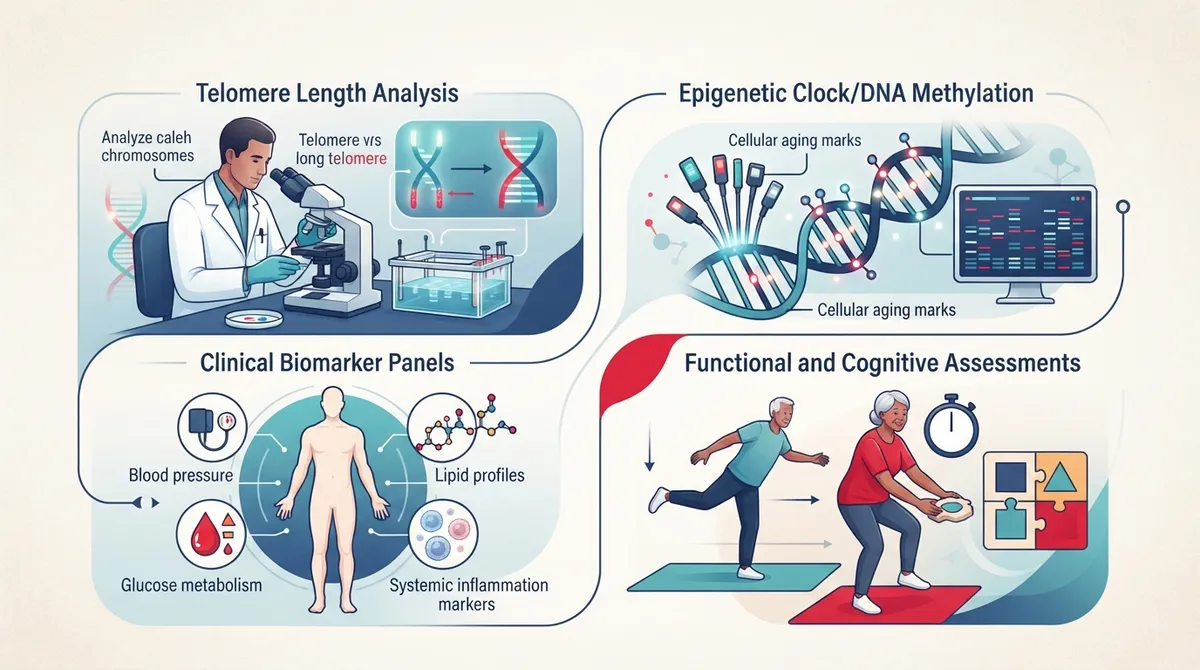
The Main Ways Biological Age Is Measured
Here is a quick overview of the most common approaches. Each one answers a slightly different question about aging.
|
Method |
What It Measures |
Sample Needed |
Main Strength |
Main Limit |
|---|---|---|---|---|
|
Clinical biomarker models |
Organ function, metabolism, inflammation |
Blood and vitals |
Uses familiar, routine tests |
Depends on the model chosen |
|
Epigenetic clocks |
DNA methylation patterns |
Blood or saliva |
Detailed molecular view |
Varies by clock and lab |
|
Telomere length |
Protective caps on chromosomes |
Blood |
Reflects cell aging |
Wide natural variation |
|
Functional tests |
Strength, lung capacity, fitness |
In-clinic testing |
Shows real-world ability |
Affected by effort and training |
|
Body composition and wearables |
Muscle, fat, sleep, activity |
Scan or device |
Easy to track over time |
Indirect measures of aging |
Method 1: Clinical Biomarker Models
This approach uses tests that your primary care doctor already orders. Depending on the model, it may include blood pressure, blood sugar or HbA1c, cholesterol, C-reactive protein (CRP), kidney markers such as creatinine, lung function, and body composition.
One well-known example is Phenotypic Age. It combines your chronological age with nine blood biomarkers tied to metabolism, inflammation, and organ function, according to the American Heart Association's 2023 explanation. The result is an estimated age. Your age acceleration is that estimate minus your real age.
A key advantage is that these markers are already used to guide care. In a 2024 comparison from the CARDIA study, published in the Journal of the American Heart Association, clinical-marker age acceleration and the Framingham 10-year risk score were more strongly linked to future cardiovascular disease than the epigenetic measures tested. This shows why routine labs still matter so much.
Method 2: Epigenetic Clocks
Epigenetic clocks look at DNA methylation. These are small chemical tags that attach to your DNA and change over time. A lab reads the tags at chosen sites, usually from a blood or saliva sample, and a formula turns the pattern into an age estimate.
The Horvath clock, introduced in 2013, uses 353 sites on the DNA. It was reported to match chronological age with a correlation of about 0.96 across the tissues studied. That is strong, but it shows how well the clock predicts calendar age, not that it captures every part of aging.
Not all clocks are built for the same job. Some estimate chronological age. Others are trained to reflect health risk, mortality, or the pace of aging. Because of this, two clocks can give you two different numbers on the same day.
Method 3: Other Measures of Aging
Several other tools add useful context. They should not be treated as interchangeable with the methods above.
- Telomere length: Telomeres are protective caps on the ends of chromosomes. They tend to shorten with age, but natural variation between people is large.
- Protein and metabolite profiles: These look at molecules in your blood that change as your body ages.
- Physical function tests: Grip strength, walking speed, balance, and lung function show how your body performs in daily life.
- Wearable data: Sleep, heart rate, and activity trends can hint at fitness and recovery patterns.
Fitness and metabolic tests can be especially helpful. For example, metabolic breath analysis and body composition testing show how efficiently your body uses energy and how much muscle and fat you carry. These are practical signals you can act on.
Steps to Get a Reliable Biological Age Assessment
If you want to explore your biological age, a thoughtful process will give you better results. Follow these steps.
- Start with a baseline visit. Begin with a full checkup so your doctor knows your history, medicines, and risk factors. A routine physical exam is a strong starting point.
- Get core lab work done. Blood pressure, glucose, lipids, kidney function, and inflammation markers form the foundation of most clinical age models.
- Choose the right add-on tests. Your clinician may suggest an epigenetic test, a body composition scan, or fitness testing based on your goals.
- Review results with a clinician. A number alone can cause worry or false comfort. A doctor can explain what it means for you.
- Build an action plan. Focus on proven steps such as exercise, sleep, nutrition, blood pressure control, and cancer screening.
- Retest on a sensible schedule. Repeat testing with the same method so you compare like with like.
How Accurate Are Biological Age Tests?
Accuracy depends on the test, the lab, the sample, and the formula. Results can change because of measurement error, recent illness, medicines, or even the time of day you give a sample. This is normal and does not mean the test is broken.
Evidence and validation also vary a lot between consumer tests. Some have strong research behind them, while others are newer and less proven. A review in the research literature stresses that biomarkers of aging are still being validated for routine clinical use.
For this reason, a result that says you are "five years older" or "five years younger" should be read as an estimate. It is a prompt to look closer, not a verdict. Always compare any new score with your standard health data.
What Your Result Can and Cannot Tell You
A higher biological age may point to areas worth a closer look, such as blood sugar, inflammation, or low fitness. A lower biological age may be encouraging, but it does not mean you can skip screenings.
Here is what a result can help with:
- Motivating healthy habit changes
- Highlighting risk factors to discuss with your doctor
- Tracking progress over months or years
Here is what it cannot do:
- Diagnose a disease
- Replace standard screening and risk tools
- Predict your exact lifespan
Established measures such as blood pressure, glucose, lipids, kidney function, and cardiovascular risk scores still guide treatment. Biological age adds context, but your doctor's judgment stays central.
Can You Lower Your Biological Age?
Many studies suggest that lifestyle changes can improve the markers that feed into these scores. Regular exercise, quality sleep, a balanced diet, stress management, and avoiding tobacco all help. Managing weight and blood pressure also makes a difference.
If weight is a concern, a structured plan can help. Supervised weight loss programs combine medical guidance with practical coaching. Staying current on cancer screening also protects your long-term health, even though it does not change your score directly.
Results do not appear overnight. Changes in blood markers may show within a few months, while other shifts take longer. Patience and consistency matter more than quick fixes.
Who May Benefit Most From Biological Age Testing
Biological age testing appeals to many groups. Busy professionals and tech-savvy patients like having clear data to track. Families and younger adults may use it to build healthy habits early. Women without an established doctor may find it a useful reason to start a full wellness visit.
People who want deeper insight may also consider DNA gene testing, which looks at inherited traits and risk patterns. It is a different tool from an epigenetic clock, but both can support a personalized prevention plan.
Whatever your reason, the goal is the same: use information to act early, not to worry. A trusted clinician can help you separate helpful insight from hype.
How InCare Helps You Make Sense of Your Results
At InCare, we believe a test is only useful when it leads to a plan. Our team combines advanced technology with hands-on medical expertise at our Tampa and Riverview clinics. We can pair standard labs and primary care with body composition scans, metabolic breath analysis, and gene testing to build a complete view of your health.
Our patients hold us to a high standard, and we are proud of our 4.8-star rating from hundreds of reviews. You can read what InCare patients say on Google to see how our team supports people like you. You can also follow our updates on Instagram, Facebook, and TikTok for wellness tips.
We keep our approach honest. We treat biological age as a helpful estimate, and we anchor every plan in proven medicine. That means you get clear next steps, not confusing numbers.
Conclusion
Biological age is measured in several ways, including routine blood markers, DNA methylation clocks, telomere length, functional tests, and body composition data. Each method shows a different slice of aging, and none is a perfect gold standard. The smartest approach is to combine tools, read results with caution, and rely on proven clinical measures to guide care.
If you want a clear, personalized look at your health, our team is ready to help. Book your visit with InCare today to start with a full checkup. You can also contact our team with any questions before you come in.
FAQs
Q: What is biological age, and how is it different from chronological age?
A: Chronological age is the number of years since your birth. Biological age is an estimate of how well your body systems are aging compared with that number. It is not a diagnosis, and different tests can give different results.
Q: What blood tests are used to estimate biological age?
A: Clinical models use routine markers such as blood sugar or HbA1c, cholesterol, C-reactive protein, and kidney function. Phenotypic Age, for example, combines chronological age with nine blood biomarkers tied to metabolism, inflammation, and organ health.
Q: Are biological age tests accurate and clinically validated?
A: Accuracy varies by test, lab, sample, and formula. There is no gold-standard measure, and validation for many consumer tests is still limited. Results should be treated as estimates and reviewed with a clinician.
Q: Can biological age be lowered, and how long does it take?
A: Healthy habits such as exercise, good sleep, balanced nutrition, and blood pressure control can improve the markers that feed into these scores. Some blood markers may shift within months, while others take longer, so steady effort matters most.
Q: How often should biological age be tested?
A: There is no single schedule, but many clinicians suggest retesting every six to twelve months using the same method. Repeating the same test lets you compare results fairly and see real trends over time.


