Key Takeaways
- In the US, primary care physicians have distinct specialties (family medicine, internal medicine, pediatrics, geriatrics) with different training and patient focus, so verifying your doctor's actual specialty matters more than the GP label alone.
- Roughly 92 million Americans live in primary care shortage zones, making it crucial to establish a consistent primary care relationship now rather than waiting until you're sick for preventive care and chronic disease management.
- Modern comprehensive primary care goes beyond checkups and referrals to include advanced screenings, wellness technology, and preventive services that help catch problems early and optimize long-term health outcomes.
- Choose your primary care provider based on your specific needs—family medicine for household care, internists for adult chronic conditions, pediatricians for children—and verify credentials and available services rather than relying on terminology alone.
If you've ever wondered whether your "GP" and your "primary care doctor" are actually the same person, you're not alone. Many patients search for care and get confused by the labels doctors use. The good news? Understanding this distinction can help you choose the right provider, ask better questions, and get more from every visit. This guide breaks down what these terms really mean, why it matters for your health, and how to find a doctor who fits your needs, whether you're in Tampa, Riverview, or anywhere else in Florida.
Is a Primary Care Doctor the Same as a GP?
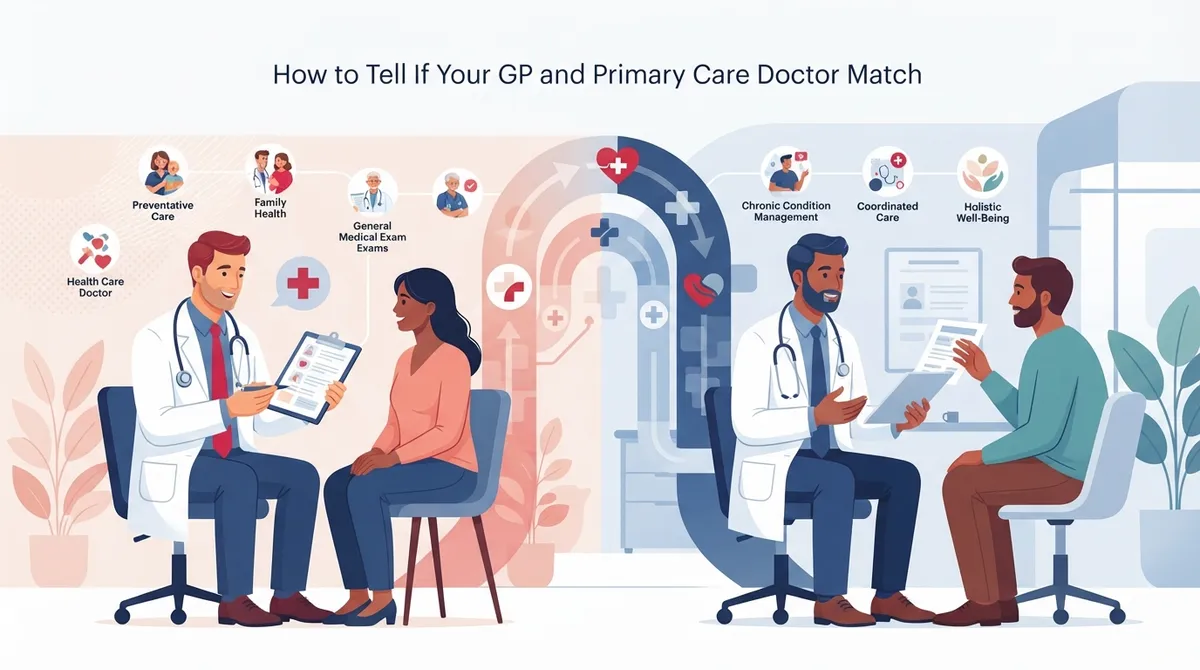
In everyday conversation, yes. Most people use "primary care doctor" and "GP" to mean the same thing: a doctor who handles your everyday health needs. This includes checkups, common illnesses, and referrals to specialists when needed.
But the terms aren't always exact matches. "Primary care" describes a role. It's the type of care you get, not a specific job title. "General practitioner," or GP, describes a kind of doctor. The exact meaning shifts depending on where you live and how that country's health system works.
In the United States, doctors rarely call themselves GPs. Instead, they use terms like family medicine physician, internist, or pediatrician. The American Academy of Family Physicians notes that primary care and family medicine are related but not interchangeable terms. So while your doctor might informally be called a GP, their actual training and credentials tell a more precise story.
How the Terms Differ Around the World
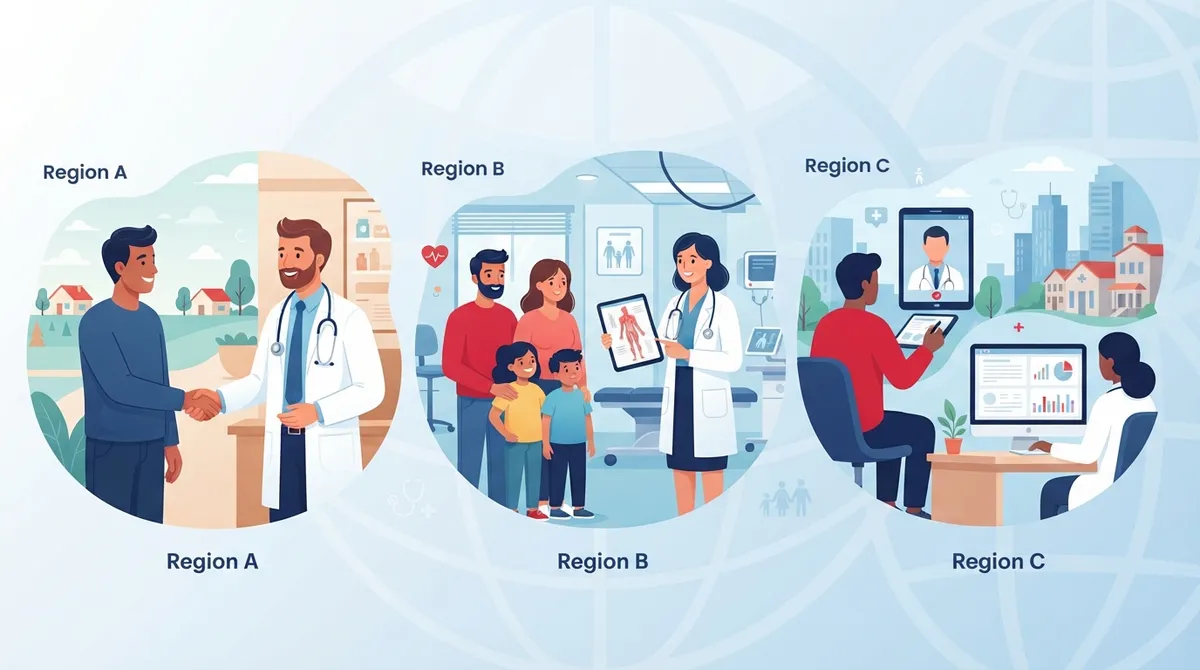
In the UK and many other countries, "GP" is the standard, official term. GPs work in community clinics and are usually the first doctor you see for any health concern. It's a clear, simple system.
The US system works differently. Here, "primary care physician" is the more common phrase. This is because primary care in the US includes several types of doctors, each with distinct training:
- Family medicine doctors: Trained to treat patients of all ages, from infants to seniors
- General internists: Focus only on adult health, often managing complex or chronic conditions
- Pediatricians: Specialize in children's health from birth through the teen years
- Geriatricians: Focus on the unique health needs of older adults
- Combined internal medicine-pediatrics doctors: Trained to treat both adults and children
All of these doctors can serve as your primary care provider. But their training, patient focus, and scope of services can vary quite a bit. That's why checking a doctor's specialty matters more than relying on the label alone.
Why This Matters for Your Health Decisions
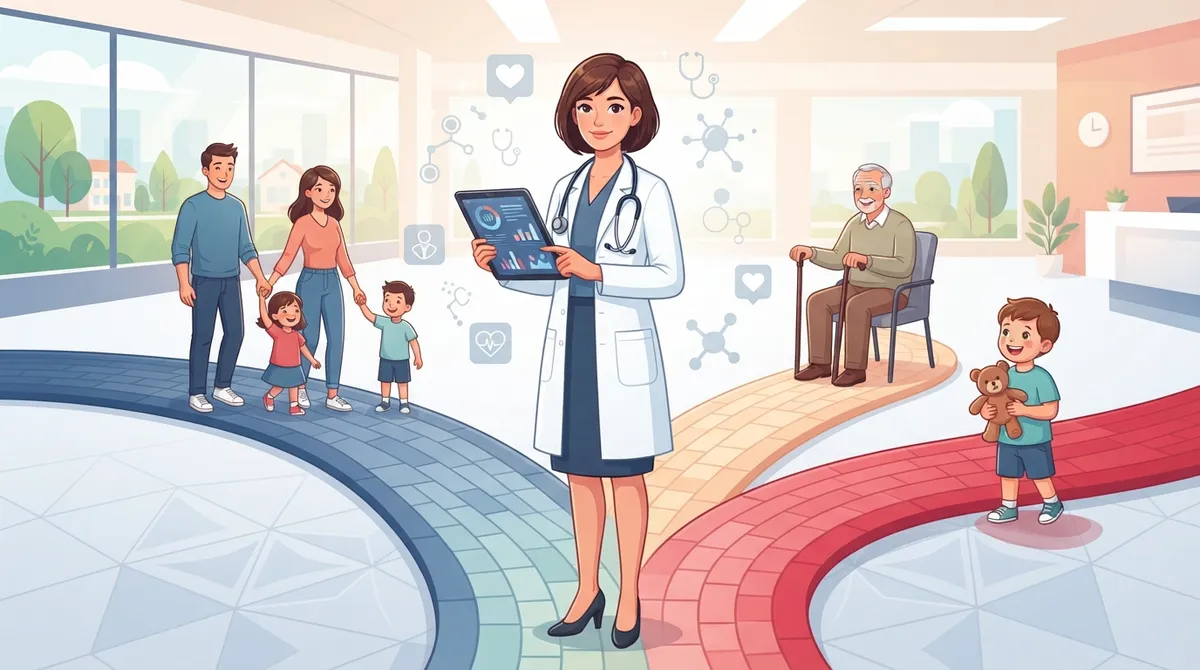
Knowing the difference helps you pick the right doctor for your situation. A family medicine doctor might be ideal if you want one provider for your whole household. An internist could be a better fit if you're managing several chronic conditions as an adult. A pediatrician is the right choice for your kids.
This decision affects more than convenience. The right primary care relationship supports better long-term health outcomes. According to HRSA's 2025 State of the Primary Care Workforce report, the US had 340,319 active primary care physicians in 2023. That's about 34.3% of all active physicians in the country. Despite this workforce, access remains a challenge. As of December 2025, roughly 92 million Americans, about 27% of the population, live in areas officially designated as primary care shortage zones.
This shortage means finding a reliable primary care relationship is more important than ever. Whether you call your provider a GP or a primary care doctor, having someone who knows your history and coordinates your care can make a real difference.
What a Primary Care Doctor or GP Actually Does
Regardless of the label, most primary care doctors provide a similar core set of services. Here's what you can typically expect:
- Annual checkups and preventive care: Routine exams designed to catch health issues before they become serious
- Evaluation of new symptoms: First-line diagnosis for anything from a persistent cough to unexplained fatigue
- Chronic disease management: Ongoing care for conditions like diabetes, high blood pressure, and asthma
- Referrals to specialists: Coordination when your condition needs more focused expertise
- Health screenings: Cancer screenings, cholesterol checks, and other preventive tests based on your age and risk factors
At InCare's primary care services, this comprehensive approach goes even further. Patients get access to advanced tools like DNA gene testing and body composition analysis, blending traditional primary care with modern wellness technology.
Comparing Primary Care Provider Types
The table below breaks down the main types of primary care doctors in the US and what makes each one unique.
|
Provider Type |
Typical Patients |
Common Focus Areas |
|---|---|---|
|
Family Medicine Physician |
All ages, entire families |
General health, preventive care, chronic disease management |
|
Internist |
Adults only |
Complex chronic conditions, adult preventive care |
|
Pediatrician |
Children and teens |
Growth, development, childhood illnesses |
|
Geriatrician |
Older adults |
Age-related conditions, medication management |
|
Med-Peds Physician |
Adults and children |
Combined care across the lifespan |
Signs You Need to Check Your Doctor's Credentials
Since the label "GP" doesn't tell you everything, it helps to know when a deeper check is worthwhile. Consider verifying credentials if:
- You have a complex chronic condition requiring specialized management
- You're choosing a doctor for a child, elderly parent, or someone with unique health needs
- You want to know if your provider offers services beyond basic checkups, like IV hydration therapy or medical weight loss programs
- You're switching providers and want continuity of care
Board certification, medical school training, and years of practice all matter more than whether someone calls themselves a GP or a primary care physician. This guide on how to choose the right general practitioner for your care walks through additional factors worth considering.
How to Choose the Right Primary Care Provider
Follow these steps to find a doctor who truly fits your health needs:
- Identify your priorities: Decide if you need a family doctor, an adult-focused internist, or pediatric care
- Check credentials: Look up board certifications and training background
- Review available services: Confirm the practice offers the screenings, wellness services, or chronic care support you need
- Consider location and access: Choose a clinic close to home or work, with options like virtual visits if you're busy
- Read patient reviews: Learn from other patients' experiences with communication style and wait times
For residents in the Tampa Bay area, finding a primary care clinic near you in Tampa and Riverview is simple with InCare's two convenient locations and virtual appointment options.
The Growing Need for Reliable Primary Care
The primary care workforce faces real pressure. HRSA projects a shortage of 70,610 full-time primary care physicians by 2038. To eliminate current shortage designations entirely, the country would need 15,628 more physicians right now, based on a ratio of one physician for every 3,500 patients.
This shortage makes it even more important to build a strong relationship with a primary care provider today, rather than waiting until you're sick. Preventive visits, regular screenings, and ongoing chronic disease management all depend on having a consistent doctor who knows your history.
InCare addresses this need directly. With locations in Tampa and Riverview, plus telemedicine options, patients can access experienced providers like Dr. Naveen Paddu, Dr. Pramjeet Ahluwalia, and Dr. Teshy John without long wait times common at larger health systems.
Beyond the Basics: What Sets Comprehensive Primary Care Apart
Traditional primary care often stops at checkups and referrals. But modern wellness-focused clinics do more. They combine standard medical care with advanced technology to catch problems early and optimize overall health.
At InCare, this means patients can access:
- Advanced cancer screening services for early detection
- Metabolic breath analysis to understand how your body burns energy
- Hair restoration treatments for patients dealing with hair loss
- Urgent care services for when you need same-day treatment
This whole-body approach reflects a shift in how primary care doctors serve patients today. It's not just about treating illness. It's about preventing it and helping patients feel their best long term.
Take the Next Step Toward Better Primary Care
Whether you call your doctor a GP or a primary care physician, what matters most is finding a provider you trust. Look for someone with the right training, a service list that matches your needs, and a location that fits your schedule.
InCare has built a reputation for exactly this kind of care. Patients consistently praise the practice, reflected in a 4.8 out of 5 rating from hundreds of reviews. You can visit us on Google — InCare to read what current patients say about their experience.
Ready to find a primary care provider who understands your whole health picture? You can reach out to our team with questions, or go ahead and book your appointment today to get started. Stay connected with health tips and updates by following InCare on Facebook, Instagram, and TikTok.
FAQs
Q: Is a primary care doctor the same as a GP?
A: In everyday use, yes, they usually mean the same thing: a doctor who provides first-contact, ongoing care. However, in the US, doctors are more commonly called primary care physicians rather than GPs, and their specific training can vary by specialty.
Q: What is the difference between a GP and a primary care physician in the US?
A: A GP is a term used more commonly outside the US, especially in the UK, to describe a community doctor providing general medical care. In the US, primary care physicians may be trained in family medicine, internal medicine, pediatrics, or geriatrics, so the term covers a broader range of specialties.
Q: Is a family doctor the same as a GP?
A: Yes, in most everyday conversations, family doctor and GP are used interchangeably. Both describe a doctor trained to treat patients across all ages, from children to seniors, within one family practice.
Q: Can an internist be my primary care doctor?
A: Yes, general internists are trained to provide primary care specifically for adults. They often manage complex or chronic health conditions and can serve as your main doctor if you are an adult patient.
Q: How do I choose a primary care doctor or GP?
A: Start by identifying your specific needs, such as family care, adult-focused care, or pediatric care. Then check the doctor's credentials, available services, and location to ensure they fit your health goals and lifestyle.