

Key Takeaways
- KP-10 is investigational and not FDA-approved for any medical use; it remains limited to research trials and should never replace proper medical evaluation from a qualified provider.
- KP-10 most commonly refers to kisspeptin-10, a 10-amino-acid peptide that activates the reproductive hormone pathway in the brain via the KISS1R receptor in the hypothalamus.
- Unregulated peptide products sold online carry significant risks including unknown purity, inaccurate dosing, legal uncertainty, and lack of medical oversight for side effects.
- Standard hormone testing and primary care evaluation should always come first for symptoms like irregular periods or fertility concerns; specialized kisspeptin testing is not part of routine wellness screening.
- The term KP-10 causes confusion because it can mean kisspeptin-10, a $10 insurance copay, or unrelated administrative codes, making it essential to ask your provider directly what it means in your context.
- Researchers are studying kisspeptin-10 for conditions like infertility and hypogonadotropic hypogonadism, but results depend heavily on dose, delivery method, and timing with limited human study data available.
Searching for "KP-10 medical information" can bring up confusing results. Some sites talk about a hormone peptide. Others mention a $10 copay. This mix-up leaves many people unsure what KP-10 actually means for their health. If you are trying to make sense of this term before your next doctor visit, this guide breaks it down clearly.
At InCare, we believe patients deserve straight answers, not confusing jargon. Our primary care team in Tampa and Riverview helps patients sort through trending health terms, peptide questions, and hormone concerns every day. This article explains what KP-10 really means in medicine, who studies it, and why you should always talk to a qualified provider before considering any related treatment.

What Does KP-10 Actually Mean?
KP-10 is a short name for kisspeptin-10. This is a small piece of a larger hormone called kisspeptin. Kisspeptin-10 has just 10 amino acids linked together. It is the active fragment that scientists study most closely.
Kisspeptin-10 works in the brain. It connects to a receptor called KISS1R, also known as GPR54. This receptor sits in the hypothalamus, a small but powerful part of your brain. When kisspeptin-10 binds to this receptor, it triggers the release of another hormone called GnRH.
GnRH then tells your pituitary gland to release two more hormones: luteinizing hormone (LH) and follicle-stimulating hormone (FSH). These two hormones control reproduction in both men and women. This chain reaction is called the hypothalamic-pituitary-gonadal axis, or HPG axis for short.
Why the Term KP-10 Causes Confusion
The abbreviation "KP-10" is not standard across all of healthcare. It shows up in different contexts, and this creates mix-ups. Here are the most common meanings people run into:
- Kisspeptin-10, the reproductive hormone peptide studied in fertility research
- An informal shorthand for a $10 primary care copayment on some insurance plans
- Random administrative codes or form labels used in unrelated paperwork
- Confusion with similar-sounding terms like KPV or other peptide names
Because there is no single accepted definition, it is smart to ask your provider directly what the term means in your specific situation. Our providers can clarify this during your visit.
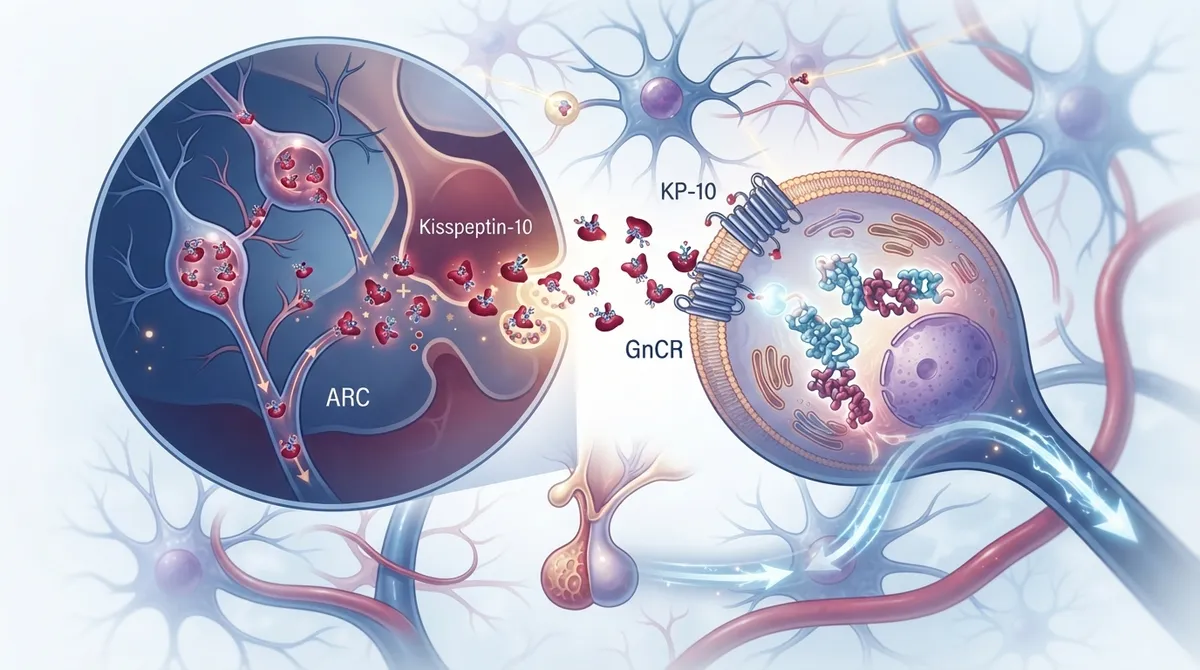
The Science Behind Kisspeptin-10
Kisspeptin-10 is not a brand-new discovery, but research on it keeps growing. Scientists first connected the KISS1 gene to hormone regulation years ago. Since then, kisspeptin research has expanded into several areas of reproductive health.
Here is what current research shows about kisspeptin-10:
- It is the C-terminal fragment of the full kisspeptin protein, meaning it comes from the tail end of the molecule
- It activates the KISS1R receptor with strong effect, even in small doses
- It can trigger dose-dependent LH and FSH responses in controlled human studies
- Its effects depend heavily on dose, delivery method, and timing
- Pulsatile administration (given in rhythmic bursts) works differently than a single dose
- Human studies remain limited compared to larger, more established treatments
Researchers have looked at kisspeptin-10 and a related longer form called kisspeptin-54 in early-phase clinical trials. These studies explore conditions like low reproductive hormone levels, irregular ovulation, and infertility. Study sizes vary widely, and results depend on how the peptide is given.
What Conditions Are Linked to Kisspeptin Research
Medical researchers have investigated kisspeptin compounds for several reproductive and hormone-related conditions. These include:
- Hypogonadotropic hypogonadism, a condition where the brain does not send proper signals to the reproductive glands
- Functional hypothalamic amenorrhea, which causes missed periods due to stress, low body weight, or overtraining
- Delayed or early puberty in adolescents
- Infertility in both men and women
- Low sexual desire linked to hormone imbalance
These are serious medical conditions. They require proper diagnosis through comprehensive primary care before anyone considers specialized hormone testing or treatment.
Is KP-10 an Approved Treatment?
This is one of the most important facts to understand. Kisspeptin-10 is investigational. That means it is still being studied in research settings. It is not an approved treatment you can pick up at a pharmacy for general use.
The table below breaks down the current status of kisspeptin-10 compared to standard, approved primary care treatments.
|
Factor |
Kisspeptin-10 (KP-10) |
Standard Approved Hormone Therapy |
|---|---|---|
|
Regulatory Status |
No FDA or EMA approval for any use |
FDA approved for specific conditions |
|
Availability |
Limited to research trials or specialty settings |
Available through prescription at licensed clinics |
|
Evidence Base |
Small early-phase or mechanistic studies |
Large-scale clinical trials with long-term data |
|
Dosing Guidelines |
Not standardized |
Established and monitored dosing protocols |
|
Insurance Coverage |
Generally not covered |
Often covered depending on plan |
No research finding should be treated as proof that kisspeptin-10 works for routine wellness use. Research and clinical approval are two very different things. Always ask your primary care physician before trying any investigational compound.
Steps to Take If You Are Curious About KP-10
If you came across KP-10 online and want real answers, follow these steps before making any decisions.
- Write down your symptoms clearly, such as irregular periods, low energy, or fertility concerns
- Schedule a visit with a primary care provider who can review your full health history
- Ask for standard lab work first, including hormone panels and basic blood tests
- Discuss your findings with your provider before considering any specialized peptide testing
- Avoid buying research-grade peptides online without medical supervision
- Ask your provider directly about the source, safety, and legal status of any product
- Consider whether your concern might be better addressed with an established treatment first
This process protects your health and your wallet. Skipping steps and jumping straight to an unproven compound rarely leads to good outcomes.
Why Routine Screening Comes First
Kisspeptin testing is not part of a normal wellness checkup. If you have symptoms like missed periods, fertility struggles, or low libido, your provider will usually start with a full history and physical exam. This is the same approach used during a wellness visit at InCare.
Standard blood work often includes thyroid function, reproductive hormones, and metabolic markers. These basic tests catch many common causes of hormone imbalance. Only after ruling out simpler explanations would a provider consider more specialized endocrine evaluation.
Risks of Unregulated Peptide Products
Because kisspeptin-10 is not approved for general use, some patients turn to online sellers marketing "research chemicals" or compounded peptides. This path carries real risk.
Here are common concerns with unregulated peptide products:
- Purity is often unknown, meaning the product may contain contaminants
- Dosing information is rarely accurate or based on solid science
- Storage requirements may not be followed, which can degrade the product
- Legal status varies and some products may not be sold legitimately for human use
- There is no medical oversight to catch side effects early
These risks are why InCare encourages patients to work with licensed providers rather than self-treating based on internet searches. Our experienced medical team can help you understand safer, evidence-based options for hormone and fertility concerns.
KP-10 as a Copay: The Other Meaning
Some patients search for KP-10 expecting insurance information. In certain health plans, "KP-10" is shorthand for a $10 copay tier for primary care visits. This has nothing to do with kisspeptin or peptide therapy.
If your insurance card or plan documents use this term, it likely refers to your out-of-pocket cost for a visit, not a medical treatment. Always confirm with your insurance provider or our billing team what any code or abbreviation means for your specific plan. Our office can help you verify your coverage details before your appointment.
How InCare Supports Your Hormone and Fertility Questions
Whether your concern is about kisspeptin research, general hormone health, or understanding a confusing insurance term, InCare offers a starting point built on trust and clear communication. Our clinics in Tampa and Riverview combine modern testing tools with real medical expertise.
We offer services that support whole-body health, including:
- DNA gene testing to understand your personal health risks
- Body composition analysis using advanced 3D imaging
- Cancer screenings for early detection
- Medical weight loss programs backed by science
- IV hydration and vitamin therapy for energy support
Patients trust InCare because we explain complex topics in plain language. You can read what real patients say by visiting our InCare location on Google, where our clinic holds a strong reputation built on honest, patient-first care.
Questions to Bring to Your Next Visit
Before your appointment, it helps to prepare a short list of questions. Consider asking:
- What standard tests should I get first based on my symptoms?
- Is there an approved treatment option that fits my situation?
- How do I know if a peptide or hormone product is safe?
- What lifestyle changes might help before considering any medication?
- Where can I find real clinical trial information if I want to learn more?
These questions help you have a productive, informed conversation instead of relying on scattered internet claims.
Staying Informed Without Falling for Hype
Health trends move fast online. Terms like KP-10 spread through social media and wellness forums before solid medical guidance catches up. This is why trusted primary care remains your best resource. You can also follow reliable health updates through our Facebook page and Instagram account, where we share accurate wellness information regularly. For quick video explainers on topics like this, check our Tik Tok channel.
For authoritative background on peptide hormone research, resources from the National Center for Biotechnology Information and the National Institute of Diabetes and Digestive and Kidney Diseases offer helpful scientific context on reproductive hormones and the HPG axis.
Conclusion
KP-10 medical information can mean different things depending on where you find it. In most health contexts, it points to kisspeptin-10, an investigational peptide studied for its role in reproductive hormones. It is not an approved treatment, and it should never replace a proper medical evaluation. If you have symptoms related to fertility, irregular periods, or hormone imbalance, the safest first step is a visit with a qualified primary care provider.
InCare is here to guide you through confusing health terms with clear answers and real medical expertise. Our Tampa and Riverview locations offer comprehensive primary care, advanced wellness testing, and a team that genuinely listens. Book your appointment today and get the straightforward answers you deserve about your health.
FAQs
Q: What is KP-10 in medical terms?
A: KP-10 most commonly refers to kisspeptin-10, a 10-amino-acid fragment of the kisspeptin hormone. It plays a role in activating the reproductive hormone pathway in your brain. The term can also refer informally to a $10 primary care copay, so context matters.
Q: Is kisspeptin-10 approved by the FDA?
A: No, kisspeptin-10 does not currently have FDA or EMA approval for any medical use. It remains investigational and is studied mainly in research and clinical trial settings, not offered as a standard treatment.
Q: Can KP-10 help with fertility or low testosterone?
A: Researchers are studying kisspeptin-10 for conditions like infertility and hypogonadotropic hypogonadism, but results vary by study and dosing method. It should not be used as a first-line treatment without proper evaluation from a primary care or endocrinology provider.
Q: What are the risks of trying kisspeptin-10 products bought online?
A: Unregulated peptide products often have unknown purity, inconsistent dosing, and unclear legal status. Using them without medical supervision can lead to unpredictable side effects and wasted money on products that may not work as advertised.
Q: Is kisspeptin-10 the same as kisspeptin-54?
A: No, they are related but different. Kisspeptin-10 is a shorter, active fragment, while kisspeptin-54 is a longer form of the hormone. Both have been studied in early human trials, but they behave differently depending on dose and delivery method.