
Key Takeaways
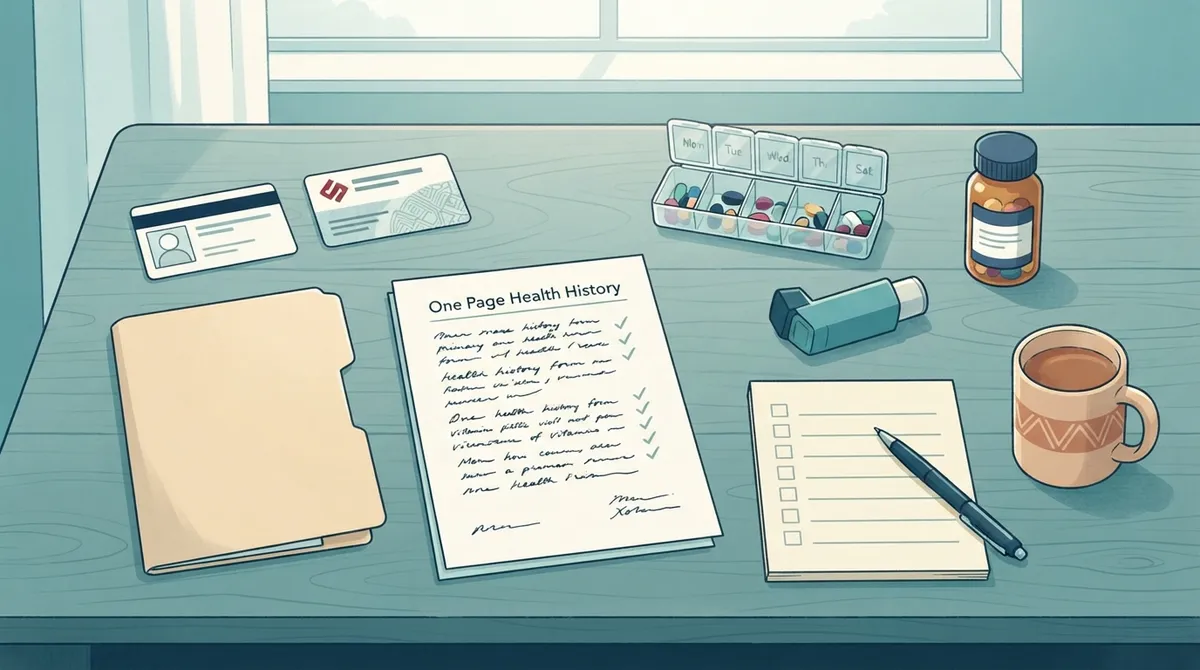
- Bring a photo ID, your current insurance card (front and back), and any referral or authorization your plan requires, then call the office a few days ahead to confirm copay and payment options.
- Prepare a complete medication list including prescriptions, over-the-counter drugs, vitamins, herbal products, and specialist-prescribed injections, patches, or inhalers, since supplements can affect how medicines work.
- Request past medical records early, because transfers can take days or weeks; if they have not arrived, still attend the visit and tell your clinician what is missing.
- Write a one-page medical history covering conditions, surgeries, allergies and drug reactions, and major tests, and bring immunization records and family health history.
- Write down each symptom's start date, frequency, triggers, and impact on sleep, work, or daily life, and rank your concerns so the most important ones are addressed first.
- Arrive 15 to 20 minutes early to finish forms without rushing, and bring glasses, hearing aids, or home health readings like blood pressure or blood sugar logs.
Starting care with a new doctor is an important step. A little preparation can turn a short appointment into a visit that truly helps you. Many people walk in with no records, no medication list, and no clear questions. Then they leave feeling like something was missed. You can avoid that with a simple plan.
This guide explains what to bring to your first primary care visit, why each item matters, and how to organize it. It is written for busy adults, young families, and anyone building a care relationship for the first time. Whether you want to manage a health condition, schedule screenings, or focus on prevention, the steps below will help you make the most of your time.
Requirements can vary by practice and insurance plan. Always confirm details with the clinic ahead of time. For a deeper look at the process, read what to expect at a new patient appointment.

Why Preparation Matters for a First Visit
A first primary care visit is more than a quick check. It is the start of a long-term partnership. Your clinician uses this visit to learn your health history, review your medicines, and plan the next steps together with you.
When you arrive prepared, you give your clinician a clearer picture. That leads to safer decisions and fewer repeat questions. It also saves time, so you can spend more of the visit talking about your goals.
Good preparation also helps with:
- Avoiding duplicate tests or missed screenings
- Catching medication conflicts early
- Building a complete record for future care
- Making sure your biggest concerns get addressed
If you are still choosing a clinic, our guide on how to choose the right primary care physician in Tampa Bay can help you decide.
Your First Visit Checklist at a Glance
Use this table as a quick reference. Then read the sections below for details on each item.
|
Item to Bring |
Why It Matters |
Where to Get It |
|---|---|---|
|
Photo ID |
Confirms your identity and protects your records |
Wallet or phone |
|
Insurance card |
Verifies coverage, copays, and billing |
Your insurer or member portal |
|
Medication and supplement list |
Prevents unsafe drug combinations |
Home, pharmacy, or pill bottles |
|
Medical history summary |
Gives context for your current health |
Past doctors or your own notes |
|
Immunization records |
Shows which vaccines you may need |
Past clinic, state registry, or school |
|
Family health history |
Helps assess inherited risks |
Relatives and family records |
|
List of concerns and questions |
Keeps the visit focused on what matters |
Your own notes |
|
Prior test results |
Avoids repeat testing |
Past clinics or patient portals |
Step 1: Gather Your Identification and Insurance Details
Start with the basics. Almost every clinic will ask for the following items at check-in:
- A valid photo ID such as a driver's license or passport.
- Your current health insurance card, front and back.
- Any required referral or authorization, if your plan needs one.
- Completed intake forms, if the clinic sent them ahead of time.
Call the office a few days before your visit. Ask about your expected copay and what payment methods they accept. Also ask whether your old records have already arrived. This short call can prevent surprise bills and delays at the front desk.
If you are not sure which doctors take your plan, see our tips on finding doctors accepting new patients near you.
Step 2: Create a Complete Medication List
Your medication list is one of the most important things you can bring. It helps your clinician avoid harmful interactions and spot gaps in your care.
What to Include on Your List
Write down every product you take, not just prescriptions. Include:
- Prescription medicines, with the dose and how often you take them
- Over-the-counter medicines, such as pain relievers or allergy pills
- Vitamins, minerals, and herbal products
- Medicines prescribed by other clinicians or specialists
- Injections, patches, inhalers, and eye drops
Should You Bring the Bottles?
A written list works well. Still, original containers can help confirm names, strengths, and directions. If your list is long or you are unsure of the details, bring the bottles in a bag. Your clinician can then check each one.
Also note your preferred pharmacy. This makes it easier to send new prescriptions. For ongoing support, you may find our prescription management tips for 2026 useful.
Step 3: Prepare a Short Medical History
You do not need a long document. A one-page summary is often enough. A clear history helps your new clinician understand where you have been, so they can plan where to go next.
Cover these areas:
- Past and current conditions, such as diabetes, high blood pressure, asthma, or thyroid disease.
- Surgeries and hospital stays, with approximate dates.
- Allergies and drug reactions, including what happened.
- Major tests or treatments, such as scans, biopsies, or cancer care.
If you have test results or imaging reports, bring copies. Records that are not yet in the new system can slow down care. You can learn how to request them in our guide to making a medical records request.
If Your Records Are Missing
Contact your previous clinics and ask them to send records ahead of time. Do this as early as you can, since transfers can take days or weeks. If the records do not arrive in time, do not cancel your visit. Simply tell your new clinician what is missing. You should never delay urgent care while you wait for paperwork.
Step 4: Bring Immunization and Family History Information
Two items often get forgotten, yet both are very useful.
Immunization Records
Vaccine records show which shots you have had and which you may need. This is especially helpful for travel, work, school, or planning a family. If you cannot find your records, ask your last clinic, your state immunization registry, or your pharmacy.
Family Health History
Some conditions run in families. Heart disease, diabetes, certain cancers, and mental health conditions are common examples. Ask close relatives what they have faced and at what age. Write down what you learn. This helps your clinician decide when to start screenings and which risks to watch.
Families with children should also read about pediatric family medicine to plan visits for the whole household.
Step 5: Write Down Your Concerns and Questions
Appointments move fast. It is easy to forget a key question once you are in the room. Write your concerns down before you go, and put the most important ones first.
For each symptom, note:
- When it started
- How often it happens
- What makes it better or worse
- How it affects your sleep, work, or daily life
You may also want to ask about screenings, lifestyle goals, and long-term prevention. Here are some good starter questions:
- What screenings do I need at my age and risk level?
- How will I receive my test results?
- What follow-up visits should I plan for?
- How can I reach the practice after hours?
- Which lifestyle changes would help me most?
You can also review our list of questions to ask a new primary care doctor for more ideas.
Step 6: Add Helpful Extras
A few extra items can make the day smoother:
- Contact details for your other doctors and specialists, so your care team can share information.
- An advance directive or living will, if you want it added to your chart.
- A notebook or phone to take notes during the visit.
- Glasses, hearing aids, or other aids you use every day.
- A trusted support person, if having someone with you would help.
If you track your health with a wearable or home device, bring those readings too. Blood pressure logs and blood sugar numbers can be very useful.
What Happens During a First Primary Care Visit
Knowing what to expect can ease any nerves. A first visit usually includes several parts.
- Check-in. You confirm your identity, insurance, and forms.
- Vital signs. A staff member checks your weight, height, blood pressure, and more.
- Conversation. Your clinician reviews your history, medicines, family background, and lifestyle.
- Exam. You may have a physical exam, based on your needs.
- Planning. You discuss screenings, labs, referrals, and next steps.
Many patients like to arrive 15 to 20 minutes early. This gives you time to finish forms without feeling rushed. For a closer look at the exam itself, see what happens during an annual physical exam.
Why InCare Is a Strong Choice for Your First Visit
The right clinic makes preparation easier and care more personal. InCare combines medical expertise with modern technology to support prevention and whole-body health. Our team serves patients in Tampa and Riverview, with virtual visits also available for added convenience.
As a new patient, you can expect a warm welcome, clear communication, and a plan built around your goals. Our primary care services cover chronic condition management, preventive care, and wellness. We also offer tools such as cancer screening and DNA gene testing to help you act early on health risks.
Patients often tell us they feel heard from the first minute. You can see what others say by reading InCare reviews on Google through our Visit us on Google — InCare listing, or by reading real stories on our testimonials page. You can also follow our updates on Instagram, Facebook, and TikTok for health tips and clinic news.
To meet the people who will care for you, visit our providers page. If you live nearby, our locations page lists where to find us. Riverview residents can also read about why InCare is the best choice for primary care in Riverview.
Common Mistakes to Avoid
Even well-prepared patients can slip up. Watch out for these common errors:
- Leaving out supplements. Herbal products can still affect how medicines work.
- Waiting to request records. Transfers can take time, so start early.
- Hiding sensitive details. Your clinician needs honest information to help you safely.
- Skipping the insurance check. A quick call avoids billing surprises.
- Bringing too many topics. Pick your top concerns and ask about the rest at a follow-up.
Your Next Step
Preparing for your first visit does not take long, yet it makes a big difference. Bring your ID and insurance card, a full medication list, a short health history, immunization and family records, and a written list of questions. These simple steps help your clinician understand you from day one.
Ready to begin? Book your first appointment with InCare today. If you have questions before you come in, contact our team and we will gladly help you get ready.
FAQs
Q: What documents should I bring to my first primary care appointment?
A: Bring a photo ID, your current health insurance card, and any referral or intake forms the clinic requested. It also helps to bring a medication list, a short medical history, and any past test results. Call the office ahead of time to confirm what they need.
Q: Should I bring my medication bottles or just a list?
A: A complete written list works for most visits, including doses and how often you take each item. Bring the original bottles if your list is long or you are unsure of the details. Containers help your clinician confirm names and directions.
Q: How do I transfer medical records to a new primary care doctor?
A: Contact your previous clinics and ask them to send your records to your new practice. You may need to sign a release form, and transfers can take days or weeks. If records do not arrive in time, still attend your visit and tell your clinician what is missing.
Q: How early should I arrive for a first primary care visit?
A: Plan to arrive 15 to 20 minutes early. This gives you time to check in, confirm insurance, and finish any forms. Arriving early also helps you feel calm and ready to talk with your clinician.
Q: What questions should I ask at my first primary care appointment?
A: Ask which screenings you need, how test results will be shared, and what follow-up care to expect. You can also ask how to reach the practice after hours. Write your questions down beforehand and place the most important ones first.


