
Key Takeaways
- A standard resting EKG records heart electrical activity in about 10 seconds and is painless, making it a quick diagnostic tool for evaluating symptoms like chest discomfort, palpitations, or dizziness.
- A normal EKG does not rule out all heart problems since it captures only a brief moment; intermittent rhythm issues may not appear, so your doctor may recommend longer-term monitoring if symptoms persist.
- Routine EKG screening is not recommended for asymptomatic low-risk adults per the U.S. Preventive Services Task Force, as potential harms like unnecessary follow-up procedures outweigh benefits.
- Prepare for EKG testing by wearing loose two-piece clothing, avoiding heavy lotions on your chest, sharing your medication list, and staying calm and still during the 10-second recording.
- An abnormal EKG finding does not automatically indicate serious disease; your doctor must interpret results alongside your symptoms, medical history, and risk factors to determine next steps.
- Request a copy of your EKG tracing to keep for future reference when seeing new providers, and always follow up with your doctor if concerning symptoms return between appointments.
Chest tightness, a racing pulse, or a sudden dizzy spell can be unsettling. When symptoms like these appear, your doctor may suggest EKG testing. It is one of the fastest and simplest tools in primary care. For busy professionals, young families, and health-focused adults in 2026, knowing what to expect can ease worry and save time.
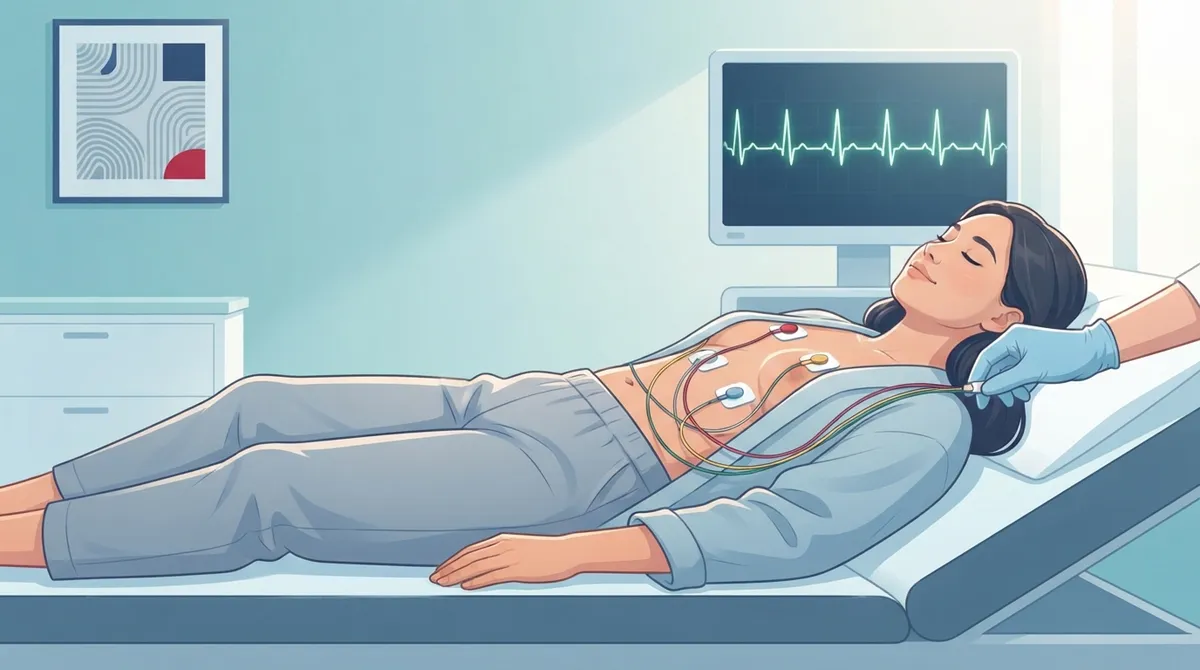
An EKG (also called an ECG) records the electrical activity of your heart. It uses small sensors placed on your skin. It does not send electricity into your body. In most visits, the test is quick and painless.
This guide explains how to prepare for EKG testing, what happens during the test, and how to understand your results. You will also learn when an EKG is useful, and when it may not be needed. At InCare primary care, we believe informed patients make better health choices.
What Is EKG Testing and What Does It Show?
An electrocardiogram is a quick, noninvasive test. It records the heart's electrical signals through electrodes on the skin. Each heartbeat starts with a small electrical pulse. The EKG turns that pulse into a line pattern your doctor can read.
A standard 12-lead EKG is a brief resting tracing. According to the StatPearls overview from the NCBI Bookshelf, the recording itself lasts about 10 seconds.
An EKG can give your clinician useful details about:
- Your heart rate and rhythm
- How electrical signals move through the heart
- Patterns that may suggest a current or past heart attack
- Other possible heart abnormalities
It is a helpful diagnostic aid. It is not a full picture of your heart health. Think of it as one clue, not the whole story.
When Do Doctors Order an EKG?
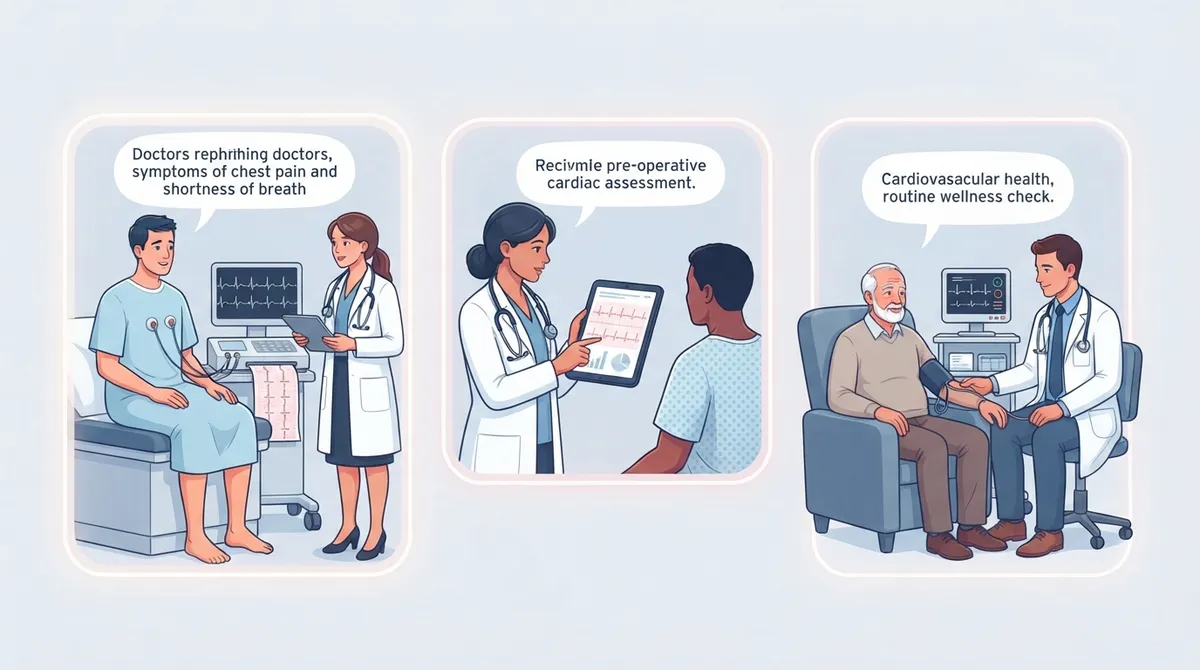
In primary care, a clinician may order an EKG to look into symptoms or to check a known heart condition. Common reasons include:
- Chest discomfort or pressure
- Heart palpitations or a fluttering feeling
- Fainting or dizziness
- Shortness of breath
- An unusually fast or slow pulse
- Follow-up for a known heart condition
- Checking how a pacemaker is working
Your provider may also use an EKG before certain procedures or when starting some medicines. If you have high blood pressure, diabetes, or a strong family history of heart disease, your doctor may talk with you about whether an EKG makes sense. Our guide on blood pressure management explains how heart health and blood pressure connect.
How to Prepare for EKG Testing: Step-by-Step
Good news: EKG testing needs very little preparation. A few simple steps can help you get a clear, reliable tracing.
- Tell your provider about your symptoms. Note when they happen, how long they last, and what you were doing. This detail helps your doctor read the results in context.
- Share your medication list. Bring a list of prescriptions, supplements, and over-the-counter drugs. Some can affect heart rhythm.
- Wear comfortable, two-piece clothing. You will need to expose your chest and possibly your arms and legs. A loose top makes this easy.
- Skip heavy lotions or oils on your chest. These can keep the electrodes from sticking well.
- Be ready for a quick shave. Chest hair may need to be trimmed so the electrodes touch the skin.
- Plan to stay calm and still. Movement and talking can distort the tracing. Take a few slow breaths before the test begins.
You usually do not need to fast or stop eating for a standard resting EKG. If your provider has special instructions, follow them.
What Happens During an EKG?
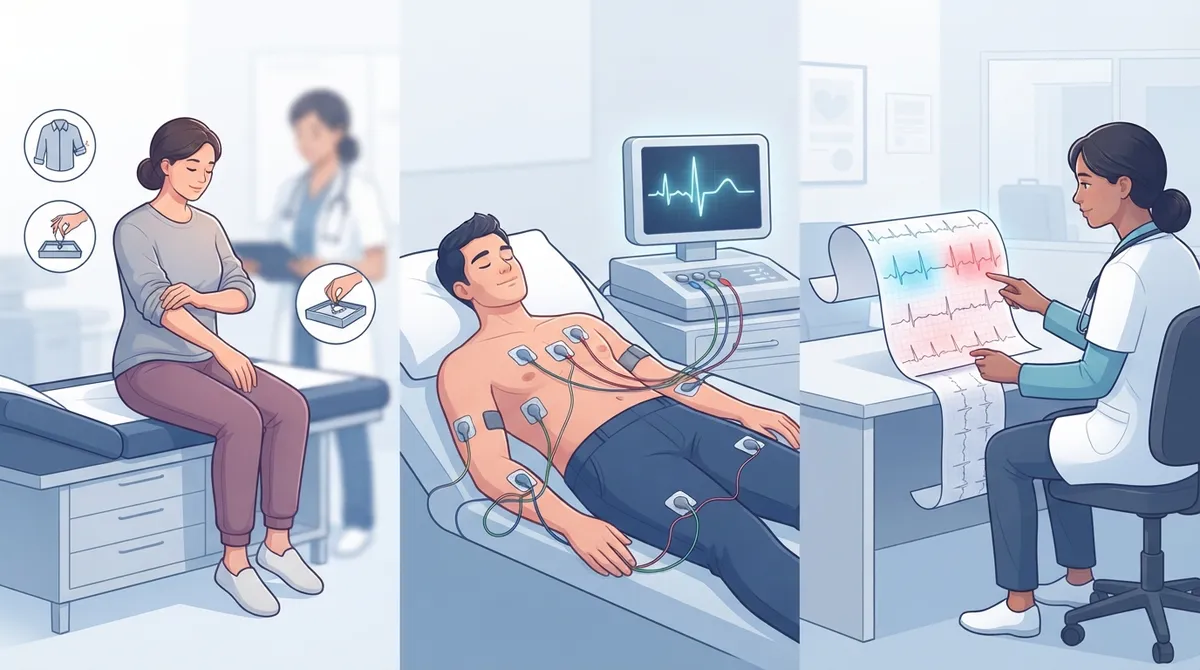
Knowing the process can make the visit feel easier. Here is what typically happens for a standard resting EKG:
- A staff member asks you to lie down on an exam table.
- Small, sticky electrodes are placed on your chest, arms, and legs.
- Wires connect the electrodes to the EKG machine.
- You lie still and breathe normally while the machine records.
- The electrodes are removed, and your provider reviews the tracing.
The recording takes only a few minutes at most, including setup. Correct electrode placement and staying still help produce a reliable tracing. The test is generally painless and low risk. Some people notice mild skin irritation from the adhesive, which fades quickly.
How to Understand Your EKG Results
Your clinician will review the tracing and explain what it means for you. You do not need to read the waves yourself. Still, it helps to know the general categories of findings.
|
Result Type |
What It May Mean |
Typical Next Step |
|---|---|---|
|
Normal tracing |
No concerning pattern seen during the recording |
Continue routine care; discuss symptoms if they persist |
|
Rhythm irregularity |
The heartbeat may be too fast, too slow, or uneven |
Further review, possible longer monitoring |
|
Conduction changes |
Electrical signals may move slowly or unevenly |
Clinical review and possible added testing |
|
Patterns of prior or current heart injury |
May suggest a past or ongoing heart event |
Prompt evaluation and possible specialist referral |
An abnormal EKG does not always mean serious disease. Some findings are harmless variations. Others need more testing. Your provider will look at your symptoms, history, and risk factors together.
What a Normal EKG Does Not Tell You
This is an important point. A normal resting EKG does not rule out every heart problem. The test captures only a brief moment in time. If your heart rhythm problem comes and goes, it may not show up during the short recording.
If you have symptoms but a normal EKG, your clinician may consider other options. These may include longer-term ambulatory monitoring or other heart tests. Never ignore ongoing symptoms just because one test looked normal. Keep talking with your provider.
Should Healthy Adults Get an EKG Screening?
Many people assume an EKG is a good routine screening tool. The evidence says it depends on your risk level and symptoms.
The U.S. Preventive Services Task Force (USPSTF) recommends against resting or exercise EKG screening in adults with no symptoms who are at low risk of cardiovascular disease. This is a Grade D recommendation, first published in 2018. The reason is that potential harms, such as unnecessary follow-up procedures, overtreatment, and labeling, are equal to or greater than the likely benefits.
For adults with no symptoms but intermediate or high cardiovascular risk, the USPSTF says the evidence is insufficient to judge the balance of benefits and harms. You can review the full statement on the USPSTF cardiovascular screening recommendation page.
What does this mean for you? An EKG is most useful when there is a clear reason, such as symptoms or a known condition. A personal risk review with your doctor is the best way to decide. Learn more about the value of regular checkups in our article on making preventive care work for your health.
EKG Testing vs. Other Heart Checks
An EKG is one tool in a larger toolbox. Here is how it fits with other common approaches in primary care:
|
Approach |
What It Checks |
Best Used For |
|---|---|---|
|
Resting EKG |
Heart rhythm and electrical activity at one moment |
Symptoms like palpitations, chest discomfort, dizziness |
|
Longer ambulatory monitoring |
Rhythm over hours or days |
Symptoms that come and go |
|
Blood pressure and lab work |
Risk factors such as cholesterol and blood sugar |
Prevention and risk review |
|
Health risk assessment |
Overall lifestyle and family history risk |
Building a personal prevention plan |
Blood work and risk reviews often matter just as much as an EKG for prevention. Our post on health risk assessments shows how a full picture guides smarter decisions.
Tips to Get the Most From Your EKG Visit
A few small habits can make your visit more useful:
- Write down your symptoms first. Include timing, triggers, and how you felt.
- Ask questions. Ask what the result means and what comes next.
- Request a copy of your tracing. Keep it for future comparison, especially if you see a new provider.
- Track your family history. Heart disease in close relatives can change your risk picture.
- Follow up. If symptoms return, call your provider rather than waiting for your next annual visit.
Your annual exam is also a good time to review heart health. See what happens during an annual physical exam to learn how EKG fits into the bigger picture.
When to Seek Urgent Help
An EKG in a routine office visit is not a replacement for emergency care. Call 911 or go to the nearest emergency room if you have severe chest pain, trouble breathing, fainting, or sudden weakness. Do not wait for an appointment.
For symptoms that feel concerning but not life-threatening, same-day care can help. InCare offers urgent care and same-day appointments so you can be seen quickly and get answers.
Why Choose InCare for Heart-Focused Primary Care
InCare is a personalized healthcare clinic in Tampa and Riverview, Florida. We combine modern technology with medical expertise to deliver comprehensive primary care, urgent care, and wellness services. Our approach centers on prevention and whole-body health, so you are not just treated when something goes wrong.
Our team takes time to listen, review your history, and explain each step. Patients often mention our friendly staff and the quality of care. InCare holds a 4.8 out of 5 rating on Google. You can read InCare reviews on Google to see what patients say.
Want to see our providers? Visit our providers page to meet the team, or find the nearest clinic on our locations page. You can also follow us on Instagram, Facebook, and TikTok for health tips and clinic updates.
Conclusion
EKG testing is a fast, safe, and useful way to look at your heart's electrical activity. It can help explain symptoms such as chest discomfort, palpitations, or dizziness. Preparation is simple: share your symptoms and medications, wear comfortable clothing, and stay still during the test.
Remember the limits, too. A normal EKG does not rule out every heart issue, and routine screening is not recommended for low-risk adults without symptoms. The best path is a personal conversation with a trusted provider who looks at your whole health.
If you have heart-related symptoms or questions about your risk, do not wait. Book your appointment with InCare today, or contact our team to learn how we can support your heart health in Tampa and Riverview.
FAQs
Q: How long does EKG testing take, and does it hurt?
A: A standard resting EKG records for only a few minutes at most, and the tracing itself is about 10 seconds. It is generally painless because the electrodes only sense your heart's electrical signals and do not send electricity into your body. Some people notice mild skin irritation from the adhesive.
Q: Can an EKG detect a heart attack or an irregular heartbeat?
A: An EKG can show patterns that suggest a current or prior heart attack, and it can reveal rhythm problems that happen during the recording. It is a diagnostic aid and does not give a complete picture of heart health. Your clinician will use it together with your symptoms and other tests.
Q: Can a normal EKG rule out heart disease?
A: No. A normal resting EKG does not rule out every heart problem. Rhythm issues that come and go may not appear during a brief recording, so your clinician may suggest longer-term monitoring or other tests if symptoms continue.
Q: Should healthy adults get an EKG as part of a routine checkup?
A: The USPSTF recommends against EKG screening in adults without symptoms who are at low cardiovascular risk, because the potential harms equal or exceed the likely benefits. For people at intermediate or high risk, the evidence is insufficient to judge. Talk with your provider about your personal risk.
Q: What happens if my EKG result is abnormal?
A: An abnormal result does not always mean serious disease, since some findings are harmless variations. Your provider will review the tracing alongside your symptoms and history, and may recommend repeat testing, longer monitoring, or a specialist visit.


