

Key Takeaways
- Primary care is generally covered by insurance, but covered does not mean free: your cost depends on your plan type, network status, deductible, and visit type.
- Preventive visits like annual physicals are often $0 with in-network providers, but if you discuss a new symptom during that visit, part may be billed as a sick visit with a copay or deductible.
- Check your Summary of Benefits and Coverage for the 'primary care visit' or 'office visit' line to find your copay or coinsurance, and confirm whether the deductible applies first.
- Confirm the clinic and clinician are in network for your exact plan, and ask whether labs, imaging, and procedures are billed separately from the visit.
- Medicare Part B generally requires 20% coinsurance after the Part B deductible, while Medicaid coverage varies by state, so verify your specific program before booking.
- Direct primary care membership fees are not insurance; ask whether the practice also bills your plan and which services are included in the fee.
Few things are more frustrating than leaving a doctor's office and then opening a surprise bill. Many patients ask the same question before booking a visit: is primary care covered by insurance? The short answer is yes, in most cases. But covered does not always mean free. What you pay depends on your plan, your provider's network, your deductible, and the type of visit.
This guide walks you through the process step by step. You will learn how to read your benefits, tell the difference between preventive and sick visits, and avoid common billing traps. Whether you are a busy parent, a young professional, or someone building a first relationship with a doctor, you will know what to ask before you walk in. You will also see how a modern clinic like InCare's primary care team can help you make sense of costs in 2026.

The Short Answer: Is Primary Care Covered by Insurance?
In the United States, health insurance generally covers medically necessary primary care visits. That includes visits for symptoms, illness, and ongoing conditions such as high blood pressure or diabetes. However, the amount you pay out of pocket varies widely.
Your cost depends on four main factors:
- Your plan type: HMO, PPO, high-deductible plan, Medicare, or Medicaid each follow different rules.
- Your network: In-network doctors cost less. Out-of-network care may cost more or may not be covered at all.
- Your deductible: Some plans make you pay the full visit price until you meet a yearly deductible.
- The visit type: Preventive visits are treated differently from sick visits or follow-ups.
For example, HealthCare.gov shows a covered office visit that costs $125. With 20% coinsurance, the patient pays $25. That is coverage at work, but it is not a zero-dollar visit.
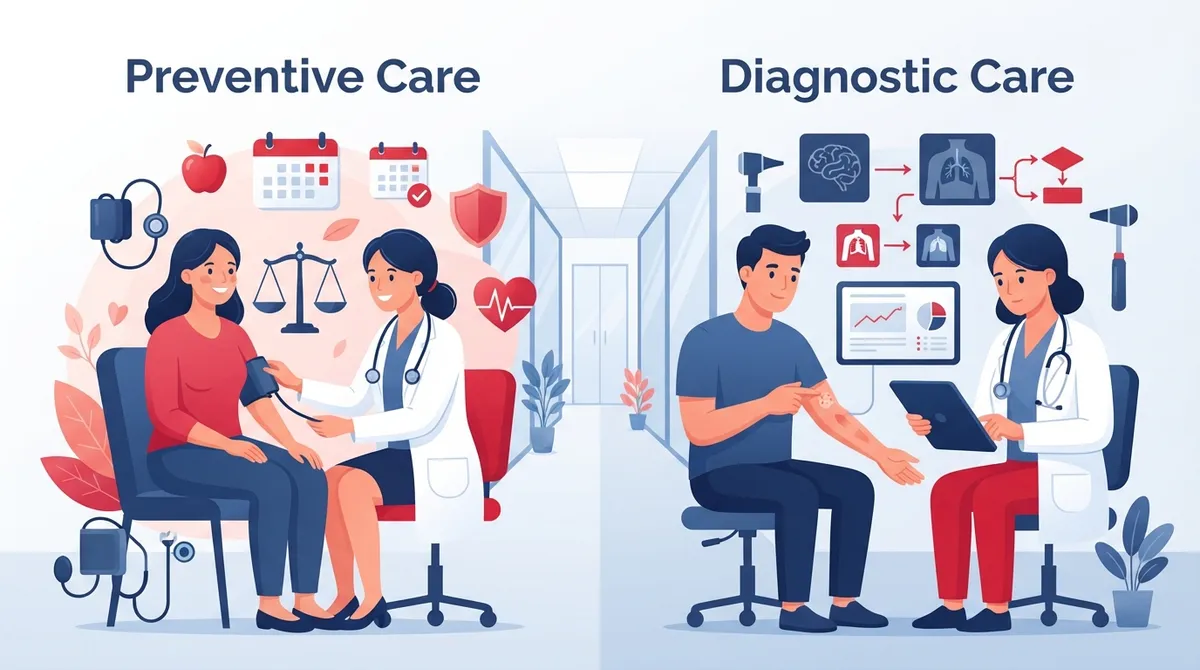
Step 1: Understand Preventive vs. Diagnostic Visits
This is the most important step. Insurers sort primary care into categories, and each category has its own cost rules.
Preventive Care
Most non-grandfathered private plans must cover certain preventive services at no cost when you see an in-network provider. According to HealthCare.gov, this often includes:
- Many cancer screenings, based on age and risk
- Routine immunizations
- Blood pressure and cholesterol screenings
- Counseling on topics like healthy eating or quitting tobacco
Eligibility depends on your age, sex, and health history. Not every test is free for every person.
Diagnostic or Sick Visits
A visit that addresses symptoms, diagnoses an illness, or manages a chronic condition is usually billed as a regular office visit. You may owe a copay, coinsurance, or the full cost until you meet your deductible.
|
Visit Type |
Typical Insurance Treatment |
What You May Pay |
|---|---|---|
|
Annual preventive exam (in network) |
Often covered in full |
$0 for covered services |
|
Sick visit (cold, infection, injury) |
Standard office visit |
Copay, coinsurance, or deductible |
|
Chronic condition follow-up |
Standard office visit |
Copay, coinsurance, or deductible |
|
Lab work or imaging |
Billed separately |
Varies by plan |
|
Out-of-network visit |
Reduced or no coverage |
Often much higher |
To learn more about what a yearly checkup includes, read what happens during an annual physical exam.
Step 2: Look Up Your Plan Details
Your insurance card and online member portal hold most of the answers. Follow these steps to find them.
- Find your plan summary. Log in to your insurer's website or app and open your Summary of Benefits and Coverage.
- Locate the primary care line. Look for "primary care visit" or "office visit." It will list a copay or coinsurance amount.
- Check your deductible. See whether the deductible applies to primary care or whether visits are covered before you meet it.
- Note your out-of-pocket maximum. This is the most you will pay in a plan year for covered care.
- Confirm referral rules. HMO plans often require a referral for specialists, which makes your primary care doctor the gatekeeper.
If anything looks unclear, call the number on the back of your card. Write down the date, the representative's name, and what they told you.
Step 3: Confirm the Clinic Is In Network
Network status can change your bill more than almost anything else. A clinic may accept your insurance in general but still be out of network for your specific plan.
Ask your insurer these questions:
- Is this clinician in network under my exact plan?
- How will this visit be classified: preventive or office visit?
- Do I need a referral or prior authorization?
- What copay, coinsurance, or deductible applies?
Then ask the clinic directly about extra charges. Labs, imaging, and procedures are often billed apart from the visit itself. If you are searching for a new doctor, this guide on finding doctors accepting new patients can help you build a short list.
Step 4: Know How Medicare and Medicaid Handle Primary Care
Medicare
Medicare Part B covers many primary-care-related services. For most covered services, you pay 20% of the Medicare-approved amount after meeting the Part B deductible, according to Medicare.gov. Some preventive services have no cost-sharing when coverage conditions are met. Medicare Advantage plans may use different copays and networks, so check your specific plan.
If you are a senior in the Tampa Bay area, you may also like what Medicare covers for seniors in primary care.
Medicaid
Medicaid covers certain preventive and primary care services, but benefits and charges vary by state and eligibility group. Contact your state program or managed-care plan to confirm what applies to you.
Step 5: Avoid the Most Common Billing Surprises
Patients are often caught off guard by the same few issues. Watch for these.
- The mixed visit. If you come in for a free annual physical but also discuss a new symptom, the plan may bill part of the visit as a sick visit. You could owe a copay even though preventive care was also done.
- Separate lab fees. Blood work may be sent to an outside lab with its own billing rules.
- Out-of-network referrals. A specialist your doctor suggests may not be in your network.
- Deductible timing. Early in the plan year, you may pay more for non-preventive care.
Before your appointment, tell the front desk what you want to cover. That helps staff code the visit correctly and gives you a chance to plan for costs.
Step 6: Understand Direct Primary Care and Membership Fees
Some practices use a direct primary care model. Patients pay a recurring membership fee for access to a doctor. A membership fee is not the same as insurance coverage. Ask these questions:
- Does the practice also bill my insurance plan?
- What services, tests, or medications does the fee include?
- Which services are billed separately?
- Do I still need insurance for hospital stays and specialists?
Direct primary care can work well for some people, but it often works best alongside real health coverage rather than in place of it.
Step 7: Check Coverage for Wellness and Advanced Services
Modern primary care often goes beyond the basic checkup. Many patients now want advanced wellness tools, such as body composition scans, metabolic testing, and DNA-based insights. Coverage for these services is less predictable.
Generally, services tied to a diagnosed medical need are more likely to be covered. Services chosen for optimization or convenience may be self-pay. Examples to ask about include:
- Cancer screening, which is often covered when it meets age and risk guidelines
- Medical weight loss programs, where coverage varies by plan and diagnosis
- DNA gene testing, which may be self-pay or partly covered
- IV hydration and vitamin drips, which are usually self-pay
Always ask for a written estimate before starting a self-pay service. A good clinic will explain what is covered, what is not, and why.
Step 8: Use Telehealth to Lower Your Costs and Save Time
Virtual visits can be a smart way to manage cost and schedule. Many plans cover telehealth for primary care, sometimes at a lower copay than an in-person visit. This is helpful for busy families and professionals who cannot take half a day off for a simple follow-up.
Check whether your plan covers telehealth and whether your clinic offers it. InCare offers virtual appointments alongside in-person care, which can make routine follow-ups easier to fit into a packed week.
A Quick Checklist Before You Book
Use this list before any new primary care visit:
- Confirm the clinic and clinician are in network.
- Ask how the visit will be coded: preventive, office visit, or both.
- Check your copay, coinsurance, and remaining deductible.
- Ask about separate charges for labs, imaging, and procedures.
- Find out whether you need a referral for any follow-up care.
- Request a cost estimate for any self-pay wellness service.
- Keep records of every call and every answer.
Why Choose InCare for Insurance-Friendly Primary Care
InCare combines medical expertise with state-of-the-art technology to deliver personalized primary care, urgent care, and whole-body wellness. With locations in Tampa and Riverview, plus virtual visits, the team helps patients understand their options before the bill arrives. Patients consistently praise the friendly staff and clear communication, and InCare holds a 4.8 out of 5 rating from 359 Google reviews. You can read InCare reviews on Google to see what real patients say.
InCare is also a strong fit for families, young adults, and women building a first primary care relationship. Our providers focus on prevention, so you can catch problems early and avoid higher costs down the road. Learn more about our providers and our locations. You can also follow our health tips on Instagram, Facebook, and TikTok.
Conclusion
So, is primary care covered by insurance? In most cases, yes. But your final cost depends on your plan, your network, your deductible, and the reason for your visit. Preventive services are often free in network, while sick visits and chronic care usually involve a copay, coinsurance, or deductible. The best approach is simple: check your benefits, confirm network status, and ask the clinic how your visit will be billed.
Ready to take the guesswork out of your next appointment? Book your InCare visit now and get personalized primary care that puts your health and your budget first. Have questions about coverage before you come in? Contact our team and we will help you understand your options.
FAQs
Q: Does health insurance cover a primary care doctor visit?
A: Yes, most health plans cover medically necessary primary care visits. However, you may still owe a copay, coinsurance, or the full visit cost until you meet your deductible. Your exact cost depends on your plan, your provider's network, and the reason for the visit.
Q: Are annual physicals and preventive checkups free with insurance?
A: Many preventive services are covered at no cost when you see an in-network provider under most non-grandfathered private plans. Coverage depends on your age, sex, and health history. If you discuss new symptoms or receive treatment during the visit, part of it may be billed as a regular office visit.
Q: Can I be charged for a sick visit during an annual physical?
A: Yes. If the doctor evaluates or treats a new problem during your preventive visit, the plan may bill that portion as an office visit. This can lead to a copay or deductible charge even though the preventive exam itself is covered.
Q: Does Medicare cover primary care visits, and what will I pay?
A: Medicare Part B covers many primary-care-related services. For most covered services, you generally pay 20% of the Medicare-approved amount after meeting the Part B deductible. Some preventive services have no cost-sharing, and Medicare Advantage plans may have different costs.
Q: Does insurance cover direct primary care membership fees?
A: Usually, no. A direct primary care membership fee is a recurring payment to a practice, not an insurance benefit. Ask the practice whether it also bills your plan and which services, tests, or medications are included in the fee.


