

Key Takeaways
- Call every doctor's office to confirm they are accepting new patients and take your exact insurance plan, since online directories are often outdated.
- Use at least three sources to search, such as your insurer's directory, local health system 'find a doctor' pages, and independent clinics, then compare results.
- Ask the office for the earliest available appointment, whether other clinicians or telehealth can see you sooner, and whether all locations are open to new patients.
- Join cancellation lists and ask about nurse practitioners or physician assistants in the same practice, since they may have earlier openings.
- If you lack insurance, search the HRSA Find a Health Center tool for community health centers that charge fees based on income.
- Find a primary care doctor while you are healthy rather than waiting until you are sick, so you have an established relationship when needs arise.
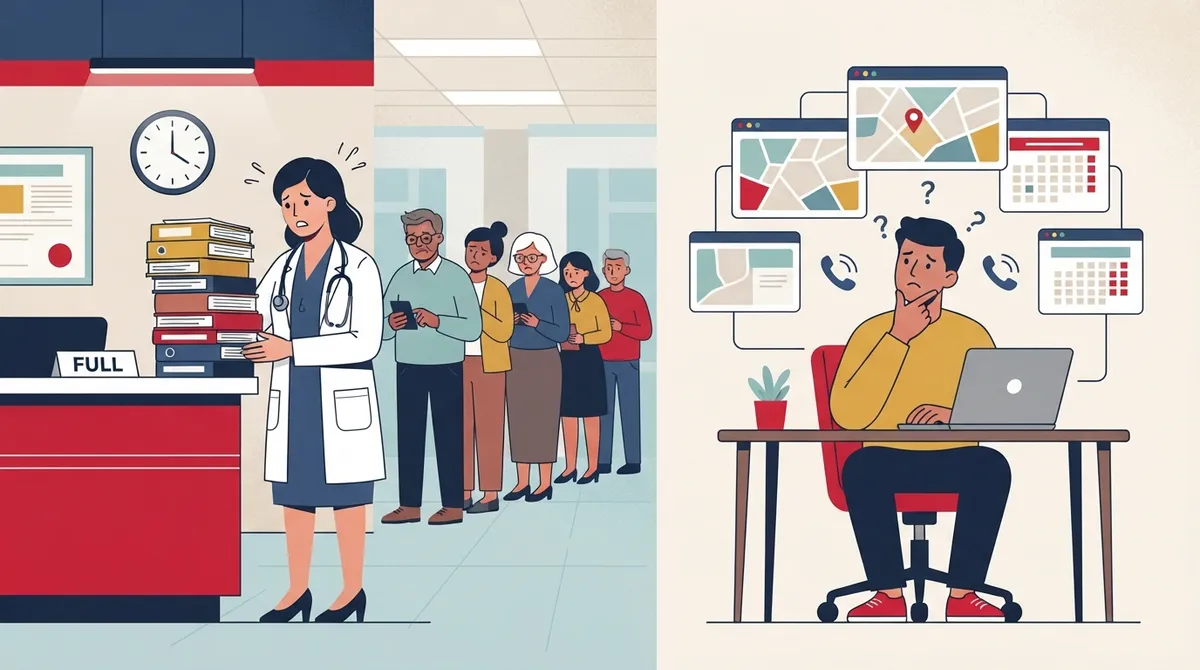
Finding a primary care doctor should be simple. In 2026, it often is not. Many practices have full schedules. Some listings are out of date. Others list doctors who no longer take your insurance. If you have asked yourself, "how do I find a doctor accepting new patients," you are not alone.
The 2025 U.S. Primary Care Scorecard, summarized by AHRQ, found that 30% of U.S. adults lacked a usual source of care in 2022. That was the highest level in a decade. The same report projects a shortage of 68,020 primary care physicians by 2036. Access is tight, but you can still find a good doctor with the right plan.
This guide gives you clear steps, smart questions, and backup options. Whether you are a busy parent, a young professional, or someone who wants to take charge of your health, you will learn how to find a doctor accepting new patients and book that first visit with confidence.
Why It Is Harder to Find a Doctor Right Now
Primary care is under pressure across the country. The number of primary care clinicians per 100,000 people fell from 105.7 in 2021 to 103.8 in 2022. Burnout is also a problem. The AHRQ summary reports that 45% of primary care physicians surveyed experienced burnout. Among them, 39% said they planned to stop seeing patients in the coming years.
What does this mean for you? Some offices close their books to new patients. Others have long waits for a first visit. That is why a smart search matters. You need to know where to look and what to ask.

Step-by-Step: How to Find a Doctor Accepting New Patients
Use this simple process. It saves time and helps you avoid dead ends.
- Know what type of doctor you need. Adults often choose family medicine or internal medicine. Children usually see a pediatrician. Family medicine can care for the whole household.
- Check your insurance directory. Log in to your health plan's website or call member services. Filter by primary care, location, and in-network status.
- Search local clinic and health system sites. Many have a "find a doctor" tool. Some show which clinicians are taking new patients.
- Ask people you trust. Friends, coworkers, and your other clinicians can point you to good practices.
- Call the office to confirm. Directory listings can be wrong. A short phone call gives you the real answer.
- Book the earliest visit that fits. Ask about cancellation lists if the first date is far away.
Start With Your Insurance Directory
Your insurer's provider directory is the best place to begin. It shows which doctors are in your network. In-network care usually costs less.
Still, treat the directory as a starting point. Listings can lag behind real changes. A doctor may have left the plan or closed their practice to new patients. Always call to double check before you book.
Filters That Save Time
- Specialty: Choose family medicine, internal medicine, or pediatrics.
- Location: Pick an area near home or work so visits are easy to keep.
- Network status: Select in-network only.
- Language and gender: Narrow results if these matter to you.
Check More Than One Source
No single list is perfect. Use at least three sources. Try your insurer, a local health system, and independent clinics in your area. Then compare the results.
For example, many people in the Tampa Bay area search for a primary care clinic that offers more than a basic checkup. If you live near Tampa or Riverview, you can learn about primary care physicians accepting new patients in Tampa and see how a local practice works. You can also read our guide on how to find doctors accepting new patients near you.
What to Ask When You Call
A good phone call can settle everything in five minutes. Have your insurance card ready. Then ask these questions.
- Is the doctor accepting new patients with my specific insurance plan?
- Is the practice taking new patients at all of its locations?
- What is the earliest appointment available?
- Are there age limits, referral rules, or other restrictions?
- Can another clinician in the practice see me sooner?
- Do you offer telehealth for follow-ups?
Also confirm the clinician's full name and the office address before you book. This prevents mix-ups on the day of your visit.
Table: Where to Search and What to Expect
|
Source |
Best For |
Watch Out For |
|---|---|---|
|
Insurance directory |
Confirming in-network doctors |
Outdated listings |
|
Health system "find a doctor" page |
Seeing doctor profiles and online booking |
Limited to that system's doctors |
|
Local independent clinics |
Personal care and flexible scheduling |
Need to verify insurance by phone |
|
Community health centers |
Income-based fees and care for the uninsured |
Demand can be high |
|
Friends and family |
Honest feedback about the patient experience |
Their doctor may not take your plan |
What to Do If You Cannot Find an In-Network Doctor
Do not give up. You still have options.
- Call your insurer. Ask for help finding a clinician. Some plans can approve a network-gap exception if no in-network doctor is available.
- Join a waitlist. Many offices keep cancellation lists. Openings can appear quickly.
- Ask about another clinician. A nurse practitioner or physician assistant in the same practice may have an earlier slot.
- Try telehealth. Virtual visits can be a quick way to start care while you wait.
Options If You Have No Insurance
Not having insurance does not mean you cannot get care. HRSA-funded community health centers offer primary care with fees based on income and family size. HRSA states that patients should not be turned away because they lack insurance or cannot afford to pay.
HRSA reports that its Health Center Program includes about 1,400 health centers and more than 16,200 service sites. Health centers care for 32.7 million people each year. You can use the HRSA "Find a Health Center" tool to locate one near you. Self-pay options at private clinics are also worth a call. Ask for clear pricing up front.
What to Do While You Wait for an Appointment
Sometimes the first open slot is weeks away. You can still get care in the meantime.
- Ask your current clinician about interim care.
- Ask the new practice about a short-term appointment.
- Use an urgent care service for non-emergency problems like infections or minor injuries.
Know the difference between urgent and emergency care. For symptoms that may be life-threatening, such as chest pain or trouble breathing, go to the emergency room right away. For everything else, same-day options can bridge the gap. Our guide to what urgent care services can treat explains when this is a smart choice.
Look Beyond Availability: Choose the Right Fit
An open schedule is only the first test. The best doctor for you is one you can see easily and trust. Think about these points before you choose.
Practical Fit Checklist
- Location and hours: Can you get there before or after work?
- Telehealth: Do they offer virtual visits for simple needs?
- Services offered: Can they handle checkups, screenings, and ongoing care under one roof?
- Credentials: Check the clinician's training and board certification.
- Coordination: Will the practice manage your preventive care and refer you when needed?
- Communication: Do they respond to portal messages and calls?
For more ideas, read 7 signs you have found the right primary care practice and 7 mistakes to avoid when choosing a primary care doctor.
Why a Modern Primary Care Practice Is Worth Seeking Out
Many people only look for a doctor when they are sick. That makes the search stressful. A better approach is to find a practice before you need one. A strong primary care relationship helps with prevention, early detection, and long-term health goals.
InCare is a personalized clinic that combines modern technology with medical expertise. The team offers primary care, urgent care, cancer screening, and advanced wellness tools such as DNA gene testing and medical weight loss. With locations in Tampa and Riverview and virtual visits available, it is built for busy people. You can learn more about the practice on our About Us page, meet the providers, or see our locations. Patients also share their experiences on our testimonials page.
Want to see what other patients say? You can read InCare reviews on Google and visit us on Google — InCare to get directions to our Tampa or Riverview office.
How to Prepare for Your First Visit
Once you book, prepare so the visit goes smoothly. Good preparation helps your new doctor understand you faster.
- Bring your insurance card and photo ID.
- Make a list of all medications, vitamins, and supplements.
- Gather past medical records or test results, if you have them.
- Write down your top health concerns and questions.
- Note your family health history, such as heart disease or cancer.
- Arrive early to finish new patient forms.
Our guide on what to expect at a new patient appointment walks through the visit in more detail. If you need to move records from an old doctor, see these steps for a medical records request.
Tips for Different Types of Patients
Busy Families
Look for a family medicine practice that can see parents and children. One office for everyone saves time. Ask about same-day sick visits and early or late hours. Our overview of family primary care explains the benefits.
Young Adults and Wellness Seekers
If you are healthy and want to stay that way, choose a practice that focuses on prevention. Ask about screenings, lab work, and advanced tools. A good primary care doctor can help you build a long-term plan, not just treat problems.
People Who Have Never Had a Doctor
Many adults have not seen a primary care doctor in years. That is common, and it is not too late to start. A first visit often includes a health history, basic screening, and a plan for next steps. Read why you may need a PCP if you are not sure where to begin.
Common Mistakes to Avoid
- Trusting only the online directory. Always call to confirm.
- Skipping the insurance check. Ask about your exact plan, not just the insurer name.
- Waiting until you are sick. Find a doctor while you are healthy.
- Ignoring telehealth. Virtual visits can shorten your wait.
- Choosing only by distance. A great fit beats a short drive.
Follow Local Practices Online
Social media can also help you learn about a clinic's style. Many practices share health tips, team updates, and service news. You can follow InCare on Facebook, Instagram, and TikTok to get a feel for the team before your first visit.
Conclusion: Take the First Step Today
Finding a doctor accepting new patients takes some effort, but it is very doable. Start with your insurance directory. Check local clinics. Call to confirm availability and ask smart questions. Use backup options like community health centers, waitlists, and telehealth if you need them. Then choose a practice that fits your life and your health goals.
If you live in the Tampa or Riverview area, InCare would be glad to be your partner in health. Book your new patient appointment today or contact our team with any questions. Do not wait until you are sick to find the right doctor.
FAQs
Q: How do I find a primary care doctor who is accepting new patients near me?
A: Start with your insurer's provider directory and filter for primary care, location, and in-network status. Then check local clinic and health system listings. Always call the office to confirm that the doctor is taking new patients and still accepts your plan.
Q: What should I ask a doctor's office before becoming a new patient?
A: Ask if the clinician accepts new patients with your specific insurance plan and if all locations are open to new patients. Also ask about the earliest appointment, any age or referral limits, and whether another clinician or telehealth can see you sooner.
Q: How do I find a primary care doctor without insurance?
A: Use the HRSA Find a Health Center tool to locate a community health center near you. These centers charge fees based on income and family size. HRSA states that patients should not be turned away because they cannot afford to pay.
Q: What can I do if no doctors in my area are accepting new patients?
A: Ask your insurer for help finding a clinician or a network-gap exception. Join cancellation lists and ask if another provider in the same practice can see you sooner. You can also use telehealth or urgent care for non-emergency needs while you wait.
Q: Can I use telehealth while I wait to see a new primary care doctor?
A: Yes. Many practices offer virtual visits that can cover minor illnesses, medication questions, and follow-ups. Ask the office whether telehealth is available to new patients and whether it can help you start care sooner.


