
Key Takeaways
- KPV is not FDA-approved and lacks human clinical trials; all evidence comes from lab dishes and animal models (rabbits and mice), making real-world effectiveness for human wounds unknown.
- KPV should never replace standard wound care, which requires proper evaluation for infection, circulation problems, and underlying conditions like diabetes that significantly impact healing.
- Current research shows KPV may reduce inflammation and support cell repair in controlled lab settings, but complex factors in human wounds (infection, poor blood flow, nerve damage) cannot be predicted from animal studies.
- Before considering any peptide product, consult a licensed provider for proper wound evaluation and avoid self-treating with unregulated online peptide products that make unproven healing claims.
If you have searched for faster ways to heal a stubborn wound, you may have come across KPV peptide. Online forums and wellness blogs describe it as a promising option for skin repair. But what does the science actually say? Understanding the real research behind kpv for wound healing can help you make smarter, safer choices about your health.
At InCare, we believe patients deserve clear, honest information before trying any emerging compound. This guide breaks down what KPV is, what the research shows, and why proper wound care from a licensed provider still matters most. Whether you live near our Tampa clinic or our Riverview location, this article will help you separate hype from evidence.
What Is KPV and Why Is It Linked to Wound Healing
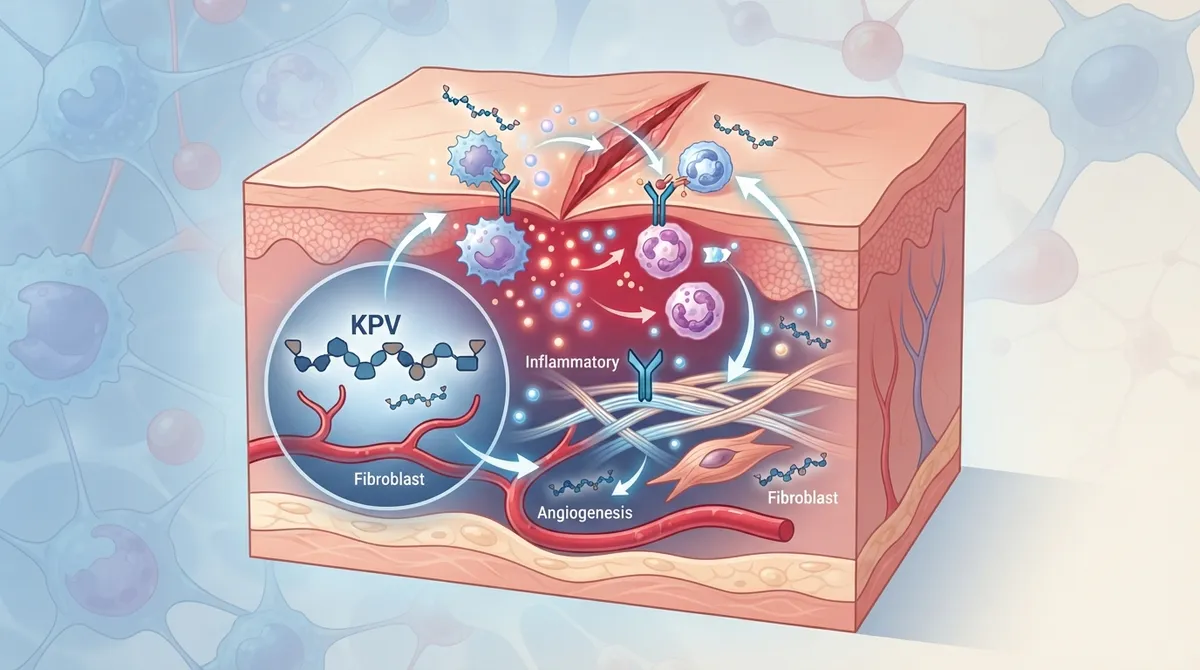
KPV, short for Lys-Pro-Val, is a small tripeptide. It comes from a larger hormone called alpha-melanocyte-stimulating hormone, or alpha-MSH. Researchers have studied KPV mainly for its anti-inflammatory properties and its possible role in tissue repair.
Scientists believe KPV may calm down excessive inflammation. It may also help skin cells move and multiply during the healing process. This is called re-epithelialization. Some studies suggest KPV interacts with melanocortin receptors and nitric-oxide pathways, though the exact mechanism is still not fully understood.
It is important to know that most of this research comes from lab dishes and animal models. Human clinical trials for kpv for wound healing are lacking. This distinction matters a great deal when deciding whether a product or therapy is truly ready for everyday use.
What the Research Actually Shows
Several studies have looked at KPV and wound repair, but the findings come with major caveats. Here is a breakdown of the key research points:
- A rabbit corneal-wound study found that topical KPV led to smaller wounds after four days compared to untreated eyes.
- Laboratory experiments on corneal cells showed increased cell survival and faster re-epithelialization when exposed to KPV.
- One lab model reported complete re-epithelialization within about 60 hours in KPV-treated corneas, while untreated samples did not fully heal in that time.
- A 2022 study tested a specialized multilayer dressing that released KPV followed by a growth factor in diabetic mice. The dressing improved several wound markers, including reduced inflammation, more blood vessel growth, and higher collagen levels.
These results sound encouraging, but none of them involve human patients with real-world wounds. Rabbit eyes and diabetic mice are useful for early research, but they cannot predict how KPV would perform on a person's leg ulcer, surgical incision, or pressure sore.
Why Animal and Lab Studies Are Not the Same as Human Evidence
Preclinical research is an important first step in science. It helps researchers understand basic biology before testing something on people. However, a compound that works well in a petri dish or on a rodent does not always work the same way in humans.
Human skin, immune responses, and wound environments are far more complex. Factors like diabetes, poor circulation, infection, and medication use all affect healing in ways that lab models cannot fully capture. This is why regulatory agencies require extensive human trials before approving new treatments.
Is KPV FDA-Approved for Wound Care?
No. KPV is not approved by the FDA for wound healing or any other medical use. There is no standardized human dose, no approved delivery method, and no established safety profile for regular use.
The FDA has stated it lacks sufficient human exposure and safety data for KPV-containing products. This means any product sold as an injectable, oral, or topical KPV formulation should not be marketed or trusted as a proven medical treatment.
If you are considering peptide-based options for skin or tissue support, it is worth discussing your goals with a licensed provider first. Our team offers guidance on peptide therapy in Tampa so patients can make informed, medically supervised decisions.
Comparing KPV Research Stages: Lab, Animal, and Human Evidence
|
Research Stage |
What Was Studied |
Key Finding |
Applies to Humans? |
|---|---|---|---|
|
Laboratory (in vitro) |
Corneal cell cultures |
Increased cell viability and re-epithelialization |
No |
|
Animal (rabbit) |
Corneal wound healing |
Smaller wounds after 4 days with topical KPV |
No |
|
Animal (diabetic mice) |
Multilayer KPV dressing |
Improved inflammation, angiogenesis, collagen deposition |
No |
|
Human clinical trials |
No registered trials identified |
No established efficacy or safety data |
N/A |
This table highlights a simple truth: the KPV wound-healing story is still in its early chapters. Patients should treat any marketing claims about KPV creams or injections with caution.
Common Questions Patients Ask About KPV
Can KPV Replace Standard Wound Care?
No. KPV should never replace evidence-based wound treatment. Standard care includes cleaning the wound, managing infection risk, and monitoring for complications. A licensed provider can also check for underlying issues like poor circulation or uncontrolled blood sugar.
What About Diabetic Wounds or Pressure Ulcers?
Diabetic wounds and pressure ulcers need specialized, medically supervised care. These wounds often heal slowly due to nerve damage, poor blood flow, or infection risk. While early diabetic-mouse studies on KPV dressings showed promise, this does not mean the same results apply to human diabetic wounds. Anyone managing a chronic wound should work closely with a primary care team. Learn more about avoiding common diabetes management mistakes that can slow healing.
Steps to Take Before Considering KPV or Any Peptide Product
- Talk to a licensed healthcare provider about your specific wound or skin concern.
- Ask whether your wound needs debridement, antibiotics, or specialist referral.
- Request a full evaluation for infection, poor circulation, or nerve damage.
- Avoid self-treating with unregulated peptide products bought online.
- Discuss any interest in peptide therapy with a provider who understands current research limits.
- Follow up regularly to track healing progress and catch complications early.
These steps apply whether you are dealing with a minor cut, a surgical wound, or a chronic ulcer. Proper evaluation always comes first.
Why Proper Wound Evaluation Matters More Than New Trends
Wound healing depends on many factors beyond any single peptide or cream. A thorough evaluation looks at infection risk, blood flow, nerve function, diabetes control, and even medication side effects. Skipping this step in favor of an unproven product can delay real healing and increase complication risk.
At InCare, our providers combine modern diagnostic tools with hands-on medical expertise. We look at the whole picture, not just the wound itself. This approach reflects our broader philosophy toward primary care and preventive health.
When Should You See a Primary Care Provider or Specialist?
You should seek medical evaluation if a wound is not improving after several days, shows signs of infection, or if you have diabetes, poor circulation, or a weakened immune system. Signs of infection include increased redness, swelling, warmth, drainage, or fever. Early evaluation often prevents small issues from becoming serious ones.
Our urgent care services are available for wounds that need prompt attention, while ongoing wound management can be handled through regular primary care visits.
How InCare Supports Whole-Body Healing
InCare takes a comprehensive approach to wellness that goes beyond treating a single symptom. Our providers, including those featured on our providers page, focus on prevention, early detection, and personalized treatment plans.
For patients interested in supporting their body's natural repair processes, we also offer services like IV hydration and vitamin drips, which can support overall wellness alongside standard medical care. We also provide DNA gene testing for patients who want deeper insight into their unique health profile.
Patients across Tampa and Riverview trust InCare because we combine advanced technology with clear, honest medical guidance. You can see what our community says by visiting InCare on Google, where our clinic maintains a strong reputation for compassionate, evidence-based care.
Staying Informed on Emerging Wellness Topics
Peptides like KPV are part of a growing wellness conversation. Staying informed helps you avoid wasting money on unproven products. It also helps you ask better questions during your next doctor's visit.
You can follow updates from our team on Facebook, Instagram, and TikTok for practical health tips and clinic updates. We also encourage patients to review trusted sources like the U.S. Food and Drug Administration when researching new peptide products.
Final Thoughts on KPV and Wound Healing
KPV shows interesting results in lab and animal studies, but it remains an investigational compound. There is no proof yet that it works safely or effectively for human wounds. If you are dealing with a wound that is not healing well, the safest path forward is a proper medical evaluation, not an unproven peptide product.
Our team at InCare is here to help you heal the right way, with care backed by real medical expertise. If you have a wound that needs attention or want to explore evidence-based wellness options, reach out to our team today or schedule your visit now to get started on a personalized care plan.
FAQs
Q: What is KPV peptide, and how might it affect wound healing?
A: KPV is a small tripeptide derived from alpha-MSH that has been studied for anti-inflammatory and tissue-repair effects. Preclinical research suggests it may support skin cell migration and reduce excessive inflammation, but these findings come primarily from lab and animal studies, not human trials.
Q: Has KPV been tested in humans for skin, diabetic, or chronic wounds?
A: No registered human clinical trials have confirmed KPV's effectiveness for skin, diabetic, or chronic wounds. Current evidence is limited to laboratory models, rabbit corneal studies, and diabetic mouse experiments, which cannot be generalized to human patients.
Q: Is KPV FDA-approved for wound healing?
A: No, KPV is not FDA-approved for wound healing or any other medical use. The FDA has noted a lack of sufficient human safety and exposure data for KPV-containing products.
Q: Can KPV replace standard wound-care treatments or antibiotics?
A: No, KPV cannot replace established wound care or antibiotics. Proper wound management requires evaluating infection risk, circulation, and underlying health conditions, which should always be handled by a licensed medical provider.
Q: When should a wound be evaluated by a primary-care clinician?
A: You should seek evaluation if a wound shows signs of infection, fails to improve after several days, or if you have diabetes, poor circulation, or a weakened immune system. Early evaluation helps prevent complications and supports proper healing.