

Key Takeaways
- KPV is a three-amino-acid peptide with anti-inflammatory effects shown only in lab and animal studies—no human clinical trials exist, and it is not FDA-approved or regulated for safety.
- Unregulated KPV products sold online carry serious risks including contamination, inaccurate labeling, and unknown dosing, making medical supervision essential before considering any peptide therapy.
- People with inflammation, digestive issues, or immune concerns should consult a licensed healthcare provider first to explore proven, evidence-based treatments rather than experimental peptides without human safety data.
If you have read about peptides online, you may have come across KPV. Some wellness blogs claim it can calm inflammation or reset immune function. But what does the actual science say? Before you consider trying any peptide, it helps to understand what KPV really is, what research shows so far, and why medical guidance matters more than online hype.
This guide breaks down KPV in plain language. We will cover how it works in lab studies, what the research does and does not prove, and how to make safe, informed decisions about your health. Whether you found KPV through a fitness forum or a wellness influencer, this article gives you the facts you need before making any decisions about your immune health.
What Is KPV?
KPV stands for Lys-Pro-Val. It is a tiny peptide made of just three amino acids: lysine, proline, and valine. It comes from a larger hormone called alpha-melanocyte-stimulating hormone, or α-MSH for short.
Researchers first became interested in KPV because it appeared to calm down inflammation in lab experiments. It is not marketed as a general immune booster. Instead, scientists study it mainly for its anti-inflammatory and immune-regulating effects.
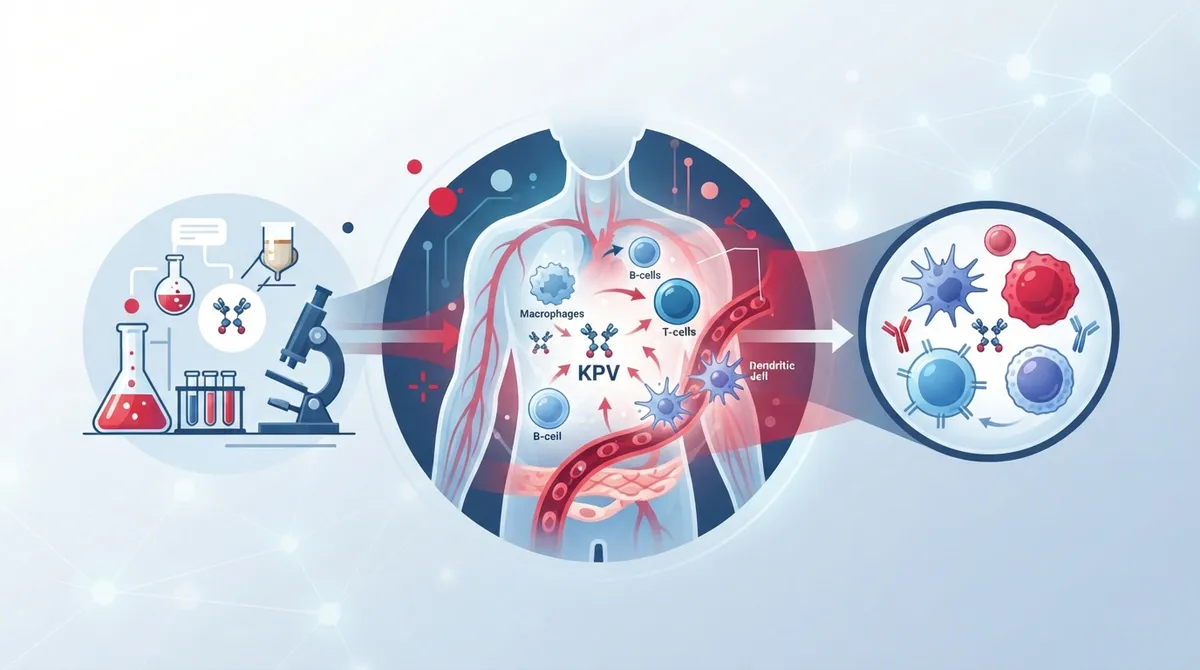
Because KPV is so small, it can move into cells more easily than larger peptides. Studies show it uses a transporter called PepT1, which is found in intestinal cells and certain immune cells. This transporter helps KPV get where it needs to go inside the body.

How Does KPV Affect Immune Function in Lab Studies?
Most of what we know about KPV comes from cell studies and animal research, not human trials. Here is what scientists have found so far:
- It may block inflammatory signals. Lab studies show KPV can inhibit a pathway called NF-κB. This pathway controls how cells produce inflammatory chemicals.
- It may reduce certain cytokines. In cell and animal studies, KPV lowered levels of inflammatory markers like TNF-alpha, IL-1beta, IL-6, and IL-8.
- It showed promise in gut inflammation models. Mouse studies using colitis models found that KPV reduced signs of intestinal inflammation.
- It may affect airway inflammation. Some experimental studies suggest KPV can lower inflammatory signaling in airway tissue models.
These are interesting findings. But it is important to remember that mice and human cells in a lab dish are very different from a living, breathing person. Just because something works in a test tube does not mean it works the same way in your body.
Why Human Evidence Still Matters
Here is the most important fact about KPV: there are no published human clinical trials proving it works for any condition. Everything we know comes from preclinical research, meaning lab and animal studies only.
This matters for several reasons:
- We do not know the right dose for humans
- We do not know how it should be taken (injection, oral, topical)
- We do not know about drug interactions
- We do not know long-term safety in people
- We do not know if lab results will translate to real health benefits
A 2007 study published in peer-reviewed research looked at KPV's effects on intestinal inflammation in mice. The results were promising in that model. But it is one study, in animals, and it has not been confirmed with controlled human trials since.
Is KPV FDA-Approved?
No. KPV is not approved by the FDA for any medical use. It is not a prescription drug, and it is not a proven supplement for immune support. Any product sold as KPV online falls outside FDA oversight for safety, purity, or accurate labeling.
This is a serious concern. Unregulated peptides can carry risks such as:
|
Risk Factor |
Why It Matters |
|---|---|
|
Contamination |
Products may contain bacteria, heavy metals, or other harmful substances |
|
Inaccurate labeling |
The actual dose may not match what is printed on the package |
|
Nonstandard dosing |
There is no established safe dose, so users are guessing |
|
No safety monitoring |
Side effects and interactions have not been studied in people |
If you are curious about peptide-based therapies, the safest path is always through a licensed medical provider who can review your health history and explain what is backed by evidence.
KPV vs. Other Anti-Inflammatory Approaches
It helps to compare KPV to treatments that already have strong human evidence behind them.
|
Approach |
Human Evidence |
Regulatory Status |
|---|---|---|
|
KPV Peptide |
Preclinical only (cells and animals) |
Not FDA-approved, unregulated products |
|
Corticosteroids |
Extensive human trials for decades |
FDA-approved prescription medications |
|
Lifestyle-based anti-inflammatory care |
Well-documented through primary care management |
Standard medical practice |
This does not mean KPV has no future. Many peptides start in animal research before moving toward human trials. But right now, it remains an investigational compound, not a treatment.
Steps to Take Before Considering Any Peptide
If you are thinking about trying KPV or any other experimental peptide, follow these steps first:
- Talk to a primary care provider. A licensed doctor can review your symptoms and medical history before recommending any treatment path.
- Ask about proven options first. Many inflammatory or immune concerns have well-studied treatments already available.
- Get proper testing done. Bloodwork and other diagnostics can identify what is actually causing your symptoms.
- Avoid self-sourced products. Peptides purchased online without medical oversight carry real safety risks.
- Stay updated on research. If KPV eventually enters human trials, that information will become publicly available through medical journals.
At InCare, our providers focus on care backed by solid evidence. If you are dealing with chronic inflammation, digestive issues, or general immune concerns, a comprehensive evaluation is always the safer starting point. Our team offers primary care services designed to get to the root of your symptoms rather than guessing with unproven products.
Common Reasons People Explore Immune-Related Peptides
People usually start researching peptides like KPV because they are dealing with one of these concerns:
- Ongoing digestive discomfort or bowel inflammation
- Chronic fatigue that will not improve
- Autoimmune symptoms that flare up unpredictably
- Skin conditions linked to inflammation
- General interest in whole-body wellness optimization
These are all valid concerns worth addressing. But the right first step is usually a conversation with a medical provider, not an unregulated peptide purchase. Conditions like inflammatory bowel disease need proper diagnosis and monitoring, which you can learn more about through our guide on how primary doctors help manage chronic illnesses.
How InCare Approaches Whole-Body Wellness
InCare combines advanced technology with real medical expertise across our Tampa and Riverview locations. We do not chase trends without evidence. Instead, our providers use tools like DNA gene testing, body composition analysis, and thorough lab work to understand what is actually happening in your body.
If inflammation or immune concerns are affecting your daily life, our providers can walk you through options that are backed by real clinical research. We also offer IV hydration and vitamin drips for patients looking to support overall wellness through methods with an established safety track record.
Many patients in Tampa and Riverview trust InCare because we combine cutting-edge diagnostics with honest, evidence-based guidance. You can follow our wellness updates on Instagram or check out patient experiences on our Facebook page to see how we approach personalized care. You can also catch quick health tips on our TikTok channel.
What the Future May Hold for KPV Research
Peptide research is moving quickly. Some peptides that started as lab curiosities eventually became approved treatments after years of human trials. It is possible KPV could follow a similar path.
For now, here is what a responsible approach looks like:
- Treat KPV as an experimental research compound, not a supplement
- Wait for published human clinical trial data before considering use
- Work with a licensed provider who can monitor developments in peptide science
- Focus on proven, evidence-based strategies for immune and inflammatory health today
Science takes time. Rushing into unproven treatments can create more problems than it solves, especially when unregulated products are involved.
Bringing It All Together
KPV is a small peptide with interesting anti-inflammatory properties shown in lab and animal studies. It has not been tested in human clinical trials, is not FDA-approved, and should not be treated as a proven immune booster or IBD treatment. If you are dealing with inflammation, immune concerns, or chronic symptoms, the safest and smartest step is a conversation with a trusted medical provider.
At InCare, our team in Tampa and Riverview is ready to help you sort fact from hype. We offer thorough evaluations, evidence-based treatment options, and honest answers about emerging therapies like peptides. Ready to talk to a provider about your immune health? Book your appointment today and get personalized guidance you can trust. You can also reach out to our team with any questions, or visit us on Google — InCare to see what our patients are saying about their experience.
FAQs
Q: What is KPV and how does it affect immune function?
A: KPV is a three-amino-acid peptide derived from alpha-melanocyte-stimulating hormone. Lab and animal studies suggest it may reduce inflammatory signaling and lower certain cytokines, but these effects have not been confirmed in human clinical trials.
Q: Is KPV an immune booster or an anti-inflammatory peptide?
A: KPV is studied primarily for its anti-inflammatory and immune-regulating properties, not as a general immune booster. Research focuses on how it may calm inflammatory pathways rather than stimulate immune activity.
Q: Has KPV been tested in human clinical trials?
A: No. All current evidence on KPV comes from cell studies and animal models. There are no published human clinical trials establishing its safety, effective dose, or real-world benefits.
Q: Is KPV FDA-approved or available as a prescription treatment?
A: KPV is not FDA-approved and is not available as a prescription medication. Products sold online as KPV are unregulated, which raises concerns about purity, accurate dosing, and contamination.
Q: Should people with autoimmune disease or chronic inflammation use KPV?
A: No one should use KPV as a treatment for autoimmune disease or chronic inflammation without medical guidance, since human safety and effectiveness data do not currently exist. A primary care provider can recommend evidence-based options instead.