
Key Takeaways
- GHK-Cu is not FDA approved for anti-aging, hair growth, wound healing, or other wellness uses, and compounded versions are not reviewed by the FDA for safety or effectiveness.
- Most GHK-Cu research comes from lab or animal studies, and human trials are small and mostly focused on topical cosmetic products, so claims of broad benefit are unproven.
- Injectable GHK-Cu carries greater concern than topical use due to systemic exposure, peptide impurities, immune reaction risks, and limited human safety data.
- Verify that the clinician holds an active Florida license and that any product comes from a properly regulated pharmacy, not a research-chemical or unverified online seller.
- Red flags include promises of guaranteed results, claims of FDA approval, 'not for human use' labeling, and pressure to buy packages before a medical evaluation.
- Start with a medical diagnosis of your skin, hair, or healing concern, since causes like thyroid issues or nutrient gaps may have better-proven treatments than any peptide.
Copper peptides have moved from skincare shelves into wellness clinics, and many Tampa residents now ask whether a doctor can prescribe GHK-Cu. The question is reasonable, but the answer is not simple. GHK-Cu is a copper-binding tripeptide found in some cosmetic products. Some wellness providers also promote it for skin, hair, and tissue repair.
The evidence behind these claims is thin. Most research is lab-based or animal-based, and human studies are small. Injectable versions raise even more questions about safety and regulation. A careful clinician will explain these limits before recommending anything.
This guide shows you how to evaluate doctor prescribed GHK-Cu in Tampa. You will learn what the compound is, what the research shows, and how topical and injectable forms differ. You will also find the questions to ask, the red flags to watch for, and the proven options worth discussing. Whether you are a busy parent, a wellness-minded professional, or a young adult exploring prevention, the steps below will help you make a safe, informed choice.
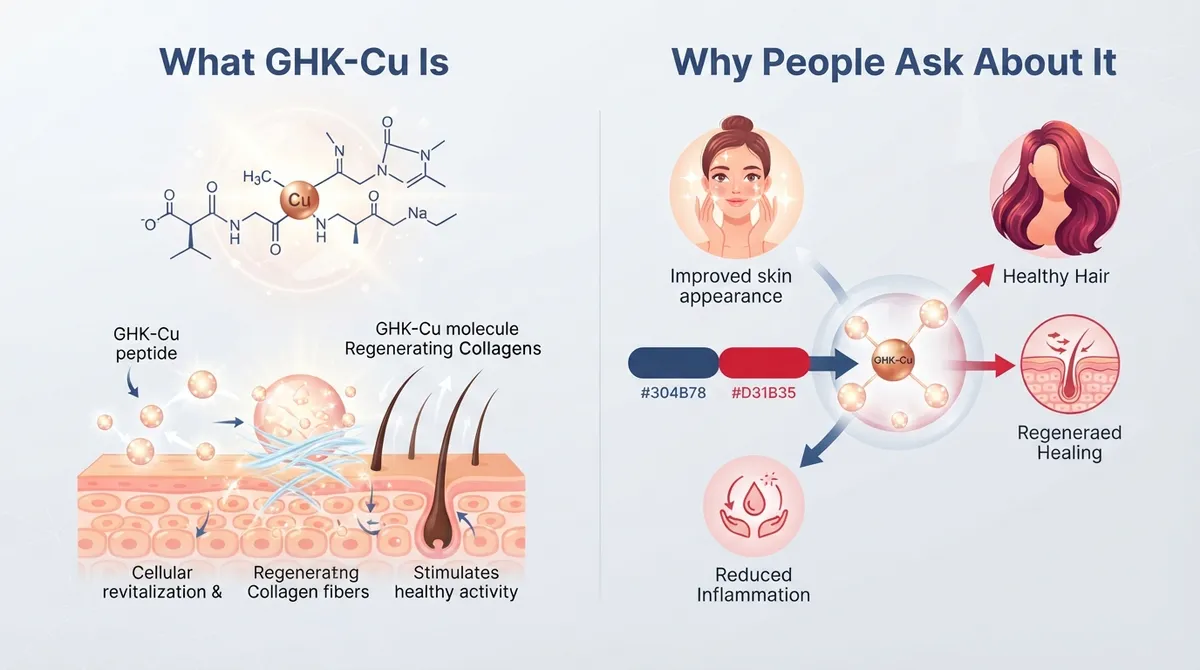
What GHK-Cu Is and Why People Ask About It
GHK-Cu stands for glycyl-L-histidyl-L-lysine complexed with copper. It is also called copper tripeptide-1. It appears in some topical cosmetic products. Wellness providers also market it for skin firmness, hair support, and tissue repair.
Interest is driven by social media, which often presents peptides as modern anti-aging tools. Many people see before-and-after photos and assume strong proof exists. In reality, a marketing claim is not clinical evidence.
If you want a deeper look at how it is discussed in skincare, see GHK-Cu Supplement Facts: What Wellness Patients Need. It adds helpful context before you talk with a clinician.
Common reasons patients ask
- Fine lines and skin texture concerns
- Thinning hair
- Slow healing after skin procedures
- Interest in preventive or longevity-focused care

What the Research Actually Shows
The research on GHK-Cu suggests possible effects on collagen and skin remodeling. However, much of the supporting evidence comes from laboratory or animal work. That kind of research is useful for generating ideas. It does not prove a treatment works in people.
A 2026 systematic review described the human GHK-Cu literature as limited and fragmented. Most clinical studies were small and focused on topical cosmetic formulations. The review also found no adequately powered published human randomized trial of microneedle-mediated GHK-Cu delivery.
No reliable, widely accepted statistic establishes the effectiveness or long-term safety of injectable GHK-Cu in humans. Strong controlled evidence for systemic use is simply missing. For a closer look at the science, read GHK-Cu Research vs. Hype: What Does Science Show?.
Topical vs. Injectable: Why the Route Matters
Topical products and injections are not interchangeable. Experience with creams does not tell us whether injections are safe or effective. An injection exposes the whole body to the compound, which carries different risks than a product applied to the skin.
|
Feature |
Topical GHK-Cu |
Injectable GHK-Cu |
|---|---|---|
|
Exposure |
Local, on the skin surface |
Systemic, throughout the body |
|
Human evidence |
Limited, small cosmetic studies |
Very limited, little controlled data |
|
Regulatory picture |
Sold as cosmetic products |
Not FDA approved; compounding status can change |
|
Main concern |
Irritation or sensitivity |
Impurities, immunogenicity, limited safety data |
For people curious about skin use, How to Pick the Best GHK-Cu Serum for Your Skin explains what to look for in a topical product.
Understanding the Regulatory Picture
GHK-Cu is not an FDA-approved drug for anti-aging, hair growth, wound healing, or other wellness uses. Compounded drugs are also not FDA-approved. The FDA does not review them for safety, effectiveness, or quality before they reach the market.
FDA materials flag potential safety concerns for compounded injectable GHK-Cu. These include immunogenicity risks related to aggregation and peptide impurities. The materials also note that human safety data are limited. You can read the agency's page on bulk drug substances that may present significant safety risks for details.
FDA status can change. Neither you nor a clinic should assume an injection is approved or eligible for compounding. Always check current FDA compounding guidance before making a decision.
How to Evaluate a Prescriber in Tampa: A Step-by-Step Process
Use this process whenever a clinic offers GHK-Cu or another peptide. It keeps the focus on safety and honest information.
- Confirm the clinician is licensed. Check that the provider holds an active Florida license and understands your medical history.
- Ask which form is being offered. Find out whether it is a topical product, an injection, or something else.
- Ask about the evidence. A trustworthy clinician will describe what is known and what is uncertain.
- Ask about regulatory status. Request a clear answer on FDA status and whether the product is compounded.
- Verify the product source. It should come from a properly regulated pharmacy, not a research-chemical seller.
- Review alternatives. Ask what established treatments exist for your specific concern.
- Plan follow-up. Safe care includes monitoring and a clear plan if you have a reaction.
For a broader checklist, see 15 Questions to Ask a Peptide Therapy Clinic in Tampa.
Red Flags to Watch For
Some warning signs should make you pause. If you notice any of these, consider seeking a second opinion.
- Claims that GHK-Cu is FDA approved for anti-aging or hair growth
- Promises of guaranteed results
- Products sold as "research chemicals" or "not for human use"
- Online sellers with no pharmacy verification
- No discussion of risks, alternatives, or uncertainty
- Pressure to buy packages before a medical evaluation
Buying peptides from unverified online sellers is especially risky. Quality and purity cannot be confirmed. For more on this problem, read 5 BPC-157 Buying Mistakes That Put Your Health at Risk, which applies to many peptides.
Possible Risks and Side Effects
Safety depends on the route and product quality. With topical use, skin irritation, redness, or sensitivity are the main concerns. Anyone who has a reaction should stop and speak with a clinician.
Injectables carry added concerns. Aggregation and impurities can raise the risk of an immune reaction. Because human safety data are limited, nobody can say with confidence what long-term use does. If you notice swelling, rash, trouble breathing, or any unusual symptom after a product, seek care right away.
Learn the warning signs in 13 GHK-Cu Allergic Reaction Signs You Must Not Ignore.
Start With the Concern, Not the Compound
A better approach is to begin with your actual goal. If you want healthier skin, thinning hair evaluated, or a wound that heals slowly, you deserve a proper diagnosis first. Many hair, skin, and healing problems have causes that a medical visit can uncover, such as thyroid issues, nutrient gaps, medication effects, or hormone changes.
A primary-care clinician can review your history, order labs, and check medications. When needed, they can refer you to dermatology or another specialist. This path often leads to treatments with stronger evidence than any peptide.
Established options worth discussing
- Sun protection and a consistent skincare routine
- Evidence-based topical treatments for skin and hair
- Lab testing to find underlying causes
- Nutrition, sleep, and stress review
- Specialist referral when a condition needs it
For skin concerns specifically, 11 Skin Repair Steps Doctors Recommend in 2026 offers practical, proven guidance.
Who Should Be Extra Cautious
Some people should be especially careful before trying any peptide. Talk with a clinician first if you are pregnant or breastfeeding, have a history of allergic reactions, take multiple medications, or live with a chronic condition. Busy parents and young adults often feel pressure to try trending products quickly. Slowing down protects your health.
If you are considering several wellness products at once, a clinician can help you avoid overlap and unnecessary risk. See How to Evaluate Peptide Therapy for Wellness Safely for a wider framework.
Understanding Costs and Value
Price can vary widely, and a high price does not signal quality. Ask for a full cost breakdown, including consultations, products, and follow-up visits. Compare that with the strength of the evidence. If a clinic cannot explain what you are paying for, that is a concern. For budgeting tips, see How to Budget for GHK-Cu Cost at a Wellness Clinic.
Why Primary Care Is a Smart Starting Point in Tampa
A primary-care clinic that blends technology with medical expertise can look at the whole picture. At InCare, patients in Tampa and Riverview can receive primary care, urgent care, preventive screenings, and wellness services in one place. The team focuses on prevention and whole-body health, which means your questions about skin, hair, or peptides are handled within a full medical context.
If you want to learn how local clinics approach this topic, What Should You Know Before GHK-Cu Therapy in Riverview? is a useful companion read. You can also see what patients say by visiting our InCare location on Google.
To stay connected with the practice, follow InCare on Instagram, join us on Facebook, or watch wellness updates on TikTok.
Questions to Bring to Your Appointment
Come prepared. A short list keeps the conversation focused and helps you leave with clear answers.
- What exactly is being recommended, and in what form?
- What human evidence supports it for my concern?
- What is its current FDA and compounding status?
- Where does the product come from, and who tests it?
- What are the risks, and how will I be monitored?
- What proven alternatives should I consider first?
Conclusion
Doctor prescribed GHK-Cu in Tampa is a topic where curiosity often runs ahead of the science. Topical products have limited cosmetic evidence. Injectable versions face greater uncertainty and FDA safety concerns. The safest path is to start with a diagnosis, ask direct questions, avoid unverified sellers, and consider established treatments first.
If you want honest guidance from a team that puts prevention and safety first, Book Your Visit with InCare today. You can also contact our team with questions before you schedule.
FAQs
Q: Can a doctor prescribe GHK-Cu in Tampa?
A: Some clinics offer GHK-Cu, but availability depends on the product form and current FDA compounding guidance. GHK-Cu is not an FDA-approved drug for wellness uses. A licensed clinician should explain the route, evidence, regulatory status, and product source before recommending it.
Q: Is GHK-Cu FDA approved?
A: No. GHK-Cu is not FDA approved for anti-aging, hair growth, wound healing, or other wellness indications. Compounded versions are also not reviewed by the FDA for safety, effectiveness, or quality before marketing.
Q: What is the difference between topical and injectable GHK-Cu?
A: Topical GHK-Cu is applied to the skin and has limited cosmetic study data. Injectable GHK-Cu exposes the whole body and carries added concerns, including impurities and immune reactions. Evidence for topical use cannot establish the safety of injections.
Q: Does GHK-Cu work for hair loss, wrinkles, or wound healing?
A: Research suggests possible effects on collagen and skin remodeling, but most evidence comes from laboratory or animal studies. Human studies are small and mainly cover topical cosmetic use. Broad medical benefits have not been established.
Q: What should I ask a doctor before using GHK-Cu?
A: Ask about the form being offered, the human evidence, FDA and compounding status, product source, risks, and monitoring plan. Also ask about proven alternatives for your specific concern. A trustworthy clinician will welcome these questions.