
Key Takeaways
- Andropause is a nontechnical term, not a formal diagnosis; clinicians instead assess for testosterone deficiency (hypogonadism), which requires compatible symptoms plus consistently low testosterone on repeated testing.
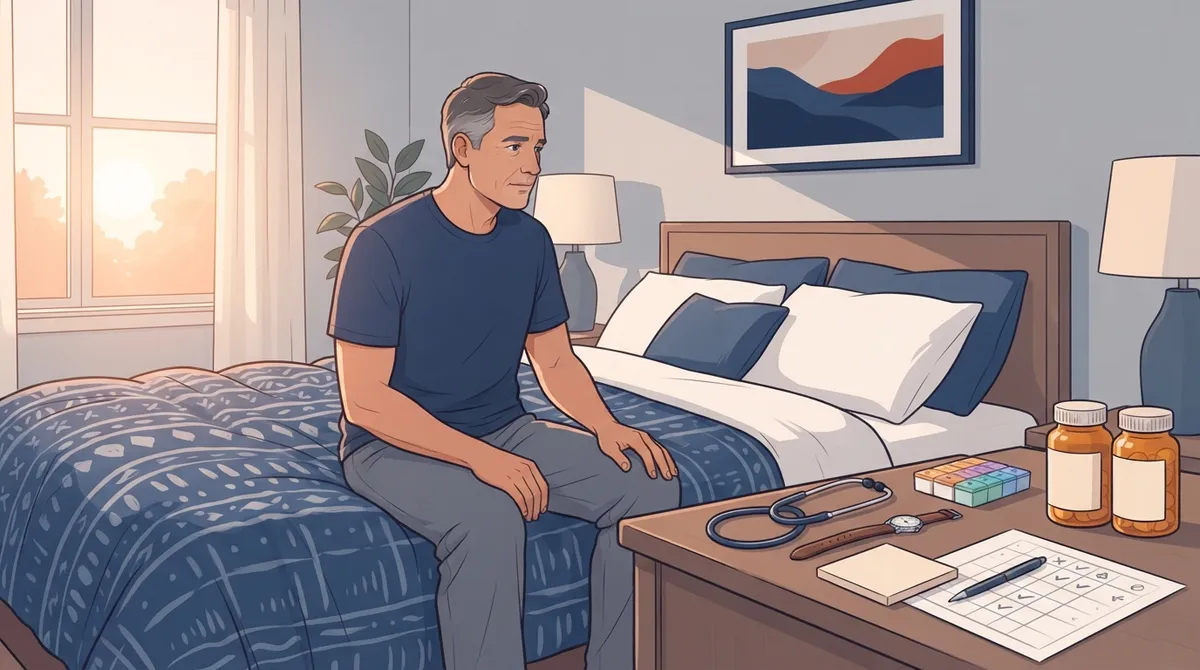
- Track energy, sleep, sexual desire, mood, workouts, weight, and waist size for two weeks, and list all medications and supplements before seeing a doctor.
- Many symptoms attributed to low testosterone, such as poor sleep, sleep apnea, depression, thyroid disease, diabetes, and anemia, have other causes that should be ruled out first.
- Testosterone levels are highest in the morning, so testing is typically done early in the day and repeated to confirm a low result; testosterone therapy can suppress sperm production and is generally unsuitable for men planning near-term fatherhood.
Many men notice changes in their late 40s and beyond. Energy dips, sex drive fades, and workouts feel harder. Friends and online articles often call this "male menopause." So, what is andropause, and does it deserve a place in your health conversations?
Andropause is a popular, nontechnical term for age-related changes that may be linked to falling testosterone. It is not a formal medical diagnosis, and it does not affect every man in the same way. Clinicians usually look for testosterone deficiency, also called hypogonadism, which can occur at any age and has many causes.
This guide shows you how to evaluate your symptoms step by step. You will learn what to track, which tests matter, what else can mimic low testosterone, and how a primary care team can help. The goal is simple: get clear answers before you consider any treatment.

What Is Andropause, Really?
The word "andropause" borrows from "menopause," but the two are not alike. Menopause brings a rapid drop in estrogen over a few years. Testosterone, by contrast, tends to decline slowly with age. One clinical review estimates a drop of about 1% per year after the fourth decade of life, though individual patterns vary widely.
Because of this gradual pattern, andropause is better described as a possible age-related shift than a single event. A low lab number alone does not prove a disorder. A diagnosis needs two things: compatible symptoms or signs, and consistently low testosterone on accurate testing.
How Common Is Low Testosterone?
Estimates differ based on how researchers define the condition. A clinical review reports testosterone deficiency in 12% to 39% of men in their 50s through 80s, depending on the population studied. A U.S. population study of 1,475 men aged 30 to 79 found symptomatic androgen deficiency in 5.6% overall. These numbers show that low testosterone is real, but it is not universal.
Step 1: Recognize the Possible Signs
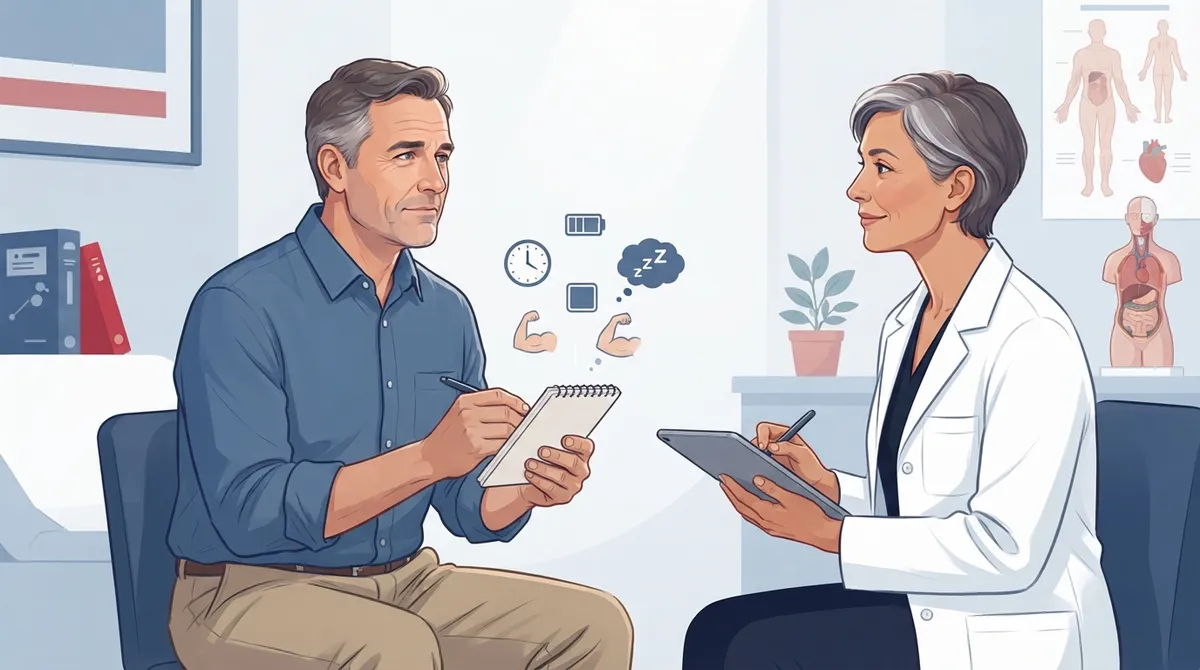
The first step is to notice what has changed. Symptoms linked to testosterone deficiency are often nonspecific, which means they can have other causes. Still, a pattern is worth discussing with a clinician.
- Reduced sexual desire
- Fewer spontaneous erections or erectile difficulty
- Loss of muscle mass or strength
- Increased body fat
- Low bone density
- Unexplained anemia
- Depressed mood or low energy
If several of these sound familiar, do not assume the cause. Persistent changes in desire or function are a good reason to book a visit. Our guide on when to see a doctor for low libido explains the key warning signs in more detail.
Step 2: Track Your Symptoms and Habits
Before your appointment, spend two weeks keeping simple notes. This gives your doctor real data instead of general impressions. Busy professionals and young families can do this quickly on a phone.
- Note your energy level each day on a scale of 1 to 10.
- Record how many hours you sleep and how rested you feel.
- Track changes in sexual desire and erections.
- Write down your mood, stress level, and any low periods.
- List your workouts and any change in strength or recovery.
- Record your current weight and waist size.
Also gather a list of all medications and supplements. Some prescriptions can affect hormones or energy. Bring this list to your first visit.
Step 3: Rule Out Other Causes
Many problems look like low testosterone. A good evaluation checks for these first. Treating the true cause often brings the biggest improvement.
|
Symptom |
Possible Non-Hormonal Causes |
|---|---|
|
Low energy |
Poor sleep, sleep apnea, anemia, thyroid problems, stress |
|
Low sex drive |
Depression, relationship stress, medications, diabetes |
|
Erectile difficulty |
Heart disease, high blood pressure, diabetes, medications |
|
Weight gain and lost muscle |
Inactivity, poor diet, insulin resistance, aging |
|
Low mood |
Depression, anxiety, life stress, sleep loss |
Sleep deserves special attention. Poor or interrupted sleep can lower energy and desire on its own. If you snore or wake tired, read how to know when to see a doctor for poor sleep. Excess weight is another common contributor, and a structured plan can help. Learn more about how medically supervised weight loss works.
Step 4: Get the Right Tests
Testing is the most important part of the evaluation. Done correctly, it separates true deficiency from normal variation. Done poorly, it can lead to the wrong conclusion.
Morning Total Testosterone
Testosterone levels are highest in the morning. For this reason, clinicians usually measure total testosterone early in the day. A single low result is not enough. The test should be repeated to confirm that the level is consistently low.
Free Testosterone and Other Markers
When total testosterone is borderline, or when sex hormone-binding globulin may be altered, a clinician may consider free testosterone. The American Urological Association uses a total testosterone below 300 ng/dL as a reasonable cutoff that supports diagnosis. Thresholds can vary by guideline, lab assay, and clinical context, so your doctor will interpret numbers alongside your symptoms.
Looking for the Cause
If low testosterone is confirmed, further tests help find the source. Luteinizing hormone is often checked to tell whether the problem starts in the testicles or in the pituitary gland or hypothalamus. Your clinician may also screen for related conditions such as diabetes, anemia, or thyroid disease. A broad hormone workup can be arranged through a comprehensive hormone panel.
Step 5: Understand Your Management Options
Treatment depends on the cause and your personal goals. There is no single answer for every man.
Address Reversible Contributors First
For many men, lifestyle and medical factors play a large role. Your clinician may recommend:
- Weight loss if you carry excess body fat
- Better sleep habits and sleep apnea testing when needed
- Regular strength training and daily activity
- Review and adjustment of medications that affect hormones
- Better control of diabetes, blood pressure, and stress
When Testosterone Therapy Is Considered
Testosterone therapy may be appropriate for selected men who have symptoms and confirmed deficiency. It is not a general anti-aging treatment. Before starting, a clinician should discuss benefits, risks, fertility plans, and monitoring.
Fertility is an important point. Testosterone therapy can suppress sperm production, so it is generally not appropriate for men planning to have children soon. Monitoring usually includes testosterone levels, hematocrit, symptoms, side effects, and prostate risk as appropriate. You can read more in our overview of how to start medically supervised TRT in Tampa safely, or learn who offers it through medically supervised TRT in Tampa Bay.
Step 6: Choose the Right Care Team
Hormone health touches many body systems. For this reason, a primary care home is often the best starting point. A primary care physician can review your full history, order the right labs, and coordinate any referrals.
InCare is a personalized healthcare clinic that combines state-of-the-art technology with medical expertise. Our team offers primary care, in-house lab testing, body composition analysis, metabolic breath analysis, and DNA gene testing, all focused on prevention and whole-body optimization. With locations in Tampa and Riverview, plus virtual visits, InCare makes it easier to fit care into a busy schedule. Patients rate the clinic 4.8 out of 5 on Google, and you can read InCare reviews on Google to see what others say.
If you want a clear starting point, a visit that covers your history, labs, and risk factors can be a smart move. See what a visit includes in our guide to what a wellness checkup in Tampa includes. You can also learn more about what Tampa men should know about andropause treatment.
Common Mistakes to Avoid
- Relying on a single low lab result without repeat testing
- Buying unregulated supplements that promise to boost testosterone
- Starting hormones without a full evaluation
- Ignoring sleep, weight, and mental health
- Skipping follow-up labs once treatment begins
A careful, stepwise approach protects your health and avoids unnecessary treatment. It also gives you a clear picture of what is really driving your symptoms.
Take the Next Step Toward Clear Answers
Andropause is a useful word for a real experience, but it is not a diagnosis on its own. The path forward is to notice your symptoms, track them, rule out other causes, and confirm any hormone problem with careful testing. From there, you and your doctor can choose a plan that fits your goals and your health.
Ready to talk through your symptoms with a team that treats the whole person? Book your appointment with InCare today, or contact our team with any questions. You can also follow InCare for health tips on Facebook, Instagram, and TikTok. For more background on testosterone care, the Endocrine Society testosterone therapy guideline offers a trusted clinical reference.
FAQs
Q: What does andropause mean, and is it a medical diagnosis?
A: Andropause is a popular, nontechnical term for possible age-related changes linked to falling testosterone. It is not a formal diagnosis. Clinicians instead assess for testosterone deficiency, or hypogonadism, which requires compatible symptoms and consistently low testosterone on testing.
Q: How is low testosterone diagnosed in primary care?
A: A clinician reviews your symptoms, medical history, medications, sleep, and weight. When indicated, they measure morning total testosterone and repeat the test to confirm a low result. Free testosterone or luteinizing hormone may be added to guide further evaluation.
Q: What else can cause symptoms that seem like andropause?
A: Poor sleep, sleep apnea, depression, thyroid disease, diabetes, anemia, obesity, stress, and certain medications can all cause fatigue, low desire, or mood changes. A thorough evaluation checks for these causes before any hormone treatment is considered.
Q: Can testosterone therapy affect fertility?
A: Yes. Testosterone therapy can suppress sperm production, so it is generally not appropriate for men planning near-term fertility. Treatment requires clinician oversight, including regular monitoring of testosterone levels, hematocrit, symptoms, side effects, and prostate risk as appropriate.


