

Key Takeaways
- Do not start, stop, or change vitamin K2 supplements if you take warfarin or blood thinners without consulting your clinician first, as vitamin K can seriously interact with these medications.
- Large clinical trials have not proven that K2 with D3 prevents fractures, heart disease, or artery calcification, despite improving some lab markers—individual health assessment is more important than the combination alone.
- Most adults need only 600-800 IU of vitamin D3 and 90-120 mcg of vitamin K daily; obtain these from food sources like fatty fish, leafy greens, and fortified products before considering supplements.
- Get a vitamin D blood test before supplementing to check your current level, as many people already meet their needs through diet and sun exposure, making extra supplementation unnecessary.
Walk down any supplement aisle in 2026, and you will see bottles that pair vitamin K2 with vitamin D3. The labels promise stronger bones and a healthier heart. It sounds simple and smart. But does the combination live up to the claims?
The honest answer is more nuanced. The science behind k2 with d3 vitamin products makes sense on paper. Yet large studies have not proven that the pair prevents fractures or heart disease. That means the best choice depends on your diet, your health history, and the medicines you take.
This guide explains what each nutrient does, what the research really shows, and how to use a combination supplement safely. You will also learn when to talk to a clinician first. If you are a busy professional, a parent, or someone focused on prevention, these steps will help you make a clear, informed choice.
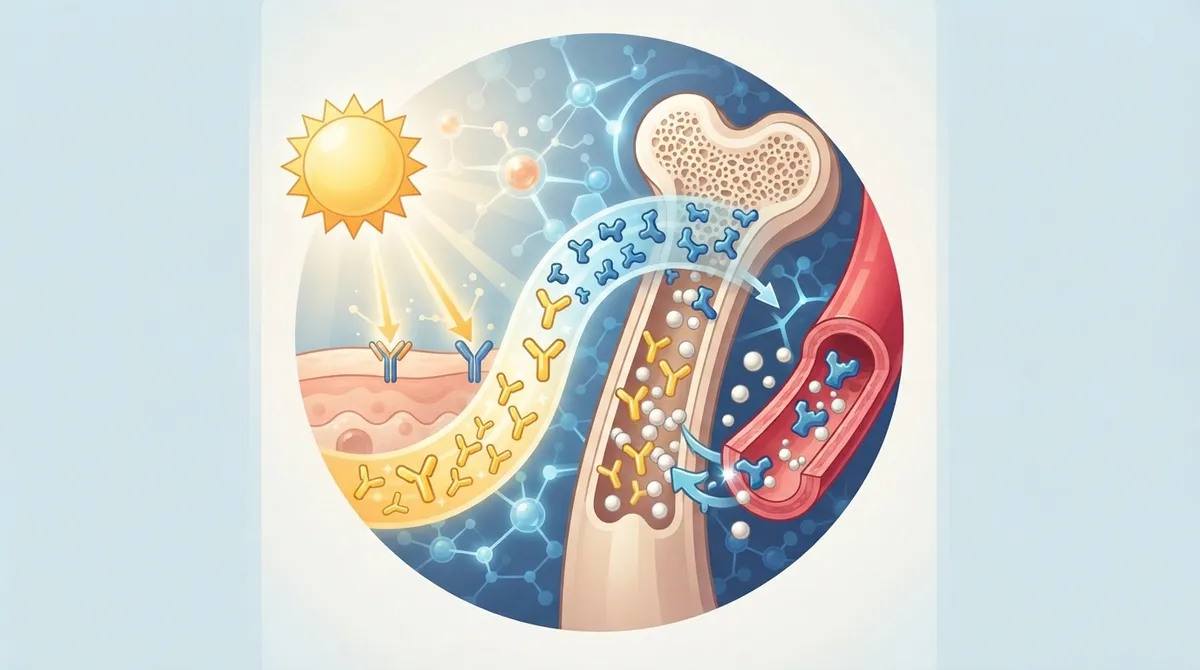
What Vitamin D3 and Vitamin K2 Do in Your Body
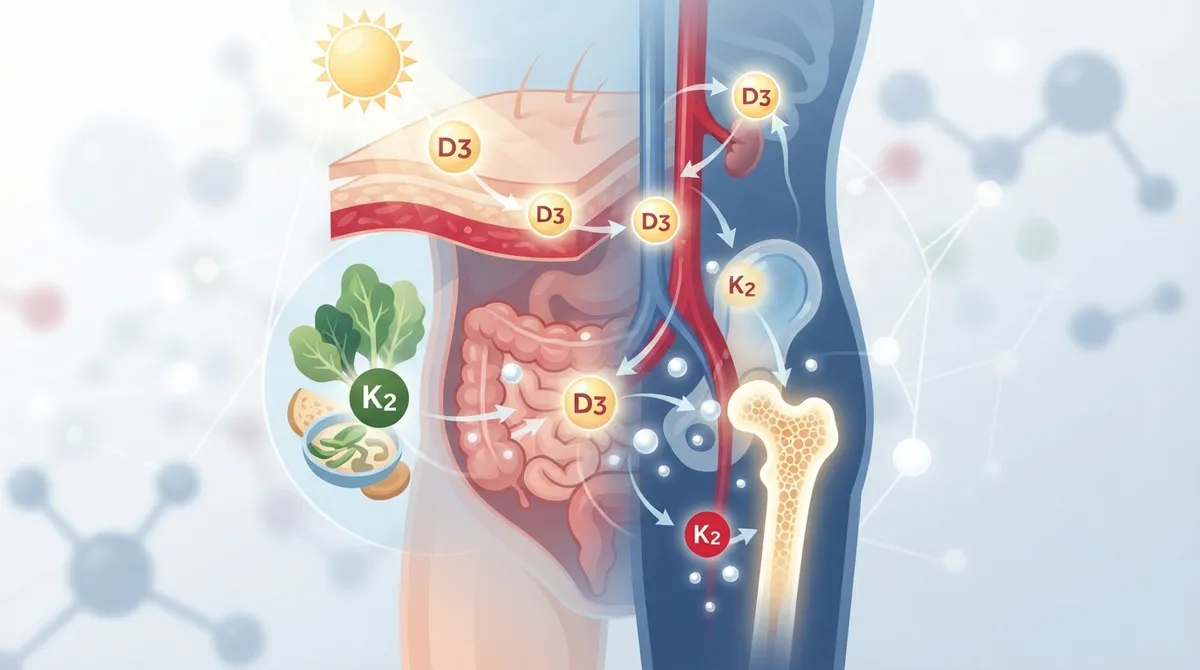
Vitamin D3 is also called cholecalciferol. Your skin makes it when sunlight hits it, and you also get it from fatty fish, fortified foods, and supplements. Its main job is to help your gut absorb calcium. That supports bone strength and mineral balance.
Vitamin K is a family of nutrients. Vitamin K2 is one form. It is often sold as MK-7 or MK-4. Vitamin K helps activate proteins that control blood clotting and bone metabolism. Some of these proteins bind calcium and help guide where it goes.
Why the Two Are Paired
The idea is simple. Vitamin D helps your body take in more calcium. Vitamin K helps activate proteins that handle that calcium. Together, they may support healthy calcium use in the body.
This is a reasonable biological theory. But a theory is not proof. Many people assume the combination steers calcium into bones and away from arteries. Research has not confirmed that this happens in a way that improves health outcomes.
What the Evidence Really Shows
Studies on K2 with D3 have produced mixed results. Some trials show changes in blood markers. A 2023 systematic review looked at 14 randomized trials of vitamin K forms. It found steady drops in a marker called dp-ucMGP, which relates to vitamin K status. But it found limited evidence that these changes lead to better health outcomes.
In short, the numbers on a lab report may improve. That does not always mean you will have fewer fractures or fewer heart problems.
What We Do Not Know Yet
No large, definitive trial has shown that taking D3 and K2 together prevents:
- Bone fractures
- Heart disease
- Hardening or calcium buildup in the arteries
It is also worth noting that the big VITAL trial, which enrolled more than 25,000 people, tested vitamin D3 alone at 2,000 IU per day. It found no significant effect on blood pressure or the chance of developing high blood pressure. It did not test D3 plus K2, so it cannot answer the combination question. It does remind us that popular supplements do not always deliver the results people expect.
How Much Do You Actually Need?
Before you buy a supplement, look at your total intake from food, sun, and pills. The National Institutes of Health Office of Dietary Supplements sets clear targets.
|
Nutrient |
Group |
Daily Target |
|---|---|---|
|
Vitamin D (RDA) |
Adults through age 70 |
600 IU (15 mcg) |
|
Vitamin D (RDA) |
Adults over 70 |
800 IU (20 mcg) |
|
Vitamin D (upper limit) |
Most adults, all sources |
4,000 IU (100 mcg) |
|
Vitamin K (adequate intake) |
Adult men |
120 mcg |
|
Vitamin K (adequate intake) |
Adult women |
90 mcg |
These numbers describe total intake. They are not a prescription for a pill. Many people reach their vitamin K goal through leafy greens, and others get enough vitamin D from food and sun. Note too that the vitamin K numbers cover all forms of vitamin K, not just K2 supplements. No upper limit has been set for vitamin K, because research has not found a toxic level in healthy people.
Safety First: Who Should Be Careful
A combination supplement is not right for everyone. Some people need to be very careful, or avoid it until a clinician reviews their case.
Blood Thinners Like Warfarin
This is the most important warning. Vitamin K can interact in a serious way with warfarin and similar blood thinners. These drugs work by blocking vitamin K. If you change your vitamin K intake, the drug may work too little or too much.
If you take warfarin, do not start, stop, or change a K2 supplement on your own. Talk to the clinician who manages your blood thinner first. Steady vitamin K intake matters, because sudden changes can shift how well your medicine works.
Too Much Vitamin D
Vitamin D is fat-soluble. That means your body stores extra amounts instead of flushing them out. Taking too much can raise calcium in your blood to unsafe levels. This is called hypercalcemia, and it can cause nausea, weakness, kidney problems, and other harm.
Most adults should stay under 4,000 IU per day from all sources. Higher doses are sometimes used for a medical reason, but only under supervision.
Other Health Conditions
Talk with a clinician before using a combination product if you have:
- Kidney disease
- A calcium disorder
- A history of kidney stones
- Pregnancy or plans to become pregnant
- Any blood-clotting condition
How to Choose a K2 With D3 Supplement: Step by Step
If you and your clinician decide a combination product fits, follow these steps to choose wisely.
- Review your current intake. Add up vitamin D and K from food, any multivitamin, and any other supplements. Many multivitamins already include both.
- Check your medicines. List every prescription and over-the-counter product you use. Pay special attention to anticoagulants.
- Read the label closely. Look at the form of K2 (MK-4 or MK-7), the amount of D3 in IU, and the serving size. Make sure the total D3 fits within the safe upper limit.
- Look for third-party testing. Supplement quality varies. Seals from independent testing groups can signal that the product contains what the label says.
- Skip megadoses. More is not better. Stay near the amounts your clinician recommends.
- Plan a follow-up. If you take a supplement for months, check in on your labs and symptoms.
Do You Need a Blood Test First?
For vitamin D, a simple blood test can show whether your level is low, normal, or high. This is called a 25-hydroxyvitamin D test. It takes the guesswork out of dosing. If your level is already healthy, extra D3 may offer little benefit.
Vitamin K status is harder to measure in routine care. Most clinicians judge it based on your diet, your health, and your medicines instead of a standard blood test. That is one more reason a personal review beats a one-size-fits-all pill.
Food First: Easy Ways to Get Both Nutrients
Supplements fill gaps. Food should still come first. Here are simple sources:
- For vitamin D: salmon, trout, sardines, egg yolks, and fortified milk or cereal.
- For vitamin K: spinach, kale, broccoli, and other leafy greens.
- For K2 specifically: fermented foods like natto, along with some cheeses and eggs.
In sunny Florida, many people also get vitamin D from safe time outdoors. Still, indoor work, sunscreen use, age, and skin tone can all lower how much your body makes. A quick lab test can show where you stand.
How Primary Care Helps You Decide
Supplement choices are personal. A primary care team looks at your whole health picture, not just one nutrient. At InCare primary care, clinicians can review your history, medicines, and goals to help you decide whether a combination supplement makes sense.
For people who want a deeper look, InCare also offers tools that go beyond a basic checkup. DNA gene testing can offer personalized insight into your health. Body composition analysis helps track changes over time. And routine annual physical exams give you a chance to review labs and bone health risks with a clinician who knows your story.
Some patients prefer a more tailored nutrient plan. In that case, IV hydration and vitamin drips are another option to discuss, though they serve different goals than an oral D3 and K2 pill. If you are also thinking about long-term prevention, you can read how to make preventive care work for your health.
With locations in Tampa and Riverview, InCare combines modern technology with personal attention. You can see what patients say by visiting our InCare location on Google. For updates and wellness tips, follow InCare on Instagram, Facebook, and TikTok.
A Quick Pros and Cons Summary
|
Possible Upside |
Possible Downside |
|---|---|
|
Convenient single product |
No proven effect on fractures or heart disease |
|
Supports healthy vitamin K and D status |
Serious interaction with warfarin |
|
May improve some lab markers |
Too much D3 can raise blood calcium |
|
Easy to add to a daily routine |
Product quality varies by brand |
Conclusion: Make a Plan That Fits You
K2 with D3 is a thoughtful pairing. The biology makes sense, and some blood markers improve. Yet strong proof of better bone or heart outcomes is still missing. That means the smartest approach is a personal one.
Start with food. Check your vitamin D level. Review your medicines, especially blood thinners. Then choose a quality product at a sensible dose, if a clinician agrees it fits your needs.
If you want expert guidance, the InCare team is ready to help. Book your visit with InCare to build a supplement and prevention plan that is safe and made for you. You can also contact our team with questions anytime.
FAQs
Q: What are the benefits of taking vitamin K2 with vitamin D3?
A: Vitamin D3 helps your body absorb calcium, and vitamin K2 helps activate proteins that handle calcium. Together they may improve some lab markers. However, large trials have not proven that the pair prevents fractures, heart disease, or artery calcification.
Q: Can I take vitamin D3 and K2 with warfarin or another blood thinner?
A: Not without medical guidance. Vitamin K can interact seriously with warfarin and similar medicines. Do not start, stop, or change a K2 supplement until you speak with the clinician who manages your anticoagulant.
Q: How much vitamin D3 is safe to take each day?
A: The recommended dietary allowance is 600 IU for adults through age 70 and 800 IU after age 70. Most adults should stay under 4,000 IU per day from all sources. Higher doses should only be used under medical supervision.
Q: Do I need a blood test before taking D3 and K2?
A: A vitamin D blood test can show whether your level is low, normal, or high, which helps guide dosing. Vitamin K status is not usually measured in routine care, so clinicians rely on your diet, health history, and medicines to decide.
Q: Should I take vitamin D3 and K2 together or separately?
A: Many people take them together in one product for convenience, and both are fat-soluble, so taking them with a meal that contains some fat is common. The best timing and dose depend on your health, your diet, and your medicines, so confirm the plan with your clinician.


