

Key Takeaways
- Get a blood test for vitamin D status (25-hydroxyvitamin D) before starting D3K2 supplements; guessing from diet or sun exposure is unreliable and can lead to unsafe dosing.
- Stay within the NIH safety limit of 100 mcg (4,000 IU) vitamin D per day from all sources; excess intake can cause high blood calcium, kidney problems, and abnormal heart rhythms.
- Do not start K2 supplements if you take warfarin or blood thinners without consulting your anticoagulation clinician, as vitamin K can interfere with how these medicines work.
- Evidence that D3K2 prevents fractures, artery calcification, or heart disease is not conclusive; the basic science is sound but real-world clinical benefits remain unproven.
- Count all vitamin D sources including multivitamins, fortified foods, and calcium products before adding a D3K2 supplement to avoid unintentional overdosing.
- Retest your vitamin D level after a few months of supplementation and watch for warning signs like nausea, excessive thirst, and weakness that may indicate dangerously high calcium.
Walk into any supplement aisle in 2026, and you will see bottles labeled "D3K2" promising stronger bones and a healthier heart. The pairing sounds logical. Vitamin D3 helps the body absorb calcium, and vitamin K2 helps direct calcium where it belongs. But does the combination deserve a place in your daily routine?
The honest answer is: it depends. D3K2 vitamins are widely marketed, yet the evidence that they prevent fractures, artery calcification, or heart disease is still not conclusive. Your age, diet, medications, and blood levels all matter. This guide walks you through a clear, step-by-step process for deciding whether D3K2 vitamins make sense for you, what a safe approach looks like, and when to involve a clinician.
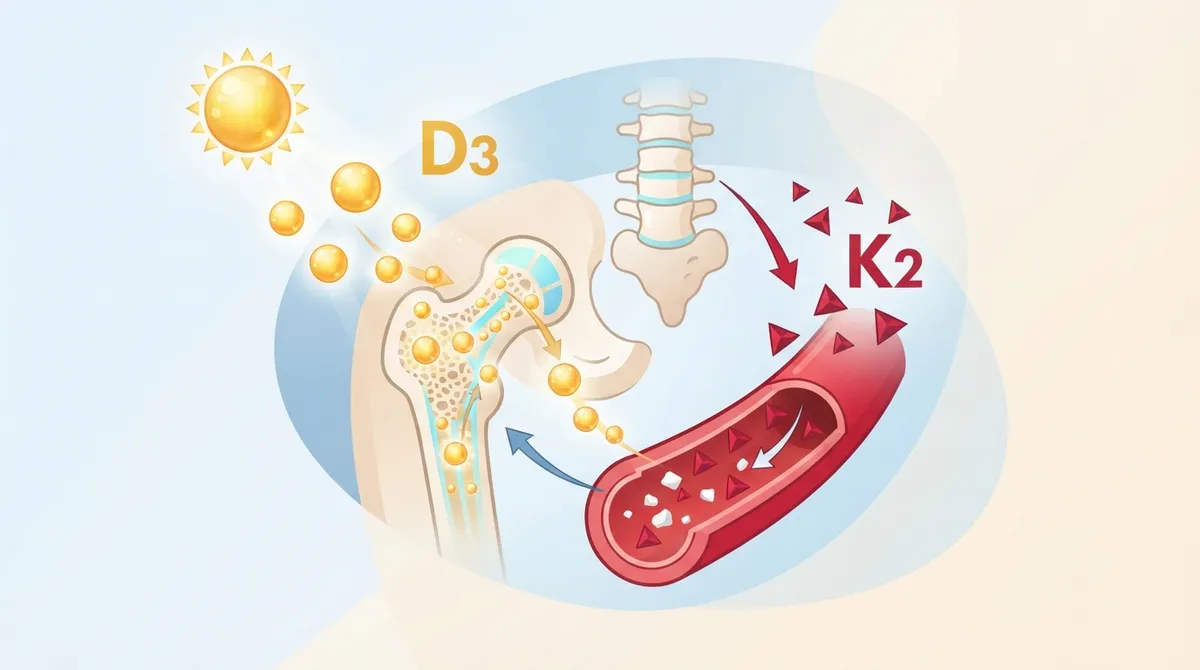
What Are D3K2 Vitamins?
D3K2 vitamins are supplements that combine vitamin D3 (cholecalciferol) with vitamin K2. The K2 in these products is usually MK-7 or MK-4, which are forms of vitamin K. Most are sold as capsules, softgels, or liquid drops.
Each nutrient has a defined job in the body:
- Vitamin D3: Helps the body absorb calcium and supports bone health.
- Vitamin K2: Helps activate proteins involved in blood clotting and bone metabolism.
These separate roles are well established. What is not proven is that taking both together prevents cardiovascular disease or fractures. Smaller studies suggest the pair may affect vitamin-K-dependent biomarkers and some bone measures. But those findings do not show a meaningful clinical benefit yet.

How to Decide If D3K2 Vitamins Make Sense for You
Follow these five steps before you add a D3K2 product to your routine.
- Review your health history. Note conditions such as osteoporosis risk, kidney disease, gut absorption problems, or a history of high calcium.
- List every medication and supplement you take. This includes blood thinners, calcium, and multivitamins.
- Check your vitamin D status with a blood test. Do not guess your level.
- Discuss the results with a clinician. Ask whether supplementation fits your situation.
- Choose a product and dose together, then recheck. Follow-up testing confirms the plan is working safely.
Many busy adults and young families skip straight to the store. A short visit with a primary care provider can save money and prevent avoidable risks. At InCare, our team can review your history and order the right labs. You can learn more about our primary care services and how we build a plan around you.
Step 1: Understand Your Vitamin D Status
For most people, vitamin D status is measured with a blood test for 25-hydroxyvitamin D, often written as 25(OH)D. This test shows how much vitamin D your body is actually holding. It is far more reliable than guessing from diet or time outdoors.
Your needs can shift based on several factors:
- Age and skin tone
- Diet and sun exposure
- Weight and body composition
- Chronic health conditions
- Certain medications
This is why a one-size-fits-all supplement can miss the mark. Someone who is already vitamin D replete may gain little from extra D3. The DO-HEALTH randomized trial enrolled 2,157 adults aged 70 or older. In this generally healthy, active, and largely vitamin-D-replete group, vitamin D3 supplementation did not reduce major cardiovascular events or new high blood pressure (2024 report). Extra vitamin D is not automatically better.
Routine lab work is easy to fold into a visit. Many patients combine it with an annual wellness visit, which also covers screenings and preventive planning.
Step 2: Know the Safe Limits for Vitamin D
Safety is the most important part of this decision. The NIH Office of Dietary Supplements lists an adult tolerable upper intake level for vitamin D of 100 mcg (4,000 IU) per day from all sources. This is a general safety ceiling, not a recommended dose. Children have lower limits that vary by age.
Clinicians sometimes prescribe higher doses for a short time to treat a true deficiency. That should happen only under medical supervision, with follow-up testing.
Too much vitamin D can cause real harm. According to the NIH, toxicity is linked to very high blood levels. Its fact sheet advises avoiding serum 25(OH)D levels above roughly 125 to 150 nmol/L (50 to 60 ng/mL). Excess intake can lead to:
- High blood calcium (hypercalcemia)
- High urine calcium (hypercalciuria)
- Kidney problems in severe cases
- Calcification of soft tissues
- Abnormal heart rhythms
- In extreme cases, death
Taking vitamin D with calcium supplements may also raise the risk of some side effects. Add up everything you take, including fortified foods, multivitamins, and separate vitamin D pills, before you add a D3K2 product.
Step 3: Check for Medication Interactions
This step matters most if you take a blood thinner. Vitamin K can interact seriously with warfarin and similar anticoagulants. These medicines work by affecting how vitamin K helps blood clot. Changing your vitamin K intake can make the medicine less effective or harder to dose.
If you take warfarin or a related drug, follow these rules:
- Do not start, stop, or change a K2 supplement without talking to your anticoagulation clinician.
- Keep your vitamin K intake consistent from day to day.
- Tell every provider about all supplements you use.
The NIH Office of Dietary Supplements notes that no tolerable upper intake level has been set for vitamin K, because reported toxicity from food or supplements is low. That does not remove the need for caution. The concern with K2 is mainly its effect on anticoagulant medicines, not toxicity alone.
Good medication tracking helps here. Our guide on prescription management tips explains how to keep your medicines and supplements organized and reviewed.
What the Evidence Says About Bones and Arteries
The big claims behind D3K2 vitamins involve bone strength and artery health. Here is how the evidence stacks up.
|
Claim |
What Is Known |
Evidence Strength |
|---|---|---|
|
Vitamin D supports calcium absorption |
Well established |
Strong |
|
Vitamin K activates bone and clotting proteins |
Well established |
Strong |
|
D3 plus K2 prevents fractures |
Not proven in clinical outcomes |
Limited |
|
D3 plus K2 prevents artery calcification |
Mechanistic and small studies only |
Limited |
|
D3 plus K2 prevents heart events |
No conclusive proof |
Insufficient |
In short, the basic science is sound, but the leap to real-world protection has not been confirmed. Weight-bearing exercise, enough dietary calcium and protein, not smoking, and limiting alcohol remain proven foundations for bone health. Bone density screening is also valuable for people at higher risk.
Who Might Benefit From a Closer Look
Some people are more likely to benefit from a vitamin D conversation. A clinician may suggest testing if you have:
- Limited sun exposure or live indoors most of the day
- Darker skin, which makes less vitamin D from sunlight
- Digestive conditions that affect absorption
- Obesity or a history of weight loss surgery
- Osteopenia, osteoporosis, or a family history of fractures
- A diet low in fortified foods or fatty fish
If you are working on weight or metabolic health, nutrient levels deserve attention. InCare offers medical weight loss programs that pair lab data with personalized plans. Those who like data-driven wellness may also enjoy DNA gene testing for deeper insight into their health profile.
Step 4: Choose a Product and Dose With Your Clinician
If testing and discussion point toward supplementation, choose carefully. Keep these tips in mind:
- Start with your lab result. Your level should guide the dose.
- Check the label for both nutrients. Note the IU or mcg of D3 and the mcg of K2, along with the form (MK-7 or MK-4).
- Stay under the upper limit unless your clinician prescribes more.
- Count all sources. Include multivitamins and calcium products.
- Pick products with third-party testing when possible.
Supplements are not a substitute for food. Fatty fish, eggs, fortified dairy, leafy greens, and fermented foods supply these nutrients in everyday meals. Food first, then supplements to fill real gaps.
Step 5: Recheck and Adjust
Supplementation is not a set-it-and-forget-it choice. After a few months, repeat your vitamin D test to confirm your level is in a healthy range. Your clinician can then adjust the dose up, down, or stop altogether.
Watch for signs that something is off, such as nausea, constant thirst, frequent urination, weakness, or confusion. These can signal high calcium and need prompt medical attention.
Your needs also change over time. Pregnancy, new medications, weight changes, and aging can all shift your plan. Regular checkups keep your approach current. Learn why steady preventive care pays off in our article on making preventive care work for your health.
Common Mistakes to Avoid
- Megadosing. More is not better, and high doses can cause harm.
- Skipping the blood test. Without data, you are guessing.
- Ignoring blood thinners. K2 can interfere with warfarin and similar drugs.
- Stacking products. Several supplements with D3 can add up quickly.
- Expecting miracles. D3K2 vitamins are not proven to prevent fractures or heart disease.
- Relying on social media advice. Online trends cannot replace personal medical guidance.
Younger adults and wellness explorers often find supplement advice on social platforms. It is fine to be curious. Just bring your questions to a licensed clinician. If you enjoy health content, you can follow InCare on Instagram, TikTok, and Facebook for updates, then confirm anything personal with your provider.
Why a Primary Care Partner Makes This Easier
Deciding on D3K2 vitamins is really a question about your whole health picture. A primary care team can order the right labs, review your medicines, and track your progress over time. This is especially helpful for busy professionals and parents who want clear answers without hours of research.
InCare combines state-of-the-art technology with personalized, preventive care at our Tampa and Riverview locations. We also offer virtual visits for added convenience. Patients appreciate our friendly staff and thoughtful care. You can see what InCare patients say on Google and learn more about our providers. If you are interested in broader optimization, ask about IV hydration and vitamin drips as part of a tailored wellness plan.
Conclusion
D3K2 vitamins combine two nutrients with real roles in bone and calcium metabolism. But the claim that the combination prevents fractures, artery calcification, or heart events remains unproven. The smartest path is simple: check your vitamin D level, review your medications, stay within safe limits, and work with a clinician who knows your history.
Do not guess when your health is on the line. Book your visit with InCare today to get lab testing and personalized guidance on D3K2 vitamins. Prefer to ask a question first? Contact our team and we will help you take the next step.
FAQs
Q: What are D3K2 vitamins, and what do vitamins D3 and K2 do?
A: D3K2 vitamins combine vitamin D3, which helps the body absorb calcium and supports bone health, with vitamin K2, which helps activate proteins involved in blood clotting and bone metabolism. They are marketed for bone and heart health, but evidence for the combination is still developing.
Q: What is a safe dose of vitamin D3 and K2?
A: The NIH Office of Dietary Supplements sets the adult upper limit for vitamin D at 100 mcg (4,000 IU) per day from all sources. This is a safety ceiling, not a recommended dose. No upper limit exists for vitamin K, but your clinician should help set the right amounts for you.
Q: Can I take vitamin K2 if I use warfarin or another blood thinner?
A: Do not start, stop, or change a K2 supplement without speaking to your anticoagulation clinician. Vitamin K can interact seriously with warfarin and similar medicines, so keeping your intake consistent is important.
Q: Do vitamin D3 and K2 prevent arterial calcification or fractures?
A: Current evidence is not conclusive. Mechanistic and smaller studies suggest possible effects on certain biomarkers and bone measures, but these results do not prove meaningful protection against fractures, vascular calcification, or cardiovascular events.
Q: Should I get a vitamin D blood test before taking supplements?
A: Yes, testing is a smart first step. A 25-hydroxyvitamin D blood test shows your actual level, which helps your clinician decide whether supplementation is appropriate and what dose is safe.


