
Key Takeaways
- Fitness performance tests (VO₂ max, resting metabolic rate, body composition) guide training and lifestyle goals but are not diagnostic, while clinical exercise stress tests evaluate heart response and must be chosen by a clinician.
- Clinical exercise stress tests monitor ECG, heart rate, rhythm, and blood pressure during about 10 to 15 minutes of treadmill or bike exertion and are not a universal screening test for healthy people.
- Do not book a fitness assessment if you have new or severe chest pain, fainting, severe shortness of breath, or a rapid or irregular heartbeat that does not settle; seek medical care first.
- Before booking, confirm the price, whether a referral is required, insurance coverage, how results are explained, and what follow-up support is included, since policies and pricing change.
- Share your heart history, blood pressure, diabetes, medications, and family history with a clinician, and never stop prescribed medication on your own before testing.
- Performance testing should lead to a concrete action plan and be paired with routine care such as an annual exam, since data alone does not improve health without clinical interpretation.
If you have searched for performance testing in Tampa, you have likely seen very different results. Some listings describe fitness assessments such as VO₂ max or resting metabolic rate. Others describe medically supervised exercise stress tests that evaluate the heart. These services serve different purposes, and choosing the wrong one can waste time, money, or delay needed care.
This guide explains how to match the right test to your goals and your health history. You will learn what each type of performance testing measures, who may benefit, how to prepare, and what questions to ask before you book. Whether you are a busy parent, a young professional tracking your fitness, or someone who wants a proactive health plan, a clear starting point makes the process easier.
The first step is simple: understand what you want to learn. Then work with a qualified clinician to select the right test. At InCare, we help Tampa and Riverview patients connect fitness data with whole-body, preventive care.

What Performance Testing Means in Tampa
In a primary care and wellness setting, performance testing usually falls into two groups. The first is fitness testing, which measures how your body performs and uses energy. The second is clinical exercise testing, which checks how your heart responds to physical effort.
These are not interchangeable. Fitness testing can guide training and lifestyle choices, but it is not a medical diagnosis. Clinical exercise testing is a medical tool that a clinician selects based on your symptoms and health history.
Fitness-Based Performance Testing
Fitness assessments are non-diagnostic. They give you data to shape training, nutrition, and recovery. Common examples include:
- VO₂ max testing: Estimates how much oxygen your body can use during intense exercise.
- Resting metabolic rate (RMR): Estimates how many calories you burn at rest.
- Body composition analysis: Measures fat mass, lean mass, and distribution.
- Anaerobic capacity testing: Measures short, high-power effort, such as the Wingate test.
The University of South Florida Human Performance Lab in Tampa lists community testing in these categories. The lab states that its exercise-science testing is not intended to diagnose health conditions. Availability, pricing, and requirements can change, so confirm details directly with any provider.
Clinical Exercise Stress Testing
A clinical stress test looks at how the heart responds to exertion. According to the American Heart Association, clinicians may monitor ECG, heart rate and rhythm, blood pressure, breathing, and symptoms while you walk on a treadmill or pedal a stationary bike. The exercise portion typically lasts about 10 to 15 minutes, though the full appointment and recovery time vary.
This type of test may help evaluate certain symptoms, assess exercise tolerance, guide safe activity levels, or inform further cardiac evaluation. It is not a universal screening test for every healthy person.
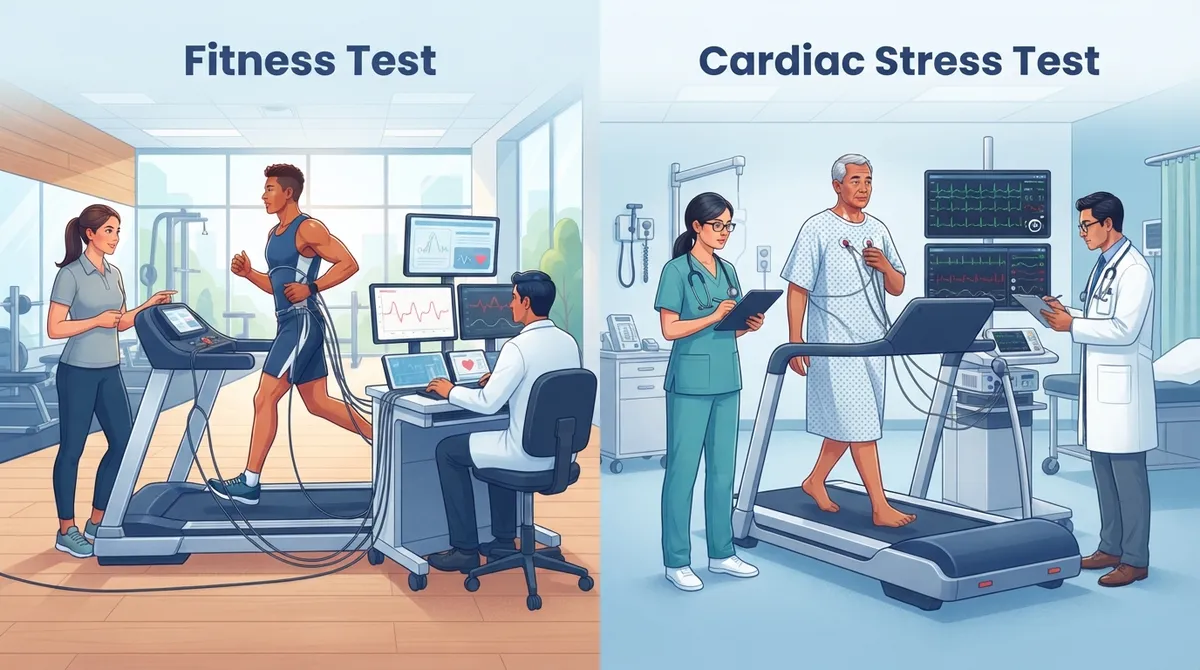
Fitness Test vs. Cardiac Stress Test: A Quick Comparison
The table below shows the main differences. Use it to decide which path fits your situation.
|
Feature |
Fitness Performance Test |
Clinical Exercise Stress Test |
|---|---|---|
|
Main purpose |
Guide training and lifestyle goals |
Evaluate heart response to exertion |
|
Diagnostic? |
No |
Used as part of a medical evaluation |
|
Who decides if you need it |
You, often with a coach or clinician |
A qualified healthcare professional |
|
Typical measures |
VO₂ max, RMR, body composition, anaerobic power |
ECG, heart rate, rhythm, blood pressure, symptoms |
|
Best for |
Athletes, weight loss, wellness optimization |
Selected symptoms, exercise tolerance, cardiac questions |
How to Choose the Right Performance Test
Follow these steps to find the right fit. Each step helps you avoid common mistakes.
- Define your goal. Do you want to improve endurance, understand your metabolism, support weight loss, or check how your heart handles exercise? Your goal points to the right test.
- Screen for warning signs. If you have new or severe chest pain, fainting, or severe shortness of breath, seek urgent medical care. Do not book a fitness assessment.
- Review your health history. Share heart conditions, high blood pressure, diabetes, medications, and family history with a clinician.
- Ask for a clinical opinion. A primary care provider can tell you whether you need a fitness test, a medical stress test, or a different evaluation.
- Confirm the details. Ask about preparation, cost, insurance, referrals, and how results will be explained.
- Plan follow-up. Data is only useful when it leads to an action plan you can follow.
Understanding VO₂ Max and Cardiopulmonary Exercise Testing
VO₂ max is one of the most searched terms in Tampa performance testing. It reflects the maximum amount of oxygen your body can use during hard exercise. Many people use it to track fitness over time.
Cardiopulmonary exercise testing (CPET) adds measurements of oxygen uptake and carbon-dioxide output during exercise. It can provide information about integrated exercise capacity. The specific indication, interpretation, and availability should be confirmed with a qualified medical provider.
If you want a closer look at how breath-based testing works in a wellness setting, read about VO2 max testing in Tampa and how PNOE metabolic testing works. These resources explain what the data can and cannot tell you.
Other Useful Performance Metrics
Performance is more than one number. A complete picture often includes several measures that work together.
Metabolic Breath Analysis
Metabolic testing estimates how your body uses fuel at rest and during activity. This can help shape nutrition and training plans. Learn more about metabolic breath analysis and how it supports weight management and energy goals.
Body Composition
Body weight alone does not show how much muscle or fat you carry. Body composition analysis separates these. See how body composition testing can track progress more accurately than a scale.
Genetic and Lifestyle Context
Some patients also want to understand how genetics may relate to health and training. A clinician can explain what DNA gene testing can and cannot tell you, so you avoid overinterpreting results.
How to Prepare for Your Test
Preparation instructions vary by test and facility. Always follow the specific guidance from your care team. These general tips apply in many cases:
- Wear comfortable exercise clothing and supportive shoes.
- Tell your clinician about all medications and supplements.
- Do not stop prescribed medication on your own.
- Ask whether you should eat, fast, or avoid caffeine beforehand.
- Get good sleep and arrive hydrated unless told otherwise.
- Bring a list of questions and your health history.
- Busy parents and young families: A baseline fitness and metabolic picture can support realistic, time-efficient health plans.
- Tech-savvy professionals: Objective data fits well with wearable tracking and goal setting.
- Wellness-focused adults: Testing can complement preventive screenings and long-term planning.
- Young adults starting out: Early data builds healthy habits before problems develop.
- Women seeking whole-body care: Testing can be one part of a broader wellness visit that goes beyond reproductive care.
Testing is not a substitute for routine care. Pair it with an annual exam. See what to expect in an annual physical exam and how a health risk assessment can guide next steps.
Cost, Insurance, and Referrals
Costs vary by provider and by test type. Fitness assessments are often self-pay. Clinical stress testing may be covered when it is medically indicated, but coverage depends on your plan. Because pricing and policies change, confirm the following before you book:
- Current price and what is included.
- Whether a referral or clinician order is required.
- Whether your insurance covers the test.
- How results are delivered and explained.
- What follow-up support is available.
Turning Results Into a Safer, More Effective Plan
Data matters only when you act on it. Good performance testing should lead to clear next steps, such as adjusting training intensity, improving nutrition, or addressing a health concern with further evaluation.
For example, a metabolic result may help set calorie targets. A body composition scan may show muscle loss during weight reduction. A clinical test result may prompt a deeper cardiac review. In each case, a clinician helps you interpret the numbers in context.
If weight management is part of your goal, explore how medical weight loss programs can use testing data to personalize care. This approach tends to work better than guessing or following generic plans.
Why a Primary Care Partner Makes a Difference
Many Tampa residents order tests on their own, then struggle to interpret them. A primary care team can connect the dots between your results, medical history, medications, and goals. It also helps ensure that warning signs are not missed.
InCare combines advanced technology with clinical expertise at locations in Tampa and Riverview. Our team can help you decide which assessments make sense and how to use them within a broader preventive plan. You can learn more about our providers and locations. Prefer to read feedback first? See what patients say and visit us on Google — InCare. You can also follow our updates on Instagram, Facebook, and TikTok.
Red Flags: When to Skip Fitness Testing and See a Clinician
Some symptoms call for medical evaluation first. Do not schedule a fitness assessment if you experience:
- New or severe chest pain or pressure.
- Fainting or near-fainting during activity.
- Severe shortness of breath at rest or with mild effort.
- Rapid or irregular heartbeat that does not settle.
If symptoms are sudden or severe, seek urgent care or emergency services. For less urgent concerns, a primary care visit is the right starting point. You can also review urgent care services to understand when same-day care is appropriate.
Conclusion
Performance testing in Tampa can mean very different things. Fitness assessments offer useful data for training, metabolism, and wellness goals. Clinical stress tests evaluate the heart and should be chosen by a qualified professional. The best choice depends on your goals, symptoms, and health history.
Start by defining what you want to learn, screen for warning signs, and talk with a clinician who can explain your options. Then use the results to build a plan you can sustain. If you are ready to take the next step, book your appointment with InCare today, or contact our team with questions about the right assessment for you.
FAQs
Q: What does performance testing mean in Tampa wellness clinics?
A: It usually refers to either fitness testing, such as VO₂ max, resting metabolic rate, and body composition, or a medically supervised exercise stress test that evaluates the heart. Fitness testing is non-diagnostic, while clinical testing is selected by a healthcare professional.
Q: What is the difference between a fitness performance test and a cardiac stress test?
A: A fitness test provides data to guide training and lifestyle goals but does not diagnose health conditions. A cardiac stress test monitors ECG, heart rate, rhythm, and blood pressure during exertion and is used as part of a medical evaluation.
Q: How should I prepare for a VO₂ max or exercise stress test?
A: Wear comfortable exercise clothing and shoes, share all medications with your care team, and follow the specific instructions given by the facility. Do not stop prescribed medication on your own.
Q: Do I need a referral for performance testing in Tampa?
A: It depends on the test and the provider. Community fitness assessments may not require one, while clinical exercise testing is typically ordered by a clinician. Confirm requirements, pricing, and insurance coverage directly with the provider before booking.
Q: Can performance testing help me build a safer exercise plan?
A: Yes. Results can help set training intensity, guide nutrition, and track progress over time. A clinician can help interpret the data in the context of your health history so your plan is both effective and safe.