

Key Takeaways
- "Longevity doctor" is a marketing label, not a recognized medical specialty, so verify the underlying medical license and board certification in family or internal medicine instead.
- Confirm the clinician's active Florida license through the Florida Department of Health lookup and check the state medical board for any public disciplinary actions.
- Be skeptical of any clinic claiming to reverse aging or extend lifespan; no treatment has been proven to stop or reverse human aging.
- Question every test and ask what it will change in your care, since repeated large panels add cost and stress without a clear medical reason.
- Treat hormones, NAD-related products, and compounded preparations with caution, because they lack FDA approval for anti-aging use and proven human lifespan benefits.
- Get all fees in writing before booking, including insurance coverage, lab charges, membership costs, and cancellation policies for prepaid packages.
Searching for a longevity doctor in Riverview can feel confusing. Some clinics promise to slow aging. Others sell expensive test panels and supplements. If you want to choose a longevity doctor in Riverview with confidence, you need a clear way to separate real medical care from marketing.
Here is the key fact: "longevity doctor" is a marketing label, not a recognized medical specialty. It does not guarantee any specific training. The best longevity care is built on solid primary care. That means prevention, risk screening, chronic disease management, and a doctor who knows you over time.
This guide gives you a practical, step-by-step approach. You will learn which credentials to verify, which questions to ask, which claims to doubt, and how to compare costs. Whether you are a busy parent, a tech-savvy professional, or someone who wants proactive wellness, these steps will help you find a trustworthy partner for your long-term health in 2026.
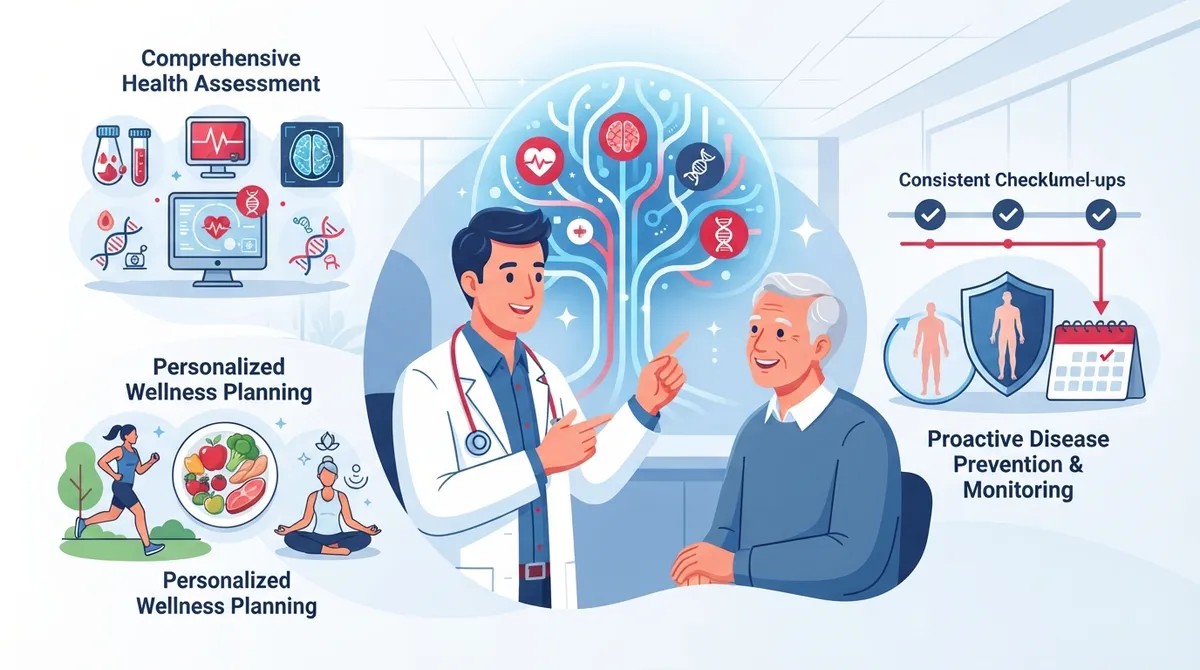
What a Longevity Doctor Actually Is
A longevity doctor is a licensed clinician who focuses on healthspan. Healthspan means the number of years you stay healthy and active, not just alive. There is no board exam for "longevity medicine." So the title alone tells you very little.
What matters is the license and training behind the title. Most strong longevity-minded doctors are board-certified in family medicine or internal medicine. They use established prevention tools and add advanced wellness services only when there is a clear reason.
Longevity Care vs. Anti-Aging Marketing
Real longevity care focuses on lowering your risk of heart disease, diabetes, cancer, and falls. Anti-aging marketing often focuses on hormones, injections, and supplements. Available evidence summaries note that no treatment has been proven to stop or reverse human aging. Be careful with any clinic that promises otherwise.
Many people begin with the basics. If you are comparing providers, you may find it helpful to read What Is a Longevity Doctor? A Clear 2026 Guide before your first visit.

Step 1: Verify Credentials and Licensure
Start with the facts you can check. Never rely on a website bio alone.
- Confirm the medical license. Use the Florida Department of Health license lookup to verify the clinician is active and in good standing.
- Check board certification. Look for certification in family medicine, internal medicine, or the relevant specialty.
- Ask about experience. How long has the doctor practiced primary care? How many patients with chronic conditions do they manage?
- Review disciplinary history. The state medical board lists any public actions.
- Ask who actually sees you. Confirm whether you will meet a physician, a nurse practitioner, or a physician assistant.
A doctor with strong primary care roots is a safer foundation than one whose only credential is a weekend course in anti-aging medicine. For more on this topic, see How to Tell If an Anti-Aging Doctor Is a Longevity Doctor.
Step 2: Look for Prevention-First Primary Care
A sound longevity visit should feel like excellent preventive medicine. It should not feel like a sales pitch. According to guidance from the National Institute on Aging, healthy aging depends on steady habits and routine medical care.
What a Good Visit Should Include
- Review of your medical and family history
- Blood pressure, weight, and other risk factor checks
- Age- and risk-appropriate screenings
- Vaccination review
- Medication and supplement review
- Support for nutrition, movement, sleep, and tobacco cessation
- A plan for managing any chronic conditions
If a clinic skips these basics and jumps straight to expensive panels, treat that as a warning sign. To see what a solid exam looks like, read What Happens During an Annual Physical Exam? and Cancer Screening Guidelines by Age and Risk in 2026.
Step 3: Question Every Test and Treatment
More testing is not always better. Every test should have a clear purpose and should change your care in some way. Before you agree to any panel or procedure, ask three questions.
- Why this test? What medical question does it answer for me?
- What will you do with the result? Will it change my treatment, screening, or lifestyle plan?
- How often do I need it? Repeat testing without a reason adds cost and stress.
Biological age tests and broad biomarker panels can be useful for some people. But they should come with a clear rationale and honest limits. Learn more in 13 Biological Age Testing Facts to Know in 2026.
Step 4: Watch for Red Flags
Some claims should make you slow down. The table below compares trustworthy signs with warning signs.
|
Area |
Trustworthy Sign |
Warning Sign |
|---|---|---|
|
Claims |
Honest about what is and is not proven |
Promises to reverse aging or extend lifespan |
|
Testing |
Tests tied to your history and risk |
Large panels for everyone, repeated often |
|
Hormones |
Prescribed for recognized medical reasons |
Marketed as a general anti-aging fix |
|
Supplements |
Reviewed against your medications and labs |
Sold in house with strong claims and no screening |
|
Pricing |
Clear fees given upfront |
Vague bundles and pressure to prepay |
|
Follow-up |
Scheduled visits and result reviews |
One-time sale with no monitoring |
Be Careful With Hormones and NAD-Related Products
Hormones should be prescribed for recognized medical reasons, not simply as anti-aging therapy. Also, FDA-approved hormone medicines differ from compounded preparations. Compounded drugs are not FDA-approved and have not gone through the same premarket review for safety and effectiveness.
NAD-related treatments also deserve caution. A 2026 report notes that the FDA has not approved NAD-related treatments for health conditions, and sources do not establish a lifespan or healthspan benefit in humans. If you are considering them, read Is NAD+ Therapy Safe? What the 2026 Evidence Shows. The same careful approach applies to peptides, covered in Peptides for Longevity: What the Evidence Shows in 2026.
A broad evidence summary from BayCare in 2023 stated that, apart from severe dietary restriction, treatments had not shown the ability to slow human aging or extend lifespan. That is a general summary, not a promise about every future therapy. But it reminds us to demand strong proof.
Step 5: Confirm Care Coordination and Continuity
Longevity is built over many years. You need a doctor who stays with you. Ask whether the clinic will:
- Share records with your existing doctors and specialists
- Explain risks, benefits, and alternatives in plain language
- Schedule follow-up visits and review lab results with you
- Handle urgent needs, so you do not have to start over elsewhere
Fragmented care is a real health risk. When one team manages your prevention, chronic conditions, and urgent needs, nothing falls through the cracks. See Fragmented Care vs. Coordinated Care: Which Wins? for a closer look.
Step 6: Compare Costs, Insurance, and Membership Fees
Cost surprises are common in wellness medicine. Before you book, get clear answers in writing.
|
Question to Ask |
Why It Matters |
|---|---|
|
Do you accept my insurance? |
Preventive visits may be covered, while some wellness services are not |
|
Is there a membership or concierge fee? |
Fees can be monthly or annual and may not replace insurance |
|
Are labs billed separately? |
Lab costs can exceed the visit cost |
|
What is the cost of procedures or therapies? |
Many wellness services are self-pay |
|
What happens if I cancel? |
Prepaid packages may be nonrefundable |
If you are weighing membership models, What Is Concierge Medicine? Costs, Benefits, and Drawbacks explains the tradeoffs. Local options in Riverview range from traditional primary care practices to concierge-style functional medicine clinics, so confirm current locations, clinicians, services, and fees directly. Listings can change.
Step 7: Match the Practice to Your Life
The right doctor also fits your daily routine. Different readers have different needs.
- Busy families: Look for a practice that can see parents and children, offer flexible scheduling, and handle sick visits fast.
- Tech-savvy professionals: Ask about virtual visits, online portals, and digital tools that make follow-up easy.
- Wellness-focused adults: Look for evidence-based advanced tools, such as DNA testing or metabolic assessments, offered with clear explanations.
- Young adults and women without a regular doctor: Look for a welcoming place to start with a full wellness visit and age-appropriate screenings.
Convenience matters because the best plan is the one you will actually follow. A practice that offers same-day or next-day access reduces the chance you will skip care. See Next Day Doctor Appointment in Riverview, FL: A 2026 Guide for tips on getting seen quickly.
Your Pre-Visit Checklist
Use this short checklist when you call or visit a clinic.
- Verify the doctor's license and board certification.
- Ask what a first visit includes and how long it lasts.
- Request a clear list of fees, including labs and add-on services.
- Ask how the clinic decides which tests to order.
- Ask which treatments have strong human evidence, and which are experimental.
- Confirm how the practice coordinates with your other doctors.
- Ask how urgent needs are handled between visits.
Why InCare Is a Strong Choice in Riverview
InCare is a personalized healthcare clinic that combines primary care, urgent care, and advanced wellness services under one roof. The Riverview location at 11922 Boyette Rd serves patients who want prevention-first care without hopping between offices. Services include cancer screenings, DNA gene testing, metabolic breath analysis, body composition analysis, medical weight loss, and IV hydration. Telemedicine visits are also available.
InCare holds a 4.8 out of 5 rating on Google across 359 reviews, with patients praising the friendly staff and the quality of care. You can see what our InCare patients say on Google and judge for yourself. To learn more about local options, read Riverview Longevity Clinic: What to Know Before You Choose and What Services Does a Longevity Doctor Offer in 2026?
You can also follow InCare for updates on Facebook, Instagram, and TikTok. For deeper reading on healthy aging, the National Institute on Aging offers trusted, research-based guidance.
Final Thoughts: Start With Strong Basics
The smartest way to choose a longevity doctor in Riverview is to treat the title as a starting point, not a promise. Verify credentials. Insist on prevention-first care. Question every test and treatment. Watch for bold claims. Confirm that your doctor will coordinate your care and explain costs clearly.
The best longevity plan is rarely flashy. It is steady primary care, smart screening, and honest guidance over many years. If you are ready to build that foundation, book your visit with InCare today, or contact our team with any questions. We are here to help you stay healthy for the long run.
FAQs
Q: How do I find a qualified longevity doctor in Riverview, Florida?
A: Start by verifying the clinician's Florida medical license and board certification in family medicine or internal medicine. Then confirm the practice offers prevention-first primary care, explains why each test is ordered, and gives clear pricing. Call the clinic directly to confirm services, availability, and fees.
Q: Is longevity medicine a recognized medical specialty?
A: No. "Longevity doctor" is a marketing description, not a recognized specialty with its own board certification. Check the doctor's underlying license, board certification, and experience in primary care or another established specialty.
Q: Are anti-aging hormones or supplements proven to extend life?
A: Available evidence does not show that hormones, NAD-related products, or most popular wellness supplements extend human lifespan. Hormones should be prescribed only for recognized medical reasons, and compounded products are not FDA-approved. Discuss any hormone or supplement with a licensed clinician first.
Q: What should a longevity-focused primary care visit include?
A: A strong visit includes a review of your medical and family history, blood pressure and risk factor checks, age-appropriate screenings, vaccinations, and a medication review. It should also include guidance on nutrition, activity, sleep, and managing any chronic conditions.
Q: Do longevity doctors accept insurance, or do I need a membership?
A: It depends on the practice. Some accept insurance for visits and preventive care, while advanced wellness services may be self-pay and some clinics charge membership fees. Ask about insurance, lab billing, and any membership costs before you book.


