

Key Takeaways
- Kisspeptin levels decline significantly with age, but a 2023 study found no connection between kisspeptin and menopause symptoms like hot flashes, challenging the idea it explains menopausal experience.
- Short-term intranasal kisspeptin-54 studies show it is well tolerated with no cardiovascular effects, but long-term safety data in elderly patients with chronic conditions remains completely absent.
- Kisspeptin effectiveness depends on estrogen levels; without estrogen present, kisspeptin cannot properly trigger LH release, making it unsuitable as a one-size-fits-all aging treatment.
- Kisspeptin is not FDA-approved for aging, menopause, low testosterone, or weight loss; compounded products from wellness clinics lack quality control for purity and dosing accuracy.
- Evidence-based alternatives like comprehensive symptom evaluation, cardiovascular screening, personalized nutrition, and established hormone therapies have decades of research support versus kisspeptin's investigational status.
- Current kisspeptin research involves small sample sizes of mostly younger adults studied for only days or weeks, with almost no data on people over 65 with multiple health conditions.
Aging changes almost every hormone system in the body, and the reproductive axis is no exception. Researchers have turned their attention to kisspeptin, a small but powerful signaling molecule, to understand why fertility hormones shift as we grow older. If you have seen headlines about kisspeptin and wondered whether it could help with menopause, low testosterone, or general aging concerns, you are not alone. This guide breaks down what the science actually shows, what remains unknown, and how a trusted primary care team can help you make sense of it all.
At InCare, patients in Tampa and Riverview often ask about emerging wellness topics like this one. While kisspeptin research is exciting, it is still investigational. This article explains the science in plain language and outlines safer, proven paths for supporting hormone health as you age.
What Is Kisspeptin and Why Does It Matter for Aging?
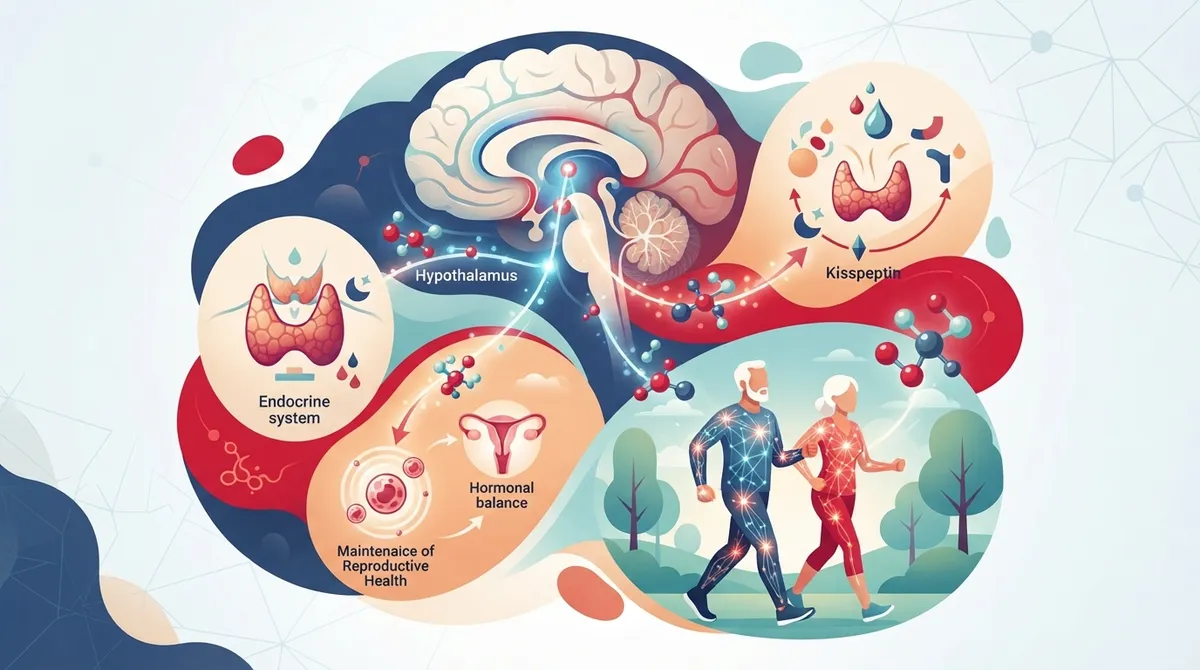
Kisspeptin is a natural hormone made in the brain. It comes from a gene called KISS1 and works by activating a receptor called KISS1R. Once activated, kisspeptin tells the brain to release another hormone called GnRH.
GnRH then triggers the release of two more hormones: luteinizing hormone (LH) and follicle-stimulating hormone (FSH). These hormones control puberty, fertility, and the production of sex hormones like estrogen and testosterone. In short, kisspeptin sits at the top of a hormone chain that shapes reproductive health across your entire life.
How Kisspeptin Changes as You Get Older
Scientists have studied how kisspeptin levels shift with age. A 2022 study of healthy women found a clear pattern: kisspeptin levels dropped as age increased. The correlation was strong, with women aged 20 to 24 showing the highest levels. Most women older than 35 had levels below 500 pg/mL.
However, blood levels do not always match what is happening inside the brain. Kisspeptin acts mainly in the hypothalamus, a brain region that blood tests cannot directly measure. This makes interpreting kisspeptin levels tricky, even for trained clinicians.

Kisspeptin and Menopause: What the Research Shows
Many people wonder if kisspeptin explains hot flashes, mood swings, or other menopause symptoms. A 2023 study looked at 155 women between ages 35 and 60. Researchers grouped them into three categories:
- 46 women in perimenopause
- 57 women in early postmenopause
- 52 women with regular periods, used as a control group
The results were surprising. There was no significant link between kisspeptin levels and vasomotor symptoms like hot flashes. There was also no connection to quality-of-life scores related to menopause. This tells us that kisspeptin alone does not explain the menopause experience.
How Estrogen Changes the Kisspeptin Response
One of the most interesting findings involves estrogen. In a study of postmenopausal women, researchers gave continuous kisspeptin infusions. Without estrogen replacement, LH levels did not rise quickly. But once estradiol (a form of estrogen) was added, LH pulse amplitude increased after about 12 hours.
This shows that kisspeptin does not work the same way in every hormone environment. Reproductive aging changes how the body responds to kisspeptin signals. This is a key reason why kisspeptin cannot simply be given as a one-size-fits-all treatment for older adults.
What Recent Studies Reveal About Kisspeptin and Aging
Research on kisspeptin continues to expand. Here are the most notable findings from recent years:
- A 2025 randomized clinical study tested intranasal kisspeptin-54 in healthy men and women. It rapidly increased gonadotropin release and was well tolerated, with no reported adverse events.
- The same 2025 study found no effects on blood pressure or heart rate during short-term dosing.
- A review of kisspeptin across the human lifespan reported that a kisspeptin-10 bolus raised LH in postmenopausal women from about 35.3 IU/L to a peak of 44.7 IU/L.
- An ongoing Imperial College London trial, running from 2024 to 2029, is testing 12 weeks of daily kisspeptin in postmenopausal women with liver fat disease. It will measure effects on liver, bone, and memory health.
- A 2023 review connected kisspeptin research to menopause, ovarian aging, and metabolic syndrome, but stressed these links remain investigational.
These studies are promising, but they involve small groups, short timeframes, and mostly younger or middle-aged adults. None of this evidence supports using kisspeptin as a routine anti-aging treatment today.
Kisspeptin Research Timeline: Key Studies at a Glance
|
Study |
Year |
Population |
Key Finding |
|---|---|---|---|
|
Serum Kisspeptin Study |
2022 |
Healthy women |
Kisspeptin declines significantly with age |
|
Vasomotor Symptom Study |
2023 |
155 women, ages 35-60 |
No link between kisspeptin and menopause symptoms |
|
Continuous Infusion Study |
Earlier research |
Postmenopausal women |
Estrogen needed for kisspeptin to raise LH |
|
Intranasal Kisspeptin-54 |
2025 |
Healthy men and women |
Well tolerated, no cardiovascular effects |
|
Imperial College Trial |
2024-2029 |
Postmenopausal women |
Ongoing study on liver, bone, and memory outcomes |
Is Kisspeptin Safe for Older Adults?
Short-term studies suggest kisspeptin is generally well tolerated. But most research has involved younger or middle-aged adults, not frail seniors with multiple health conditions. This gap in the data matters a lot.
Older adults often manage several health issues at once, such as heart disease, diabetes, or osteoporosis. Many also take multiple medications. Right now, we simply do not know how kisspeptin might interact with these conditions or drugs over months or years.
Why Long-Term Safety Data Is Still Missing
Here are the main reasons kisspeptin safety remains unclear for elderly populations:
- Most studies last only days or weeks, not months or years
- Sample sizes are small, often fewer than 50 participants
- Few studies include people over age 65 with chronic illness
- Cardiovascular risk in complex patients has not been well studied
- Cancer risk implications remain largely unexplored
- Bone health effects need more long-term tracking
Until more robust data exists, kisspeptin should be viewed as a research topic, not a treatment option, for aging-related concerns.
Kisspeptin Products: Why Caution Is Important
You may have seen kisspeptin marketed online or at certain wellness clinics. It is important to know that kisspeptin is not FDA-approved for treating aging, menopause symptoms, low testosterone, osteoporosis, or weight loss.
Compounded or research-grade kisspeptin products often lack strict quality control. This means purity, dosing accuracy, and safety oversight can vary widely. Purchasing these products without medical guidance carries real risk.
Questions to Ask Before Considering Any Peptide Therapy
If you are exploring peptide-based wellness options, ask these questions first:
- Is this treatment approved by the FDA for my specific condition?
- What does current research say about long-term safety?
- Has this been tested in people my age with my health history?
- What are the potential risks, and how would my doctor monitor them?
- Are there proven alternatives that address my symptoms more safely?
A qualified physician can help you weigh these factors honestly, without pressure to try unproven treatments.
What Primary Care Recommends Instead
Rather than turning to unproven peptides, primary care offers evidence-based tools to support healthy aging. These strategies have years of research behind them and are tailored to your unique health profile.
Evidence-Based Approaches for Hormone Health
- Comprehensive symptom evaluation to rule out other causes
- Cardiovascular and bone density risk assessments
- Personalized nutrition and physical activity guidance
- Sleep quality improvement strategies
- Reduction of tobacco and excess alcohol use
- Established hormone therapies when clinically appropriate
Providers at InCare, including those featured on the providers page, take a whole-body approach to hormone health. This means looking beyond a single hormone to understand your full picture. For women experiencing menopause transitions, options like BHRT vs. traditional HRT may offer proven relief.
How InCare Supports Whole-Body Aging Wellness
InCare combines advanced diagnostic technology with personalized medical expertise across its Tampa and Riverview locations. Instead of chasing trends, the clinic focuses on what actually works for each patient's unique biology.
Services that support healthy aging include DNA gene testing to understand your genetic predispositions, body composition analysis to track changes in muscle and fat over time, and cancer screening for early detection. These tools give your care team real data instead of guesswork.
For patients curious about hormone-related therapies, InCare also offers guidance on peptide therapy in Tampa, always grounded in current research and safety standards. You can also read more about the science behind related compounds in this kisspeptin explainer on fertility hormones.
Why Choose a Coordinated Primary Care Approach
Managing hormone health as you age requires more than a single test or treatment. It requires ongoing partnership with a provider who knows your full history. Here is why coordinated care matters:
- Your provider tracks changes over time, not just a single snapshot
- Screening catches problems early, before symptoms become severe
- Treatment plans adjust as new research emerges
- You avoid unnecessary risks from unproven, unregulated products
- Your care team coordinates across specialties when needed
This is the model followed at InCare's Tampa and Riverview locations, where primary care serves as the foundation for long-term wellness planning.
Comparing Kisspeptin to Established Hormone Therapies
|
Factor |
Kisspeptin |
Established HRT/TRT |
|---|---|---|
|
FDA Approval Status |
Not approved for aging or menopause |
Approved for specific indications |
|
Long-Term Safety Data |
Limited, short-term only |
Decades of clinical research |
|
Dosing Standards |
Not standardized |
Well-established protocols |
|
Monitoring Guidelines |
Not yet defined |
Clear clinical guidelines exist |
|
Availability |
Research settings mostly |
Widely available by prescription |
Staying Informed Through Trusted Sources
Because kisspeptin research moves quickly, it helps to follow reliable sources. Peer-reviewed studies from institutions like the National Institutes of Health provide accurate updates as new trial data becomes available. You can also follow InCare on Facebook, Instagram, or TikTok for wellness updates grounded in real science, not hype.
Patients who want to see how InCare supports the community can also visit us on Google — InCare to read reviews from real patients in Tampa and Riverview.
Common Myths About Kisspeptin and Aging
Misinformation spreads quickly online. Here are myths worth correcting:
- Myth: Kisspeptin is a proven anti-aging treatment. Fact: It remains investigational with no approved anti-aging use.
- Myth: Low kisspeptin always causes menopause symptoms. Fact: Studies found no significant link between kisspeptin levels and symptom severity.
- Myth: Nasal sprays or injections from unregulated sources are safe. Fact: Purity and dosing accuracy are not guaranteed outside regulated settings.
- Myth: Kisspeptin can replace hormone replacement therapy. Fact: Current evidence does not support this substitution.
Your Next Step Toward Healthy Aging
Kisspeptin research offers a fascinating look into how the brain controls reproductive aging. But promising science is not the same as proven treatment. For now, the safest path forward involves working with a primary care team that understands both the latest research and your personal health history.
If you have questions about hormone health, menopause, low testosterone, or general wellness as you age, InCare's experienced providers in Tampa and Riverview are ready to help. Schedule a visit today by choosing to book your appointment online, or reach out directly through our contact page to discuss your health goals with a trusted provider.
FAQs
Q: What is kisspeptin and how does it affect aging?
A: Kisspeptin is a natural brain hormone that controls the release of GnRH, which then triggers LH and FSH production. These hormones regulate fertility and sex hormone levels, and research shows kisspeptin activity changes as we age, though the exact mechanisms are still being studied.
Q: Do kisspeptin levels decline with age or menopause?
A: Research shows blood kisspeptin levels tend to decline during the reproductive years, with one 2022 study finding significantly lower levels in women over 35. However, a 2023 study found no clear link between kisspeptin levels and menopause symptoms like hot flashes.
Q: Can kisspeptin treat menopause symptoms or low testosterone?
A: No, kisspeptin is not currently an approved or established treatment for menopause symptoms or low testosterone. It remains an investigational compound, and evidence-based therapies like hormone replacement remain the recommended approach for these conditions.
Q: Is kisspeptin safe for older adults?
A: Short-term studies suggest kisspeptin is generally well tolerated in healthy adults, but most research excludes older adults with chronic conditions or multiple medications. Long-term safety data for elderly populations simply does not exist yet.
Q: Should patients use kisspeptin injections or nasal sprays from a wellness clinic?
A: Patients should approach kisspeptin products with caution, since they are not FDA-approved for aging, menopause, or weight loss, and compounded versions may lack reliable purity or dosing standards. Speaking with a primary care provider before trying any peptide therapy is strongly recommended.