

Key Takeaways
- Intranasal kisspeptin raises LH within 30-45 minutes while intravenous administration takes ~300 minutes, making delivery route critical to treatment timeline and clinical outcomes.
- Testosterone and estradiol changes lag significantly behind LH spikes, peaking 165-345 minutes after dosing, so fast hormone blips do not equal fast clinical results.
- Repeated kisspeptin dosing reduces the body's response over time, with LH responses dropping from 21.5 IU/L to 10.0 IU/L by day 14 in studied patients.
- Kisspeptin remains investigational and unapproved for hormone optimization, low testosterone, fertility, or wellness use as of 2026, requiring supervised medical evaluation before consideration.
- Individual responses vary based on sex, reproductive cycle phase, baseline hormone function, and formulation used, necessitating comprehensive hormone panels and medical oversight.
- Ovulation induction with kisspeptin requires days of monitoring and specialist coordination despite rapid LH surges, making it unsuitable for unsupervised self-administration.
If you have read about kisspeptin online, you probably have one question above all others: how fast does it actually work? The answer is more layered than a single number. Kisspeptin can trigger measurable hormone changes within minutes, yet the full picture of its effects unfolds over hours, days, or even weeks depending on what you are tracking and how the peptide is given. Understanding this timeline matters because kisspeptin remains an investigational compound, not an approved treatment you can casually pick up at a pharmacy.
At InCare, patients in Tampa and Riverview often ask about emerging peptides and hormone therapies during their wellness visits. This article breaks down what current research shows about kisspeptin's timing, why individual responses vary, and why any interest in this compound should start with a conversation with a qualified primary care provider. We will walk through the biology, the data, and the practical questions patients bring to their appointments.
What Is Kisspeptin and Why Does Timing Matter?
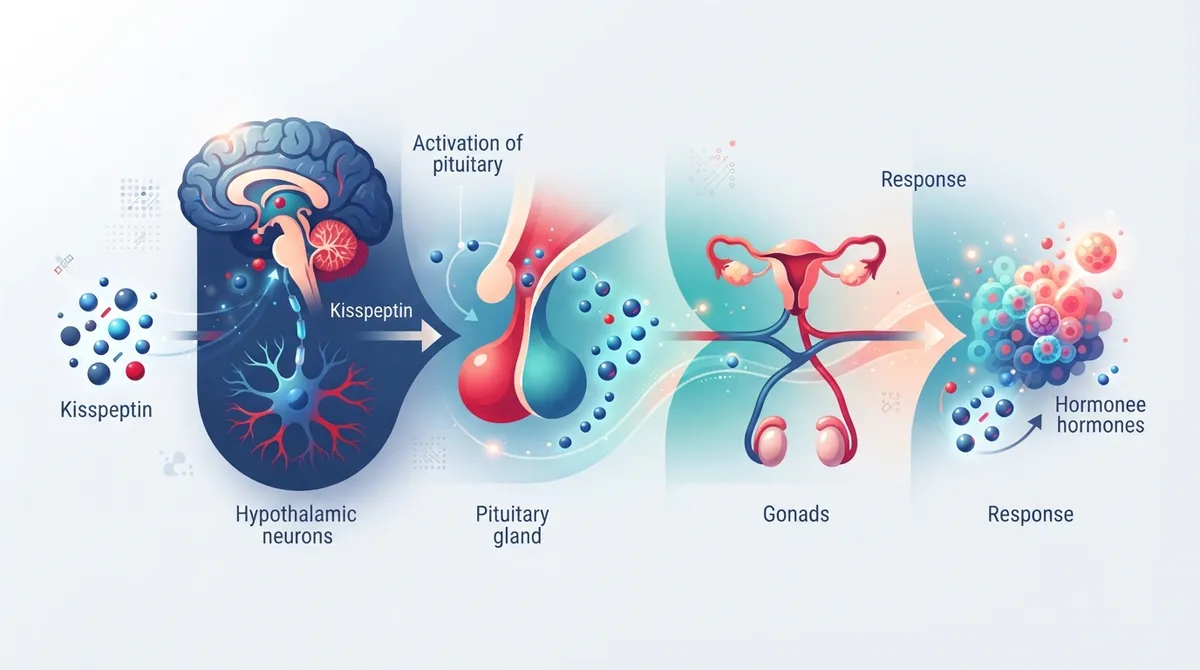
Kisspeptin is a natural signaling molecule made in the hypothalamus, a small but powerful control center in the brain. It works by activating a receptor called KISS1R. Once activated, kisspeptin tells the brain to release gonadotropin-releasing hormone, or GnRH. That release, in turn, prompts the pituitary gland to raise luteinizing hormone and follicle-stimulating hormone.
These two hormones drive reproductive function in both men and women. Because kisspeptin sits so early in this chain, researchers have studied it as a tool to understand fertility, puberty, and hormone disorders. Timing matters because clinicians and researchers need to know exactly when a dose starts working and how long its effects last before drawing conclusions about safety or benefit.
How Quickly Does Kisspeptin Raise LH Levels?
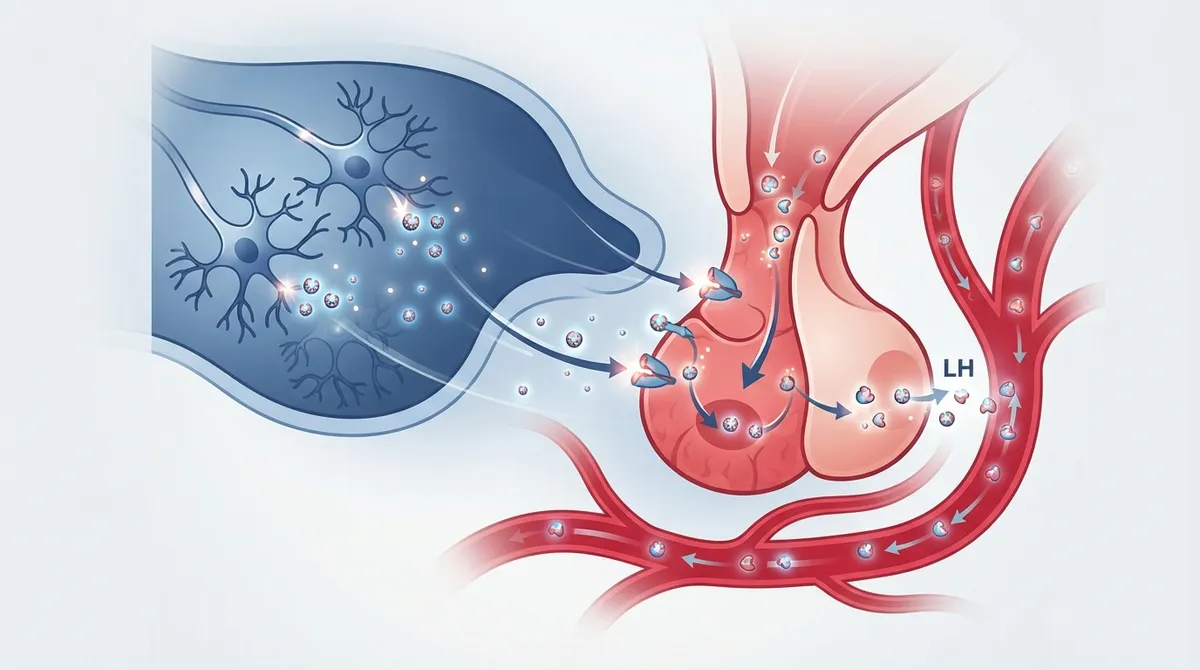
The fastest measurable response to kisspeptin is a rise in luteinizing hormone, often shortened to LH. In controlled studies, this rise can begin within minutes of dosing. The exact peak time depends heavily on how the peptide enters the body.
- Intranasal kisspeptin-54 has produced peak LH responses around 30 to 45 minutes after administration
- A 2025 human study reported a median LH peak at approximately 38 minutes following an intranasal dose
- Intravenous kisspeptin-54 showed a much later median LH peak, around 300 minutes in the same comparison
- Kisspeptin-10, a shorter fragment of the molecule, has also shown rapid LH stimulation in men and in women during certain cycle phases
This gap between intranasal and intravenous timing shows how much the delivery route shapes the body's response. A quick nasal spray produces a fast, sharp spike. An intravenous infusion produces a slower, more gradual rise that plays out over several hours.
Why LH Response Speed Varies
Several factors influence how fast LH rises after a kisspeptin dose. These include the person's baseline hormone function, their sex, and where they are in their reproductive cycle. Someone with an intact and healthy hypothalamic-pituitary-gonadal axis will typically respond faster and more predictably than someone with an underlying hormone disorder.
How Long Does It Take to Affect Testosterone or Estradiol?
While LH can rise within half an hour, downstream hormones like testosterone and estradiol take much longer to respond. This is because testosterone and estradiol production depends on LH first reaching the gonads and triggering a cascade of cellular activity.
- Kisspeptin is administered by nasal spray or intravenous route
- LH begins rising within minutes to an hour, depending on the delivery method
- The gonads receive the LH signal and begin producing sex hormones
- Testosterone or estradiol levels start climbing, typically peaking hours later
- Downstream effects, such as follicle growth or sperm production, may take days to weeks to show measurable change
In the 2025 study referenced earlier, median testosterone peaks occurred at approximately 165 minutes after intranasal dosing and around 345 minutes after intravenous dosing. This is nearly six hours after the injection for the intravenous group. These numbers highlight why a fast hormone blip does not equal a fast clinical result.
Table: Kisspeptin Response Timing by Route and Hormone
|
Administration Route |
Hormone Measured |
Approximate Peak Time |
|---|---|---|
|
Intranasal (kisspeptin-54) |
LH |
30–45 minutes |
|
Intravenous (kisspeptin-54) |
LH |
~300 minutes |
|
Intranasal (kisspeptin-54) |
Testosterone |
~165 minutes |
|
Intravenous (kisspeptin-54) |
Testosterone |
~345 minutes |
Can Kisspeptin Trigger Ovulation, and How Long Does That Take?
Some fertility research has explored kisspeptin's ability to trigger an LH surge that supports ovulation or oocyte maturation. This use has been studied mainly in assisted-conception protocols, using subcutaneous doses reported in the range of roughly 1.6 to 12.8 nmol per kilogram of body weight.
Even though the LH surge itself may happen within an hour, ovulation is a longer biological process. Follicle development and egg release typically require:
- Repeated hormone signaling over several days
- Careful monitoring through bloodwork and ultrasound
- Coordination with a fertility specialist familiar with the specific protocol
- Individualized dosing based on ovarian response
This is experimental reproductive medicine research. It is not a home remedy or a wellness shortcut, and it should never be attempted without direct medical supervision.
Does Repeated Dosing Change How Kisspeptin Works Over Time?
Yes, and this is an important detail many people overlook. A small study in women with hypothalamic amenorrhea, a condition where periods stop due to disrupted hormone signaling, found that repeated kisspeptin dosing changed the body's response over two weeks.
In that study, the mean maximal LH response dropped from approximately 21.5 IU/L at baseline to 10.0 IU/L by day 14. The women received twice-weekly injections, and the study included just five women on kisspeptin and five controls. This suggests the body may become somewhat less responsive to repeated stimulation, though responsiveness later stabilized. This kind of finding is exactly why unsupervised or self-directed use of investigational peptides carries real risk.
Table: Key Kisspeptin Research Findings
|
Study Detail |
Finding |
|---|---|
|
Baseline LH response (hypothalamic amenorrhea study) |
~21.5 IU/L |
|
Day 14 LH response (same study) |
~10.0 IU/L |
|
Study size |
5 women on kisspeptin, 5 controls |
|
Dosing schedule |
Twice weekly injections |
What Affects How Long Kisspeptin Takes to Work?
No two people respond to kisspeptin in exactly the same way. Several variables shape both the speed and strength of the response.
- Sex and current reproductive hormone status
- Menstrual cycle phase, for women who cycle
- Whether the hypothalamic-pituitary-gonadal axis is intact and functioning normally
- The dose given
- The formulation used, since not all kisspeptin products are identical
- The route of administration, whether nasal, intravenous, or subcutaneous
Earlier controlled research found that kisspeptin-10 stimulated LH release reliably in men and in women during the preovulatory phase. However, responses were limited or absent in women during certain follicular-phase conditions. This variability is one more reason kisspeptin should only be considered within a supervised clinical setting, ideally alongside comprehensive DNA gene testing and hormone panels that give your provider a full picture of your baseline health.
Is Kisspeptin Approved for Hormone Optimization or Wellness Use?
This is one of the most important points for anyone researching kisspeptin. As of 2026, kisspeptin remains an investigational compound. It is not an FDA-approved treatment for infertility, low testosterone, low libido, menopause symptoms, or general wellness optimization.
Human research has focused mainly on:
- Hypothalamic amenorrhea and related menstrual disorders
- Infertility evaluation and experimental treatment protocols
- Hypogonadism, a condition marked by low sex hormone production
The evidence does not support using kisspeptin as a general anti-aging, libido-boosting, or weight-management product. Compounded or commercially marketed versions sold outside clinical research settings have not gone through the same scrutiny as approved medications. Anyone considering this compound should discuss it directly with a licensed clinician rather than relying on marketing claims found online.
What Should You Discuss With Your Doctor First?
Before considering any investigational peptide therapy, a thorough medical evaluation is essential. A knowledgeable provider can help you understand whether your symptoms point to a hormone imbalance that has established, evidence-based treatment options.
- A full reproductive hormone panel, including LH, FSH, testosterone, and estradiol
- A review of your menstrual history, if applicable
- Screening for underlying conditions like thyroid dysfunction or pituitary disorders
- A conversation about your goals, whether fertility-related or general wellness
- An honest discussion of what is proven versus what remains experimental
InCare's team, including physicians like Naveen Paddu, MD, Pramjeet Ahluwalia, MD, and Teshy John, MD, works with patients across Tampa and Riverview to evaluate hormone health using established, evidence-backed diagnostic tools before considering any advanced or experimental therapy.
Why Whole-Body Testing Matters Before Trying Any Peptide
Hormone health rarely exists in isolation. Sleep quality, metabolic function, body composition, and even chronic stress all interact with the same pathways kisspeptin affects. That is why InCare emphasizes a whole-body approach rather than isolated symptom chasing.
- Body composition analysis can reveal how hormone imbalances are affecting muscle and fat distribution
- Metabolic breath analysis shows how your body burns energy, which connects closely to hormone regulation
- Cancer screening and routine bloodwork rule out other causes of fatigue or hormone irregularities
- IV hydration and vitamin therapy can support overall wellness while you address root causes
This kind of layered evaluation gives your provider the full context needed to recommend safe, appropriate next steps, rather than jumping straight to an unproven peptide.
Common Mistakes People Make When Researching Kisspeptin
Many patients come across kisspeptin through online forums or social media rather than medical literature. This can lead to a few recurring misunderstandings.
- Assuming a fast LH spike means fast fertility results, when downstream effects take much longer
- Believing all delivery routes work the same way, when timing differs dramatically between nasal and intravenous dosing
- Overlooking that repeated dosing can change the body's response over time
- Purchasing compounded products without medical guidance or quality assurance
- Ignoring that kisspeptin research is still in early, small-scale human trials
Avoiding these mistakes starts with getting accurate information from a trusted source rather than anecdotal claims.
Frequently Discussed Concerns in the Clinic
Patients at InCare's Tampa and Riverview locations often bring specific concerns to their wellness visits. These typically include unexplained fatigue, irregular cycles, low libido, or difficulty conceiving. A careful workup often finds answers that do not require experimental peptides at all, such as thyroid dysfunction, nutrient deficiencies, or lifestyle factors that respond well to established treatment.
For patients who are candidates for advanced hormone evaluation, InCare also offers guidance on related topics like peptide therapy in Tampa and broader weight loss programs that address metabolic health as a whole, not just isolated hormone levels.
Bringing It All Together
So, how long does kisspeptin take to work? The honest answer is that it depends on what you are measuring. LH can rise within minutes to an hour. Testosterone and estradiol changes take several hours. Fertility outcomes, if they occur at all, can take days to weeks and depend heavily on the specific protocol used. Repeated dosing may also change how your body responds over time.
Because kisspeptin remains investigational, the safest path forward is a conversation with a qualified clinician who can review your health history, order appropriate testing, and explain what treatments are actually approved and proven for your specific concern. You can find patient experiences and updates from the InCare community on Facebook, follow wellness tips on Instagram, or catch quick health insights on TikTok.
If you have questions about hormone health, fertility concerns, or emerging wellness therapies, our Tampa and Riverview teams are ready to help. You can also visit us on Google — InCare to see what other patients say about their experience with our providers.
Ready to talk through your hormone health goals with a trusted primary care team? Book your appointment today or reach out to our team with any questions about what treatments may be right for you.
FAQs
Q: How quickly does kisspeptin raise LH levels?
A: Kisspeptin can raise luteinizing hormone within minutes to an hour, depending on the delivery method. Intranasal doses have shown peak LH responses around 30 to 45 minutes, while intravenous doses tend to peak much later, around 300 minutes.
Q: How long does kisspeptin take to affect testosterone?
A: Testosterone changes typically lag behind the initial LH response. Research shows median testosterone peaks around 165 minutes after intranasal dosing and roughly 345 minutes after intravenous dosing.
Q: Can kisspeptin trigger ovulation, and how long does that take?
A: Kisspeptin has been studied as a trigger for LH surges that support ovulation in fertility research settings. However, the full ovulation process still requires days of monitoring and coordination with a fertility specialist, since the LH surge alone does not guarantee egg release.
Q: Does kisspeptin work differently when given by nasal spray versus injection?
A: Yes. Intranasal administration tends to produce a faster, sharper LH peak, while intravenous administration produces a slower, more prolonged response. The route chosen significantly affects both timing and duration of hormone changes.
Q: Is kisspeptin approved or safe for hormone optimization?
A: Kisspeptin is not FDA-approved for hormone optimization, low testosterone, low libido, or general wellness use. It remains an investigational compound studied mainly for reproductive disorders, so any interest in it should be discussed with a licensed medical provider first.